Leadership


Look forward as you learn to lead yourself

Over and over as I work with clients and students, as they learn to understand and manage their emotions, when they look back at their lives they see choices and actions they now know they would do differently. They notice relationships they mishandled, choices they would make differently, behavior that led them astray, and so on. I do the same thing. I think of relationships I lost, school and job choices I missed, maturity I lacked, and so on. I know how to do things better now. Sometimes I lament with my clients and students, empathizing with them at what we lost and missed. But then I stop. You can't change the past. I point out how looking back after you improve some behavior or…

0 Comments

Exercising authority isn’t leading

Anyone can tell someone "Do this or you'll lose your job" and the person will do it if you have the authority to fire them. I don't call that leading. Some people see positions in hierarchies and organization charts more than they see the people in those positions. If you treat them like people first and positions in charts, you have a better chance of influencing them. If you see them as positions in charts, you have a better chance of dehumanizing them, undermining the humanity of your relationship, and feeling dissociated. Even miserable. Certainly not fun. You develop skills in what you practice and exercise. The more you practice and exercise authority, the more skilled you get at it and the more authoritarian you…

0 Comments

How would you behave during the Cuban Missile Crisis?

The movie Thirteen Days illustrated how John Kennedy and the executive branch handled the Cuban Missile Crisis. I recommend the movie (and Robert Kennedy's book of the same name). I edited some parts to highlight one aspect of the situation---the personal perspectives and behavior of people closest to the President. While you won't likely face decisions with stakes as high as nuclear war, you'll face similar structures of conflict. Many people have written about conflict management, decision-making, avoiding groupthink, and other angles. https://joshuaspodek.com/wp-content/uploads/2015/03/thirteen_days_clips.ogv I recommend watching these clips actively by trying to put yourself in the places of each character, imagine the exact thoughts that might be going through their heads, the motivations they'd feel to react, how they'd have to manage themselves to behave…

0 Comments

You don’t have to overcome adversity to achieve a lot

I keep hearing people say that if only they lived in a time of greater crisis, they could have achieved more. They look at George Washington, Abraham Lincoln, Martin Luther King, Gandhi, and other famous leaders and notice they emerged through crises. I read a Harvard Business Review article implying people have to go through crucibles to develop as leaders. You don't have to overcome adversity to achieve a lot. You don't need an outside challenge. I think people don't look for counterexamples because it's easier to blame external factors than to take responsibility for realizing your dreams. It's like a version of my touchstone strategy: Don't look for blame but improve things to the extent you can. There are plenty of role models if…

0 Comments

Know your geese!

A friend and colleague visited a couple weeks ago. He invited me to breakfast with another friend of his who happened to be an incredibly successful founder and CEO of a business related to a project of mine. You don't expect to make such valuable connections. We made a great connection and may find ways to collaborate. I met the visiting friend in the first place through another guy I didn't know well, but who suggested we meet. He also put me in touch with my book agent. Agents are notoriously hard to find and create relationships with, especially at the early stage I was at when I met her. That's three great connections from one guy. He's a goose who lays golden eggs. He's…

0 Comments

The last time you interviewed someone

The last time you interviewed someone for a position on a team you were on... Did you talk about salary, bonus, benefits, and measurable things like that? Did you talk about the company or team goals? Are those goals your goals? If not, did you talk about your goals, passions, vulnerabilities, and so on? The company wants to sell products and services. You probably have aspirations beyond just that. What are your great passions, if not to be the number one provider of whatever your company does or whatever generalities its mission statement states? Do you want great relationships? Inner peace? Adventure? If you don't talk about those things to people entering your life, how do you expect to create them in your life? If…

0 Comments

The great masters of speaking with authentic voices

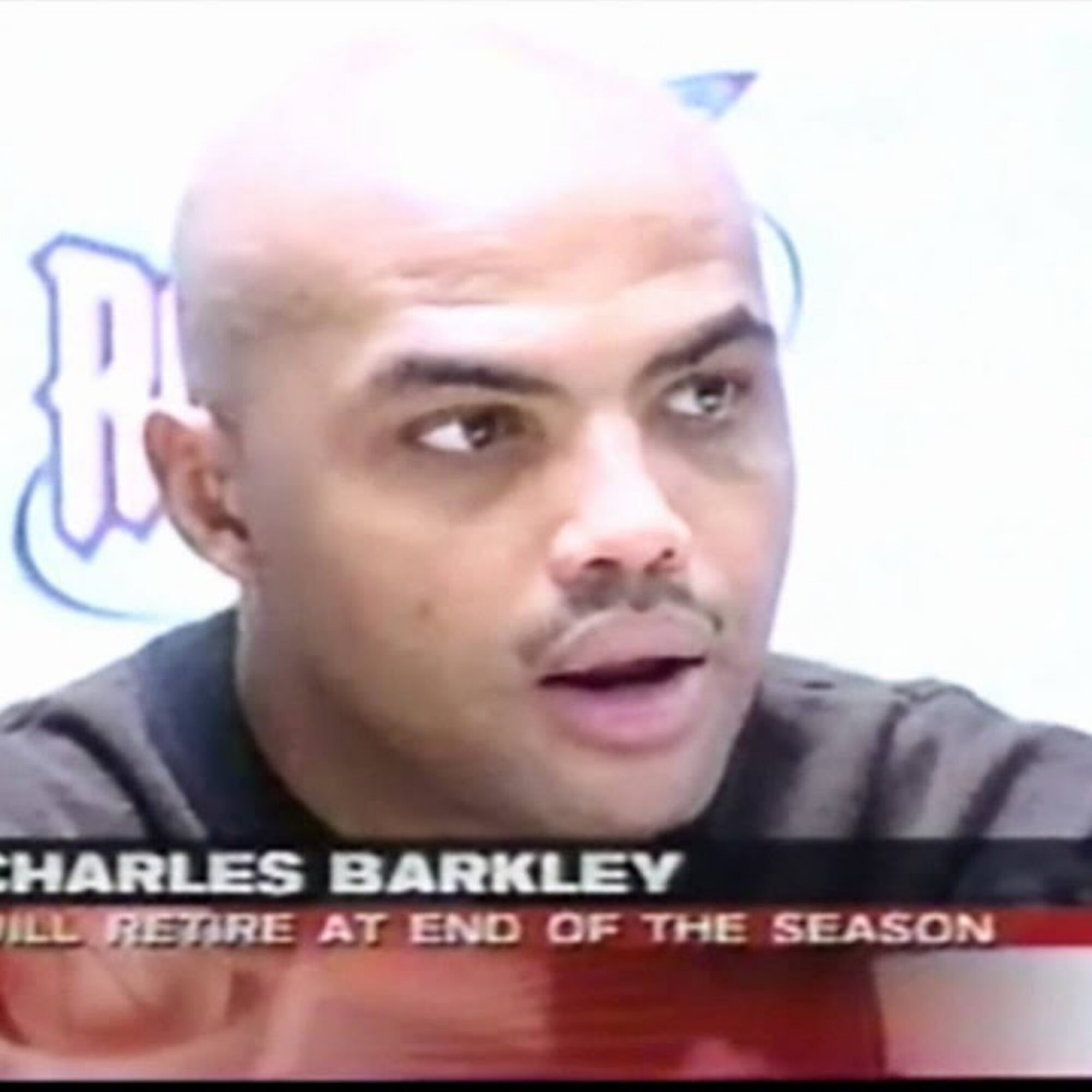
Following up yesterday's post's exercise for how to speak authentically, I wanted to give a couple more examples illustrating mastery of speaking authentically. People who speak authentically can say things others can't, meaning they have more freedom. We respect them not for their technical mastery of some craft but that they speak without that. A great master today is Charles Barkley, whom I wrote about the other day. He's famous for speaking about race, sex, class, and other topics many people lose their jobs for, yet people don't condemn him. They recognize he's sharing something about himself, not imposing his values on others. He leads people to accept him instead of judging him. The video below shows a different authenticity. Note the vulnerability he shows…

2 Comments

Your authentic voice

For a leader to speak with an authentic voice adds to their credibility and ability to influence. So how do you learn to speak more authentically? I've been leading clients through a method that has worked with each of them for years. It works, and a lot more effectively than someone telling you principles to follow. Nothing works like experience. Most people's fear of saying something they'll regret inhibits them from speaking authentically. Holding back makes you sound inauthentic, but not holding back risks saying something you think you shouldn't, like that you hate someone. Yet we admire people who speak without holding back. How do they do it without losing their jobs? I designed this exercise to have you practice on the smallest scale…

0 Comments

Freedom, from speech

You have opinions about race, sex, homosexuality, class, politics, and other controversial topics. You probably only talk about them with people closest to you. Most of us won't touch them with a ten-foot pole, knowing how one public statement can destroy a life. We believe we don't have that freedom. If you don't believe you have it, you can't do it. How about talking about them to the media for twenty years and being loved for it. That's freedom. This article about Charles Barkley described him as Off the court, where he spun quotes and welcomed controversy, Barkley was arguably the most interesting and influential athlete of his time — maybe since Ali. While others packaged themselves as though they were just another product to…

0 Comments

Emotions and sharp knives

Yesterday I compared emotions to fire and pain---things we don't enjoy feeling but we can use to improve our lives if we know how to use them. Calling them negative leads us to suppress and deny them---the opposite of self-awareness---which takes away our ability to improve our lives. I call that counterproductive. I think sharp knives might make a more helpful analogy. I might call sharp knives negative if I handled them clumsily and threw them around carelessly. You don't let children handle sharp knives because they don't have the dexterity to use them without hurting themselves. Chefs train to use them effectively. The more you train, the sharper you want your knives. No skilled cook wants a dull knife. Calling a dull knife bad…

0 Comments

Leaders ask advice. Non-leaders think they lead when giving advice, but they aren’t.

Leaders ask advice more than non-leaders. People think the opposite and hold themselves back from improving. People like giving advice and fancy themselves leaders. They think of leadership as the media mostly portrays, in command-and-control style, hear themselves giving instruction, and think they're leading. If they look at their behavior, not what they think of their behavior, they'd see they weren't leading while giving advice. How you follow when you give advice When you give advice, you suggest a new behavior for someone. You're reacting to their behavior. Reacting to someone else is not leading. Once you give the suggestion, you have to wait for them to act to find out what happens next. They control the pace of the interaction, or if it continues…

0 Comments

Involving people attracts and engages them. Pitching makes them evaluate.

[This post is part of a series on principles to create ideas people want to help you with and creating a helpful, supportive community around you. If you don't see a Table of Contents to the left, click here to view that series, where you'll get more value than reading just this post.] You wouldn't believe how much access you have to people, both the number of people and how much each one will listen to and help you. This principle surprises and helps people more than the other three. They're used to asking people for their opinions on their ideas, followed by getting a judgment, followed by the end of a conversation, followed by them having to guess at what to do about it…

0 Comments

Better than a great idea is an okay idea plus listening to your market plus flexibility

[This post is part of a series on principles to create ideas people want to help you with and creating a helpful, supportive community around you. If you don't see a Table of Contents to the left, click here to view that series, where you'll get more value than reading just this post.] The most common reason I hear from people who want to start projects or companies but don't for why they don't is that they haven't come up with a great idea. I've written about this common myth of entrepreneurship. People look at successful companies and project based around products or services that people love. They assume someone came up with the idea, acted on it, and success followed. Rarely does it happen…

0 Comments

More important than personality is skills you can learn

[This post is part of a series on principles to create ideas people want to help you with and creating a helpful, supportive community around you. If you don't see a Table of Contents to the left, click here to view that series, where you'll get more value than reading just this post.] People with great soft skills seem to dominate many areas in business . I think of leadership and sales first, though also entrepreneurship. People erroneously see people who succeed in those areas as born, not made. Or they at least ask if great leaders or salespeople are born or made. The media propagate this myth because it leads to drama, which sells copy and movie tickets. Unsuccessful people like it because it…

0 Comments

Why convincing rarely works and usually backfires

People often suggest one role of a leader is to convince people to do something. I disagree. People seem to associate the act of convincing with the outcome they want. If convincing worked as people wanted, I would associate them too, but I see it work differently in practice. If someone disagrees with you, using logic to convince someone still depends on your premises. So if the person doesn't agree with you, you have different premises. They'll see your attempts at convincing as imposing your values on them and push back, leading you to convince more, and so on. Argument ensues. When people agree there's no point in convincing either since you already agree. Trying to use logic sometimes provokes argument even when someone agrees.…

0 Comments

Meet the Global CEO of Deloitte, Barry Salzberg, March 19!

If you think you could learn from a leader with over 200,000 people reporting to him, operating in over 150 countries, and producing over $30 billion in revenue, I recommend meeting Barry Salzberg, Global CEO of Deloitte. Most of us wish for leaders like him. He rose through one firm over 38 years, retiring to teach leadership at Columbia Business School. His legacy includes championing Deloitte University, a $300 million world-class learning and development center, and helping weather Enron and Anderson undermining the industry. Yet he remains down-to-earth, approachable, and dedicated to helping others. On March 19 he'll speak with the Columbia Business School Alumni Club (everyone is welcome). I recommend joining! Register here From the club's announcement page: Meet Global CEO of Deloitte Barry…

0 Comments

What do you think when someone acts not how you want

How do you think when someone acts unexpectedly, especially a way you don't like. That result is usually the opposite of leadership, where you want people behaving the way you lead them. I used to think something like They did something wrong. Why would they do that?!? What's their problem? I know how to do this right. I have to change them. What should I do to get them to behave how I want? I still think that way sometimes, I guess out of habit more than effectiveness because I don't find it effective at influencing people to follow my lead. It annoys the other person and it frustrates me. Now I think something more like I didn't expect that result. I don't like that…

0 Comments

My next Leadership Workshop, Sunday March 1

My next seminar is March 1, two weeks from yesterday! It's with the Columbia Business School Alumni Club, but it's open to everyone. That means two things. First, you save money because they capped the price below recent seminars. Second, you get phenomenal classmates. Columbia alumni are knowledgeable but inquisitive, experienced yet curious, accomplished yet humble. In other words, they help everyone learn and perform at their best. Here's the announcement. Click here to register! Workshop: How to lead people so they want you to lead them again Effective leaders motivate people from the inside — so people they lead contribute fully and thank the leader for giving them the opportunity to work with them. Isn't someone thanking you for motivating them to work hard…

0 Comments

Mental models and beliefs: an exercise to identify yours

[EDIT February 2020: I gathered, edited, and compiled all the posts I listed below into my book ReModel, which I recommend if you prefer a more curated experience with less clicking. Either way, I recommend doing the exercise. It gives a new way of seeing the world that costs nothing and takes little time.] This series covers my doing my Write Your Beliefs exercise, which I've found one of the more valuable self-awareness exercises that my clients, my students, and I have done. It builds on the Inner Monologue exercise, which I also call "The most effective self-awareness exercise I know." The first entry motivates the value of this exercise, the second describes the exercise, the third and fourth describe my experience doing the exercise,…

0 Comments

Fundamentals and technique: what you do when you don’t know what to do

A professor / actor I'm working with described a harrowing experience that illustrates the value of fundamentals and technique. He told me he forgot his line on a Broadway stage in front of around 500 to 1,000 people. Some paid hundreds of dollars for their seats and want a professional performance. What do you do if you forget your lines on stage? There's a fundamental technique a lot of actors start training early with called the repetition exercise where you repeat the same words back and forth, learning to pay attention to things other than words and react. I don't know many actors, but I think most of them know the exercise. The American-trained ones, at least. This actor, on the Broadway stage, forgetting his…

0 Comments

To start a habit, focus on emotions

Different people suggest starting habits different ways. Some say to start with behavior, like setting a New Year's resolution or doing it every day for a month. Others suggest starting by changing your environment, like by putting a note on your computer monitor or daily schedule, wearing a device that measures your exercise, or joining a web page that tracks and reminds you. That's all low-level tactics. Tactics, no matter how effective, don't work if the high-level strategy doesn't work. Effective strategy comes from knowing how the new habit will affect your life. What is its meaning, value, importance, and purpose (MVIP)? MVIP is based in emotion. That means what emotions do you expect the new habit to create. If you expect the change to…

0 Comments

Influence and persuasion class starts Saturday

This Saturday begins my class at General Assembly on influence and persuasion. Register here We call the class "Entrepreneurial Sales" because it teaches entrepreneurial skills and uses a model of selling for its structure, but it's about broader concepts of influence, persuasion, value, and building relationships based on understanding others' needs. I used to think sales was part of the business other people did---something low-level that used pressure and made people feel bad, like selling used cars or souvenirs in tourist traps. Boy was I wrong! Sales is also Getting hired (selling your labor) Hiring people (selling your company's culture) Pitching proposals (selling your ideas) Getting funded (selling shares in your company) Influencing and persuading others (selling your perspective) Getting promoted (selling your skills) Knowing…

0 Comments

Listen to the results of my online leadership course: the full interview!

Over the past six months I created an online leadership course, The Fundamentals of Leadership. I interviewed a student who took it. Listen to the interview highlights and full course. If you want to learn to lead yourself or others better, or to improve your life, listen to the interview and see if it fits your interests. EDIT: Here is a video version of the interview highlights that's only in audio below: https://www.youtube.com/watch?v=g0ODcbJarCM Click here for the interview highlights (about ten minutes) Click here for the full interview (about an hour) Here it is in nine 5--8-minute segments: Part 1, Part 2, Part 3, Part 4, Part 5, Part 6, Part 7, Part 8, Part 9 About the course The Fundamentals of Leadership will prepare…

0 Comments

Listen to the results of my online leadership course: the full interview, part 9/9

[Another post superseded this one by posting the full interview and the highlights. I'll copy that post here: Over the past six months I created an online leadership course, The Fundamentals of Leadership. I interviewed a student who took it. Listen to the interview highlights and full course. If you want to learn to lead yourself or others better, or to improve your life, listen to the interview and see if it fits your interests. Click here for the interview highlights (about ten minutes) Click here for the full interview (about an hour) Here it is in nine 5—8-minute segments: Part 1, Part 2, Part 3, Part 4, Part 5, Part 6, Part 7, Part 8, Part 9 About the course The Fundamentals of Leadership…

0 Comments

Listen to the results of my online leadership course: the full interview, part 8/9

[Another post superseded this one by posting the full interview and the highlights. I'll copy that post here: Over the past six months I created an online leadership course, The Fundamentals of Leadership. I interviewed a student who took it. Listen to the interview highlights and full course. If you want to learn to lead yourself or others better, or to improve your life, listen to the interview and see if it fits your interests. Click here for the interview highlights (about ten minutes) Click here for the full interview (about an hour) Here it is in nine 5—8-minute segments: Part 1, Part 2, Part 3, Part 4, Part 5, Part 6, Part 7, Part 8, Part 9 About the course The Fundamentals of Leadership…

0 Comments

End of content

No more pages to load