Nature


McLibel

By the way, having mentioned McLibel and the difference between "food" and food and between "meat" and meat, and as long as I'm on the topic of reasonable talk about eating, I can't help mention more about the case. Quoting from a web page devoted to the case, The McLibel Trial is the infamous British court case between McDonald's and a former postman & a gardener from London (Helen Steel and Dave Morris). It ran for two and a half years and became the longest ever English trial. The defendants were denied legal aid and their right to a jury, so the whole trial was heard by a single Judge, Mr Justice Bell. He delivered his verdictin June 1997. The verdict was devastating for McDonald's.…

0 Comments

Why I stopped eating meat, part 2

Yesterday I mentioned I stopped eating meat for two categories of reasons: taste and intellectual reasons. Today I'll cover taste. By taste I mean not just flavor, but what one likes or not, as in musical taste. I never liked eating meat. At least I don't remember liking it, but it was a long time ago. I remember disliking eating meat. My mom would say "It's all meat!" about the fat around a steak that, no matter how much you chew, doesn't break down in your mouth. So I had to chew that stuff while it made me gag. I think my siblings all remember the phrase. So if I ever liked steak I didn't like it after that. The tendons on a drumstick eventually…

1 Comment

Why I stopped eating meat, part 1

People often ask me why I stopped eating meat. I wrote a few days ago about how often people ask in order to argue and how I find the question boring after having been asked roughly daily or so for decades. Still, I've learned to appreciate and even celebrate things I can't change so it doesn't get me down. I used to argue with people about food too so I empathize with them, though I learned to stop arguing, so I feel justified in expecting more of them. Anyway, before writing why I stopped eating meat, I'll point out most of my reasons for not eating meat now, which I'll write about later, are different than my reasons for stopping eating meat in 1989. I've…

2 Comments

More reasonable talk on eating, part 3

Yesterday covered more the physical side of the change in the trucker's life with food. Today let's look more at the emotional side. The movie showed that, however ingrained the punishment of "food" and its related confusion-based helplessness, just a few days of new experience can overcome it. The trucker's physical health didn't change overnight, but his emotional health did. And a major point of this blog is the fundamental importance of emotions in changing your life. Once he found that food -- something so simple as food -- could create power (ability to influence his life), joy, reward, and so on, he found he could create something to live for, which I believe was a better life for himself, spending time with his family…

0 Comments

More reasonable talk on eating, part 2

Yesterday I wrote about healthy food, unhealthy "food," and how we've created industries that confuse the two, leading to people eating things they don't like and avoiding things they do. The day before I wrote about the movie Fat, Sick, and Nearly Dead (view for free here, view trailers here). Since food can be such a rewarding part of life when you find ways to actively enjoy it, many books, movies, restaurants, and so on inspire people by removing the deception and confusion "food" vendors create to sell their products. Once you realize how much joy and reward food can create, you love it. Many have inspired me. A character in Fat, Sick, and Nearly Dead inspired me most recently. The movie's main thread is…

0 Comments

More reasonable talk on eating

I alluded to a point yesterday that people don't eat what they want and eat what they don't want. They diet, avoid things for reasons other people give them, eat unhealthy foods, and so on. Is this mind-blowing or what? How can someone eat things they don't like and avoid things they do? Food is as basic as things get. What better feelings does life offer than for eating food we like? Could you imagine our ancestors evolving liking eating anything but healthy food? Or disliking eating anything but harmful things? Wanting to eat healthy food and avoid unhealthy alternatives must be fundamental to our wiring. The opposite -- eating unhealthy stuff and not getting healthy food -- must confuse our systems. Answering these questions…

0 Comments

Some reasonable talk on eating

A movie I saw recently called Fat, Sick, and Nearly Dead (view for free here, view trailers here) struck a chord and got me thinking more about food recently, and buying and eating more fresh, organic fruits and vegetables than ever. So I'll post a few posts on food and diet. The last time I intentionally ate meat was the spring of 1989. Occasionally someone brings me a turkey burger when I order a veggie burger and I accidentally eat some or a bug flies down my throat when I'm running, but I don't count things that happen without intent. People who eat meat can get weird about people not eating meat sometimes. I'm sure from their perspective they seem normal and people who don't…

1 Comment

There will never be a periodic table of emotions, part 2

Continuing yesterdays' post... In the examples above, the categorization schemes worked because they categorized something with an underlying structure -- the photon and its wavelength, the atom and its nucleus and electrons, natural selection and DNA, the (so far) fundamental particles and the laws governing their interactions. But not everything with patterns has an underlying structure. Let's look at anatomy, for example. As we'll see, it will reveal a lot about emotions and motivations. Notice that despite common characteristics across life, no one has created a periodic table of anatomy. Why not? Because anatomy has no underlying structure like those other categorization schemes. We know several unpredictable factors affect how a species' anatomy evolves -- for example, that species' current anatomy, its environment, and natural…

6 Comments

There will never be a periodic table of emotions, part 1

Discovering the periodic table of the elements told us wonders about chemistry and pointed the way toward understanding atoms. Figuring it out pointed the way toward tremendous understanding and improving our lives. We found similar structures that revealed underlying structure in the spectrum of light, life's family tree, the standard model of particle physics, and others. Wouldn't it be great to find such a structure for our emotions and motivations? Wouldn't we expect discovering such a structure reveal our emotional system and create tremendous progress in psychology, personal development, achievement, motivation, and well-being? Why can't we find such a structure? I think we never will. But that doesn't mean we won't make tremendous progress in those areas to improve our lives. Let's take a step…

0 Comments

Central Park: Sunday’s stunning explosion of autumn colors

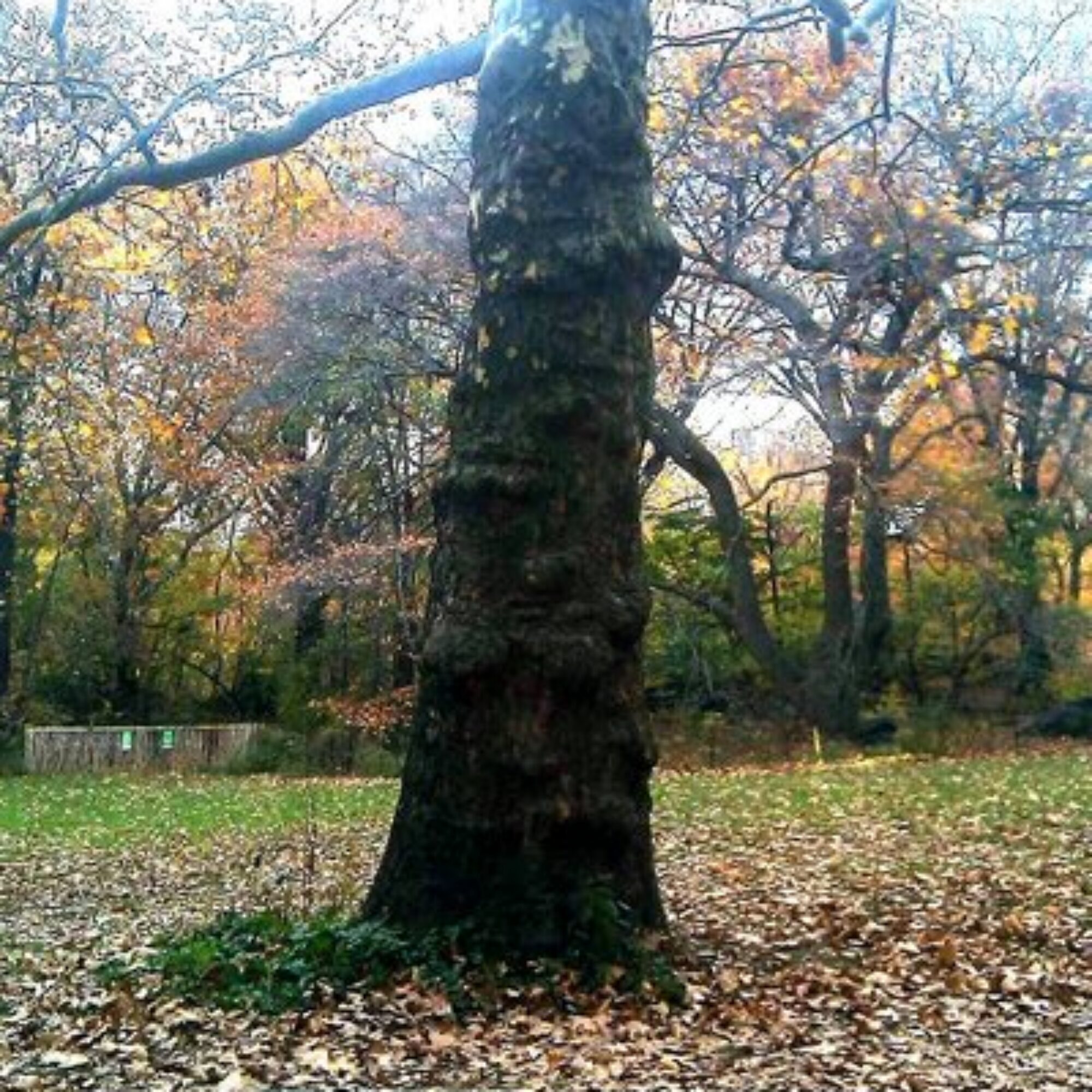
A friend asked what site to see in New York City if she could only see one. Without hesitation I said Central Park. Thinking about it later, I thought if an alien asked what site to see on Earth if he, she, or it could only see one. I might still say Central Park. I've seen beautiful days, but none more so than Sunday, when Central Park exploded with autumn colors. Unfortunately I had only my crappy cell phone camera, but I like the pictures anyway. A nice bookend to when the explosion of spring in the park across the street from me prompted me to post pictures of it. Here's a tree quote, not that relevant to Central Park, but useful in life anyway.…

0 Comments

Amartya Sen and North Korea

A friend and reader, es, commented Your posts about North Korea remind me of some parts from Amartya Sen's "Identity and Violence" and "the Idea of Justice". Over-generalization, exclusion, multiple identities, basic norms existing in each society and universal norms that should transcend them. Narrow views on North Korea can be attributed to people only focusing on one aspect of North Koreans' identities through the lens of basic norms in the first world. There may not be norms based on social contracts in North Korea but that does not necessarily deprive them of their other identities and humanity. People tend to blur this line, though. I haven't read those books of Sen, but I appreciate the ideas of his I've come across. To have one's…

1 Comment

I’ll get in trouble for this in two ways

I'll get in trouble for this post in two ways, but people who get it will appreciate it. The first is how I view death. I'm overwhelmingly swayed by this passage from the ancient book called the Zuangzi (spelled Chuang Tzu in the translation below) on the death of a loved one. Chuang Tzu's wife died. When Hui Tzu went to convey his condolences, he found Chuang Tzu sitting with his legs sprawled out, pounding on a pot and singing. "You lived with her, she brought up your children and grew old," said Hui Tzu. "It should be enough simply not to weep at her death. But pounding on a tub and singing - this is going too far, isn't it?" Chuang Tzu said, "Not…

0 Comments

The Model: “What is the meaning of life” is a needlessly and counterproductively complicated question

[This post is part of a series on The Model -- my model for the human emotional system designed for use in leadership, self-awareness, and general purpose professional and personal development -- which I find the most effective and valuable foundation for understanding yourself and others and improving your life. If you don't see a Table of Contents to the left, click here to view the series, where you'll get more value than reading just this post.] The past two day's posts on meaning and complexity in emotions helps us understand the age-old, often asked but never answered question, "What is the meaning of life?". More importantly, it helps us make sense of a question that doesn't make much sense. Unfortunately, the question's complexity makes…

2 Comments

The Model: the source of all meaning, value, purpose, and importance

[This post is part of a series on The Model -- my model for the human emotional system designed for use in leadership, self-awareness, and general purpose professional and personal development -- which I find the most effective and valuable foundation for understanding yourself and others and improving your life. If you don't see a Table of Contents to the left, click here to view the series, where you'll get more value than reading just this post.] Most of our greatest life questions and quests involve meaning and values. What things are meaningful and why? What are our values? What is important and why? Looking up words like meaning, values, and importance in the dictionary or Wikipedia doesn't help. At least one dictionary online gave…

0 Comments
The Model: a single cycle is simple. Many cycles get complex.
Three interacting thoughts

The Model: a single cycle is simple. Many cycles get complex.

[This post is part of a series on The Model -- my model for the human emotional system designed for use in leadership, self-awareness, and general purpose professional and personal development -- which I find the most effective and valuable foundation for understanding yourself and others and improving your life. If you don't see a Table of Contents to the left, click here to view the series, where you'll get more value than reading just this post.] Do you consider emotions complex and bewildering? I wouldn't surprise me if you did. Many people present them that way, what I call romanticizing them. Making them seem complex and bewildering sells movie tickets, magazines, and books, unfortunately at the cost of making people misunderstand themselves. I hope…

0 Comments

The Model: what you can and can’t control

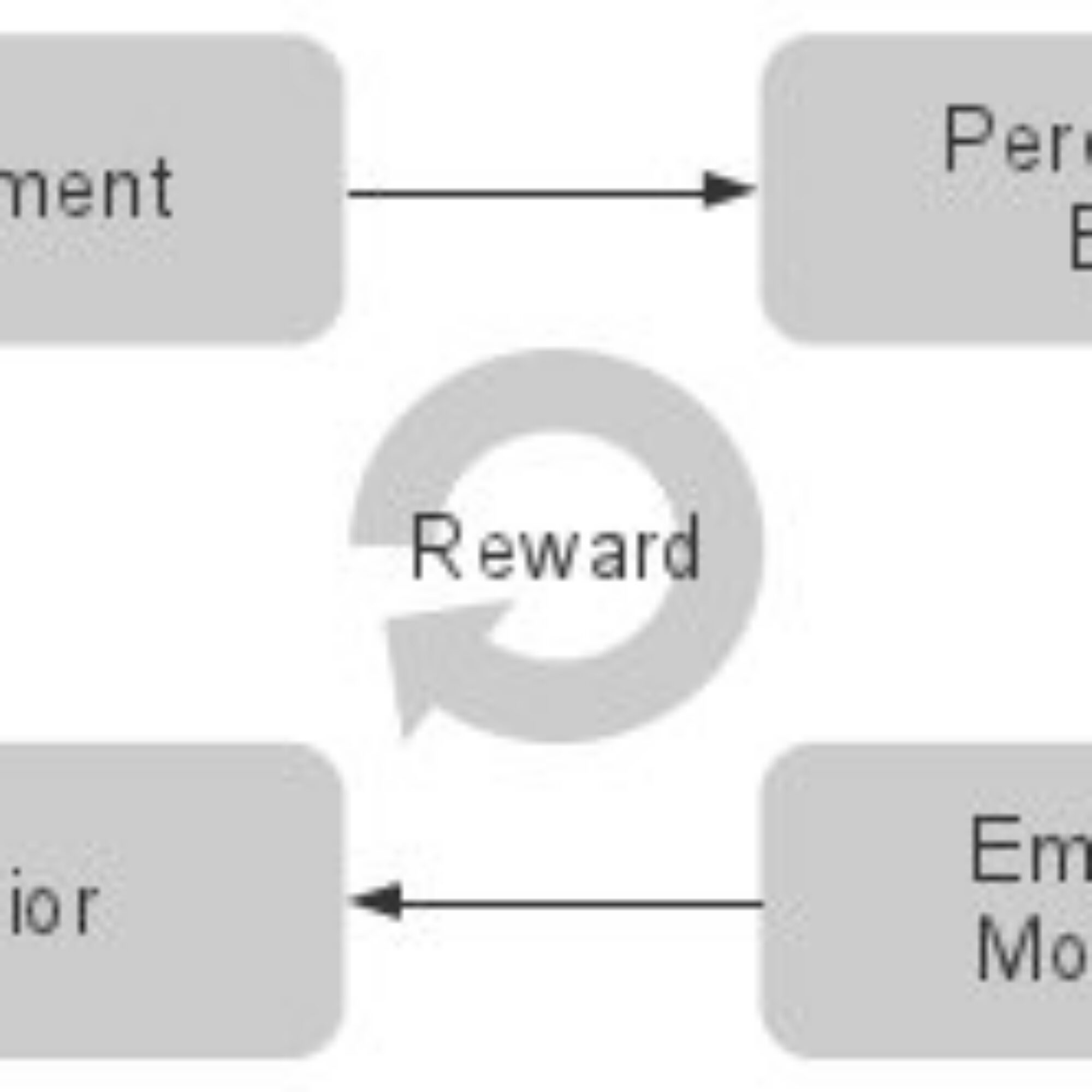
Of the five elements in the Model -- environment, beliefs, emotions, behavior, and reward -- you can voluntarily choose and act on your environment, belief, and behavior. Except to a limited degree, you can't voluntarily choose your emotions. They react to the other elements. Reward, being a special emotion, also reacts to the other elements. It may seem a cruel twist that the most important parts of the cycle are the parts we can't control. After all, the Declaration of Independence doesn't say "life, liberty and the pursuit of environment" or "... of perception" or "... of belief." It recognizes happiness -- your emotions -- as the highest value. From an evolutionary perspective, for your emotions to be involuntary makes sense. If you felt hungry,…

0 Comments

The Model: how your emotional system chooses your emotions

[This post is part of a series on The Model -- my model for the human emotional system designed for use in leadership, self-awareness, and general purpose professional and personal development -- which I find the most effective and valuable foundation for understanding yourself and others and improving your life. If you don't see a Table of Contents to the left, click here to view the series, where you'll get more value than reading just this post.] Why do you feel the emotions you do? People who think their emotions are irrational and follow no pattern can't understand why they feel the emotions they do. Worse, they make themselves unable to manage their emotions. They become easy to manipulate. Perhaps they make good consumers for…

0 Comments

The Model: more on the difference between “positive” and rewarding emotions

[This post is part of a series on The Model -- my model for the human emotional system designed for use in leadership, self-awareness, and general purpose professional and personal development -- which I find the most effective and valuable foundation for understanding yourself and others and improving your life. If you don't see a Table of Contents to the left, click here to view the series, where you'll get more value than reading just this post.] People usually say they want to feel positive emotions. I've already discussed how calling emotions positive doesn't help. They may feel good, but even ones that feel bad are useful. We have them for a reason. Treating them functionally helps you manage them better. The following examples illustrate…

0 Comments

The Model: more functional views of emotions

[This post is part of a series on The Model -- my model for the human emotional system designed for use in leadership, self-awareness, and general purpose professional and personal development -- which I find the most effective and valuable foundation for understanding yourself and others and improving your life. If you don't see a Table of Contents to the left, click here to view the series, where you'll get more value than reading just this post.] Our society cripples us by presenting too narrow a view of emotions. Today let's consider other views that let us be more free. Our culture romanticizes emotions for their feelings, characterizing them as irrational. That romanticization sells movie tickets and books, but complicates your ability to manage your…

0 Comments

Earth from space, a pale blue dot

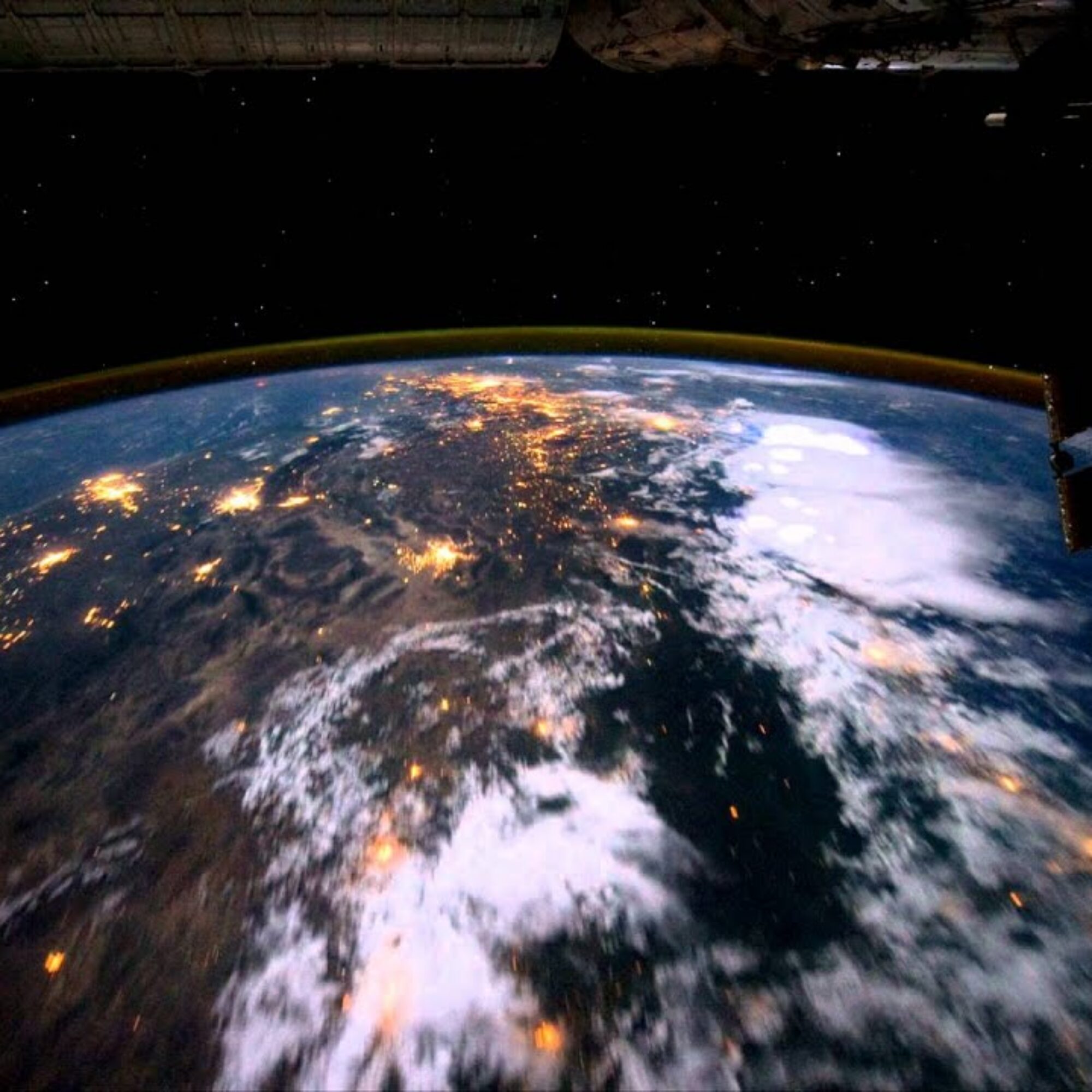
If you read this blog for unique ideas from me, they don't come from nowhere. Their deepest foundation comes probably from the beauty I find in nature, a main reason I studied physics, which I consider the foundation of our understanding of nature. A science educator, James Drake, created this video -- a time-lapse of publicly available images -- a perspective of our world vastly different from our usual perspectives about our lives. I find it beautiful. You may want to click on the YouTube logo to watch it full-screen there. His blog has many images of Earth from space. http://www.youtube.com/watch?v=74mhQyuyELQ A small comment: I would title it "What does it look like to fly over Earth". I think the video shows what it looks…

0 Comments

The Model: what are awareness, self-awareness, and emotional intelligence?

[This post is part of a series on The Model -- my model for the human emotional system designed for use in leadership, self-awareness, and general purpose professional and personal development -- which I find the most effective and valuable foundation for understanding yourself and others and improving your life. If you don't see a Table of Contents to the left, click here to view the series, where you'll get more value than reading just this post.] Do you also find people talk about awareness, self-awareness, emotional intelligence and related topics loosely, without knowing precisely what they mean? The Model lets us circle back, discuss, and clarify these concepts. Perhaps ironically, people with low awareness would tend to benefit most from increasing theirs. Without a…

0 Comments

The Model: reward in more depth

[This post is part of a series on The Model -- my model for the human emotional system designed for use in leadership, self-awareness, and general purpose professional and personal development -- which I find the most effective and valuable foundation for understanding yourself and others and improving your life. If you don't see a Table of Contents to the left, click here to view the series, where you'll get more value than reading just this post.] Continuing looking at elements of the Model in more depth, after behavior yesterday comes reward. Past posts clarified that reward differs from the emotions that bring it about -- so you know you can get reward from any emotion, not just so-called "positive" ones -- and the differences…

0 Comments

The Model: behavior in more depth

[This post is part of a series on The Model -- my model for the human emotional system designed for use in leadership, self-awareness, and general purpose professional and personal development -- which I find the most effective and valuable foundation for understanding yourself and others and improving your life. If you don't see a Table of Contents to the left, click here to view the series, where you'll get more value than reading just this post.] Continuing looking at elements of the Model in more depth, after emotions and their origins over the past two days comes behavior. Of all the elements, behavior is probably the simplest. Behavior includes the obvious -- your gross movements like moving around, eating, sleeping, running, and what you…

0 Comments

The Model: characteristics of emotions

[This post is part of a series on The Model -- my model for the human emotional system designed for use in leadership, self-awareness, and general purpose professional and personal development -- which I find the most effective and valuable foundation for understanding yourself and others and improving your life. If you don't see a Table of Contents to the left, click here to view the series, where you'll get more value than reading just this post.] Besides your emotional system's consistency and reliability, each emotion you feel has several characteristics relevant to its function. I have found four characteristics particularly relevant. Each emotion has characteristics of Pleasure, from pleasurable to painful Intensity, from intense to subtle Richness, from complex to simple Duration, of long…

0 Comments

The Model: the origins of your emotions and emotional system

[This post is part of a series on The Model -- my model for the human emotional system designed for use in leadership, self-awareness, and general purpose professional and personal development -- which I find the most effective and valuable foundation for understanding yourself and others and improving your life. If you don't see a Table of Contents to the left, click here to view the series, where you'll get more value than reading just this post.] Know thyself. As with every system to improve your life I know, I consider knowing yourself fundamental. Today's post shows how recent science -- evolutionary psychology -- lets us know ourselves better than any humans could before. Evolution tells us our roots beyond our childhood another billion years.…

0 Comments

End of content

No more pages to load