Perception


The futility of “Seeing things as they are”

Do people understand what they're saying when they talking about "seeing things as they really are?" Do they realize it makes no sense? Let's say you're seeing things for not what they are. Do they imagine you have some special faculty that you were not using but when you decide to, you can just use your reality-seeing eyes instead of your what? false-seeing eyes? If you misperceived or were deceived before, you didn't know you were, or else you would have corrected for the misperception or deception. How do you know you aren't misperceiving or deceived now? You don't. And what if someone sees things differently than you? If you believe you see things as they are, then you believe you're right and they're wrong.…

0 Comments

What’s more exotic, a mango or a turnip? What’s sweeter, ice cream or an apple? More culturally different, someone in a different country or generation?

What's more exotic, a mango or a turnip? In New York City, and most of the U.S., you can buy mangoes at many stores. Turnips are harder to find. People say they travel to experience new, exotic things. But they don't see that there are new things in their back yards. What's sweeter, ice cream or an apple? Ice cream has more sugar than apples and for most Americans, who are about 80% overweight or obese, tastes better. Apples probably don't taste that sweet to them. But after stopping eating ice cream long enough for your saturated taste buds to recover, apples become incredibly sweet. Ice cream becomes inedibly sweet. I almost can't eat a whole apple these days because they taste too sweet. I…

0 Comments

The opposite of consuming unnecessarily is not deprivation or unhappiness

Apparently of all the materials we mine, extract, harvest and so on, after six months, less than one percent is still in use or in the product we got it for. Over 99% of what we get from the earth is used that long. I found that statistic from The Story of Stuff (video and annotated script). These two pages 21 Surprising Statistics That Reveal How Much Stuff We Actually Own and Surprising Stats give even more insane statistics about how much we materially consume. It feels like we could use an interaction like the scenes in the shows about people who weigh over 600 pounds where they have them look in the mirror, which they never do because they prefer denying seeing themselves, and…

0 Comments

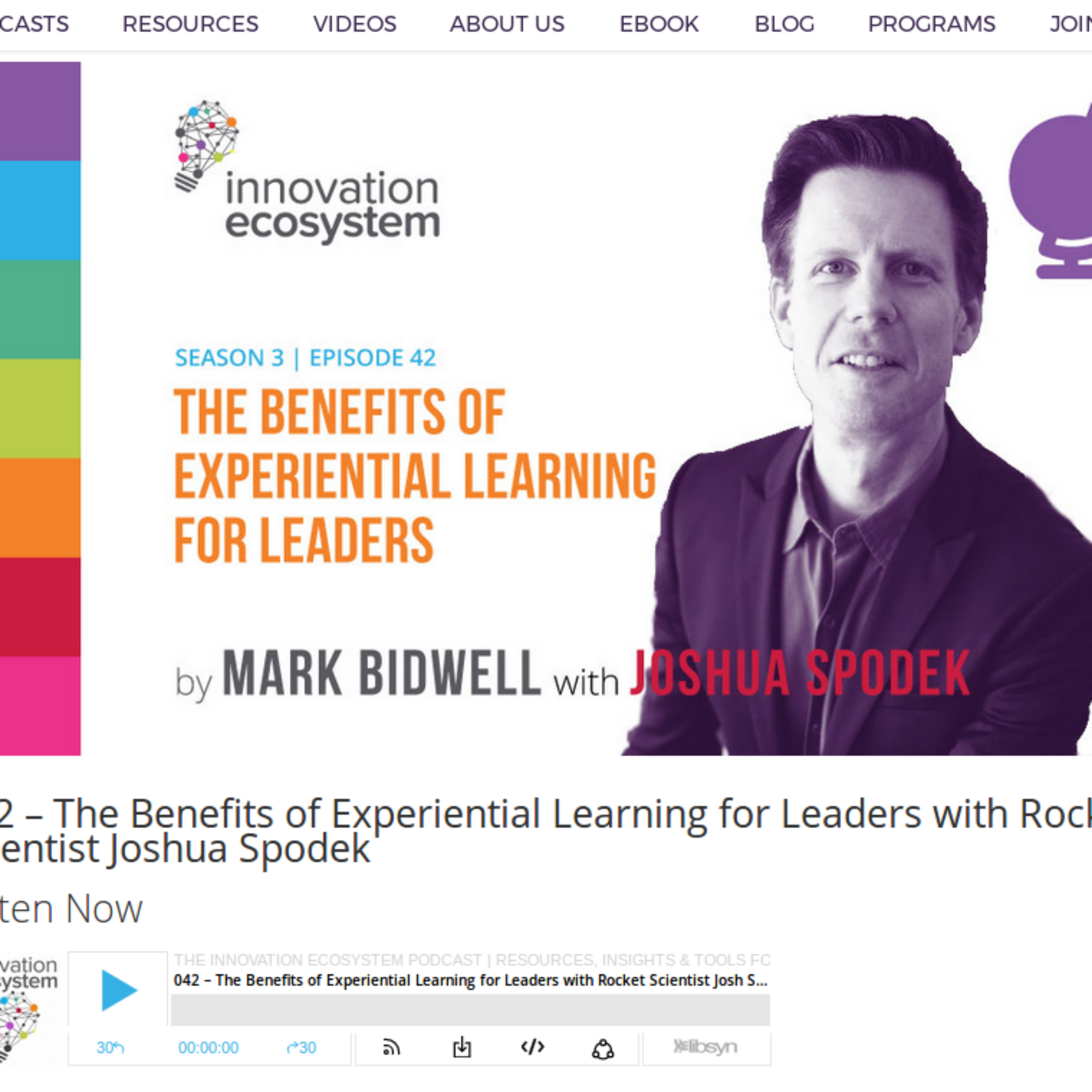
The Benefits of Experiential Learning for Leaders with Rocket Scientist Joshua Spodek

https://www.youtube.com/watch?v=2-DZIZxl1IM Mark Bidwell, founder and podcast host of Innovation Ecosystem, posted today a wonderful interview about Leadership Step by Step, experiential learning, exercises, and more. I can only describe Mark as someone who gets it. He ascended the corporate ladder, where he drove innovation, built teams, and so on, then found there was more to life and is creating resources to enable others to. If you are looking to improve your leadership, social, and emotional skills, Mark gets to the heart of how to, covering techniques that work, as well as the problems of traditional education that suppress learning these things. Listen to the interview! A few words about Mark and the Innovation Ecosystem podcast: We interview remarkable and thought-provoking guests about innovation, leadership and…

0 Comments

Listen to a wonderful interview of me by Sami Honkonen of Boss Level podcast

Sami Honkonen records Boss Level Podcast Interviews with interesting people doing awesome things Boss Level is a podcast on people and organizations aiming for the boss level. Boss level is the status a person or an organization achieves by making a better quality of life for themselves and others by doing what they need to do regardless of all the haters and obstacles out there. I love his interview of me, "Joshua Spodek and seven years of burpees," which he posted today. If you like my material and, especially, if you're curious about my long-term direction and goals for it---my passion, or one of them, for those who've done my book and leadership course's Unit 4: Leading Others exercises---he brings them up at the end.…

0 Comments

Non-judgmental Ethics Sunday: What to Do About a Physician Who May Be a Quack

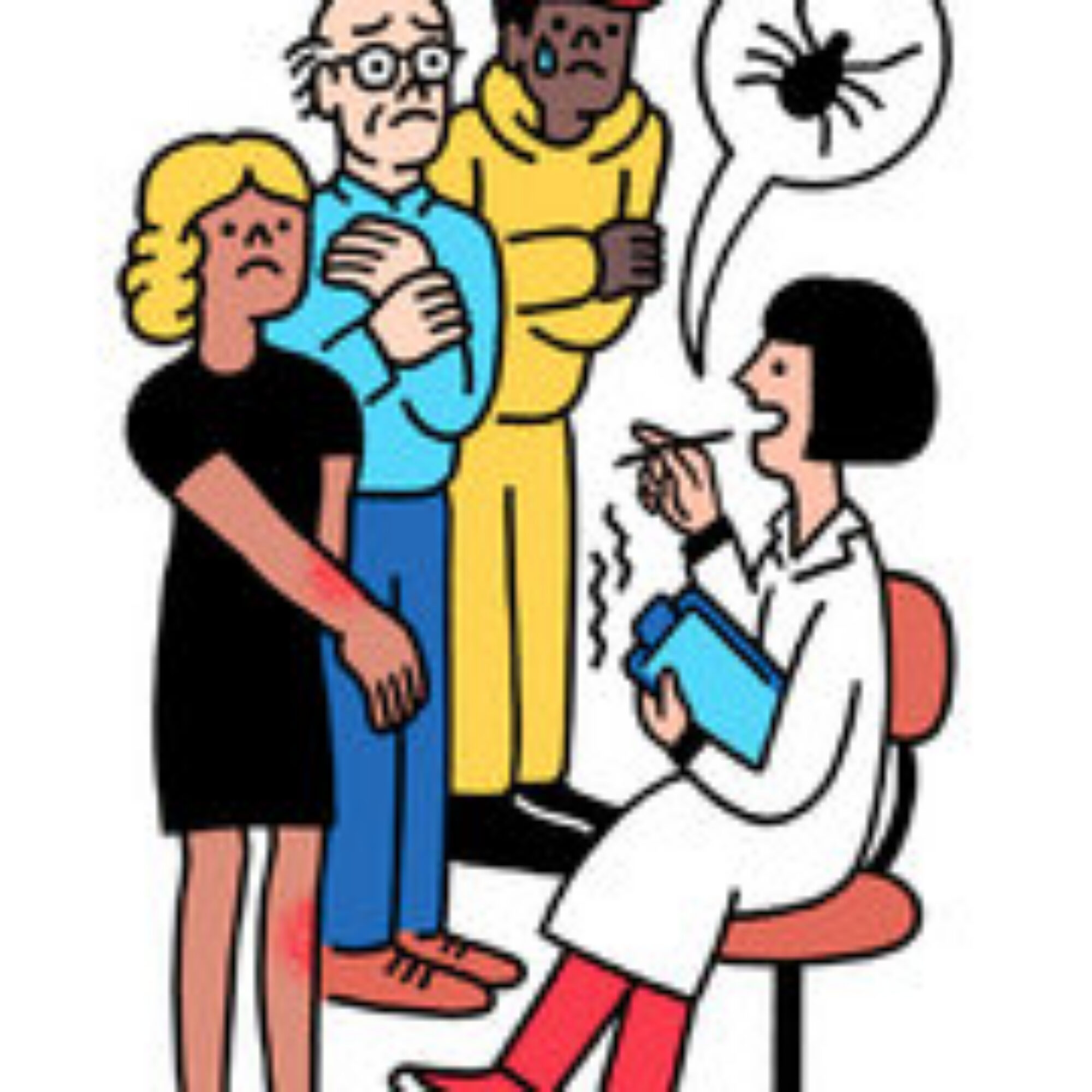
Continuing my series of responses to the New York Times', The Ethicist, without imposing values, here is my take on today's post, "What to Do About a Physician Who May Be a Quack." I live in an affluent community in New Jersey. I am a scientist with a Ph.D. and have worked for a company that researched Lyme disease. I am very involved with our hospital, where the head of the neurology department is a leading expert in Lyme. I consider myself quite knowledgeable about the disease. Here is my problem: There is a family-practice physician in our community who is diagnosing Lyme disease in many of my friends and acquaintances (and their families). The doctor attended an Ivy League college and a well-respected medical…

0 Comments

Who traveled more?

Consider two travelers. One went online, bought a plane ticket to a spot half way around the world, took a taxi to the airport by highway he's been on countless times, got in a plane---a long metal tube he can't see out of---sat, confined, packed with hundreds of others, was fed food from a box, watched movies on a tiny screen, slept fitfully, eventually emerged in an airport similar to the one he left from, took another taxi to a hotel, and slept in a bed someone else made. He left a trail of thousands of gallons of jet fuel, equivalent to a year's worth of driving. The other rode a bicycle under his own power, carrying a tent, sleeping bag, and everything he needed,…

0 Comments

Things it’s a mistake to separate

If you separate the following things, I think you're making a mistake: Work and life If you're trying to balance work and life, I think you made a bigger mistake in separating them, even if you balance them somehow. You don't stop living when you're at work and why would you stop working in "regular" life outside of work if you love what you do for work. You love your work, right? Practice and theory You can try to learn theory just by reading it or having someone lecture it at you but you still have to solve some problems to experience it to learn it. In my experience, understanding theory comes from practicing something until you start seeing the patterns. If you want someone…

0 Comments

It pays to blow your mind sometimes

Flexibility in your beliefs and mental models is a key part of intelligence and leadership. Your beliefs influence how you see the world. Only being able to see things one way confines you to a mental jail and keeps you from solving problems. Think of the 4-minute mile. When everyone believed breaking it was impossible, almost nobody tried. Once the first man did, within months another followed. Now high school boys have done it. Do you want to trap yourself below your potential by limiting your beliefs? I don't know what beliefs' changes will help you improve your life most, but I guarantee that developing the skills of flexibility of beliefs and openness to new ones will enable you to change more and be trapped…

2 Comments

Imagine a world with more empathy: Why I write and teach

My books and courses teach empathy. I used to think of empathy as an intangible, nebulous, even weird concept I couldn't really understand. Now I view it as a skill anyone can learn as well as they can learn to ride a bike or throw a baseball. Improving your empathy skills improves your ability to lead, all your relationships, and your moods. As a teacher, it's incredible to see people develop the skill. I don't see many resources that treat empathy as a skill anyone can develop. Of those I find, they give vague advice on how to improve it. My book and courses teach it with clear instruction and follow-up. I tend to think it will change how we view empathy. One of the…

0 Comments

365 days, flying, and the definition of impossibility

I've been asking people lately When was the last time 365 days passed in your life without flying? Interesting question? Most people I ask can't remember, so it's probably been decades. Several people have commented that it would be "impossible" to go a year without flying. That's an odd use of the word "impossible" that says more about them than you'd think. The Wright brothers first flew in 1903. Before then, most people considered heavier-than-air flight "impossible" based on physics. They may have been wrong, but I get that use of "impossible." 113 years later the direction of impossibility switched, as did the basis. Now people base the impossibility on their feelings. I have no problem with people basing their ideas of possibility on their…

2 Comments

You drink too much water, probably

You've heard to drink eight cups of water a day. I can't count how many times I have. There is zero medical or scientific evidence supporting the advice. None. There never was and never will be. I hear people suggest it so often, feeling they're helping people when they're just repeating uninformed, confused misinformation, I couldn't help but post on it. This site---Snopes---summarizes the science debunking the myth, with citations to the research. I'm not going to tell you to stop repeating the nonsense, but at least now you know you're not helping anyone. EDIT: Here's a New York Times article compiling more research on it, "No, You Do Not Have to Drink 8 Glasses of Water a Day." It begins "If there is one…

0 Comments

Creating more life: more tomatoes! … and the sweetness of vegetables

In "Creating life ... my first tomato!" I wrote about my first gardening experiments and how proud I was of my first tomato growing. That's nothing compared to people who seriously garden, but I have low standards the first time and this is a first time. It turns out it's a cherry tomato. Also, I learned that tomato plants usually need insects to pollinate the flowers and cause them to turn into tomatoes. A friend told me she learned that you didn't need insects, exactly, but their vibrations to cause the pollen to come off the plant. She told me she used an electronic vibrating device I didn't have but I have an electric hair trimmer that vibrates. Below are the results: more cherry tomatoes…

0 Comments

Was where you are once stunningly beautiful?

How far do you have to travel to see stunningly beautiful nature? Not necessarily Grand Canyon or Yosemite level grandeur, but at least something you can't help but pause to take in? Now consider this: imagine where you are now before humans arrived, or even after we arrived but before roads, gas stations, and landfills. How beautiful was it then? Artist renditions of pre-human Manhattan based on archaeological data look beautiful to me. Across the Hudson are stunning cliffs. In the harbor are picturesque islands. Wildlife ran, flew, and swam free. When people arrived, they'd catch their food right out of the water. Even for a long time after they arrived the place was basically similar. I'm not saying life was easy or better. It's…

2 Comments

“I don’t know which I like more: a juicy, ripe peach in season, or the rest of the universe”

After the peach I just ate, I don't know which I like more: a juicy, ripe peach in season, or the rest of the universe. I can't believe people eat candy and junk when fruit and vegetables exist in the world. I used to, so if I think about it I can understand it, but I don't want to any more. Not after letting my taste buds heal from the damage Kraft, Frito-Lay, and so on inflicted on them and came to appreciate freshness, ripeness, and in-seasonness. The flavor in a peach, plum, pear, collard green, cabbage, and other things I eat with no more preparation than washing is shocking, in the best way. Dandelion greens and mustard greens I almost can't keep in my…

0 Comments

Social battles won and lost

If I had to count winners and losers in big social and political battles, I'd write them out this way. I'm not describing my views, just how I'd call it based on the outcomes I see, maybe being melodramatic but I don't think groundlessly. According to massshootingtracker.org, a crowd-sourced database of U.S. mass shootings that defines a "mass shooting" as a single outburst of violence in which four or more people are shot, there have been: 195 U.S. mass shootings in 2016 1230 mass shootings since 1/1/2013 2 days since last mass shooting I think it's safe to say that in the big social battle between people who want more guns and those who want fewer, the more guns side has won. Overwhelmingly. We could…

0 Comments

Have you noticed this distinction in flavors?

Most of my life, I've liked eating apples and I've liked eating potato chips. I would say they both tasted good as a result. Doesn't wanting to eat something mean it tastes good? I'd like to suggest a subtle distinction. Actually, it's only subtle at first. After you realize it, it becomes obvious and changes how you think about food and eat. At least it did for me. It led to me eating more foods I liked and were healthy and losing taste for unhealthy foods. Apples I stand by my feeling that apples taste good. They're sweet and crisp. Note, however, that after you eat one, eating another is hard. Since the next apple tastes just like the first, we seem to have a…

0 Comments

Exercise thoughts

Exercise takes mental effort, not just physical effort. Everyone's mind handles the challenge differently, but some things are common. I find some people feel silly or awkward about their thoughts. More than any other thoughts, I think about fractions of the way finished I am. For example, a lap of Central Park is six miles. I know roughly where each mile is. The first mile is one-sixth, or about sixteen percent. The next mile is one-third, then one-half, then two-thirds, then the next marker has one-sixth left. I generally note when I pass the seventy-percent mark, since in grade school seventy percent meant passing. I also note ninety percent, since that's where you get an A. I do twenty-six burpees every day. Many burpees have…

0 Comments

“Eating healthy is expensive and takes too much time” is wrong

I just read yet another post of someone saying eating healthy takes more time and money. I can't believe how wrong that view is, at least by my experience. Living in New York City means I have access to some of the best restaurants in the world. I can afford to eat at them. Yet my past year's cooking has disillusioned me in them. I find them disappointing. Their food still tastes that same. They're just as convenient. Their food just doesn't taste as good as what I can make at home and cooking, eating, and cleaning at home takes less time than eating out our having it delivered. I like cooking at home first and foremost because it tastes better. Next because it takes…

0 Comments

Cabbage

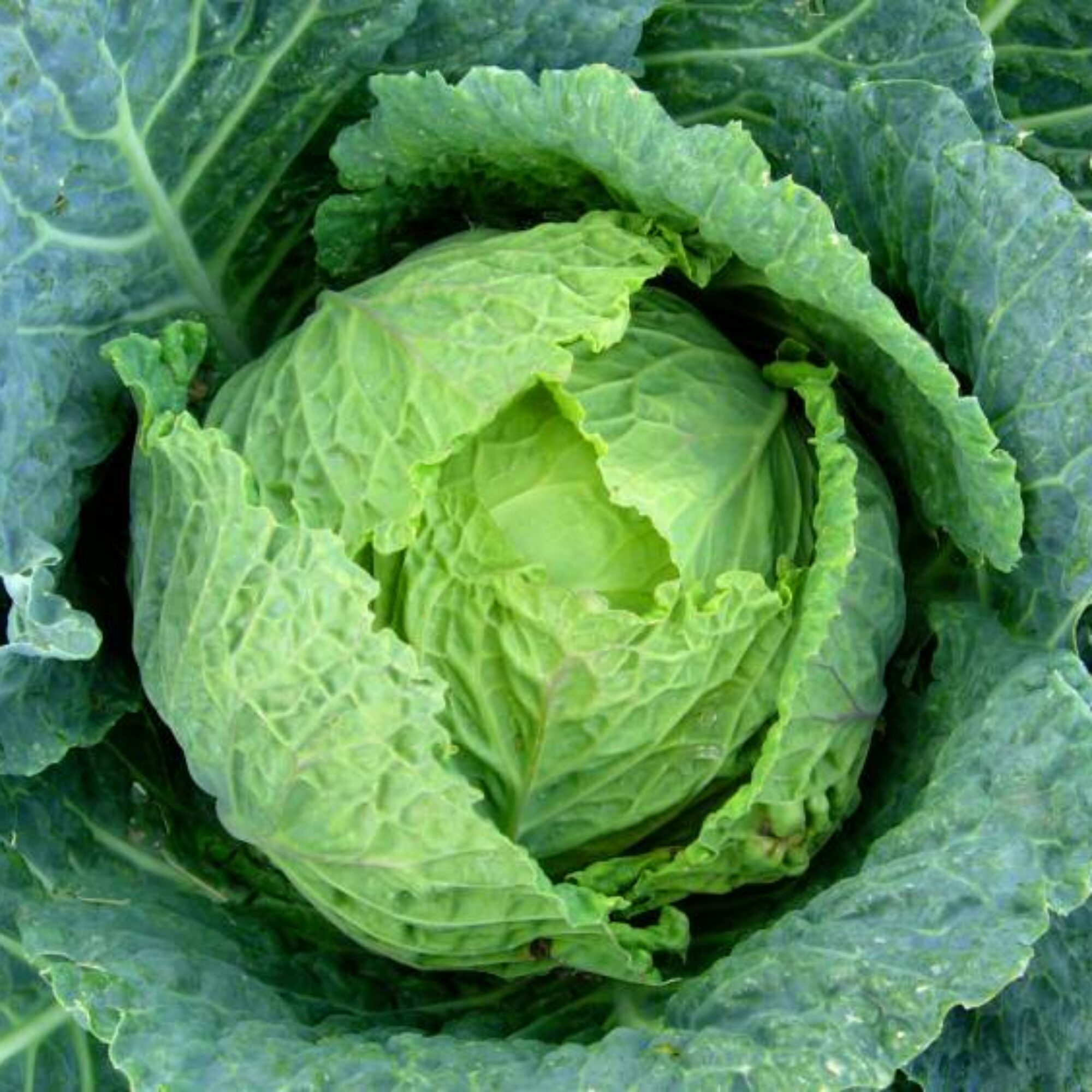
If this doesn't sound like leadership and the rest of what I usually write about, it is. It's about awareness, perception, discovery, and living your life. Increasingly I see food and how you eat as fundamental to leading yourself. Cabbage is delicious! I grew up thinking it was supposed to taste bad. I thought maybe when I grew up I would "acquire the taste for it." I never bought cabbage before last year. Since joining the farm share, where I get vegetables from a nearby farm every week, I've been eating a lot more vegetables. Even when I got it last year as part of the shipment, I would steam it and make something like sauerkraut with it. I didn't know anything else to do…

4 Comments

Use fewer words

Extra words water down what you say. "Go ahead and..." for example. People with lower status use more words to say the same thing. People who feel insecure keep talking and explaining more than they need. I think people are afraid of implying they're equal to people they see above them. Is that what you want for yourself? Speak more succinctly and see if weathering the challenge leads you to grow.

1 Comment

“Resilience: What The New York Times, New Yorker and Most of Academia Got Wrong” (My Inc. story)

My latest Inc.com story "Resilience: What The New York Times, New Yorker and Most of Academia Got Wrong" begins Resilience: What The New York Times, New Yorker, and Most of Academia Got Wrong If you want to be resilient, not just know about resilience, research and the media won't help you. [the story starts with a picture of an athlete covered in mud, struggling to make it] You're covered in mud, exhausted, bruised, and have a long way to go. Disaster or glory? Any leader or entrepreneur knows it's how you look at it. The active among us find ways to motivate ourselves and our teams. Resilience is a hot topic. It's valuable to know to handle challenges and recover from adversity. Those who can…

0 Comments

Everybody cares about the environment until they want to fly somewhere

Everyone says they care about the environment. Talk is cheap. How they behave tells you what they care about. If they choose themselves over something they say they care about, that tells you their priority. I talk a lot about how I try to avoid flying because the pollution it causes hurts people. When people talk about how much more first-worlders pollute more than others, flying contributes a lot. But talk to someone about taking fewer flights and you will get the most self-serving, fatuous reasons why pollution is not an issue for flying. Whatever it takes to deny to themselves how when people talk about how humans are destroying the environment for future generations, and now current generations, they themselves---likely you yourself, since most…

0 Comments

I’ve been catching up my whole life

School Doing a gratitude exercise recently, writing my undergraduate advisor who helped me figure out how to major in physics starting my second semester junior year. Physics is intense so most of my classmates were younger, having known their major since high school. So academically, I was catching up with classmates from when I chose my major. I just finished the major in my last semester and got into Penn for graduate school, so I felt caught up. Graduate school brought a new level of classmates. Many of them came from abroad, where their educational systems had them take only math and science classes from fifteen or sixteen years old. Some of them had taken forty math and science classes. Columbia is a liberal arts…

0 Comments

How to use space travel to make mangoes taste better

This passage interviewing a guy who walked in space, plus some context, can help you enjoy life more, even---especially---if you can't get to space but expect you'd love the experience. From the article: In the 1960s, he says, "astronauts were celebrities. They were invited on JFK's boat. If you wanted to go to space, you had to become Neil Armstrong." Today, however, space-travel companies like Virgin Galactic and SpaceX are creating new opportunities for engineers. I imagine most people would find the Earth from space one of the most beautiful sights imaginable. Many would love being celebrities who get to hang out with Presidents. Astronauts lost their 60s status long ago. Charles Lindberg was once famous for crossing the Atlantic. So was Christopher Columbus. Thousands…

0 Comments

End of content

No more pages to load