Great videos on understanding the economy, environment, and energy

If we could use leadership in any place most, I can think of few places more important than in understanding what is happening with our environment, energy, and how it will affect us, meaning the economy. Some conclude that since before Revelations through Malthus and beyond people have been predicting the end of the world, yet the world hasn't ended, we have solved all problems before and we'll solve whatever problems come. For many reasons I disagree. I'd go into my main reasons, and in a future post I may, but Limits to Growth explains the reasons better than I could. I just finished watching a series of videos by another guy with a science PhD and MBA, Chris Martenson, on the subject of what…

0 Comments

Facebook versus Walden

Walden is one of the great American books on nature and American society. Friends and longtime readers know I like it and much of its message. It criticizes the pick-a-little-talk-a-little-cheep-cheep-cheep-talk-a-lot-pick-a-little-more gossip-about-your-neighbor culture in favor of simplicity and appreciating nature. Facebook is in the news a lot. The opening sentences to Walden made me think about Facebook and the values spending time on it promotes. When I wrote the following pages, or rather the bulk of them, I lived alone, in the woods, a mile from any neighbor, in a house which I had built myself, on the shore of Walden Pond, in Concord, Massachusetts, and earned my living by the labor of my hands only. I lived there two years and two months. At present…

2 Comments

Entrepreneurs saving heating costs and polluting less

After my recent posts on the environment, the Do The Math blog, and the Sustainable Energy book I liked, a friend and Columbia engineer, Marshall Cox, is succeeding in a business plan competition to help reduce waste with a company called Radiator Labs. They have a simple idea that could cheaply reduce a lot of waste and make people's buildings more comfortable. A why-didn't-someone-think-of-that-a-long-time-ago idea you can't imagine someone not implementing. Here's the video. If you think it would help, click to the Energy.gov site and click "like" (not a creepy Facebook like) to help them in the National Clean Energy Business Plan Competition. [youtube]http://www.youtube.com/watch?v=njApaHK2FA4[/youtube] Or maybe you could think of and implement an idea to help reduce waste and pollution too. Marshall and I…

0 Comments
First cherries of spring!
Cherries!

First cherries of spring!

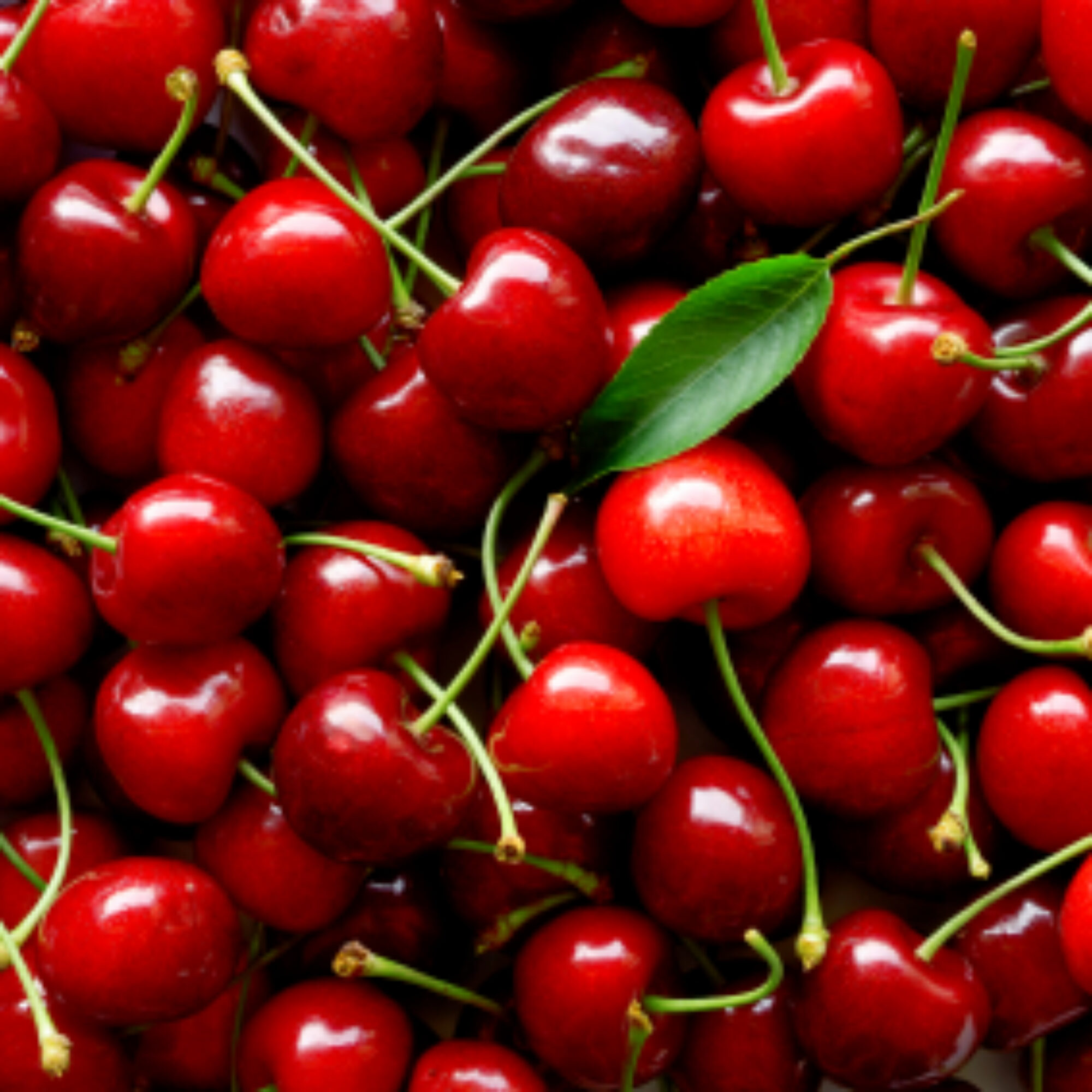
If the first cherries of spring don't warrant a post of their own, I don't know what does. Billions of years of evolution led to them tasting so good -- on their side and mine. After all the amazing tropical fruits of Vietnam and China, I like being reminded of how good some local fruit here can taste. Every spring I eat cherries until they make me feel woozy. Then I know I've had enough. Then I usually have a few more.

0 Comments

The difference between men and women

I'm going to explain a major difference between men and women that will help men understand women and women understand men. It won't explain everything, but it will help you understand the opposite sex better than most perspectives. I'll overstate the point for clarity. You have to figure out for yourself how much to dial it back. And keep in mind, I'm presenting a model. If it works for you, use it. If it doesn't, you don't have to. If you feel compelled to point out the model is wrong or missing data, review what I wrote about models -- I probably agree with you, but that doesn't mean the model doesn't improve your life. You might as well point out that men aren't from…

0 Comments

Problems at the foundation of economics

My physics training tells me economics views some things in a weird way. In physics, if your theory predicts something to happen a certain way and it happens differently, you say your theory is wrong, at least partly, and you work to improve it. Nature is always correct. You try to get your theory to predict what nature does. When economics predicts people to behave some way and they don't, economists often say the people are biased. Or acting in error or irrationally. A physicist would never say an electron was biased. It's weird when I read some economist saying someone whose behavior violates a theory made an error, was biased, or acted irrationally. From my perspective, the theory needs work. Perhaps the model's concept…

0 Comments

The difference between “about science” and science

Somebody showed me yet another artistic representation about discoveries about nature and the people who made the discoveries. I think she expected that since I like science I would like those representations. I saw them as new age-y. For a long time, since I never knew a concrete definition of the term new age, though the Wikipedia page seems to describe it well, I substituted the words "feeble-minded" every time I heard the term. The substitution has never steered me wrong. I don't mean to insult new age thinking. I just genuinely find it feeble-minded and any time I've found it otherwise, the difference hasn't been meaningful. I sometimes do yoga and meditate. I have long hair. People ask me to help motivate them and…

0 Comments

Business people should understand our effect on the environment better than anyone, part 2

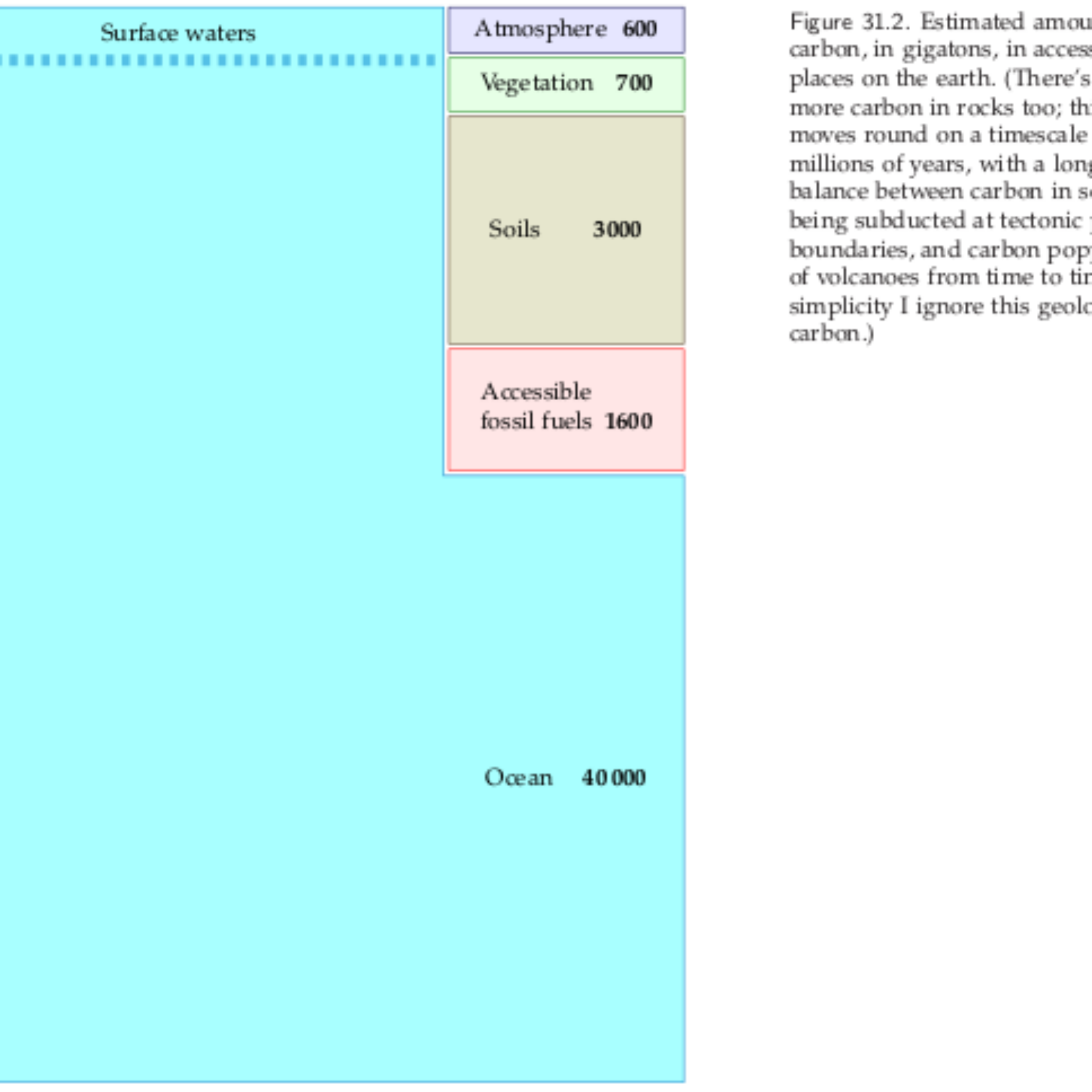
Following up yesterday's post on balance sheets and charts for using and producing energy and reporting our numbers to see if we can make them balance, let's look at carbon flows. People who don't know about carbon emissions, flows, and balance confuse simple ideas with each other. For example, some talk about how volcanoes and cows digestive systems produce tons of carbon and wonder why we should bother changing our practice. When you understand amounts and flows, you don't confuse unimportant effects for important ones, like business people who learn not to be penny wise and pound foolish. Below is a representation of where carbon is on the Earth. It's not exactly a balance sheet, though over time the total numbers have to add up.…

0 Comments

Business people should understand our effect on the environment better than anyone, part 1

People don't realize it, but business people have some of the best the skills to understand our effect on the environment. We should learn those skills from them. I didn't have much (any?) business experience when I co-founded my first company. I couldn't read a balance sheet or know accounting. My science background taught me to understand general and broad patterns, which don't suffice for running a company. Either the check clears or it doesn't. Business school taught me how to manage cash -- accounting, keeping and reading balance sheets, profits and losses, cash flows, and so on. Many people understand how we affect our environment worse than I understood how to understand a business. In other words, they just know information but not how…

0 Comments

One of the best books I’ve read on the environment, our impact on it, and what we can do about it

Imagine living your whole life nearsighted and one day you wear glasses for the first time -- everything going from fuzzy blobs to clear. Or you know after you get out of the pool and your ears have water in them? Imagine you heard like that for your whole life and suddenly they cleared and you could hear properly. Or you've been wearing gloves and for the first time you take them off and feel something directly. That feeling of experiencing something clearly instead of vaguely and indirectly is what reading the book Sustainable Energy -- Without the Hot Air is like. Like the Do The Math blog I've been enjoying and praising, a Cal Tech educated physicist wrote it. This author, David MacKay, has…

0 Comments

A leader and physicist’s view on morality, ethics, and judgment

Wrapping up my series on the counterproductivity of leading with morality, ethics, and judgment, I'll present a model based I got from Einstein. Without all the emotion judgment can grip you with, you can understand the physics model easily. Then you can apply it to the emotional situation. Then I bet you'll improve your life. Before Einstein: the problem of the aether Before Einstein, people created a concept called the aether. They saw light traveling through a vacuum and figured something must be there, so they created a concept. For years they looked for properties of it. No one succeeded. You might remember the Michelson-Morley experiment from high school physics that famously couldn't detect the aether. That was a problem. People were looking for something…

0 Comments

Ecology, economy, population growth and Do The Math

I've written about Do The Math, the blog that takes a quantitative, scientific, and usually non-judgmental approach to understanding our impact on the environment. I posted on it today for the first time about some questions I'd been thinking about for a while but haven't approached in that blog's way. He has written about increasing his efficiency in using energy. I generally applaud that approach and do it myself, but I wonder about its value in the long-term, given population growth. I wrote the following on a thread on conserving energy in the home and persuading others to. Regarding efficiency, while I also try to improve mine, I can't help but put these gains in the context of population growth, mainly driven by having read…

8 Comments

Awesome math book and an anecdote on it

Math and science to me are beautiful -- about the most beautiful things in the world. I hope some of that comes across when I write on them. After a couple posts on a physicist's perspective on our impact on the world -- about an awesome blog (called Do The Math, but it has a science perspective) and an awesome video presentation by the blogger, here's something on math. When I started graduate school in physics at the University of Pennsylvania, I thought I could still study some math on the side. It turns out physics grad school takes all your time (I was also playing Ultimate Frisbee), but I had time to establish a relationship with a professor in the math department. He suggested…

0 Comments

Leadership-based thoughts on economic and energy growth and limits

My closing paragraphs on yesterday's post, anticipating people's reaction, got me thinking about Marshall Goldsmith, one of today's top business thinkers (and a friend). I wrote the following: By now, many of you are probably thinking "we've solved all the problems so far, we'll solve the ones to come" "since before Malthus scientists project doomsday and they never happen, we can ignore this" or "this won't affect me" If so, do the math. Read his blog. At least understand the situation. If he's wrong, show him how. Show me too. I'd love to find out he's wrong. As a scientist, he (and I) would love someone to show him (and me) wrong. That's how we learn. I hope you're open to the same. Now before…

0 Comments

Fantastic video on economic and energy growth and limits

I've written about the Do The Math blog, which looks at the numbers underlying how our economy works, particularly the energy part, which is to say, what drives it. If you think something else drives it, do the math! I think you'll see otherwise. Incidentally, analysis like his is one of the reasons I studied physics (if you didn't know, I got a PhD in the subject) -- to understand nature. Many people think of physics as something that happens in a lab or happened a long time ago with Galileo and Newton, but fundamentally physics studies our natural world. And we are part of nature. Anyone who thinks otherwise -- well, I don't know what to say to them. Anyway, Tom Murphy, the guy…

0 Comments

Yet more perspective on the economy, environment, and ecology

Following yesterday's post on a the blog -- Do the Math -- that covers the economy, environment, and ecology the best I know, along with Limits to Growth, I found another blog that covers a perspective on economics I haven't seen, but consider important. We rely on an economics system based on growth but we live on a finite planet. We will one day reach an equilibrium with our environment. Well, we hope to -- we could enter a perpetual cycle of booms and busts. In equilibrium instead of growth, how do we distribute resources? Mainstream economic theory falls apart, yet it seems obvious to me it can be done. Enter the Center for the Advancement of the Steady State Economy, which promotes understanding economics…

0 Comments

Finally, more great perspective on the economy, environment, and ecology

I've written before on the poor dialog I've seen on the environment, ecology, and economy. Almost everyone seems to promote an agenda or not know what they're talking about. Today I found a blog called Do the Math that compares with the book Limits to Growth in treating those topics thoroughly and intelligently. It covers the issues as I would, but in much more depth than I could, clearly explaining its points and assumptions. Instead of hand-waving, acting on hopes or assumptions, or promoting an agenda, it creates plausible models, varies its inputs, and examines the results. Very refreshing. A physics professor at UC San Diego who got his PhD at Caltech writes it. He calls it Do the Math because he quantifies and calculates…

0 Comments

Finding home by traveling far

My interactions with North Korea have taught me more about myself and my values than anything else in recent memory. I was going to say it taught me more about being an American, but being an American means something different to me today than it used to, and means something different to everyone. I'm thinking about America in the context of North Korea today because I'm in the middle of reading what appears a great work of American writing, or at least a companion to one. Anyone who knows me well knows my ranking of the top such works include the Declaration of Independence, the Constitution, and Thoreau's Civil Disobedience, and King's "I Have a Dream" speech. I haven't yet read Moby Dick and have…

0 Comments

North Korea, the environment, and trees

This NY TImes article on North Korea and its environment, Q. and A.: North Korea’s Choked Environment, reminded me of other routes to create bonds and understanding with North Korea -- nature and science. The article describes the current environmental situation there, some history, and how a conference on it went. Since the Korean War North Korea has lost trees, exacerbated by famine, mismanagement, flooding, and so on. Everybody gains from helping make an environment sustainable. Nearly everybody gains from free exchange of scientific information (people whose power depends on faith and dogma might not see how they do). Anyway, this article points out the usual problems with how North Korea communicates with the rest of the world -- spending resources showing off its leaders…

0 Comments

Spring in New York 2012, part 1

Nearly everyone who has eaten with me in my neighborhood knows Benny's Burritos is my favorite place (though they took my favorite dish off the menu again -- the bowl of vegetarian chili). Spring must be here because they put the outdoor tables out. This patron, Winston, was too cute not to take his picture. Maybe it's not what I normally blog about but can you really complain?

2 Comments

Spring sunshine and breezes

Burpees and rowing indoors are great, but nothing beats getting up early and running in the morning sun with 60 degree light breezes. Freedom -- what life is about. Especially for the first time in the spring. (I still did my daily burpees anyway, of course.)

0 Comments

Psychologists on self-awareness

This quote on self-awareness, from the book Willpower, describes some psychologists' perspectives on self-awareness. I like its perspective. It asks how self-awareness could have evolved and notes the importance of the behavior the mental ability motivates By the way, I recommend the book for its content and engaging writing style, although I prefer the advice and perspective in my willpower series. Read both. (Edit: and my Empathy Gap series. Read all three.) In the 1970s, social psychologists studying subjects in self-conscious situations began to understand why self-awareness developed in humans... When people were placed in front of a mirror, or told that their actions were being filmed, they consistently changed their behavior. These self-conscious people worked harder at laboratory tasks. They gave more valid answers…

0 Comments

Hard projects will be harder than you expect. How to prepare.

[This post is part of a series on empathy gaps. If you don't see a Table of Contents to the left, click here to view the series, where you'll get more value than reading just this post.] A second post from the book Willpower... Leading yourself and others requires foreseeing that doing something hard feels harder, longer, more frustrating, and so on than you expect. At the beginning you say, "I'm strong, diligent, and capable. I'll power through no matter what comes my way." Intellectually anticipating it will be hard doesn't and can't prepare you for the emotional motivation to stop you'll feel in the moment. One of my main reasons for running marathons (as if being cheered on by millions of fans isn't enough)…

0 Comments

E. O. Wilson and evolutionary psychology in the New Yorker

The New Yorker has a piece this week on E. O. Wilson and others on current debate in evolutionary psychology and altruism. Online only has the summary, so you'll have to buy a copy, but I expect quality from the magazine. E. O. Wilson published a fictional story on ants I found enjoyable and educational in the New Yorker himself a couple years ago. I saw Wilson speak and got to talk to him briefly at the New York Academy of Sciences. Things I learned from him have affected my views on motivations and emotions as much as from anyone else.

0 Comments

Amazing representation of the size the universe and everything in it

I love this representation of the size of things in the universe so much I have to link to it, even though I prefer to post things that I created more of. Please check it out and play with it. (EDIT: alternative link) It's an updated, interactive, unnarrated version of the great educational 1968 short film, the Powers of Ten. I think the movie and interactive representation show some of the greatest parts of the beauty we can find of nature. We can find that beauty everywhere we look. [youtube]http://www.youtube.com/watch?v=0fKBhvDjuy0[/youtube] Here is a simpler version of the representation of distance scales. EDIT: Another representation

2 Comments

End of content

No more pages to load