Instead of calling something right, wrong, good, or bad, consider the consequences of your actions

I just watched Zero Dark Thirty and read a bunch of stuff about torture. People often ask about morality and ethics -- is such an action right or wrong, good or bad. Asking the morality of actions and behavior doesn't change them. I don't see categorizing, judging, and  labeling things helping. Calling something good, bad, right, wrong, etc does no more than label them (tomorrow I'll write more on why labels don't change things). I think people think they are making sense of things for themselves and helping others understand, but I don't think it works out that way. Or they think if they label something enough or with enough argument or emotion others will agree. But if one person says something is wrong, someone…

0 Comments

The irony of my last two posts

I didn't notice it until a few people wrote and called me about the awesome Vince Lombardi quote and I looked at the post on my front page followed by the previous day's post on karaoke. So I wanted people to know that the irony, if that's the right word, is not lost on me that I had back to back posts on one of the greatest coaches of all time talking about winning at the highest level versus me taking pride in singing karaoke. It sure looks like someone set his sites low, and I don't mean Vince. Still, I stand by my posts and feel no shame in taking pride in just singing karaoke when others feel horrible when coming in second in…

0 Comments

Thoughts on mourning

News from home comes slowly and filtered here in China. I know only the basic facts about the shooting in Connecticut. I saw Obama's first speech on it, but little more. I don't know much of what happened or how the nation is reacting to it, but I know people are dealing with death and grief. In all my communications on the subject, I've found the most helpful this passage from the ancient book called the Zuangzi (spelled Chuang Tzu in the translation below) on the death of a loved one. Chuang Tzu's wife died. When Hui Tzu went to convey his condolences, he found Chuang Tzu sitting with his legs sprawled out, pounding on a pot and singing. "You lived with her, she brought…

0 Comments

Common objection 5: I have to take care of “real world” issues first

[This post is part of a series on internal objections and blocks and how to overcome them. If you don't see a Table of Contents to the left, click here to view the series, where you'll get more value than reading just this post.] Objection People often say things like I have to take care of “real-world” issues like earning money first. or their bosses, parents, or teachers say things like You have to take care of "real-world" issues first, like getting a job or paying your bills. or they believe things other than “real-world” issues are indulgent. Or they have to be “practical” or “pragmatic.” Alternatively: My job doesn't allow it or give me time to do it. That's fine and well for others…

0 Comments

How to make yourself more confident

Is there anything you do that wouldn't benefit from having more confidence? Even if showing confidence doesn't make a difference, at least having the option to show it helps. Have you noticed that people with more confidence can't do that much more than people without it? They can't lift heavier weights or solve more difficult problems. The guy at the gym who lifts the heaviest weights probably isn't the most confident person there. Alternatively, you can lift weights all you want -- that alone won't make you more confident. So what does? A friend just wrote me that she didn't feel comfortable opening up with most people because she usually felt vulnerable and insecure, but with me she did. It got me thinking. Opening up…

0 Comments

People who claim not to judge and blame often do, illustrated

Early in my blog I posted about how people often don't realize how much they judge and blame, even when they believe they don't. People often say others judge and blame when the others' values differ. When they themselves judge and blame they just think they're calling it like it is. As I wrote then, it’s easy to say you don’t judge or blame when talking about other people’s values that you don’t share. It’s more difficult when talking about your values. I find myself judging and blaming more than I want to, but I think I've decreased a lot. I've written about exercises that worked for me, making me pleasantly surprised at how much judging and blaming less improved relationships. As I've written many…

0 Comments

More on power, leadership, lawlessness, justice, and amnesty

The New Yorker published a piece, "The Fairness Trap," echoing the issues I wrote on yesterday in the context of the U.S. foreclosure and Greek economic crises. In both cases, people's desire to punish people conflicted with clearly better economic solutions, according to the author. He talks about fairness, basically the same concept as justice -- reacting to emotions like outrage, indignation, and self-righteousness over agreeing on criteria to evaluate future outcomes on and trying to achieve the best one based on those criteria. A major problem with fairness, justice, outrage, indignation, self-righteousness, and the like is their subjectivity. We may personify justice as holding scales, but no scale can evaluate when an outcome or behavior is right or wrong, just or unjust, fair or…

0 Comments

How to generate tons of hits and posts and why I don’t do it

Having written daily for a while I've found out great ways to generate lots of hits and to generate online discussion. I don't do them on this page, despite how well they work. The tactics attract people to any media -- press, tv, etc. Title Start with a title with a provocative question the answer is usually no to. Is Obama secretly working with the GOP? Can you make millions without working? What is the government not telling you about healthcare? Subject Express an opinion as indisputable fact on something there is no right answer to or no one knows. Judge. What's hot this season Why Portland is the best city to live in The truth behind global warming Tone Polarize. Moralize. Suggest people can…

3 Comments

You don’t have to accept anyone else’s hierarchy of taste

I posted on another board in a discussion on taste Is classical music better than punk? Museum art better than street art? Haute cuisine better than burritos? Is the op-ed page better than stand-up comedy? Is classical philosophy better than folk wisdom? My life improved when I learned I didn't have to accept anyone else's hierarchy of taste. Most people may consider one better than another, but I've learned to see them as meeting the values of a community better, not being absolutely better. Classical music meets the values of some communities better than punk. But punk meets other communities' values better than classical. I prefer evaluating things by the values of the communities that practice it. Then I appreciate more things and judge less.…

0 Comments

A leader and physicist’s view on morality, ethics, and judgment

Wrapping up my series on the counterproductivity of leading with morality, ethics, and judgment, I'll present a model based I got from Einstein. Without all the emotion judgment can grip you with, you can understand the physics model easily. Then you can apply it to the emotional situation. Then I bet you'll improve your life. Before Einstein: the problem of the aether Before Einstein, people created a concept called the aether. They saw light traveling through a vacuum and figured something must be there, so they created a concept. For years they looked for properties of it. No one succeeded. You might remember the Michelson-Morley experiment from high school physics that famously couldn't detect the aether. That was a problem. People were looking for something…

0 Comments

How do you lead when you can’t stand working with someone?

Yesterday I wrote on how to lead people (yourself or others) you disagree with without judging them. I skipped cases where you felt you could not work with the person under any circumstances. Let's look at such cases today. I'm going to treat these cases strategically. Most cases will be unique at the tactical level so you'll have to figure out how to apply the strategy. If you can't work with someone, YOU have a problem First things first. No matter how bad you think they are, no matter how much evidence you have pointing out their faults and shortcomings, no matter how many other people agree the other person has problems, you have a problem too. I'm not saying they don't have problems too.…

0 Comments

Deciding right and wrong for others and causing them guilt and blame doesn’t help anyone

Prelude: this is about leadership (of others and yourself) Yesterday I outlined an essay on the counterproductivity of deciding right and wrong for people who disagree with you. Today I'm fleshing out the essay. The point of this blog is to help people lead -- to influence others, to work with them in teams, to negotiate with them, and so on -- even when you disagree. So I'll leave deciding right and wrong for others, figuring that, since some issues haven't been resolved for thousands of years, you might not resolve them before you have to deliver on your project (or while you improve your life if we're talking about leading yourself). Successful leaders ship while attract people to work with them. Today's post covers…

0 Comments

On the counterproductivity of motivating people with guilt and blame — aka moralizing

I liked Michael Pollan's Omnivore's Dilemma, which people have suggested I read for years. I like his perspective on food and "food." I don't intend for the following to detract from his overall message, but his chapter 17, "The Ethics of Eating Animals," makes a great example for leadership. Leadership means motivating others, which means changing their emotions. Few of us like when others motivate us with guilt or blame, so I find using leading through those emotions counterproductive. Claiming to appeal to absolute measures of right, wrong, good, bad, or evil tend to polarize. Motivating through guilt or blame with appeal to absolutes has a name: moralizing. Morality, ethics, meddling, being holier-than-thou, self-righteousness, and so on work to some degree, but risking alienating, polarizing,…

0 Comments

Ecology, economy, population growth and Do The Math

I've written about Do The Math, the blog that takes a quantitative, scientific, and usually non-judgmental approach to understanding our impact on the environment. I posted on it today for the first time about some questions I'd been thinking about for a while but haven't approached in that blog's way. He has written about increasing his efficiency in using energy. I generally applaud that approach and do it myself, but I wonder about its value in the long-term, given population growth. I wrote the following on a thread on conserving energy in the home and persuading others to. Regarding efficiency, while I also try to improve mine, I can't help but put these gains in the context of population growth, mainly driven by having read…

8 Comments

See my North Korea strategy talk

Sebastian posted the video of my North Korea strategy talk to his strategy group of entrepreneurs in Beijing. Check it out. The video didn't capture the questions and answers afterward. One of the first questions people asked was if I worried I was overly sympathetic to North Korean decision-makers. My goal is to understand them and their perspective, which people sometimes interpret as support. It bears repeating that understanding doesn't mean support. If you want to influence someone -- what else do we strategize about? -- I consider ignorance of their perspective the least productive starting point. Once you understand that understanding doesn't mean support, you begin to learn about them. Then you can influence them. Come to think of it, a less productive starting…

0 Comments

Words of wisdom for crunch time

Crunch time means you don't have a lot of time, you have a lot to do, mistakes can cost a lot, people depend on you, and likely you depend on other people. People make mistakes. Also, sometimes you have to make decisions based on less information than you'd like. If people dwell on the mistakes or find out later that someone else could have made a better decision, they point fingers. Pointing fingers distracts from the task, takes time from productivity, and hurts morale. My general advice Don't look for blame, but take responsibility for making things better to the extent you can applies particularly well in crunch time. I'll add more specific words that seem to come up in many crunch times. I say…

0 Comments

See Joshua Spodek on understanding North Korea from a business strategy perspective in Beijing

My friend Sebastian organizes Lectures on Strategy, strategy talks to entrepreneurs and other strategists in Beijing, and invited me to speak to his group. If you're in Beijing, see me speak April 22 at 4pm, near the Shuangjing subway stop. RSVP to me or Sebastian (sebastian at sebastianmarshall.com) for details. I'm basing it on my talk at Columbia Business School last month, using mostly the same slides. He plans to record it, so I expect to post video eventually. Edit: Sebastian posted the video of the talk on his site and I wrote a bit about the discussion that followed.

0 Comments

Conquering anxiety (or any other emotion) and getting the job done

I remember learning a great life lesson in managing intense emotions from a time I felt some of the deepest anxiety of my life. I also finished the project on time and on budget in the process. Two weeks from the deadline on a two-year project, I was coming to realize I didn't see how I could complete it. People I told I could deliver had put themselves out for me. I feared making them look bad for having believed in me. When I told them I could do it, I believed I could, but with two weeks left out of two years, I couldn't solve a core problem. I was going to look bad and, worse, make people who believed in me look bad.…

0 Comments

Talking about “truth” or “reality” confuses things

Since writing about avoiding judgmental words like good, bad, right, wrong, evil, and so on, I've loosely kept track of times the words truth, reality, and their derivatives added meaning to a sentence. So far, not once. You might not consider "truth" and "reality" judgmental terms. I won't try to convince you they are, but notice how people use them. They say things like "The truth is that we should raise interests rates," "you have to understand the reality of how we do business," or simply "That's true." You could rewrite the first sentence "We should raise interest rates." Adding "the truth is that" in front implies the speaker is absolutely correct. But no one is. "We should raise interest rates" is no more or…

0 Comments

One way to accept without judging

Here's an old story that comes in many versions (here are seven), but I learned from Srikumar Rao's book Are You Ready to Succeed (text from this blog). An old man lived in a valley with his son, a handsome and dutiful youth. They lived a peaceful life despite a lack of material possessions. They were very happy. So much so, that neighbors began to get envious. One day, the old man used all his savings to buy a young wild stallion. It was a beautiful horse that he planned to use for breeding. The very same day he bought it, the horse jumped the fence and ran off. The neighbors came over to sympathize. “How terrible!” they said. “Good thing? Bad thing? Who knows?”…

0 Comments

Nobody is normal

Sometimes hearing something bluntly makes you realize new things in areas you thought you knew. That happened to me recently. A friend said something that dramatically improved how I thought of people and how I get to know them. The perspective becomes more liberating and improves your relationships more the more you understand it. She said, "Josh, nobody is normal." Nobody is normal! At first I the bluntness caught me off guard. I wanted to disagree. Aren't there lots of normal people? I mean, aren't they the ones who buy the stuff in ads. Isn't that who shops at the Gap? I kept thinking, though. I have plenty of friends, many quirky. I like them for their quirks. The quirks make them interesting. As I…

0 Comments

The Method: exercise to transform yourself

This exercise transforms your life. It has you do the first three steps of the Method, prepares you for the fourth, and sets up accountability with others for step 4. Accountability is how things get done, so it can help a lot. I do this exercise halfway through my seminar. People get deeply into it, even after sitting in a room for five or six hours. When we review the exercise people sometimes tell me it gave them their first experience ever sharing some problems, then finding themselves surprised to find simple solutions to them. Requirements (or good-to-haves) You can do the exercise alone, but I prefer to group people into three to five. Everyone should know the Model and the Method. Preferably you've prepared…

0 Comments

The Method: exercise in new beliefs

The Method's steps 2 and 3 have you conceive of new emotions, environments, beliefs, and behaviors for emotional cycles you want to change. The challenge How do you pick the new beliefs to crowd out the old ones? Choosing the opposite to existing beliefs rarely helps. You end up debating yourself in your head. Discussion I find complements to beliefs crowd out existing ones more effectively. For example, I found an effective alternative to rising anger is not to try to be calm, but to be curious about the situation causing the anger. The curiosity crowds out the anger and I get calm anyway. I've found effective complements to many emotions, though curiosity works well for many situations for me. When I feel frustrated, impatient,…

0 Comments

The Method: exercise in knowing yourself

Many people feel they can't change themselves or that doing so is fake. Here is a quick exercise to show you how easily you can change yourself because you do it already. Step 1 First answer the question "Who are you?" by describing yourself with three or four adjectives. I know you're just reading a web page, but if you have pen and paper or can open a window on your computer to write in, write a few adjectives that describe you before going to the next step. No one will hold you to them, so you don't have to pick the best ones. Just a few. Step 2 Now imagine yourself in a job interview and answer the same question. Write a few adjectives…

0 Comments

The Method: long term

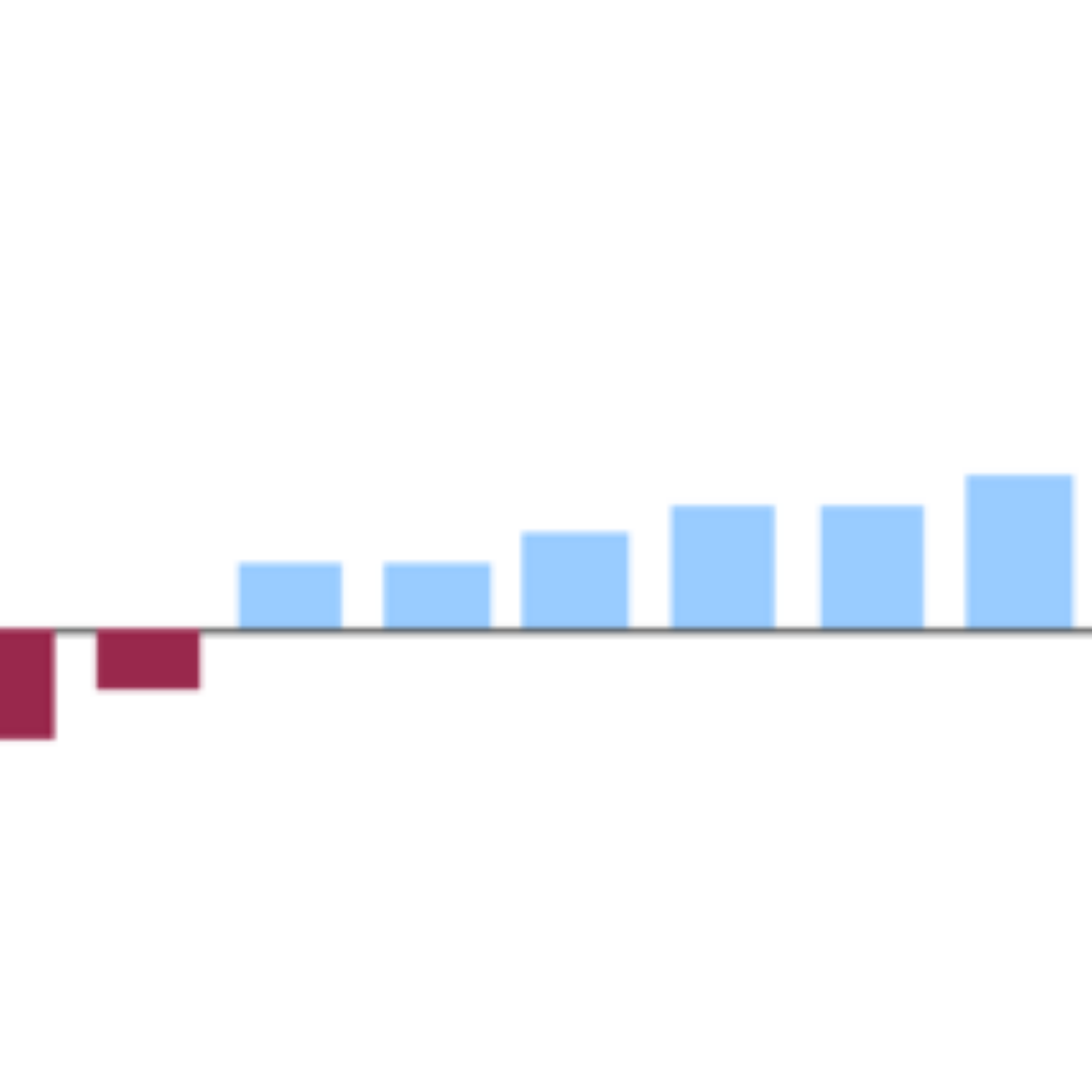
If you lined up all the cycles in your life by the amount of reward they brought you, you might represent them like this. The low bar on the left might represent something you can never get right -- like feeling helpless about your weight if you're overweight or about a big debt you have to repay. The high bar on the right might represent the joy you feel for your favorite hobby or spending time with your best friend. I'm only casually representing things. I don't know how objectively you can measure the amount of reward, but in general we know some parts of our lives bring us great joy, others misery, and others in between. I think the graph above illustrates that. According…

0 Comments

End of content

No more pages to load