The Method: improving your life as much as you want is all based on one cycle

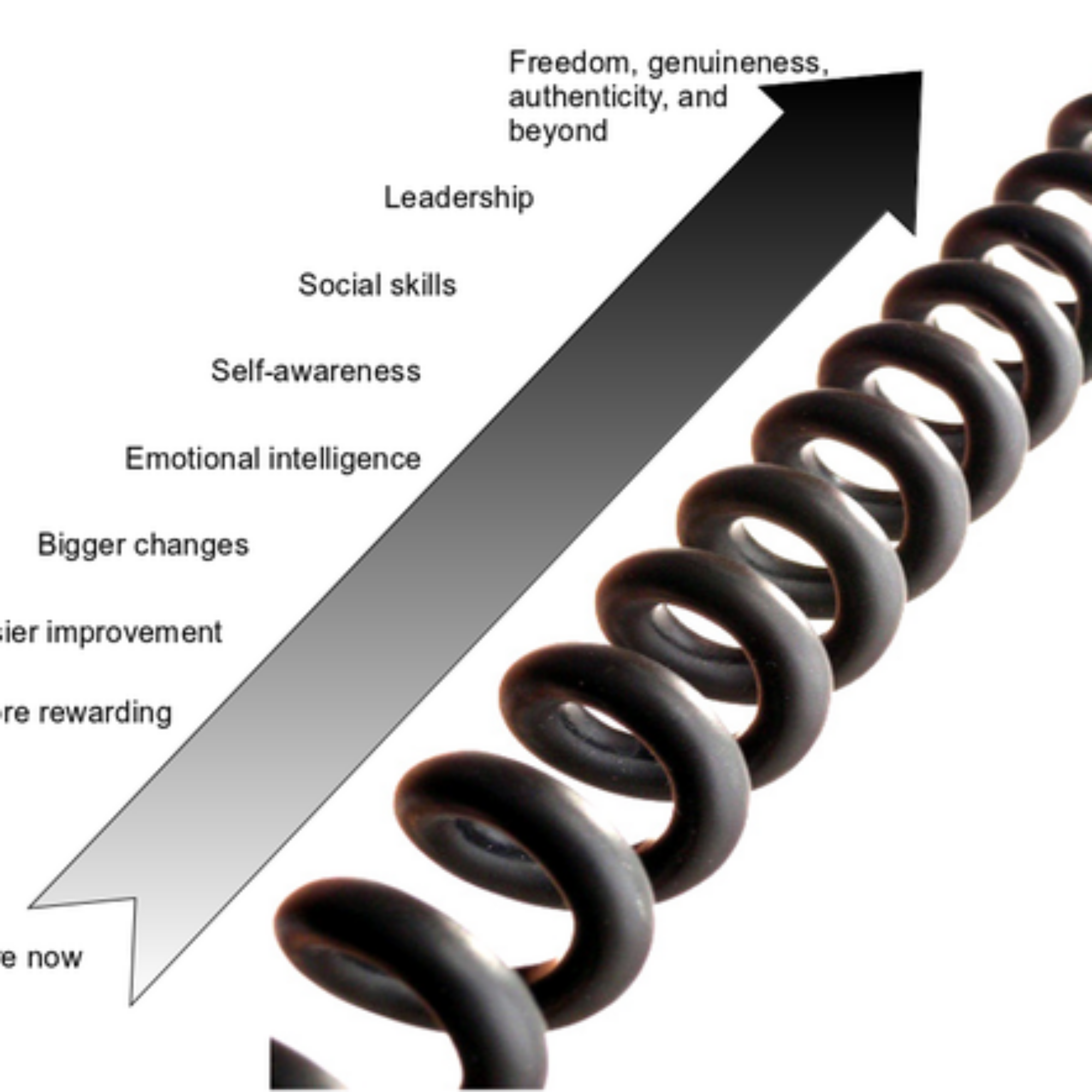
[This post is part of a series on The Method to use The Model -- my model for the human emotional system designed for use in leadership, self-awareness, and general purpose professional and personal development -- which I find the most effective and valuable foundation for understanding yourself and others and improving your life. If you don't see a Table of Contents to the left, click here to view the series, where you'll get more value than reading just this post.] As the Tao Te Ching says, A journey of a thousand miles begins with one step. Yesterday's post described and illustrated the long-term potential of improving your life through self-awareness -- freedom, genuineness, authenticity, and more. Remember, all this life improvement rests on one…

0 Comments

The Method: long-term growth from many transformations

[This post is part of a series on The Method to use The Model -- my model for the human emotional system designed for use in leadership, self-awareness, and general purpose professional and personal development -- which I find the most effective and valuable foundation for understanding yourself and others and improving your life. If you don't see a Table of Contents to the left, click here to view the series, where you'll get more value than reading just this post.] Yesterday's post showed how one transformation -- that is, one application of the Method -- not only cycles you back to start a new transformation, it also changes you, which you can see from another perspective. You can think of one transformation as one…

0 Comments

The Method: illustration of implementation stages

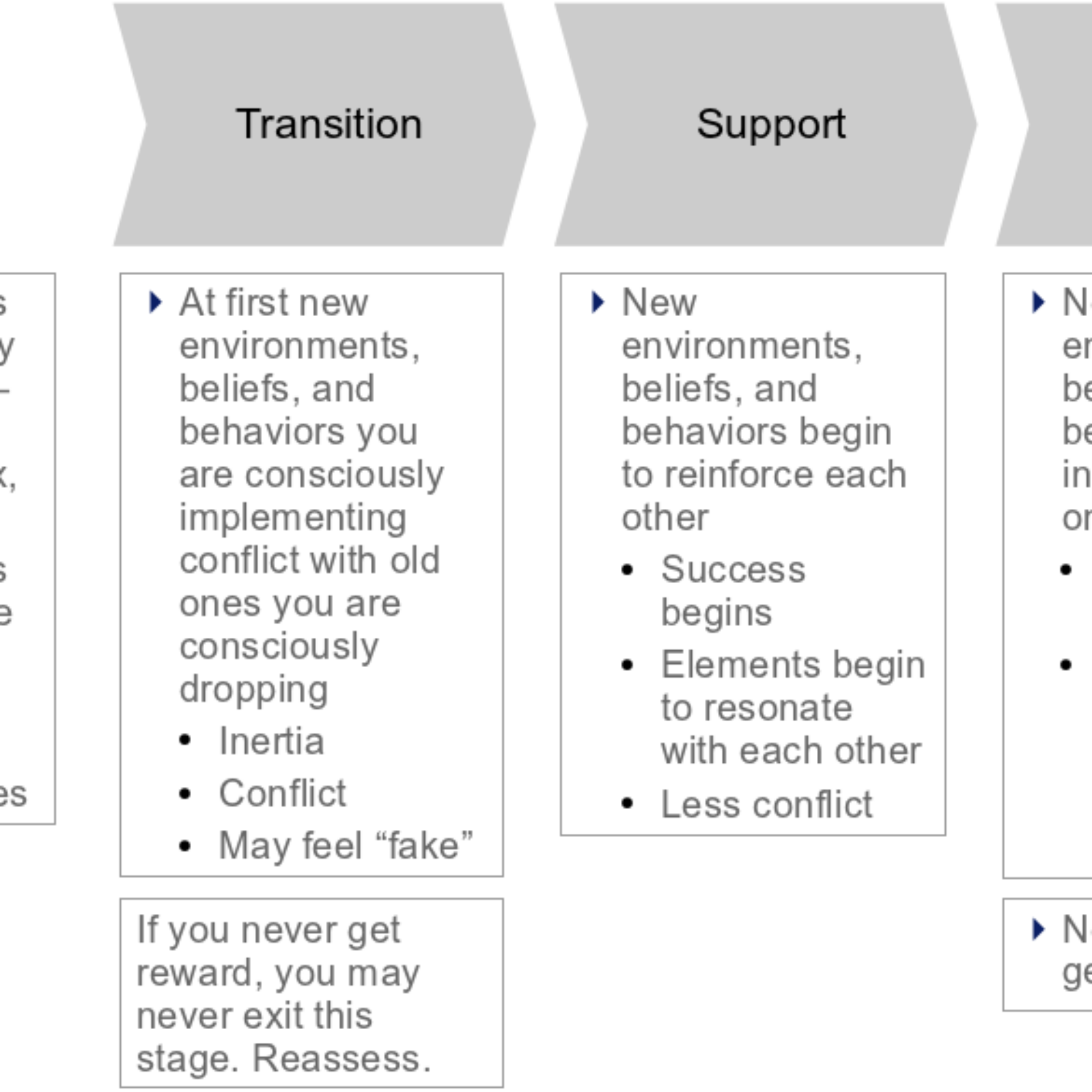
[This post is part of a series on The Method to use The Model -- my model for the human emotional system designed for use in leadership, self-awareness, and general purpose professional and personal development -- which I find the most effective and valuable foundation for understanding yourself and others and improving your life. If you don't see a Table of Contents to the left, click here to view the series, where you'll get more value than reading just this post.] Here is an illustration of the implementation stages of step 4 of the Method. Overview Transition (also a caveat) Support Regular life

0 Comments

The Method from another perspective

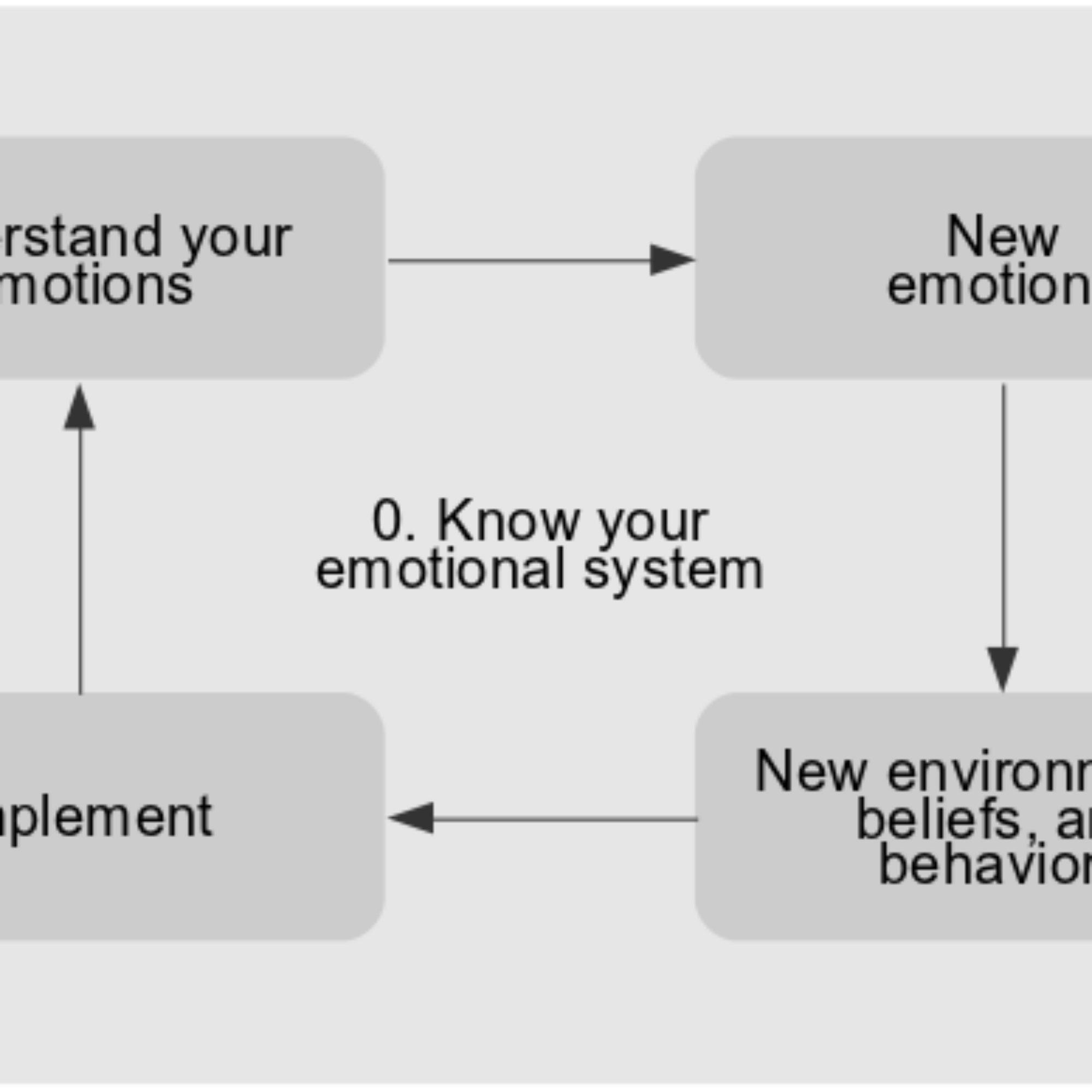
[This post is part of a series on The Method to use The Model -- my model for the human emotional system designed for use in leadership, self-awareness, and general purpose professional and personal development -- which I find the most effective and valuable foundation for understanding yourself and others and improving your life. If you don't see a Table of Contents to the left, click here to view the series, where you'll get more value than reading just this post.] Recalling the illustration of the Method from a couple posts ago, I present the Method as a four-step cycle (steps 1-4), grounded in knowing your emotional system (step 0). Know your emotional system Understand your relevant emotional cycles and constraints (plus an extra note…

0 Comments

The Method: implementation stage 1: a caveat

[This post is part of a series on The Method to use The Model -- my model for the human emotional system designed for use in leadership, self-awareness, and general purpose professional and personal development -- which I find the most effective and valuable foundation for understanding yourself and others and improving your life. If you don't see a Table of Contents to the left, click here to view the series, where you'll get more value than reading just this post.] I should note a caveat for the transition stage. Since this stage involves conflict, feeling fake, and overcoming inertia, you may use a lot of willpower. How do you know you’re moving in a direction that improves your life? How do you know you…

0 Comments

The Method: implementation stage 3: regular life

Eventually a transformation’s new environments, beliefs, and behaviors synchronize completely with each other. The cycle you changed brings the emotions you want and reward. At this stage this cycle becomes a part of your regular life, a life now more rewarding for the change. You haven’t replaced the old you. In circumstances where the new you fits you crowd out the old part of you. In situations where the old you belongs, the old you comes out. In my life, for example, by the time I was a full-time CEO of the company I co-founded, I no longer identified primarily as a physicist. Still, when I met with my old classmates or professors, I could return to identifying myself as a physicist (though less able…

0 Comments

The Method: implementation stage 2: support

[This post is part of a series on The Method to use The Model -- my model for the human emotional system designed for use in leadership, self-awareness, and general purpose professional and personal development -- which I find the most effective and valuable foundation for understanding yourself and others and improving your life. If you don't see a Table of Contents to the left, click here to view the series, where you'll get more value than reading just this post.] Once the elements of a transformation start supporting each other the transformation starts to feel like it will take root. You may still feel some inertia, fakeness, and conflict between the old and new you, but decreasingly. Examples of elements supporting each other include…

0 Comments

The Method: implementation stage 1: transition

[This post is part of a series on The Method to use The Model -- my model for the human emotional system designed for use in leadership, self-awareness, and general purpose professional and personal development -- which I find the most effective and valuable foundation for understanding yourself and others and improving your life. If you don't see a Table of Contents to the left, click here to view the series, where you'll get more value than reading just this post.] You can usually do the preparation stages of transforming a part of your life easily since you can do them yourself, without someone else. Working with other people usually makes things more complex. Still, you generally do benefit from involving others. Because they have…

0 Comments

The Method: implementation overview

[This post is part of a series on The Method to use The Model -- my model for the human emotional system designed for use in leadership, self-awareness, and general purpose professional and personal development -- which I find the most effective and valuable foundation for understanding yourself and others and improving your life. If you don't see a Table of Contents to the left, click here to view the series, where you'll get more value than reading just this post.] We've covered the preparation stages of transforming a part of your life to bring more reward by choosing environments, beliefs, and behaviors based on your interests. Of course your life changes all the time whether you intentionally cause those changes or not. Using the…

0 Comments

The Method: summary of one cycle (with diagram)

We’ve now covered the examples and preparation stages of how to implement the Method. Here is a diagram summarizing these steps Know your emotional system Understand your relevant emotional cycles and constraints Conceive of new emotions Conceive of new environments, beliefs, and behaviors Implement the environments, beliefs, and behaviors

0 Comments

The Method, step 4: Implement the environments, beliefs, and behaviors

[This post is part of a series on The Method to use The Model -- my model for the human emotional system designed for use in leadership, self-awareness, and general purpose professional and personal development -- which I find the most effective and valuable foundation for understanding yourself and others and improving your life. If you don't see a Table of Contents to the left, click here to view the series, where you'll get more value than reading just this post.] Now, with direction, boundaries, and goals set from steps 0, 1, 2, and 3 it's time to act. You can do the earlier steps quickly -- with practice maybe a few minutes. You may even come to do them automatically without conscious effort. Step…

0 Comments

The Method, step 3: conceive of new environments, beliefs, and behaviors

[This post is part of a series on The Method to use The Model -- my model for the human emotional system designed for use in leadership, self-awareness, and general purpose professional and personal development -- which I find the most effective and valuable foundation for understanding yourself and others and improving your life. If you don't see a Table of Contents to the left, click here to view the series, where you'll get more value than reading just this post.] Now, with direction and boundaries set from steps 0, 1, and 2, we plan what we will do. Step 3 is to think of new environments, beliefs, and behaviors that will create the emotions you thought of in the last step consistent with your…

0 Comments

The Method, step 2: conceive of new emotions

[This post is part of a series on The Method to use The Model -- my model for the human emotional system designed for use in leadership, self-awareness, and general purpose professional and personal development -- which I find the most effective and valuable foundation for understanding yourself and others and improving your life. If you don't see a Table of Contents to the left, click here to view the series, where you'll get more value than reading just this post.] Step 2, the Method's first active step, is to pick your direction, the key word being your. You will transform yourself based on your emotions, based on your wiring, meaning based on your values, meaning, and purpose. Not anyone else's. You already clarified your…

0 Comments

The Method: steps 0 and 1, awareness

[This post is part of a series on The Method to use The Model -- my model for the human emotional system designed for use in leadership, self-awareness, and general purpose professional and personal development -- which I find the most effective and valuable foundation for understanding yourself and others and improving your life. If you don't see a Table of Contents to the left, click here to view the series, where you'll get more value than reading just this post.] The Method's first two steps -- knowing your emotional system and understanding your current emotional cycles -- involve little action. They cover awareness. The appeal to act on a situation you want to change quickly and decisively can tempt you. I advise against it,…

0 Comments

The Method, step 1: understand your current emotional cycles

[This post is part of a series on The Method to use The Model -- my model for the human emotional system designed for use in leadership, self-awareness, and general purpose professional and personal development -- which I find the most effective and valuable foundation for understanding yourself and others and improving your life. If you don't see a Table of Contents to the left, click here to view the series, where you'll get more value than reading just this post.] The Method's zeroth step was a once-per-lifetime step. Once you understand your emotional cycle once, you can remember it all your life. Step 1 begins the preparation for each situation: to understand your current emotional cycle. That means understanding its elements -- the relevant…

0 Comments

The Method, step 0: know your emotional system

[This post is part of a series on The Method to use The Model -- my model for the human emotional system designed for use in leadership, self-awareness, and general purpose professional and personal development -- which I find the most effective and valuable foundation for understanding yourself and others and improving your life. If you don't see a Table of Contents to the left, click here to view the series, where you'll get more value than reading just this post.] Today’s post will be brief. The Method’s zeroth step is to know your emotional system. I call it step zero instead of step one because you only have to do it once in your life. All the other steps you do once per transformation,…

0 Comments

The Method, step by step

This post is better covered by the series on The Method, where you'll get more value than reading just this post. Please click there instead. (I'm keeping the rest of this post for posterity). This post begins describing the Method, which is how to use the Model to lead yourself and others and to improve your life, in particular, using the elements you have voluntary control over. The Method, step by step Before anything else, the Method begins with you knowing your emotional system -- the foundation of self-awareness and emotional intelligence. You only have to learn it once in your life. From then on you may refine it or refresh your memory, but you won't have to re-learn that you have a consistent, reliable,…

0 Comments
The best book for understanding North Korea
The best book to understand North Korea

The best book for understanding North Korea

North Korea fascinates us. Its leaders, their posturing and militarism, their economics, and more all fascinate us. Their belligerence puts them in the news often. Yet we know little about them. More than fascinating, they are globally important. They are a nuclear power with the world's fourth largest military and most militarized border. Yet the media, mainstream and otherwise, mystifies them more. No one explains how or why anyone could act like its leaders and population do. Until now. I wrote Understanding North Korea: Demystifying the World's Most Misunderstood Country to explain the situation there. Many books and articles cover border skirmishes, human interest stories, the apparent oddness of their leaders, breaking news, and the like. None before gave the big picture. Understanding North Korea…

0 Comments

Mass crying over Kim Jong Il’s death: Learning about others teaches you about yourself

Many people have commented on the video of North Koreans crying over the death of Kim Jong Il. You've probably seen it but, if not, here it is. I'll have you compare it with videos more familiar to our culture, then ask a few questions hopefully to increase your self-awareness, authenticity, and freedom. [youtube]http://www.youtube.com/watch?v=pSWN6Qj98Iw[/youtube] It's been viewed almost seven million times in less than a week. Typical reactions point out how crazy or weird they are. The crazy "they" could be the people in the video, whom they accuse of inauthentically crying or the leaders who somehow force the people to cry. I'd like to look at these assumptions of inauthenticity and forcing. A common theme of my writing about North Korea is to point…

0 Comments

Comedian Chris Rock can solve all your relationship problems

Here is the solution to any relationship problems you have. Whatever problems you and any significant others have, just watch Chris Rock videos online until you find him joking about exactly your issue, realize what you thought was the most important problem in the world you'd never get over is a trivial thing everyone goes through, laugh about it and how unjustifiably self-important you felt, and get over it. Then go back to enjoying life. And stay humble. [youtube]http://www.youtube.com/watch?v=M902ZJHzaLE[/youtube] Sometimes you have to watch a couple other comedians to get to it, but the principle works.

0 Comments

The Method: three exercises to transform your life, part 3

The third exercise comes in two parts also. First you think of emotions you'd prefer to the ones listed in the previous exercise. Second you think of environments, beliefs, and behaviors to create those emotions. You think of the emotions first because they are the roots of your values and what creates meaning and purpose. By listing what you can't or won't do in the previous exercise, you assure yourself you won't do anything you consider wrong or don't want to. By starting with your emotions, you know you'll be doing things consistent with your values, meaning, and purpose. The exercise part 1 -- conceive of new emotions Write new emotions that you would prefer to get from this part of life you want to…

0 Comments

The Method: three exercises to transform your life, part 2

Yesterday's exercise was to list a couple areas in your life you want to improve. Today's exercise is to view the areas from the perspective of the Model. Exercise 2 Part 1 Write on a piece of paper in four different lines, the words "Old environment:," "Old beliefs:," "Old emotions:," and "Old behaviors:," like so: Old environments: Old beliefs: Old emotions: Old behaviors: Then for each area on your life you want to improve, fill out each of the four elements of the relevant emotional cycles. The idea is to break up something complex into simpler parts that are easier to understand and show the structure of how those parts interrelate. Running a marathon Old environment: Playing other sports, bars, in front of tv Old…

0 Comments

The Method: three exercises to transform your life, part 1

You want to improve your life. I'm about to present three great exercises that help -- you could say one exercise in three parts. My seminars cover them over the course of the first day, with a fourth follow-up if time permits (which I link to at the end of the third exercise here). People report finding them deceptively simple for how much they help. They create a structure that makes it easy to understand otherwise complex and emotionally laden parts of your life. They also build cumulatively. They also start great conversations and form bonds between the people who do the third part together. They take little effort, though sometimes people will spend a long time on them because they can get you thinking…

0 Comments

Audio interview: best part of visiting North Korea?

In today’s interview, my business partner, Christina Black, asked me my best part of visiting North Korea. Small interface: [audio:https://joshuaspodek.com/wp-content/uploads/2011/11/north_korea_greatest_lesson.mp3] Large interface:[videofile]https://joshuaspodek.com/wp-content/uploads/2011/11/north_korea_greatest_lesson.mp3[/videofile] — EDIT: I included much of this post and this series on strategy (edited and polished) in my ebook, Understanding North Korea: Demystifying the World’s Most Misunderstood Country. I wrote the book to help increase understanding, communication, and freedom.

0 Comments

How to bring happiness and emotional reward to your life by analogy with pleasure, part 3

[This post is part of a series on creating happiness and reward by understanding pleasure. If you don't see a Table of Contents to the left, click here to view the series, where you'll get more value than reading just this post.] Two days ago and yesterday I described how seeing how easily you can create physical pleasure in your life shows how easily you can create emotional pleasure -- as much as you want. Today I'll go a step further -- how to create as much reward as you want. Remember, emotional reward is the feeling that everything in the relevant cycle syncs with everything else. It encompasses emotional and physical pleasure and more. Though in most cases emotional reward feels better and more…

0 Comments

End of content

No more pages to load