Do you turn on the light when you wake up at night to go to the bathroom? Why it matters.

One of the more common line of questions people ask me when they learn I disconnected my apartment from the electric grid is what I do for light. Before I share what I share with them, if you're curious, you can find out easily: don't turn your lights on this evening. If you do the simple task of not dying, you'll find an answer. I'm no do-it-yourselfer. If you just don't die, you'll find more relevant answers for yourself than whatever I say. The more nights you do it, the more answers you'll find. Some nights you might talk with your family more. Others you might go out to volunteer. Others you might go to sleep earlier or meditate. You might post to your blog,…

0 Comments

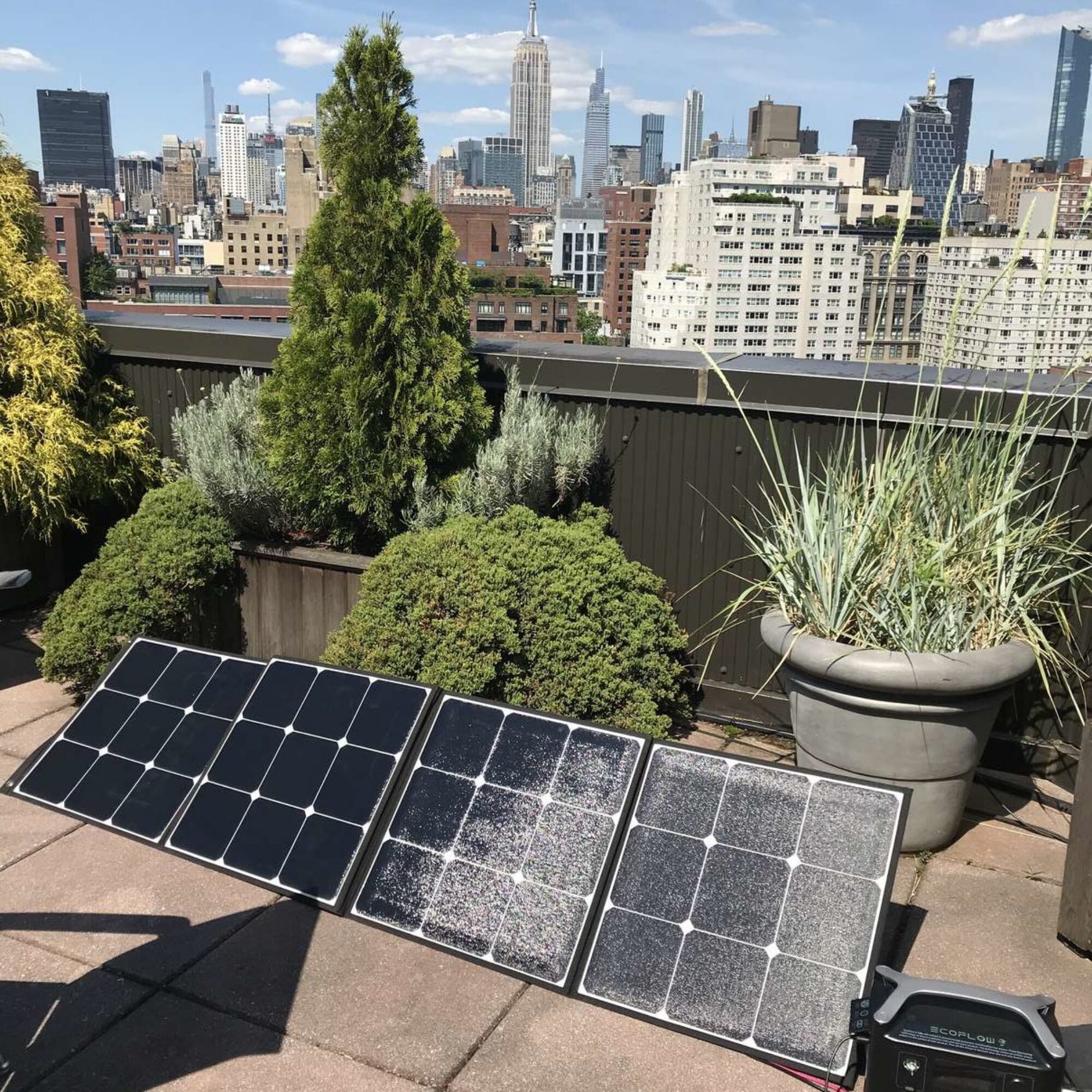
Darn: My building’s 5-month project denying roof access has extended to 13 months.

My building's routine maintenance project that began keeping residents from roof access last March is now extended to this March, as my building manager informed residents earlier this month. The delays mean I have to keep walking ten or fifteen minutes each way to Washington Square Park to charge. Argh. The building manager wrote me in early December, "The plan is for the work to be completed in December." So she knew at the time it they wouldn't finish that month, but didn't communicate openly with me. I don't like when people are slippery and deceptive like that. I don't see an alternative to keeping charging in the park. I could reconnect, start using grid power, and pay to hurt innocent people, but I prefer…

2 Comments

Asymptotically approaching a finite number isn’t approaching zero, so we can increase efficiency forever and still increase pollution forever too.

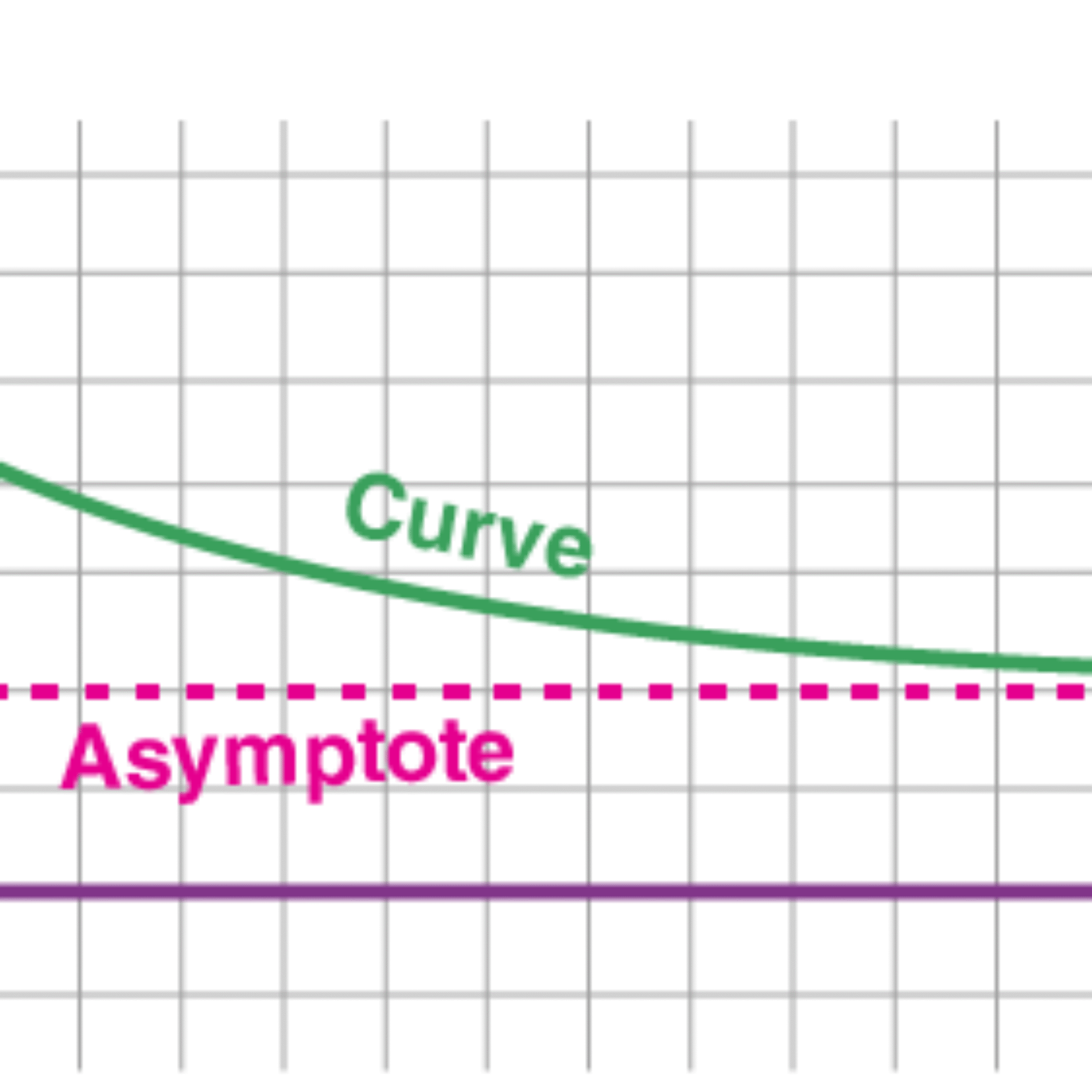
Increasing efficiency forever can't reach zero waste for many physical processes, but I think people feel otherwise. Or fantasize. When you hear about airplanes being made more efficient, or electric vehicles, computers, or whatever, do you think that if we keep making them more efficient, they'll eventually not pollute? In the graph below, where the green curve approaches the horizontal line, it will lower forever but never drop below a certain amount. This pattern happens when processes have physical limits, like flying, cooking, or heating. You can make them forever more efficient but they'll never require zero energy or produce zero waste. Then if you multiply their use by an exponentially growing economy or number of people using them, their total pollution continues to increase.…

1 Comment

Hear me on the Power Hour from the Heritage Foundation

Jack Spencer has been a guest on my podcast three times. Now I've been on his, and I think you'll agree it was a fun, engaging conversation. I can't tell you how much I've learned from him. For one thing, when I started doing the Spodek Method with him on my podcast, I enjoyed his sharing about nature so much, I didn't get past the first couple steps. I had to keep listening to what he shared. Most people I know who call themselves environmentalist view Jack's employer, the Heritage Foundation, as the enemy or something like it. They would want to defeat it, not talk to them, and would view people in it with suspicion. Yet I found his appreciation for and love of…

0 Comments

We need the words of Thomas Jefferson and work of Robert Carter III. Instead we have the words of Carter and acts of Jefferson.

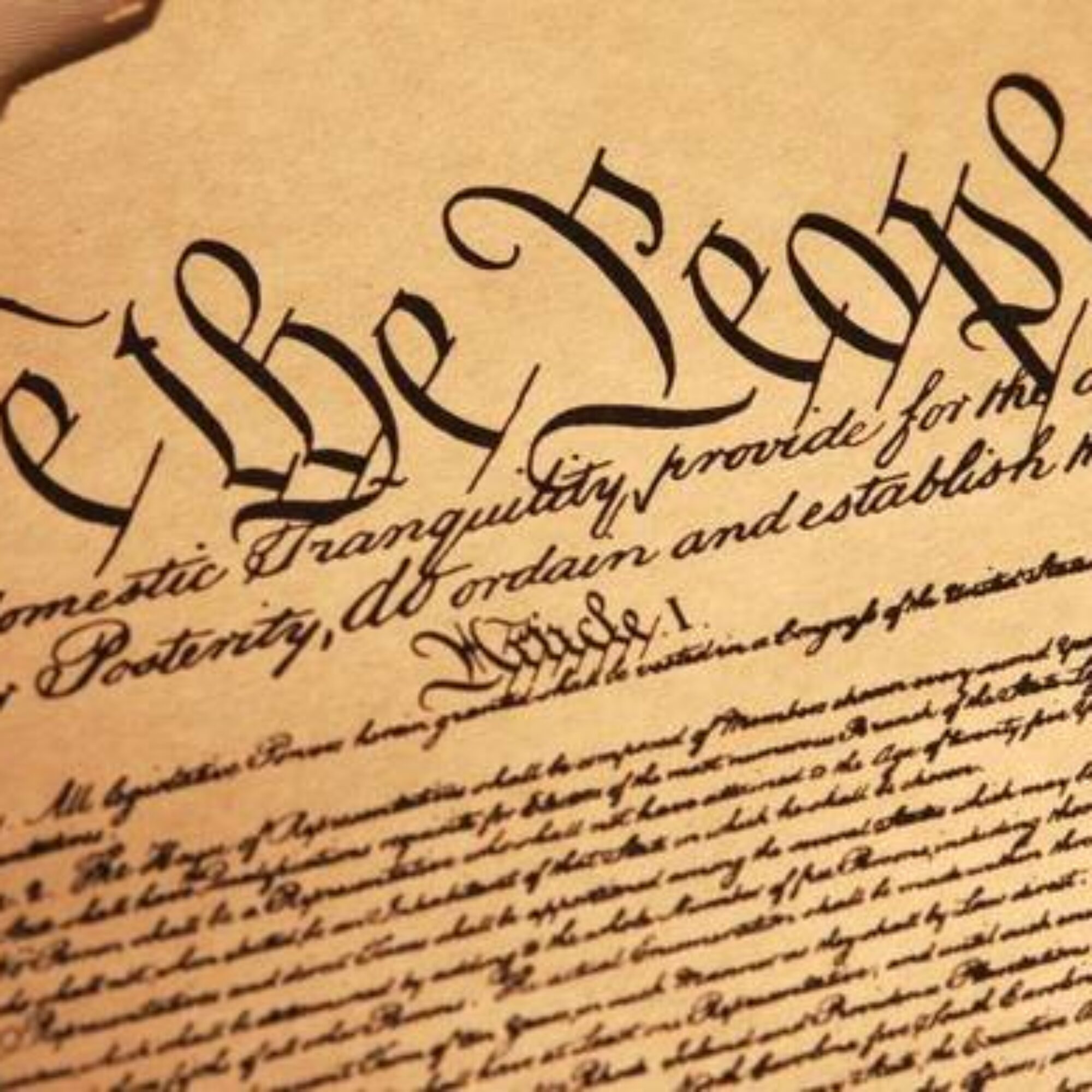
Thomas Jefferson wrote some of the most inspiring words on freedom and liberty, yet kept his slaves. To this day, people say as a result: He didn't mean all men are created equal or he wouldn't have done what he did. He did, so he must have meant all white men are created equal. The United States Constitution It's difficult to impossible to lead without credibility or integrity. Jefferson undermined both by violating the values he claimed. Meanwhile, Robert Carter III freed his slaves, but said nearly nothing publicly about it, even to his classmate, Jefferson. When Carter ran for elections, he lost. Every environmentalist with a prominent voice today is at best like Jefferson. They talk about sustainability but don't act it, so they…

0 Comments

802: Lorraine Smith, part 2: The hidden, dirty secrets of corporate “sustainability” work

I start by sharing how much value I get from participating in Lorraine's weekly coaching group. Then she shares her path to coaching on sustainability. She worked in the heart of the corporate sustainability accounting and reporting. She saw it mostly did nothing and often exacerbated the situations it purported to solve. She has created a practice that exposes and helps fix these problems. I ended up coaching her back in asking her to clarify what a potential client would see in her work to start working with her. As I wrote before, Lorraine understands our environmental situation more accurately than nearly anyone. We have to change our culture. Transforming leaders of industry is necessary if we expect to change the system. Lorraine's home page

0 Comments

This week’s selected media, January 12, 2025: Nuclear Revolution, Powering America

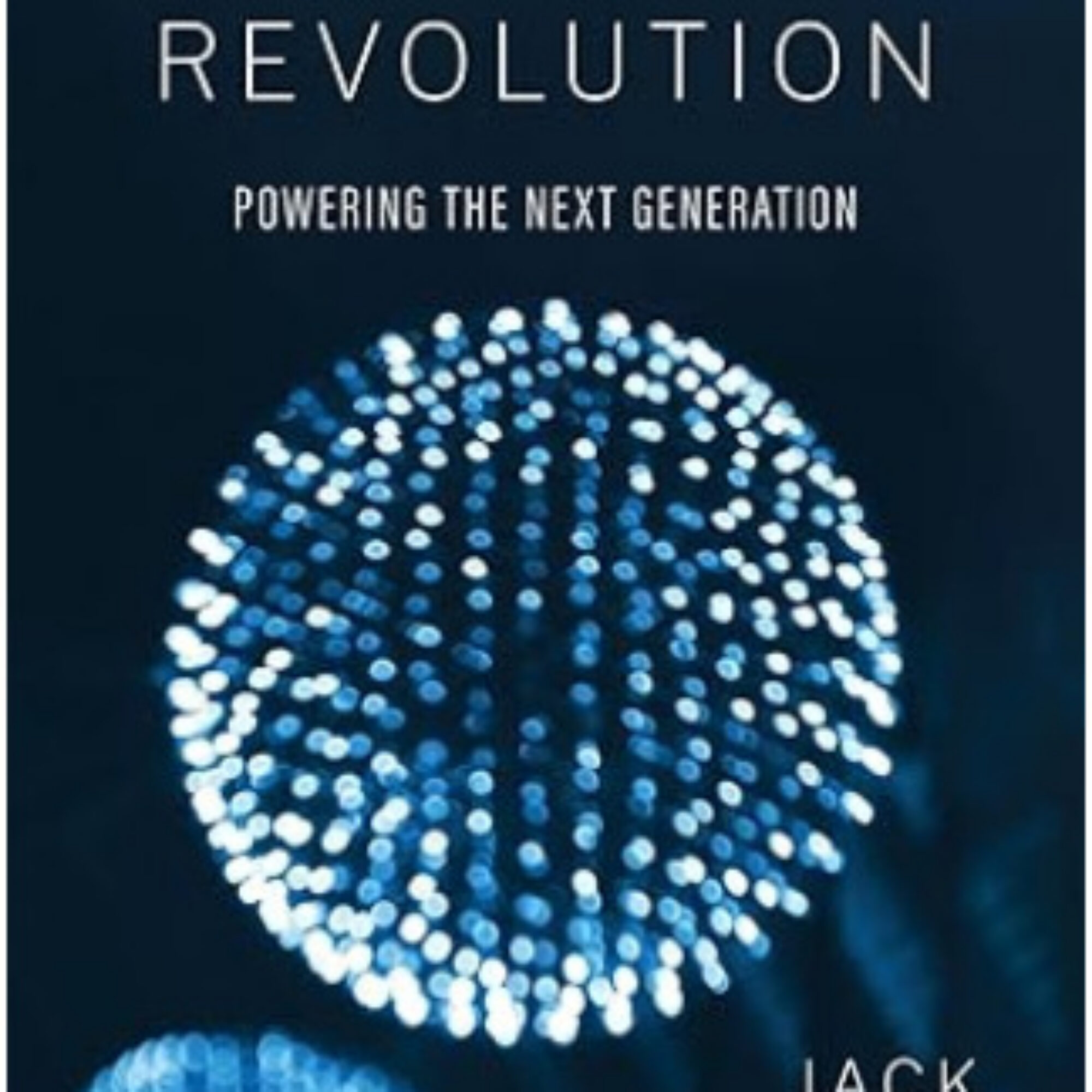
This week I finished: Nuclear Revolution: Powering the Next Generation, by podcast guest Jack Spencer. I also watched his presentation on the book and panel at Heritage and followed up with the film he recommended in that presentation, Powering America, by the Heritage Foundation, where Jack works. Through our conversations on my podcast, especially doing the Spodek Method, and (coming soon, just recorded) on his, plus all the interactions that come with scheduling, Jack and I have become friends. If you've listened to our conversations, you know that we're planning to go fishing together. I haven't eaten fish since 1990 and don't expect to restart, but Jack predicts I'll at least still love the experience. I agree with much of his view. Competitive markets can…

0 Comments

Measuring greenhouse emissions looks like a distraction. Extraction and introduction into the biosphere seems more relevant.

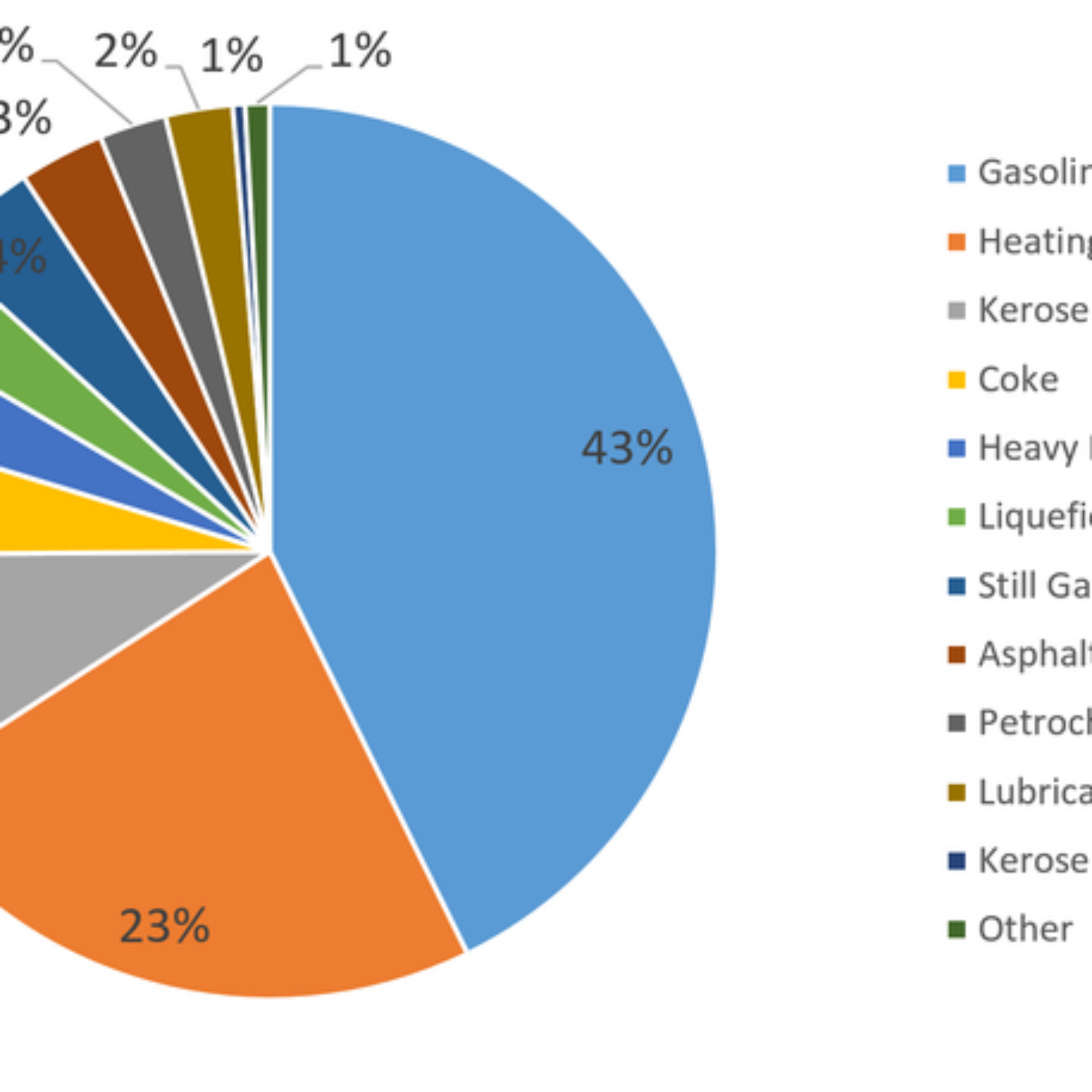
We track and report greenhouse gas emissions as one of our top measures of our impact on the environment. I propose that that measure may be a distraction. I wrote about the importance to know the 2 carbon cycles and not to confuse them: burning wood affects the environment differently than extracting fossil fuels from underground and burning them. They weren't in the biosphere so they affect it differently than burning wood, which just shuffles chemicals around the environment. Here are the products made from oil: We may like the short-term benefits we can create from any of those products, but all of them eventually become pollution. Whatever we do with them, they hurt us. Emitting greenhouse gases is only one such path. In other…

0 Comments

“I never had a more optimistic outlook than when things were going to shit,” said my friend about suffering a debilitating disease

A friend reminded me of a life lesson we could all use in facing our environmental symptoms. In her words: "I never had a more optimistic outlook than when things were going to shit." Her context: A crippling disease She got a disease that would take a lot of work to heal. She probably wouldn't die, but could suffer lifelong symptoms. Her clothing and showers hurt where her skin had blistered. She took medication so toxic that the hospital gave her a special toilet to collect her waste to keep it separate from the city plumbing. Her response: To dig deeper It sounded brutal and traumatic, but she said that having to work and being part of a team working together gave her optimism. She…

0 Comments

Is most of the economy transaction costs?

I was learning about the economist Ronald Coase and a topic he focused on: transaction costs. A person in a video described how businesses and technology help lower transaction costs. The person used Amazon.com as an example, pointing out it takes less time to search the marketplace and buy what someone wants. My experience is different. When I look up what people buy most on Amazon.com, a lot of it is stuff that won't improve the life of the buyer before ending up in a landfill. In my conversation with Lorna Davis after she stopped shopping Amazon after taking my sustainability leadership workshop, she saved time and money. She didn't think she was wasting time or money. She probably thought she was saving them by…

0 Comments

801: Travis Fisher, part 3: Restoring time with family

Meaningful interactions don't have to be complex. Travis simply shares his experiences in nature in childhood and finds ways to recreate the emotional experience today. To me the most meaningful part is the result: he expects to spend more time with his children (and dog) doing something he's meant to do a long time. It doesn't cost money. It sounds like it will give him more time. The cleaning part, we'll see how it goes, though I predict the activation that comes from that part of it will affect him. He works in policy so he describes how he sees personal change leading to systemic change more than trying to start with something top-down alone, like working from government or coercion. As I understand, he…

0 Comments

Why we feel so busy

Do you feel busy all the time, like no matter how much you do, you still have more to do? I used to feel that way, but less so now. I still have to pay bills, buy food, and so on. It's more that I recognized how our culture rewards companies and industries making us feel that way. Here's how. Advertisers have learned to manipulate our emotional systems, often better than we can ourselves. Once they know how to prompt craving, they can sell you something to stop it. Entrepreneurs and product developers won't say the following is their strategy, but it amounts to it. They look for emotions we feel, the stronger the more effective. Then they think of how they can excite it,…

0 Comments

Resources on Robert Carter III

Compiling resources on Robert Carter III for reference: Why do I care about Carter? A CNN article quoted Andrew Levy, who wrote a book on Carter, on why Americans seem to bury Carter’s story: Levy, whose books include a biography of Carter, “The First Emancipator,” has another suspicion: America doesn’t care – because it’s inconvenient. “It blows an enormous hole in this legacy we’re trying to balance for these founders,” he said. As Levy sees it, American history feebly attempts to level the founding fathers’ fondness for freedom with their ownership of humans by uncritically parroting their assertions that there was no pragmatic way to emancipate hundreds of thousands of slaves. Slavery was a necessary evil, to hear the founders tell it. “If Carter is…

0 Comments

This week’s selected media, January 5, 2025: The Anti-Jefferson: Why Robert Carter III Freed His Slaves (And Why We Couldn’t Care Less) and The Individualists

This week I finished: The Anti-Jefferson: Why Robert Carter III Freed His Slaves (And Why We Couldn't Care Less), by Andrew Levy: This piece was a journal article in the spring 2001 issue of The American Scholar. Robert Carter III plays a major role in Sustainability Simplified as a contrast to Jefferson, Washington, and their peers who spoke of freedom but did not free their slaves. Carter freed all his slaves during his lifetime. His slaveholding neighbors disliked him for it. He was "extreme" in his time. I consider him as a role model for being called "extreme" in my time. Future generations will consider it obvious how most people today are violating their own values and how their rationalizations and justifications carry no more…

0 Comments

“I solve problems. I’m not putting band-aids on symptoms”

I spoke this post title in conversation. As I said them, I realized I had to post them to my blog: "I solve problems. I'm not putting band-aids on symptoms" Most purported solution I see proposed for the environment put band-aids on symptoms. I don't oppose helping the poor, conservation efforts for the Amazon or other nature being encroached on, avoiding straws, eating less meat, turning off lights when not in use, protests, and so on. Nearly all these efforts achieve what I call "stepping on the gas, thinking it's the brake, wanting congratulations." In Sustainability Simplified I call them "pulling an Eli Whitney," after the guy whose cotton gin designed to reduce labor helped grow American cotton into the greatest slave culture in history.…

0 Comments

The average of zero and a negative number is still negative so we all have to live sustainably, not just some of us.

I generally define sustainability as not lowering the amount of multicellular life earth can sustain. Single-celled life turns out to comprise a lot of life and our behavior may not affect it, but I'm partial to humans and the life we depend on, like other animals, plants, and fungi. Humans have decreased the amount of life. If sustainability keeps the number unchanged, it's like a zero net affect. Unsustainability means a negative number. Regenerative means a positive number. We can only regenerate for so long based on energy from the sun, which powers photosynthesis. Nothing else has been shown to work in the long term, so regenerative doesn't last long term. What remains is living sustainably and unsustainably. Today, nearly everyone lives unsustainably. That is,…

0 Comments

A video of my twice-daily burpee-based calisthenics routine at the start of 2025

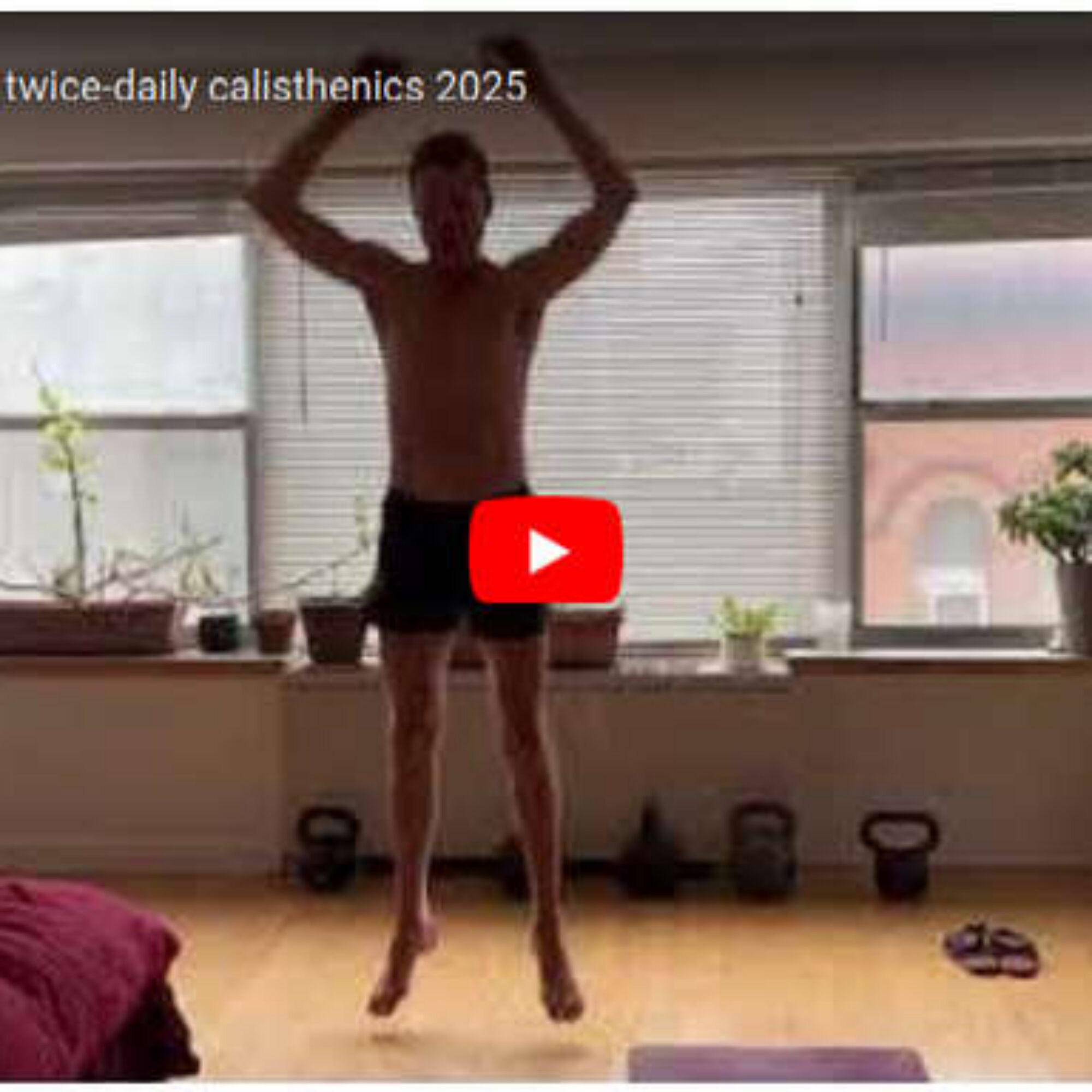
Here is my twice-daily calisthenics routine at the start of 2025. For context, here is a list of all my sidchas, standard operating procedures, and preferences. I have found discipline creates freedom. This sidcha creates freedom, peace, connection, calm, and more. The calories burned and motivation required are negligible in comparison to those benefits, and are benefits themselves. I started in 2011 with ten burpees a day, then added and refined. My evening set differs slightly (planks instead of crunches, for example), but mostly like this video. This video shows my odd-numbered-day pattern. On even-numbered days I vary slightly based on what workout I do that day (cardio or lifting). I do this routine after Making my bed and turning off the alarm within a…

0 Comments

The books and movies I liked most and least in 2024

On Sundays I post the selected media I finished that week, usually books and movies, though sometimes videos or other media. I looked back at the list I finished this year. My top book is Sustainability Simplified, and not because I wrote it. I wouldn't have written it except that I see zero approaches to our environmental symptoms that even in principle solve the greatest problem humanity faces---PAID culture, a concept the book explains---let alone show how we can enjoy the process. I believe the book, plus Note, I'm counting works by when I finished them, not by when they were published. Most weren't recent releases. My favorite books of 2024 In no particular order: The Counterrevolution of Slavery: Politics and Ideology in Antebellum South…

0 Comments

800: Lorna Davis, part 4: After the Sustainability Leadership Workshop

If you haven't listened to my conversation with Lorna before taking the sustainability leadership workshop, I recommend listening to it first: 794: Lorna Davis, part 3: Before taking the sustainability leadership workshop. In this episode, Lorna shares her experiences, reactions, and thoughts from taking the workshop. They're all multifaceted. They come from her classmates, leading them in the exercises, being led by them in the exercises, curiosity, and more. She shares vulnerabilities as openly as her discoveries and new commitments. I predict you'll find her engaging and captivating. Longtime listeners have heard me talk about the workshop, maybe Evelyn, but you might think consider me biased as the person who developed it and Evelyn as someone else leading it. Check out Lorna's experiences. If interested…

0 Comments

Disposable means imperialist. So does polluting.

The dictionary defines imperialism as: The policy, practice, or advocacy of extending the power and dominion of a nation especially by direct territorial acquisitions or by gaining indirect control over the political or economic life of other areas. Making something disposable means when you're done with it, you put it into someone else's space. Likewise with pollution. In principle, if the disposable thing biodegrades, it might decompose, but most disposable things don't and even many that do, we produce in such quantity that they don't in practice. Pollution into shared land, water, and air invades the spaces of other nations, people, and their bodies. In other words, using disposable stuff and polluting uses our power over others: they have to deal with our waste. If…

0 Comments

This week’s selected media, December 29, 2024: This Land, Yi Yi

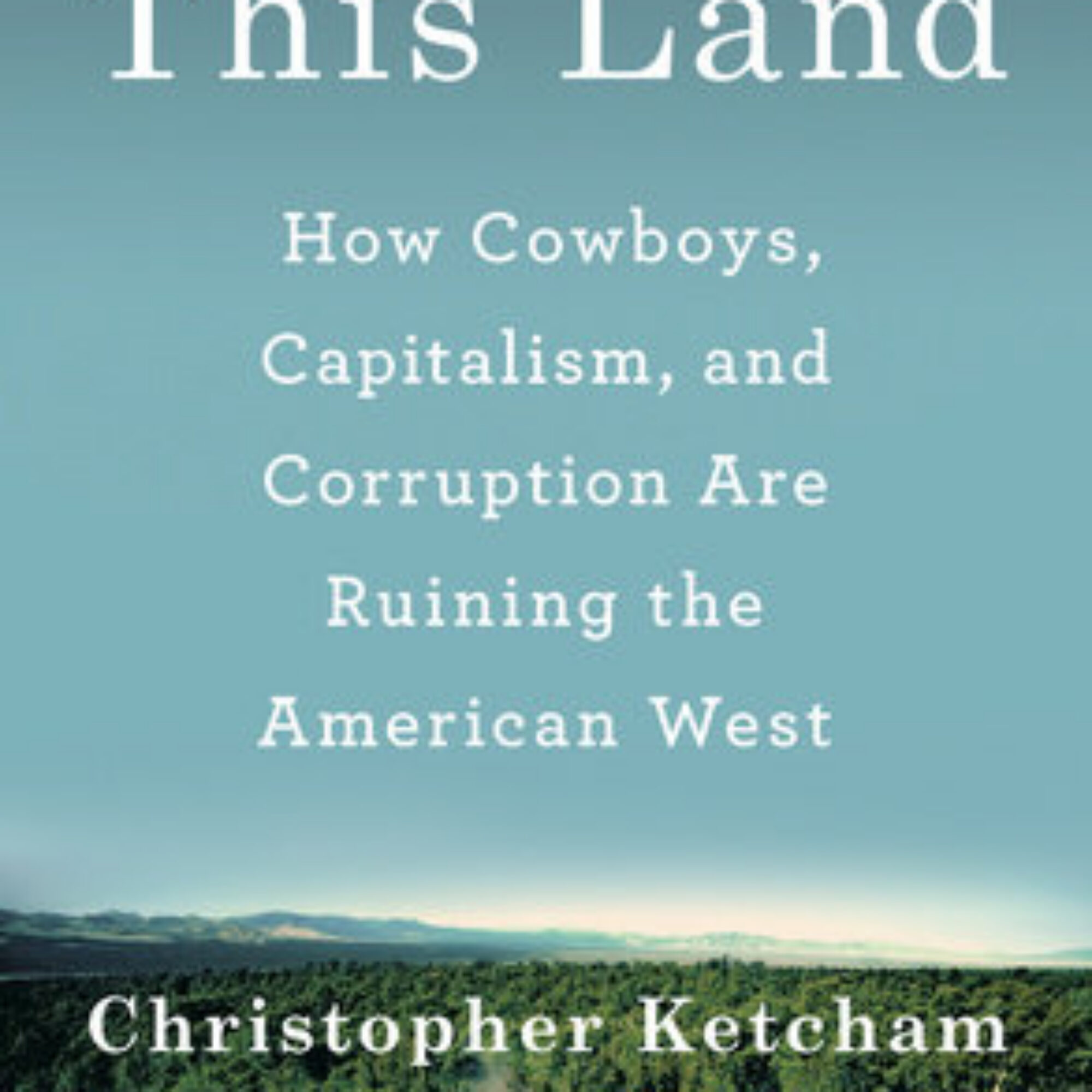
This week I finished: This Land: How Cowboys, Capitalism, and Corruption Are Ruining the American West, by podcast guest Christopher Ketcham: I consider Chris one of the top journalists on our environmental symptoms for many reasons. The top two are his taking on essential topics few others do, especially growth and limits to it, and writing about them knowledgeably and effectively. In This Land he reveals the tragic horror story of corruption, extraction, and depletion of the US west. Chapter after chapter hits like a gut punch of how our taxes are paying for the opposite of what we'd expect. When you think it can't get more dire, the next chapter reveals a whole other dimension of corruption. Corruption feels like the most nightmarish part.…

0 Comments

“They blame me for their guilt”

I heard someone speaking on nature conservation. After he spoke someone in the audience described how people who promote conservation in words but don't practice it in deed often call people who also practice it pushing too hard, too self-righteous, or the like. The speaker responded: "Yes, they blame me for their guilt." The statement rang true. People acting against their own values feel guilty not because others who act according to those values speak, but because of their own consciences. It's facile, though spurious, to conclude that because someone else's words made feelings of guilt (or shame, helplessness, hopelessness, despair, etc) enter their consciousness that that person caused those feelings, or intended to cause those feelings. Only a person's own conscience can make them…

0 Comments

799: Josh Bandoch, part 2: Leadership: Humans feel first, then reason

Josh and I talked about a few aspects of his acting on his commitment from the Spodek Method. For one thing, since he and I both study, practice, and teach leadership, we talked about the technique, how it works, how it impacted him. Since leadership involves emotion, empathy, and related social and emotional skills, we talked about the emotional journey. If you ever want to infuriate me, maybe the most effective way is to get me talking about environmentalists who talk only science and policy, just what they consider the facts that make them right. They try to browbeat people into doing what they don't do themselves, as if integrity, credibility, and personal, hands-on, practical experience didn't matter for leading others. They're essential. Oops, I…

0 Comments

Our environmental symptoms aren’t like a mosquito. They’re like a flat tire while riding a bike: you have to stop and face them to solve them.

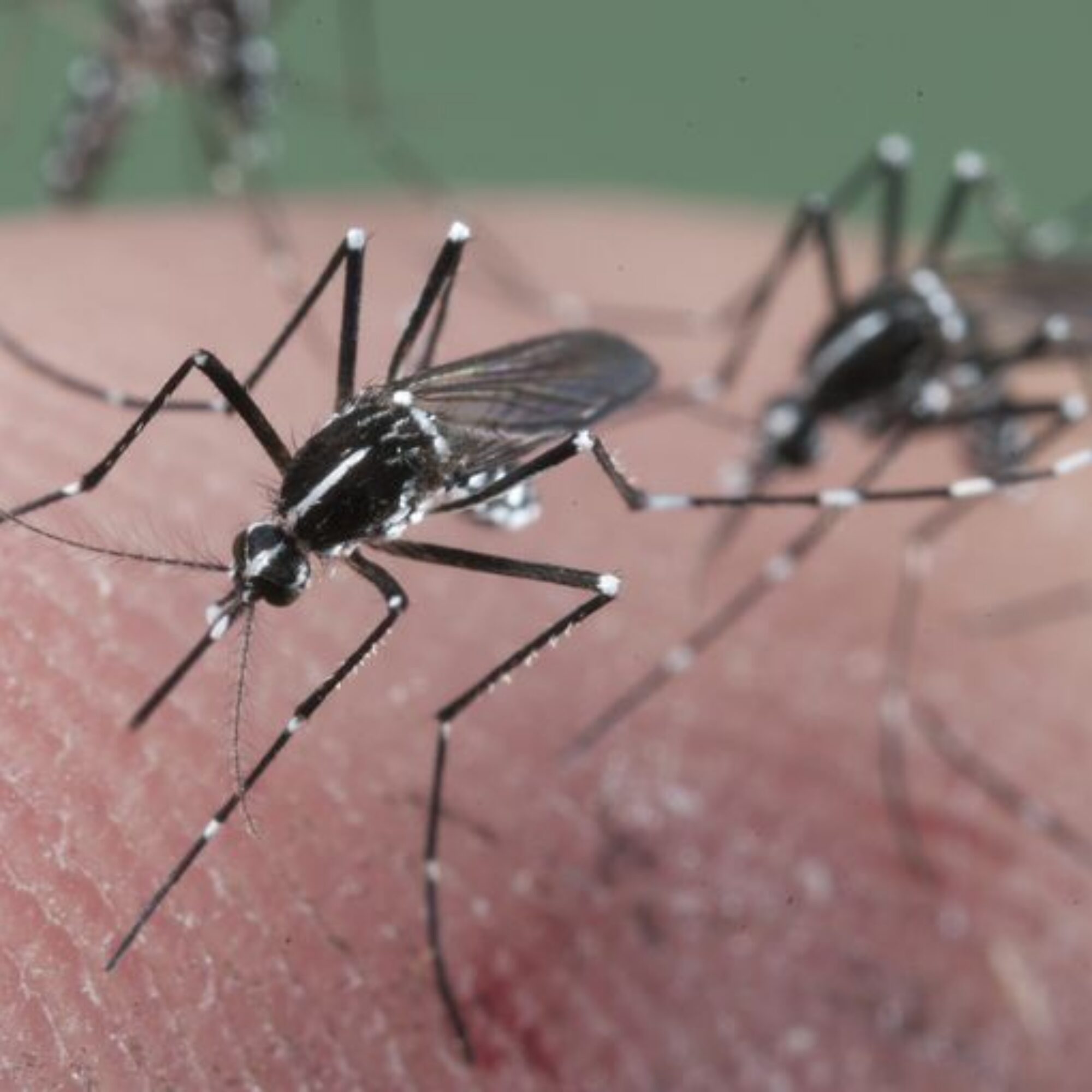
Some problems are like a mosquito. It may bother and annoy you, but usually not enough to keep you from what you're doing. Say you're walking and a mosquito bothers you. You may swat at it and try to kill it, but you can generally keep doing what you were doing. Many people see our environmental symptoms as mosquito problems. They see them as bothersome, but not enough to turn away from living the life they wanted in their culture. Other problems are like a flat tire when riding a bike. These problems won't go away. They increase if unsolved: if you try to keep riding, you'll break the bike. If you keep going, you'll likely fall and injure yourself. A flat-tire-on-a-bike problem you have…

0 Comments

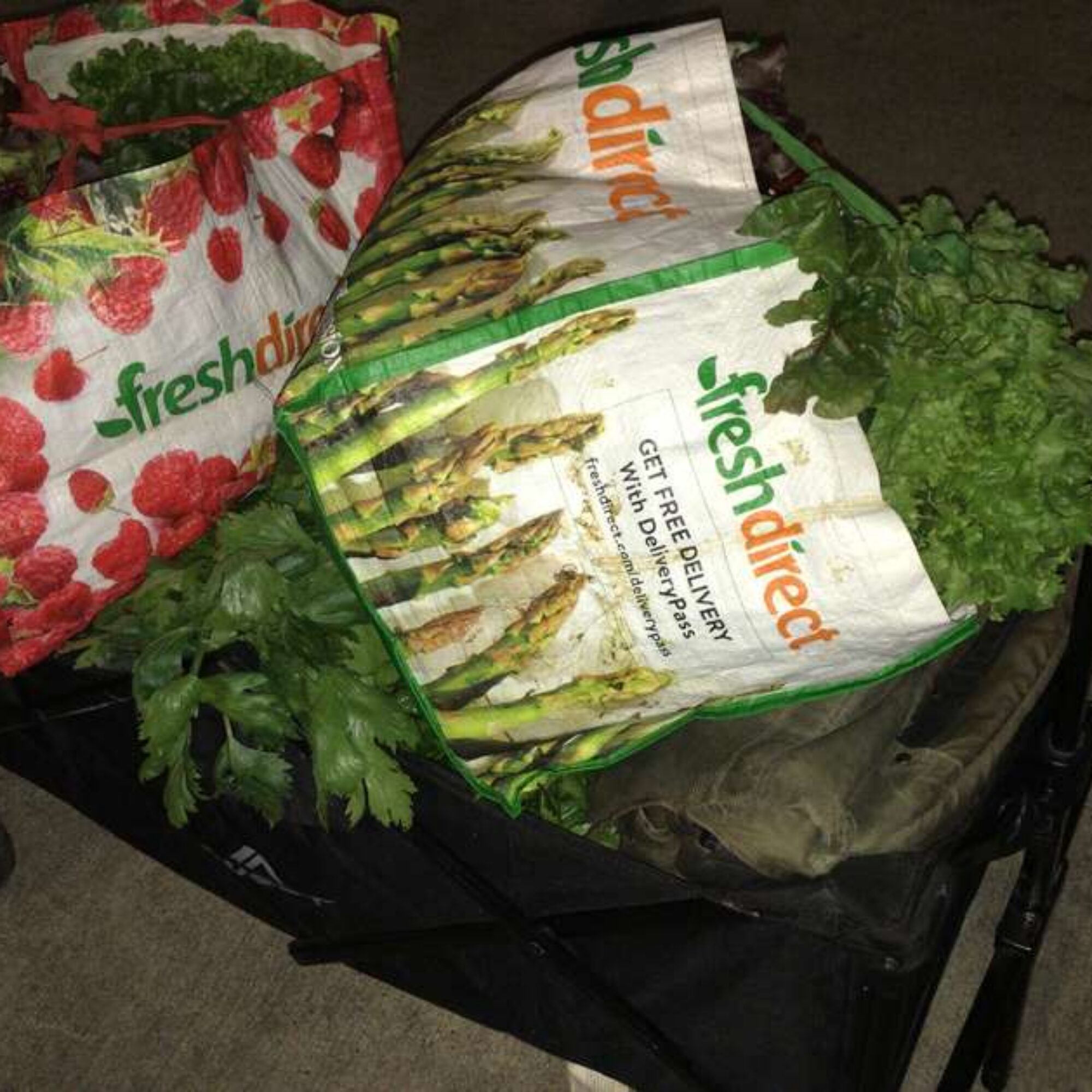
On delivering food to a soup kitchen on Christmas

When I deliver food to hungry people, people say I'm nice. When I avoid polluting, they call me extreme. Yet both actions come from the same place in my heart and mind, which I can best characterize with the phrase "love your neighbor as yourself." Whether you're Christian or not, that advice has stood the test of time for a reason. Acts of love for neighbors are rewarding. I just got back from delivering a big load of food that would have been thrown away to the Bowery Mission---a soup kitchen on the lower east side that feeds the hungry. People call me lucky that I have time to volunteer, often disparagingly or condescendingly implying I'm privileged---note: not privileged relative to the people I'm serving…

0 Comments

End of content

No more pages to load