786: Jan Mulder, part 2: The joy of finding and leading community

Usually when someone does their commitment with the Spodek Method, they enjoy it. Nearly always they do more than they commit to. Sometimes someone really enjoys it. Jan went to town on his commitment. You might wonder if there's any appeal to picking up litter. Is it worth the effort? Who cares, anyway? After all, more people litter than pick it up, as anyone can tell by how much litter there is and how much it's growing. Yet the pattern I've discovered keeps happening. On the other side of working on sustainability is always community. I can't prove it always happens, but so far it does. In Jan's case, he found community, in particular, people who had long wanted to act. They were just waiting…

0 Comments

A response to a common self-serving response to the NY Times profile of me

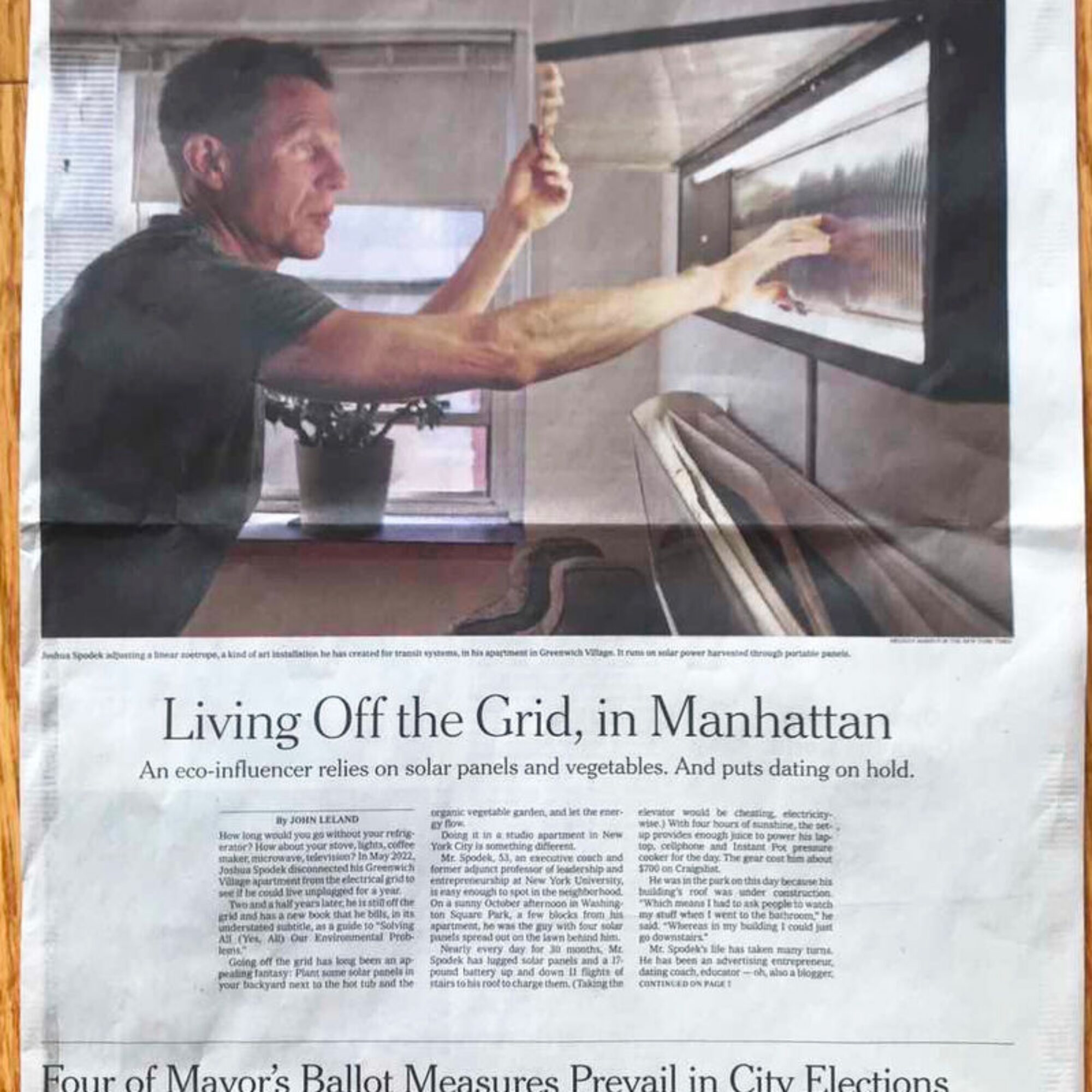
Here's a typical response on a forum to Tuesday's profile in the New York Times of me from someone who I think would describe themselves as environmentalist: I enjoyed the article, and your blog post. You are part of the tiny % of the comfortable class who voluntarily simplify. Of course there are 8 billion, most of whom live in INvoluntary simplicity, and are trying to increase their throughput. In fairness, the Times article missed that I focus on leading people, not hoping that by mere personal action I'll influence others or make a difference. Still, I've seen this type of response enough to see the pattern. Also in fairness, when we're addicted to many things in our lifestyles, it can be incredibly difficult even…

0 Comments

Friends tell friends they’re full of s#!t. Who else will?

A longtime friend and I disagreed during a phone call yesterday. We raised our voices at each other and interrupted each other. After the altercation, we resumed regular conversation, but at the end of the call I apologized. Then he apologized back, but I said he didn't need to apologize. A consider it an act of friendship to argue with someone when you feel they deserve it. Someone who isn't a friend may not feel comfortable enough to oppose you. They might not want to risk a relationship that a friend feels is more secure. Without great friends, you may be unable to tell which ideas of yours need refinement. I even noticed as I said to him, "Friends tell friends they're full of shit.…

0 Comments

The Story Behind the Story of the New York Times: “Who Says You Can’t Live Off the Grid in Manhattan?”

I'm honored and humbled by the New York Times' profile of me today. The article shows a huge part of my day-to-day life, but a sliver of our long-term leading the world to living joyfully sustainably. Read my book, Sustainability Simplified, for the full story. Of course, a book can cover more than an article, but everything I do is mission-driven on leadership. Sustainability Simplified charts a clear, joyful, rewarding path to changing global culture, showing what each of us can do, step-by-step, to reach sustainability: governments, corporations, and eight billion people. Get the book for the full story, then take the workshop. The bigger picture: Sustainability Leadership Imagine the world reached sustainability: governments, corporations, and eight billion people. We aren't there now. How would…

2 Comments

I don’t mean to be melodramatic, but if I succeed at changing culture, what are the odds of me being shot?

[EDIT: I had no idea the New York Times would post its profile of me the day after this piece] Sorry for the in-your-face title and I don't mean any time soon, but I think it's a fair question. Other people have asked me the question when I describe my mission. Maybe you think I'm kidding myself that I could be so successful as to create enough animosity in others that they'd resort to a lethal level of animosity. I usually doubt I could reach that level, but I think I would be naive not to think of where my path leads. If I succeed at my mission, I will help many people choose to improve their lives by stopping spending money on things that…

0 Comments

This week’s selected media, November 3, 2024: Be Useful, the Power of Negative Thinking, How to Be an Antiracist

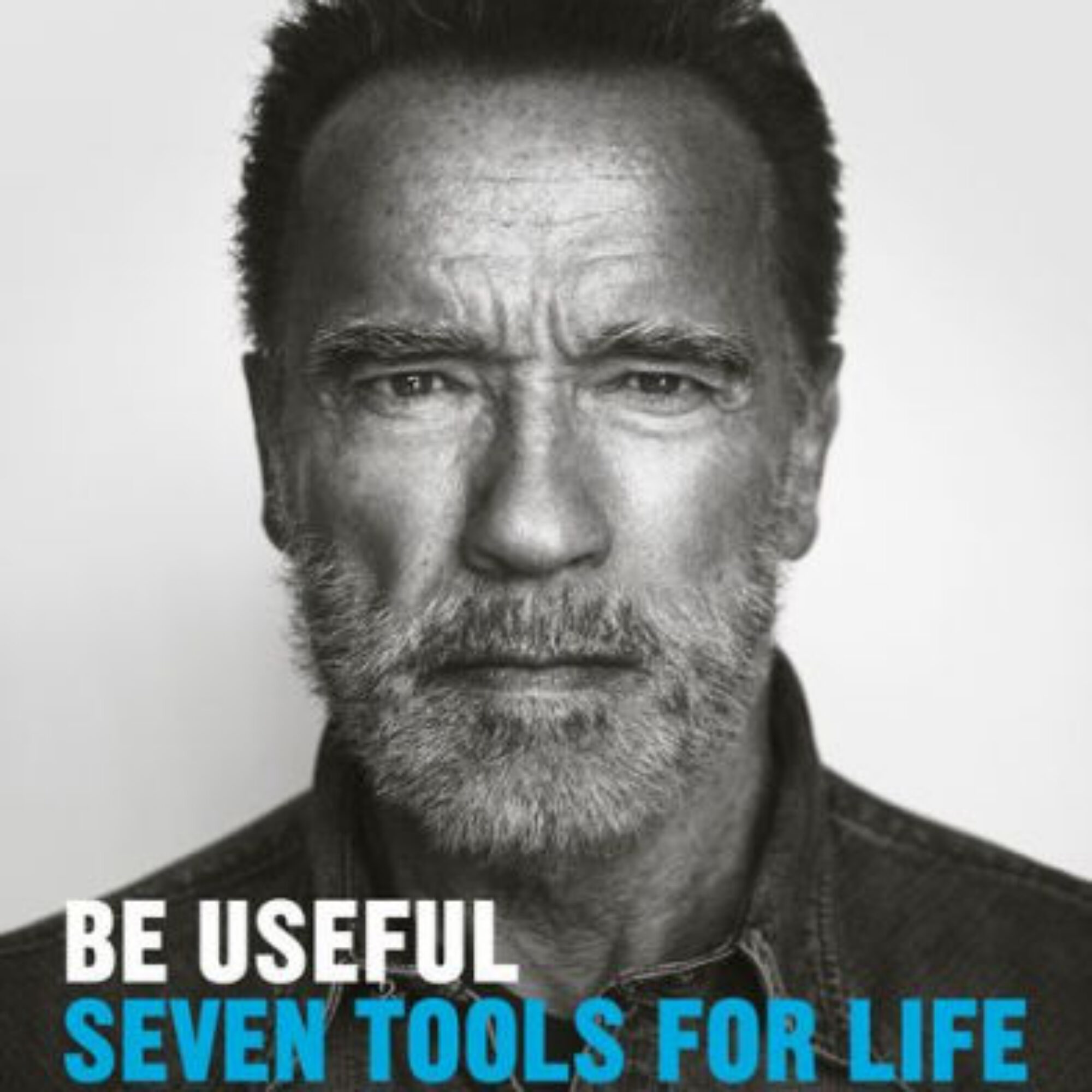
This week I finished: Be Useful: Seven Tools for Life, by Arnold Schwarzenegger: I got this book expecting something to pass the time and got much more. Maybe it's just me, but I find it easy to forget how Arnold Schwarzenegger is just a regular person like you and me who has achieved a lot. He isn't lucky. He wasn't born rich. He didn't have any special advantages. He isn't a robot from the future with superhuman powers. He's disciplined. He has vision. He persists. He learned how to work with people, manage emotions, acknowledge his weaknesses, and more. As a result of these things and more he's achieved greatness in several areas of life where many of us would consider ourselves outstanding if we…

0 Comments

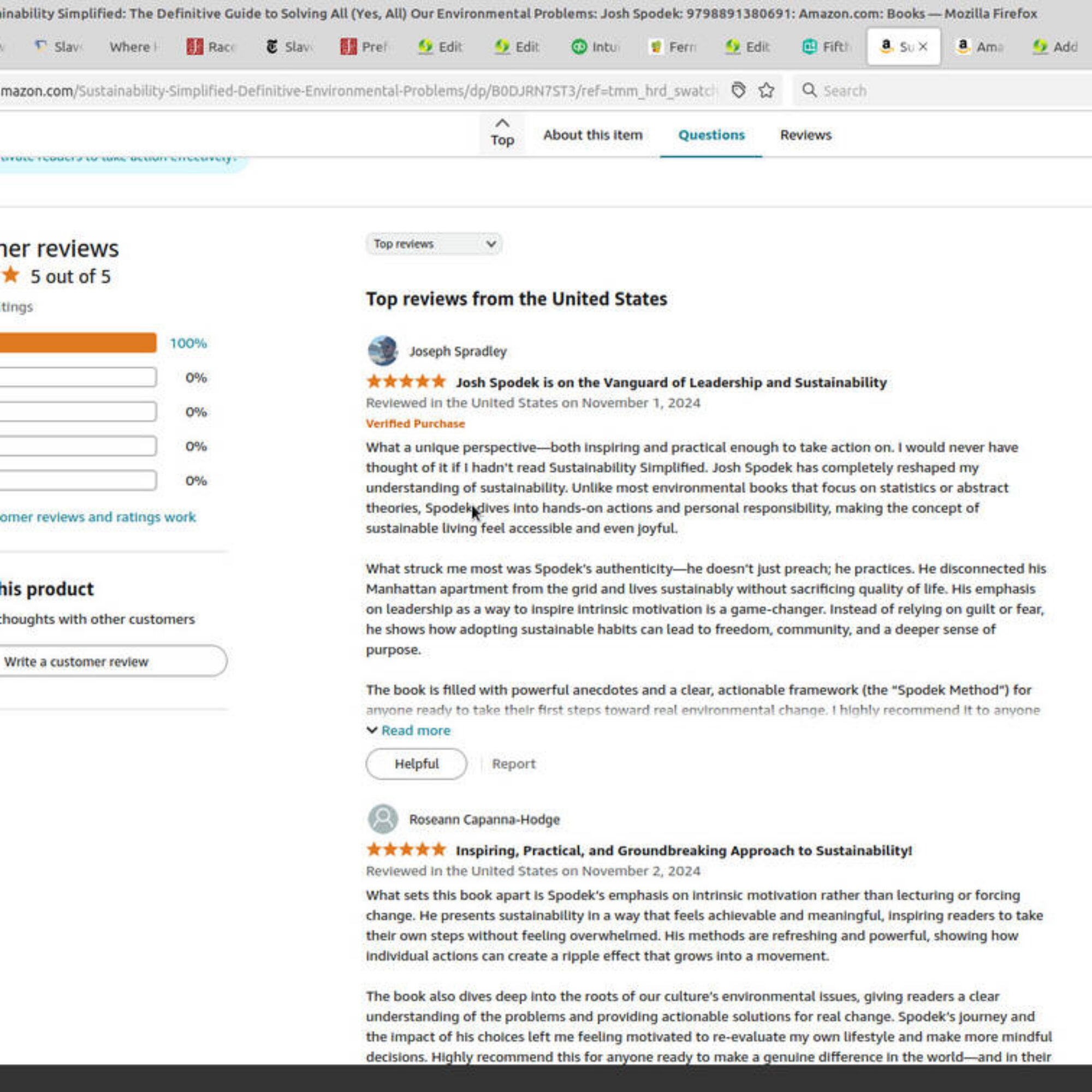
The reviews for Sustainability Simplified are coming in and look great.

The paperback has been up about a day, and the reviews are coming in. It's not Malcolm Gladwell level numbers yet, but a couple dozen reviews and all 5 stars so far. Making the book available feels great, as do the reviews so far. I wrote this book to help my mission, which is big, so putting the book up for sale is just the start. As much time and attention as the book took to write, it's the foundation. It's essential and I recommend it to anyone with working lungs, along with the workshop, but much more will follow. My mission is to help change American (and global) culture on sustainability and stewardship from expecting deprivation, sacrifice, burden, and chore to expecting rewarding emotions…

0 Comments

Sustainability Simplified became available in paperback this morning!

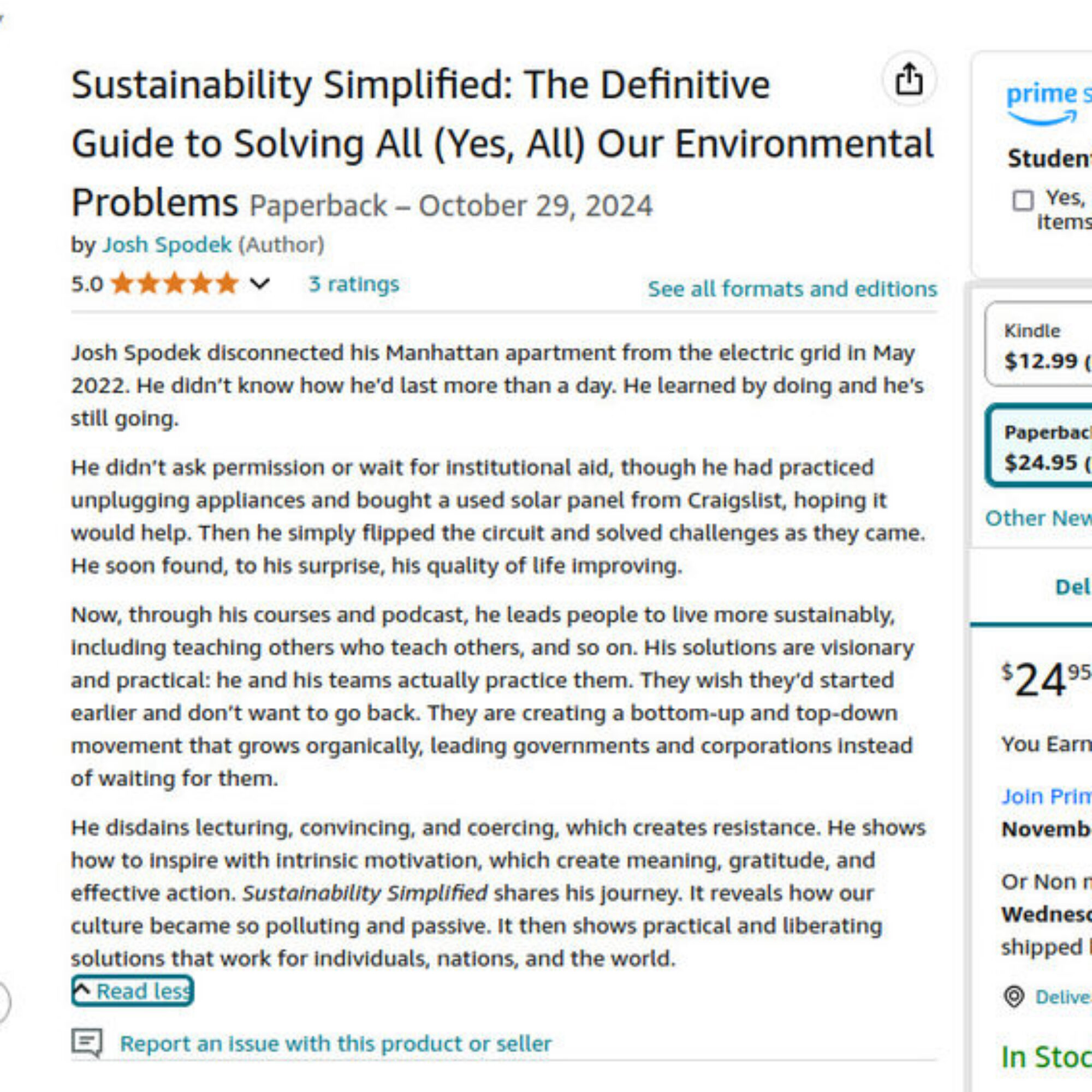
Word got out about ahead of time about my new book, Sustainability Simplified: The Definitive Guide to Understanding and Solving All (Yes, All) Our Environmental Problems. It would normally have come out in paperback later, but media attention has prompted us to make it available earlier. In particular, I've been interviewed lately for prominent media and expect people will want to read it sooner. My publisher moved mountains to make it available as soon as possible in advance of media attention, and it went up today on Amazon.com. I recommend buying the book. I believe it will be the most valuable thing you read on the most important subject for humanity. Don't take my word for it. Here are some of the book's endorsements: Endorsements…

0 Comments

Want quality? Start with the corners nobody notices.

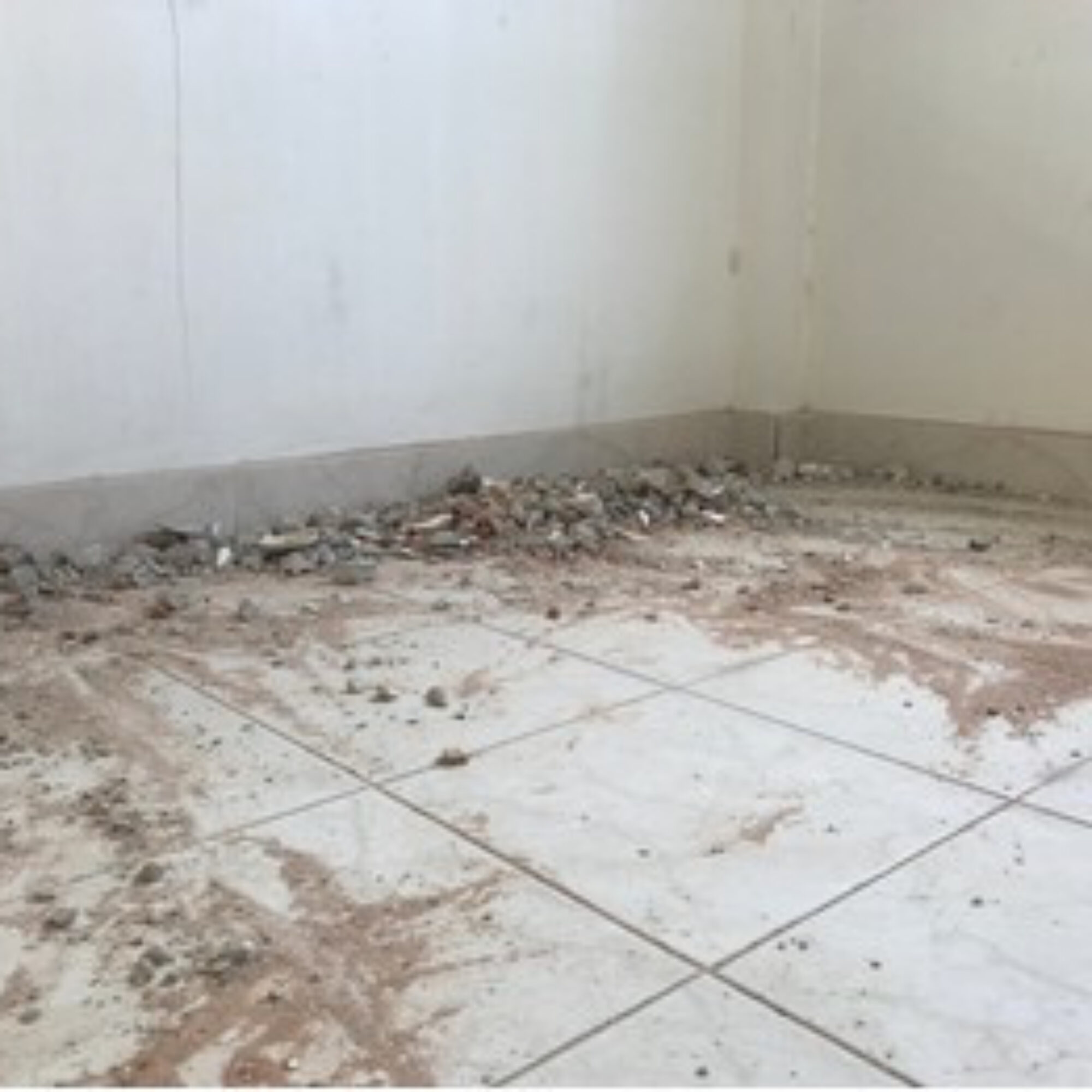
When I mopped, I used to think I should start with the middle of the floor. That's where I spend the most time and the saw the most. I've included mopping in My sidchas, standard operating procedures, and preferences on one day of my six-day exercise cycle, meaning I haven't skipped or missed mopping every sixth day for years. Performing a task with a measure of quality teaches a lot internally and externally. I've learned to start with the corners and out-of-the-way or not-visible areas. Then the middle takes care of itself. If I start with the middle, the corners accumulate dirt. I'm not just talking about mopping floors. I'm talking about any performance-based field. Actually, any art. An artist who cares and who has…

0 Comments

If you believe living more sustainably makes your life worse but you want sustainability, you’ll help your cause by shutting up (until you practice).

I've been remarking lately that every message I've heard on our environmental problems says that acting more sustainably means making my life worse for little chance of gain. I ask people if they know of counterexamples. If you do, please tell me, because no one has so far. Context Even ardent environmentalists suggest living more sustainably means giving up things I value for the possible benefit of someone else somewhere else at some other time, though it might not help. Also, some genius might fix the problem without me, superseding anything I did. In fact, someone has to supersede anything I or any individual could do in order to solve our problems fully, making my actions irrelevant. The rational response to a definite loss here…

2 Comments

785: Josh Bandoch, part 1: Teaching persuasion and leadership

I participated in an online workshop in influence and persuasion that Josh led. We got in touch afterward and found our approaches to the practices and how to learn them overlap. We start this episode talking about his background and what led him to learning and training others in the practices. Then we talk about what we like about learning and practicing them, what works, what doesn't, misconceptions, and other aspects. Some related subjects include authority, extrinsic emotions, management, and such. We practiced the Spodek Method, him experiencing it for the first time. In this first conversation, he only experienced being led to share what the environment means to him and coming up with a commitment to help evoke that meaning. You can hear that…

0 Comments

I have been to the mountaintop and I have seen the promised land.

I experiment on how more effectively to describe changing culture from mainstream American to more sustainably. I'm not talking about some abstract "environment." I'm talking about restoring living by doing unto others as I would have them do unto me and of loving my neighbor as myself, the opposite of polluting. I found a better way of describing the shift than just saying I've changed culture, I've passed a cusp, or I've overcome a threshold or reaction potential, like in a chemical reaction. I'm not saying the new way is original, but it communicates the change. Classics stand the test of time. I have been to the mountaintop and I have seen the promised land, and it is a land of freedom and abundance. That…

0 Comments

This week’s selected media, October 27, 2024: The Cost of Discipleship

This week I finished: The Cost of Discipleship, by Dietrich Bonhoeffer: Two podcast guests created works on Dietrich Bonhoeffer. Eric Metaxas wrote a book on him. Martin Doblmeier created a documentary. I confess (no pun intended) to have learned about him only recently, but everyone who knew about him valued his influence on their lives. Learning about him as a Lutheran helped me understand things about my mom, who was raised Lutheran. At least I think it did. People are complex. It was time to go to the source: his words. I'd never read anything like this book. He analyzed and assembled an understanding of the Bible to a degree and with thoroughness I'd never seen. I couldn't help reading it knowing he would within…

0 Comments

What’s in your garbage?

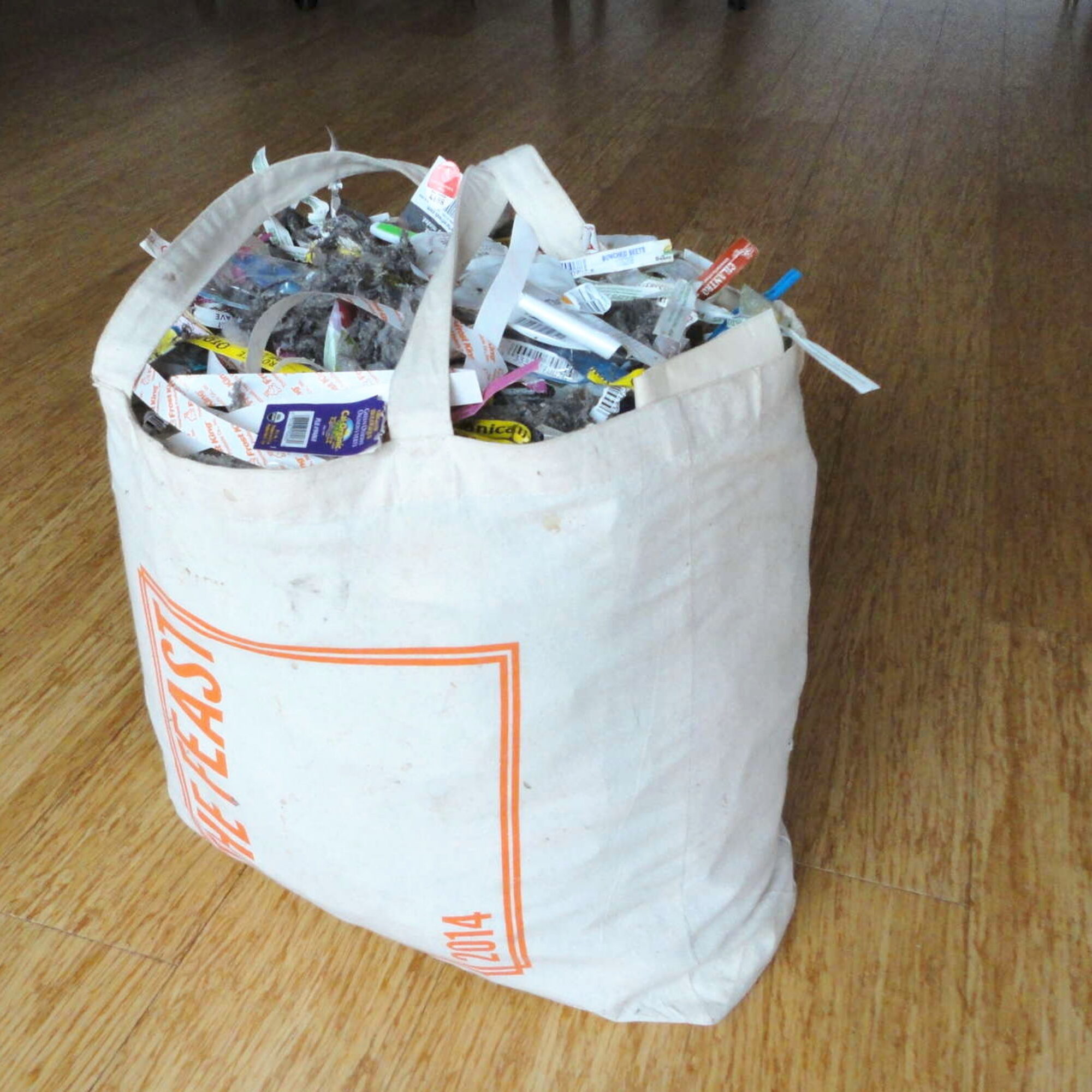
When people hear I take years to fill a load of garbage at home, after their incredulity passes, they often ask, "What's in your garbage?" It's weird for people to be interested in your garbage. I mean, how often has anyone asked you what's in your garbage? I guess it makes sense as a knee-jerk response, but the more interesting question isn't what remains in mine but what fills up everyone else's. Or nearly equivalently, what's not in mine. Frozen pizza boxes, ice cream containers, coffee grounds, takeout containers, food packaging of all types, and packaging from online purchases are things in many trash cans that aren't in mine. All these things hurt people by polluting and don't improve your life, except maybe the coffee…

0 Comments

Would you propose changing Nazi culture by making it more efficient?

People who agree with me that to achieve sustainability, we have to change our culture, still struggle to see why making things more efficient not only doesn't change our culture, it accelerates it. That is, it will lead us to create more of the results we get now. Imagine going back to 1942. We are fighting the Nazis and imperialist Japanese. We know every German isn't a Nazi nor does every Japanese want to conquer the Pacific. In fact, if we knew then what we know now, we'd know their culture would transform to make their nations' some of our greatest allies. If the exact people in question could become allies, we don't want to kill them all. We want to change their cultures. Then…

0 Comments

Elon Musk is Eli Whitney on steroids

I don't understand how people associate Elon Musk with sustainability or invention. He didn't start Tesla. Sustainability would come with fewer roads and cars. Musk is building more roads, including underground with the Boring Company, and as many cars as he can. For comparison and context, Eli Whitney invented a new type of cotton gin. As I understand, his goal was to decrease the need for labor in picking cotton. It's tempting to see technology as good or bad, but it's a tool. Like sharp knives and fire, tools augment the values and goals of the people and culture using them. Whitney may have, in his heart, wanted to help slaves. The result of the cotton gin was to transform an institution declining from exhausting…

0 Comments

“What about ambulances, fire trucks, and hospitals?”

"What about ambulances, fire trucks, and hospitals?", some people ask. "Don't they help us and require polluting?" "Checkmate," I can almost hear them thinking. "We can't get rid of them, so we have to keep culture going as is." Meanwhile Hawaiians lived sustainably over centuries, long past when Malthusian collapse, if inevitable, would have happened. Hawaiians lived on their own for centuries, longer than the time since the Enlightenment to today. They seem to have reached an optimal or at least stable, sustainable population. In a stable situation like theirs, life-extending technology would affect everyone. The longer I lived, the fewer births could happen without overshooting the islands' ability to sustain life. When I died, a couple could have another child. If technology or innovation…

0 Comments

The opposite of individual action is not what you think.

People erroneously contrast individual action with systemic change, like doing one hampers you from doing the other. Do they think musicians practicing their instruments prevent the orchestra from practicing together? Systemic change is not the opposite of individual action. If you rationalize and justify living against your values because in some way you're doing what culture around you does, you've been corrupted. If you don't live by your values, you've been corrupted. The opposite of individual action is individual corruption, at least in a culture with values that conflict with yours. If you live against your values, you can blame culture all you want, but you've been corrupted. I'm not trying to be mean or accusatory. Just pointing out the consequences of our actions.

0 Comments

What is the opposite of pollution? Loving your neighbor as yourself.

The opposite of pollution is loving your neighbor as yourself. After all, do you keep your garbage in your house forever? No, you get rid of it. That means you have your neighbors deal with it, as you would not deal with it yourself. Does it matter that those neighbors aren't your next door neighbors but are poor and distant? How can you love your neighbor as yourself except not to create waste that you dump on them? Humans don't need to pollute or deplete for health, safety, or security. We do to maintain our culture, but we can change our culture. Do you have the exhaust of your car or plane go into the cabin with you? No, you blast it into the atmosphere…

0 Comments

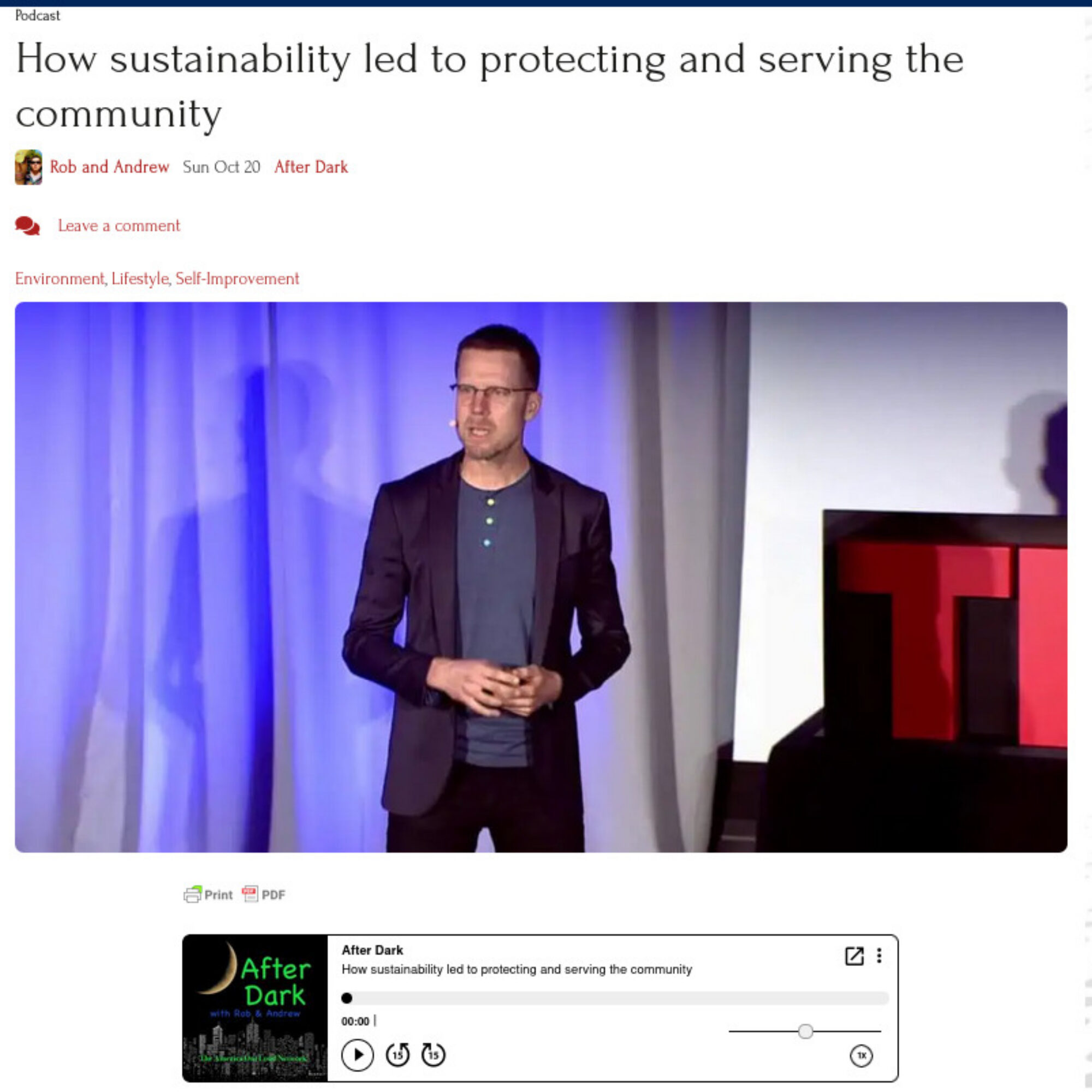
Hear me on America Out Loud: “How sustainability led to protecting and serving the community” and “From sustainability to law enforcement”

You've heard me on the America Out Loud network's podcast After Dark with Rob and Andrew before. They hosted me again (just Rob these times) to ask about my becoming an auxiliary police officer. Here's the first of two episodes, "How sustainability led to protecting and serving the community": Rob was very interested in my motivations and my concerns: why didn't I tell people about it until I finished? What response did I expect or fear? I had asked these questions but not really answered them. You'll hear I'm still figuring out the answers, but Rob's questions help me pursue. Here's the second episode, "From sustainability to law enforcement": Here are the show notes for the first episode: Author and speaker Josh Spodek recently returned…

0 Comments

This week’s selected media, October 20, 2024: Serpico, The Road

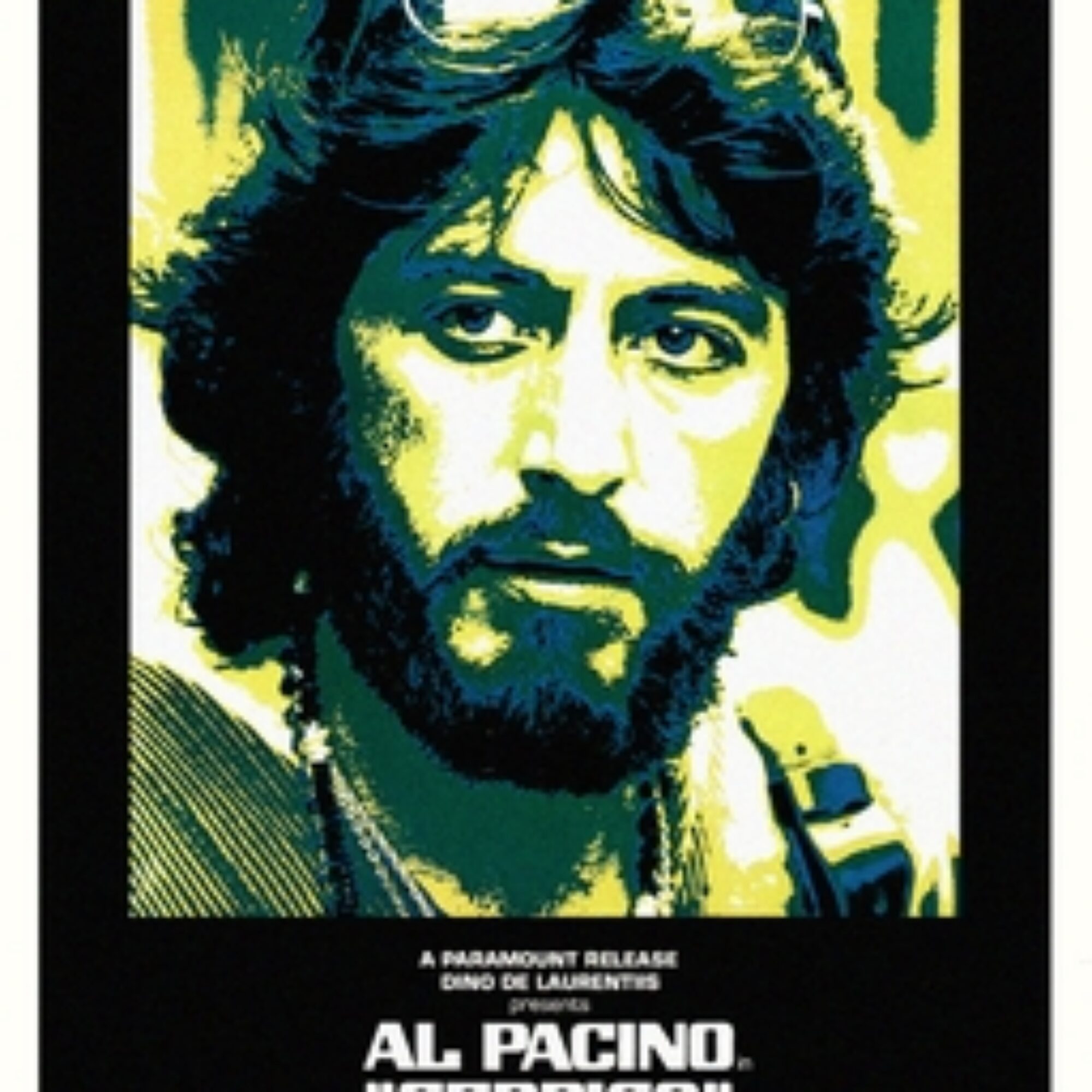
This week I finished two great works: Serpico, by Sidney Lumet starring Al Pacino about Frank Serpico: I watched this movie again since starting volunteering as an auxiliary, not that I see anything like what this movie covers. Before commenting on the content, Pacino's acting made watching the movie watching him. He didn't upstage others. He just played the role masterfully. On par with Pacino's acting is the story of Frank Serpico and its relevance to my work. Serpico found the NYPD systemically corrupt to the highest levels. When you live in a corrupt culture, it's easier to follow culture than to stick with what you believe is right. In a community where everyone is corrupt, people ask “Who can trust a cop who doesn’t…

0 Comments

How to pave a state

I once read about two percent of the US is paved. Two percent of fifty is one, implying about one state worth of the US is paved. How do we reach the point of paving an entire state's worth of land? It seems to me: First we tread over similar land to create dirt paths. Then we tread over them enough that rain makes them muddy enough to make them impassable or unusable at times. Then we pave them over to make them unaffected by water. If earlier steps removed life from them, paving them made them unable to sustain life. They become deadly. Then we pave more around them. Then we create machines that enable us to travel faster on paved roads. Then we…

0 Comments

Everyone looks for holes in sustainability, expecting it to unravel, but it’s self-consistent. Unsustainability has holes and doesn’t work.

One of the more common responses to my suggesting eight billion people live sustainably, along with governments and corporations, is to suggest thing after thing the other person thinks wouldn't work. "What about cars? How will people get around?" "What about family?" "But they won't be able to create energy." "What about police and ambulances?" The list of attempts to challenge sustainably goes on. They aren't being rational. They're just reacting to emotions of wanting to avoid changing, to avoid trying, to do anything besides keeping doing what they've been doing and expected to keep doing. Among other things, they hope to find holes in sustainability. If only they find an inconsistency in living sustainably they can not try. I did it. "A meteor the…

0 Comments

I get the joke, but to accept the humor means giving up. I’m not giving up because I know solutions that work.

This cartoon from this week's New Yorker looks like it's riffing on our time's situation. I get the humor it's presenting, but for it to be funny and for me to laugh, we have to accept that things just are the way they are. To me, to laugh at it would be like to laugh if during Apartheid they said: "Heads Mandela goes to prison, tails the government cracks down harder on protests" or if before the Montgomery bus boycott they said "Heads Rosa Parks gets sent to the back of the bus, tails poll taxes deprive citizens of the right to vote" Instead of accepting things, watching them deteriorate, I've developed strategies to restore health, security, safety, freedom, and liberty and they work. They…

0 Comments

Two updates to my sidchas and standard operation procedures

I'm updating My sidchas, standard operating procedures, and preferences in two ways. Cardio days First, in my 6-Day Exercise/Mindfulness Cycle, I'm changing day 6, which was "Cardio, at least 300 calories rowing or meaningful effort plogging, biking, walking, or climbing stairs." I did cardiovascular exercises for two reasons: To improve my heart and lung health and capacity To burn more calories Since around May, I've been experimenting fasting on day 6. That is, instead of burning more calories, taking in fewer. Doing cardio almost inevitably led to me eating more on those days, so exercising more wasn't in practice leading to getting rid of fat I didn't want. In practice, fasting is resulting in getting rid of more fat I don't want. As for heart…

0 Comments

End of content

No more pages to load