Tips


Overcoming objections exercise

[This post is part of a series on internal objections and blocks and how to overcome them. If you don't see a Table of Contents to the left, click here to view the series, where you'll get more value than reading just this post.] I love covering objections and blocks in my seminar. More than any other, that section results in people applying the seminar's contents to their lives and solving their problems. They change their mode from digesting and evaluating the information to using and applying it. I love to see how quickly what seemed like abstract information suddenly becomes useful tools to solve problems, lead people, improve careers, and improve lives. More than that, people come together. The break after this exercise is…

0 Comments

Common objection 11: Other people tell me not to

[This post is part of a series on internal objections and blocks and how to overcome them. If you don't see a Table of Contents to the left, click here to view the series, where you'll get more value than reading just this post.] Objection Other people tell me not to. We all defer judgment to someone. Sometimes others know better. Not always. Sometimes we feel pressure from peers, family, society, bosses, etc. Example Parents are the big ones who advise their children to what the parents' think best, which may or may not coincide with what their children think best. Bosses advise too. As do friends and, for that matter, random acquaintances. Institutions like governments, schools, churches, and so on also promote their agendas.…

0 Comments

Common objection 10: I’m good at something else

[This post is part of a series on internal objections and blocks and how to overcome them. If you don't see a Table of Contents to the left, click here to view the series, where you'll get more value than reading just this post.] Objection This objection sounds so weird when you say it abstractly you can't imagine people succumbing to it. When they say it less abstractly you can understand why it holds people back, but also that they should be able to get past it. In the abstract: I excel in another area so I can't in this one. Does that sound crazy to you? Why should strength in one area hold you back from another? I hear versions of it all the…

0 Comments

Common objection 9: I’m too busy. I have other priorities.

[This post is part of a series on internal objections and blocks and how to overcome them. If you don't see a Table of Contents to the left, click here to view the series, where you'll get more value than reading just this post.] Objection Some people want to take on new projects or change something in their lives but they have too many other things. I'm too busy. I have too many other priorities. For this obstacle, I'll mention that your other priorities may be more important. Only you know. Example Examples are too numerous to mention. We all have things in our lives -- work, friends, family, hobbies, etc -- that take time, energy, attention, connections, and other resources. If you aren't completely…

0 Comments

Common objection 8: But it’s embarrassing or it makes me anxious

[This post is part of a series on internal objections and blocks and how to overcome them. If you don't see a Table of Contents to the left, click here to view the series, where you'll get more value than reading just this post.] Objection Yesterday I posted how fear of feeling fake after changing holds people back. Today I'll note how some people don't start because they feel embarrassed or anxious now. But I'm embarrassed! I'm too nervous to even think about it! Many people prefer not to think about problem areas of their lives. Example The big one here is out-of-shape people not going to the gym because they're embarrassed about being the fat person at the gym. I speak from experience. I…

0 Comments

Common objection 7: I’ll feel fake

[This post is part of a series on internal objections and blocks and how to overcome them. If you don't see a Table of Contents to the left, click here to view the series, where you'll get more value than reading just this post.] Objection People worry that changing themselves will make themselves fake. It won't be the "real" them. My new beliefs will be fake. It won't be the real me. I'll be acting. Example As a coach I hear this all the time when someone changes even small things about themselves. People may feel fake from wearing different styles of clothes than they used to, speaking more slowly, calling someone outside their network, taking on leadership positions or even just any new position…

0 Comments

Common objection 6: That’s just the way it is

[This post is part of a series on internal objections and blocks and how to overcome them. If you don't see a Table of Contents to the left, click here to view the series, where you'll get more value than reading just this post.] Objection People think some things can't change. They say It's a fact. That's just the way it is. You have to accept that some things are just that way. Examples Bureaucrats consistently tell me how their process works, saying I can't do it any other way. They probably tell you the same thing. (I hope you, like me, consistently achieve things they call impossible.) My leadership seminar includes a couple slides with quotes from experts then stating how things had to…

0 Comments

Common objection 5: I have to take care of “real world” issues first

[This post is part of a series on internal objections and blocks and how to overcome them. If you don't see a Table of Contents to the left, click here to view the series, where you'll get more value than reading just this post.] Objection People often say things like I have to take care of "real-world" issues like earning money first. or their bosses, parents, or teachers say things like You have to take care of "real-world" issues first, like getting a job or paying your bills. or they believe things other than "real-world" issues are indulgent. Or they have to be "practical" or "pragmatic." Alternatively: My job doesn't allow it or give me time to do it. That's fine and well for others…

0 Comments

Common objection 4: I don’t know how to do it, I’m too introverted, I’m not smart enough, etc

[This post is part of a series on internal objections and blocks and how to overcome them. If you don't see a Table of Contents to the left, click here to view the series, where you'll get more value than reading just this post.] Objection People often complain that the project they want to do requires skills or abilities they don't have: I don't know how to do it. I'm too introverted. I'm not smart enough. Example I hear people claim they can't perform plenty of business and social interactions because they just don't get along with people; they want to do things alone. Or people claim they've never been that smart. Underlying belief Their usual underlying belief is that only extraordinary people can achieve…

0 Comments

Common objection 3: I don’t have enough money/time/connections/etc

[This post is part of a series on internal objections and blocks and how to overcome them. If you don't see a Table of Contents to the left, click here to view the series, where you'll get more value than reading just this post.] Objection People usually state this objection as I would do it but I don't have enough money. You need connections to do that and I don't have them. I would if only I had time. or some appeal to needing more of something external to them. Tomorrow I'll write about internal obstacles or blocks. Example Would-be entrepreneurs often say they can't start businesses because they don't have the money. People don't go on vacations, decrease their working hours, or do plenty…

0 Comments

Common objection 2: I’m not good at X. I can’t do Y. I’m not a Z person

[This post is part of a series on internal objections and blocks and how to overcome them. If you don't see a Table of Contents to the left, click here to view the series, where you'll get more value than reading just this post.] Objection People usually state this objection as a statement like these. I'm just not a leader. Leaders are born, not made and I wasn't born a leader. I've tried losing weight a million times. I'm just not a gym person. I'm no good at math. Example Too many to list. The above statements suggest a few. Underlying belief The underlying belief to these statements is that Existing or past patterns can't change. or Describing how things are says how they have…

0 Comments

Common objection 1: I want to understand the root of the problem before solving it

[This post is part of a series on internal objections and blocks and how to overcome them. If you don't see a Table of Contents to the left, click here to view the series, where you'll get more value than reading just this post.] Objection People usually state this objection with something like I want to understand the problem before acting. I want to get at the root first. If I don't, it will just happen again. You can also call this objection Analysis Paralysis since it leads people to analyze over acting. Again, some problems require analysis, but I bet you'll find that the more you learn alternatives, like the ones below, the more you'll learn to solve problems faster. Example My classic example…

0 Comments

How to view objections and blocks as advantages

[This post is part of a series on internal objections and blocks and how to overcome them. If you don't see a Table of Contents to the left, click here to view the series, where you'll get more value than reading just this post.] Yesterday introduced obstacles and blocks as inevitable parts of leadership and personal development. It also suggested you can see them as advantages, or at least solving them as advantages. How do you train yourself to see problems as advantages? That's like the solution to all your problems, right? Once problems become fun, or at least rewarding growth opportunities, nothing holds you back from taking on whatever challenges come your way. Most people wouldn't believe some of my current projects. But Submedia's…

0 Comments

How to make yourself more confident

Is there anything you do that wouldn't benefit from having more confidence? Even if showing confidence doesn't make a difference, at least having the option to show it helps. Have you noticed that people with more confidence can't do that much more than people without it? They can't lift heavier weights or solve more difficult problems. The guy at the gym who lifts the heaviest weights probably isn't the most confident person there. Alternatively, you can lift weights all you want -- that alone won't make you more confident. So what does? A friend just wrote me that she didn't feel comfortable opening up with most people because she usually felt vulnerable and insecure, but with me she did. It got me thinking. Opening up…

0 Comments

A good video on body language, non-verbal communication, and improving yourself

This TED talk on body language covers several things I cover in my seminar. I recommend watching it. The speaker is Amy Cuddy. From Wikipedia Amy J. C. Cuddy is an American social psychologist known for her studies of the relations between stereotyping and behavior. She is Associate Professor in the Negotiation, Organizations & Markets Unit at Harvard Business School. Cuddy studies the origins and outcomes of how people judge and influence each other. She has conducted experimental and correlational research on stereotyping and discrimination against various groups (e.g., Asian Americans, elderly people, Latinos, working mothers), the causes and consequences of feeling ambivalent emotions (e.g., envy and pity), nonverbal behavior and communication, and hormonal responses to social stimuli. Amy Cuddy was listed #1 in Time Magazine's…

0 Comments

Amazing software to help you think and organize

It's hard to think when your mind is swimming with information. I used to have a lot of trouble starting writing documents any longer than a couple pages. Come to think of it, I'd have similar issues with starting to create many things -- ideas, research and development for my company, resolving problems with friends and colleagues, and so on. Then I found probably the best software I've found to organize my thoughts. Not having to keep track of all my thoughts means freedom -- my favorite kind of freedom: freedom to think without inhibition. I first wrote how useful I find this software -- Freemind -- in over a year and a half. Please read that post for some more description of it. I'll…

0 Comments

Know your self-talk, know yourself, part 2

Knowing your self-talk lets you change how you perceive and influence your world more than almost anything. That knowledge helps you understand and influence how your team members, peers, bosses, and so on perceive their worlds. It's a powerful lever. Your beliefs affect how you perceive your world. Everything you observe gets filtered through your beliefs. If you think Bob is a jerk, you will filter everything you see about him through your beliefs. If you believe you can't do something, like you have a dead-end job and can't do anything about it, or you're no good at meeting people, or you can't be more effective or more happy, and so on, you well see everything through that filter. Alternatively, if you believe something like…

0 Comments

Coaching highlights from coaching Columbia Business School students: Create accountability for yourself

[This post is part of a series on Coaching Highlights from coaching Columbia Business School students. If you don't see a Table of Contents to the left, click here to view the series, where you'll get more value than reading just this post.] Adding accountability to your transformation increases its chances of working and the quality of your work. I hope I've written this idea in many other posts. I say it to nearly every Columbia Business School student I coach. It's a fundamental part of my role with coaching clients. We all know we get done what we're accountable for. What we aren't accountable for we don't focus on nearly as much. So when you create a plan to improve your leadership style, your…

0 Comments

Coaching highlights from coaching Columbia Business School students: find a relevant exercise

[This post is part of a series on Coaching Highlights from coaching Columbia Business School students. If you don't see a Table of Contents to the left, click here to view the series, where you'll get more value than reading just this post.] No matter what you want to improve about yourself, no matter how important the insight of feedback, and no matter how much you can learn from books, ultimately you have to practice to improve meaningfully. Find an exercise I think one of the greatest values a coach can add, especially in a short session, is to give someone who has identified an area to improve and indicated wanting to improve an exercise to have them experience improving in their desired area. A…

0 Comments

Coaching highlights from coaching Columbia Business School students: figuring out what to start with

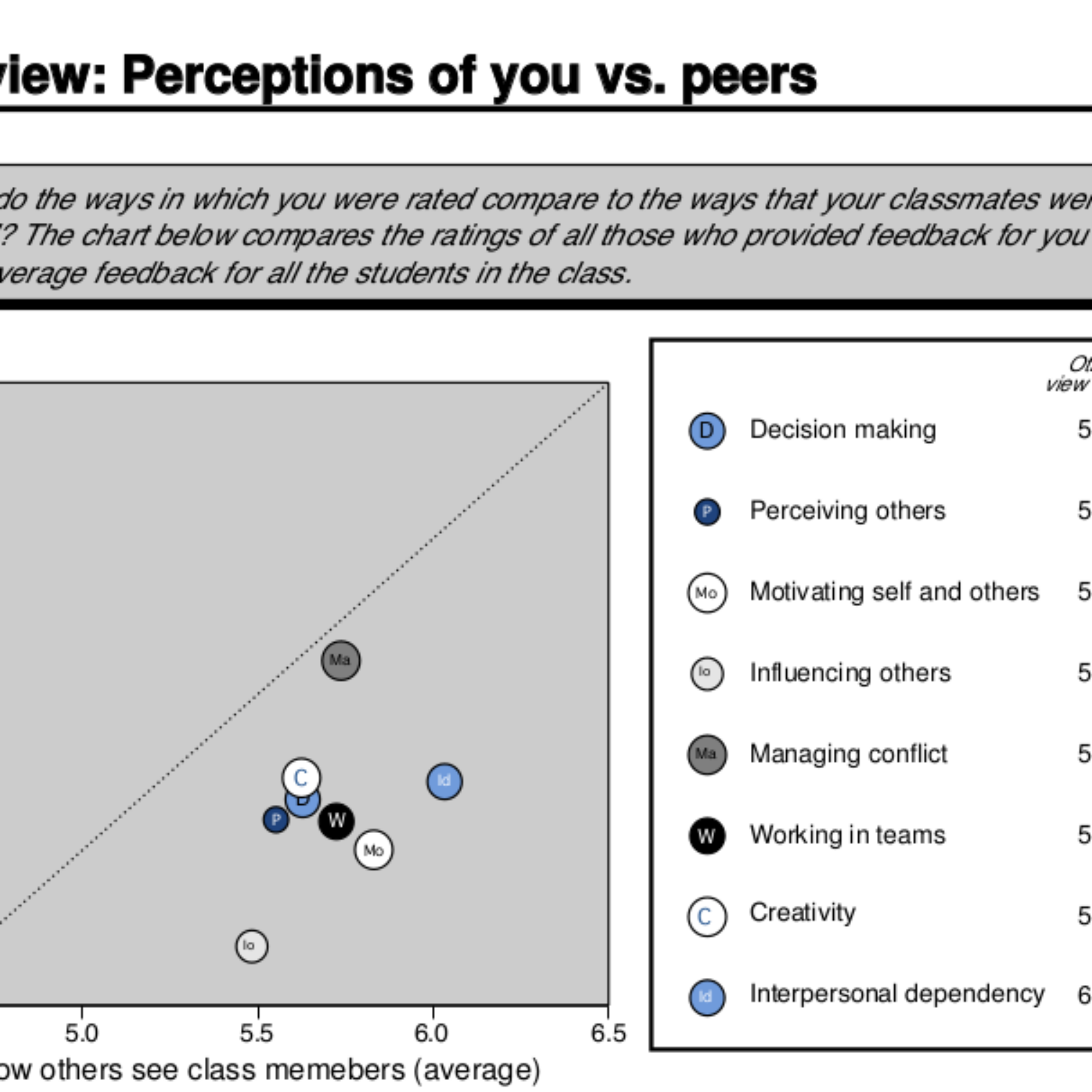
[This post is part of a series on Coaching Highlights from coaching Columbia Business School students. If you don't see a Table of Contents to the left, click here to view the series, where you'll get more value than reading just this post.] When your 360-degree feedback report features this chart and you want to start improving something, what do you start with? Keep in mind, you don't need a 360-degree feedback report to have to decide what to work on. Today's post applies to any time you want to pick something to improve yourself. You know from two days ago to focus on one meaningful thing at a time, but which? Nearly all the students I work with pick the farthest down dot, in…

0 Comments

Coaching highlights from coaching Columbia Business School students: Improve one thing at a time

[This post is part of a series on Coaching Highlights from coaching Columbia Business School students. If you don't see a Table of Contents to the left, click here to view the series, where you'll get more value than reading just this post.] A lot of students see the dots on the charts in their reports and decide they want to improve a few. In this chart, for example, they'll look at all the dots below the line, think "Uh oh, I'm behind my peers in everything," and decide to work on everything at once, or at least a few things. Most coaches I've talked to about it agree working on one area at a time makes the best progress not just in the area…

0 Comments

A good listening question, especially if you talk too much

Anyone who knows me knows my tendency to talk too much. I find most people seem prone to talk too much in certain situations. So how do you learn to reign yourself in? People usually don't like when someone else dominates a conversation, so it helps to learn when you are talking too much and how to stop doing so. Talking a lot doesn't necessarily mean talking too much. Some people tell amazing stories and you don't want them to stop talking, or give you fascinating histories or information you enjoy learning. Anyway, I just finished a conversation that ended with what I considered a great question I plan to use again. I considered it helpful, though it exposes a weakness. Toward the end of…

0 Comments

If you want to change something you do, its opposite usually is no better. Look for its complement.

People seem to want to change a lot about them. I see them trying to do the opposite of what they are trying to change. Sometimes it works. More often trying to do the opposite of what they want to stop reinforces doing it more. Food For example, overweight people often think if they eat too much they should try the opposite and try to eat less. But dieting seems to predict obesity more than prevent it -- that is, people who diet tend to be more obese than those who don't (sorry I don't have a source, so feel free to read this part skeptically). I find the complement to eating too much is not to eat less but to savor and enjoy your…

0 Comments

A model to make hard decisions easier

[This post is part of a series on "Mental models and beliefs: an exercise to identify yours." If you don't see a Table of Contents to the left, click here to view the series, where you'll get more value than reading just this post.] When I worry about a difficult choice I have to make I think of a parable. Some martial arts students ask their teacher how he always keeps his balance. He asks what they mean. They say, well you never fall down so you must never lose your balance. He says, on the contrary, I'm always losing my balance, but I'm also always recovering. I try to live like that. Things are always making me lose my balance but I rarely fall.…

0 Comments

Too much is a problem too

I hear people talk about those who have less -- usually less materially or less opportunity -- as deserving help and compassion. With due respect to their problems, I'd like to consider another challenging situation: having too much. First let me preface the huge difference between having too little and too much: people with too much can cut back. People with limited access to resources or opportunity can't usually create them out of thin air. People with too much may not know how to cut crap out, but they can. Big difference. Walking around New York last visit, I saw people with a lot more stuff and opportunity than I saw in Asia. But I didn't see them happier. On the contrary, I saw many…

0 Comments

End of content

No more pages to load