Tips


A simple, effective strategy for improving yourself — probably the best I know, and it’s totally free: Feedforward

[This post is part of a series on Mental models and beliefs: an exercise to identify yours. If you don't see a Table of Contents to the left, click here to view the series, where you'll get more value than reading just this post.] What if I told you the best way for you to improve yourself takes two minutes, costs nothing, and people will feel honored and flattered to help you with it? And you can do it anytime. Sound too good to be true? It's not. Read on. Oh, and make sure you get to the section on when I use it for how using it can help in your most important relationships at the most important times. Have you noticed the one…

0 Comments

Top models and strategies for negotiating

[This post is part of a series on "Mental models and beliefs: an exercise to identify yours." If you don't see a Table of Contents to the left, click here to view the series, where you'll get more value than reading just this post.] You negotiate every day. If you think you only negotiate when you're buying a car or creating a deal, you don't realize you negotiate every time you decide with a friend where to get lunch, with your spouse what movie to see, with your boss if you can work from home another day per week. Any interaction with some give and take involves negotiation. And if you think of negotiation as each of you trying to beat the other, you'll miss…

0 Comments

A belief to choose without getting mired in indecision

[This post is part of a series on "Mental models and beliefs: an exercise to identify yours." If you don't see a Table of Contents to the left, click here to view the series, where you'll get more value than reading just this post.] Do you ever get stuck unable to choose among options? Do you wish you could just go with something and be done with the choice? I found a couple useful models to help me choose. Model for choosing 1: my skiing model for choosing I wrote a few times about this model. Here's the most comprehensive post on it. Briefly, the model is this: when you ski a slope, the path forks, and you can't tell which path you'd enjoy more,…

0 Comments

A belief to motivate trying new things

[This post is part of a series on "Mental models and beliefs: an exercise to identify yours." If you don't see a Table of Contents to the left, click here to view the series, where you'll get more value than reading just this post.] Are you nervous to try new things? Do you wish you tried more things? Do you see others enjoying things you're too scared to try? I found a way to motivate trying new things. My model to try new things: I have low standards the first time. That is, the first time I do something, I consider it successful if I just do it at all, not by how well I do it. I wrote about this model almost two years…

0 Comments

My experience doing yesterday’s exercise and what it means to you

[This post is part of a series on "Mental models and beliefs: an exercise to identify yours." If you don't see a Table of Contents to the left, click here to view the series, where you'll get more value than reading just this post.] Since my results surprised me, I bet your results will surprise you when you do yesterday's exercise to record your beliefs (aka mental models or just models). First, the quantity. I felt like I had five or ten main models that I used a lot. I had about sixty or seventy. So the mental world I live in, from my mind's eye, is more complex than I thought. Next, how new they are -- that is, most of them aren't more…

0 Comments

An exercise in knowing your beliefs; so you can change them

[This post is part of a series on "Mental models and beliefs: an exercise to identify yours." If you don't see a Table of Contents to the left, click here to view the series, where you'll get more value than reading just this post.] We all know the story about the three guys doing the same physical work at quarry yet feeling different -- one felt miserable because he felt like he was just chopping stone, the next kind of enjoyed his work because he felt he was practicing a worthy profession, and the third who loved what he did because he was helping build the most beautiful cathedral the world had ever seen. How do you become the cathedral guy? As long as you're…

2 Comments

How to avoid temptation

Today's post will sound like it's about food, but it's about a lot more. The other day I was at a party with a great spread -- rich, delicious food and a lot of it: cheese, crackers, chips, cake, ice cream, and so on. I liked eating some, but realized I didn't want to eat too much. But everyone was talking around the food table and I find it hard not to eat delicious food right in front of you that everyone else is eating too. So I used my favorite strategy anyone can use to avoid eating too much of what they don't want. I didn't try not to eat the rich foods. I didn't try to eat less at all. I found the…

0 Comments

What makes a world-class speech

I was watching the beginning of the movie Patton. If you haven't seen it, it begins with George C. Scott as General Patton giving an incredible speech. YouTube has only the audio, but here it is. http://www.youtube.com/watch?v=9b5g1avyCSA Many see giving a speech like that as the pinnacle of leadership -- "I have a dream," the Gettysburg Address, Churchill's great speeches, and so on. If they are the pinnacle of leadership, I can't say, but they do showcase many of history's greatest leaders. So, those interested in leading may ask, how one gets to give such a great speech. Giving such speeches requires two elements -- the skill to deliver and the opportunity. Both come from one place. It may sound too simple and itself sound…

0 Comments

Unexpected skill for improving yourself

I noticed something that helps people improve more than almost anything else, at least in myself, people I know, and clients. Most people trying to change something about themselves, the bigger or more complex, the more they try. The harder they try, they figure, the more they'll do. They focus on the new thing they want to do. The unexpected skill for improving is not to try harder with the new thing you're trying to do, but to let go of the old thing you're trying to replace. Here's a model that might help: If you're trying to change your clothing style, getting rid of your old clothes will change you faster than getting new clothes, because you'll still end up wearing whatever old clothes…

0 Comments

Don’t take things personally when they aren’t

I heard that advice and thought it sounded useful: Don't take things personally when they aren't. Even more useful, it was followed up with the question and answer. So when are they personal? Maybe never. Whether the answer is right or wrong, I don't know, but it sounds like a useful belief or model. How many times when people attack, insult, or make you feel something is personal do you realize later they were talking about their own insecurity or problem? Or not even paying attention to you at all? How often after something makes you feel personally attacked does the person later apologize for their bad mood or that they learned something later that would have changed their approach?

0 Comments

One way to help prevent unhappiness

When people feel unhappy or depressed they often stop doing things. They don't feel motivated to work or go out so they don't. You know how when you're happy, you tend to smile? Most people also know smiling makes you feel happier, at least for a moment. Forcing a smile won't solve all your problems, but we can build on what it demonstrates. Not only does emotion motivate behavior, but behavior influences mood. While brief behavior influences emotion briefly, longer term behavior influences emotion long term. To keep your mood stable, keep up your habits consistently. It may not make your life perfect, but it helps a lot. It gives you a solid platform to build the rest of your life on. I've written about…

0 Comments

Paper shredders and making changing beliefs and values easier

People tell me it's hard to change beliefs and values. Some people think it's impossible. I agree if they believe it's hard, but you can and it gets easier with practice. Most people change their beliefs and values all the time without realizing it. One goal for this page is to help people learn to change their beliefs more easily so I try to give examples of how you already change beliefs and values without thinking about it. If you see you do in simple or little cases, you can expand what you already do to more complex or bigger cases. Next thing you know you'll change your life. People often restrict themselves by thinking of changing beliefs as thinking positively or thinking the opposite…

2 Comments

“I am a freedom junky” — David Allen’s inspiring words that simplified my life

Do you feel stress from too much stuff to do or lose track of things? Many entrepreneurial and management types I know read Getting Things Done and put it into practice. I recommend it. I read the book and like the philosophy -- in particular, his observation that if your mind has to remember something, it will allocate resources that distract you from everything else. The more you have to remember, the more it will preoccupy your mind. I didn't connect with it on my first reading, when I thought it was just about efficiency. What made me appreciate it was meeting David Allen at a cocktail party. He described himself as a "freedom junky" and the book his way of creating freedom. I value…

0 Comments

The Barnes Foundation!

If you haven't heard of the Barnes Foundation and you like art, find out about it. If you're anywhere near Philadelphia, go there. Albert Barnes was a successful entrepreneur who lived in and near Philadelphia (and went to my High School) from 1842 to 1951. According to Wikipedia, "in his 30s Barnes began to study and collect art. He acquired his first 20 pieces by commissioning his friend, the artist William Glackens, to buy modern work for him in Paris. After selling his business, he devoted himself to the study and collecting of art." His collection is now worth about $25 billion and a few months ago they opened a new building in Center City, Philadelphia to show it. I visited the other day and…

0 Comments

An exercise in doing what you have to even when you don’t want to

Everybody faces tasks they don't want to start, know they have to do, but also know won't take that long -- things you might characterize like pulling teeth, holding your nose and taking your medicine, or grinning and bearing it. We all want to learn to motivate ourselves better. Examples include talking to your boss about a raise, talking to a significant other about a problem that's been bothering you for a while, or finally sitting down and doing your taxes. You know the task won't take that long. It probably won't even hurt. But you have to do it. When you read a lot of leadership and personal development literature, you come across some odd practices. Sometimes it helps more than you expect. I've…

4 Comments

A question nearly every investor asks that you, the entrepreneur, can almost never answer

Investors describe themselves as helping entrepreneurs and often they do, but somehow every entrepreneur I've asked about the challenges of working with investors could still tell me stories about how investors made their lives and business difficult. However much investors want businesses they've invested in to grow, their interests never perfectly align with those of management, especially before they invest in the firm in question. I wouldn't call that difference good or bad. You just have to realize the different interests as inherent to the system. Realizing the difference in interests isn't personal helps keep things calm. Investors expect entrepreneurs to handle their interests in stride, but I find they often don't themselves recognize how their pursuing their interests impedes optimal growth. Of course they…

0 Comments

You don’t find passion, you create it

I wrote the following to a client and thought it was worth sharing here. I've written similar things before, but it bears repeating. I think it speaks for itself, but let me know if it needs more explanation or context. ----------------------------- I find with passions you get out what you put in, so I think the advice to find your passion only gets half of it. You need to find an area interesting enough to you to devote yourself to it, but no passion begins as a passion. It begins as in interest. It grows to a passion from what you put into it. Resources like time, energy, money, attention, etc that you put into one area you can't put into another, so we have…

0 Comments

Common objection 12: I’ve worked so long and hard but feel like I’m getting nowhere or going backward

[This post is part of a series on internal objections and blocks and how to overcome them. If you don't see a Table of Contents to the left, click here to view the series, where you'll get more value than reading just this post.] Objection I don't think you can significantly change your life, at least not at the beginning, without thinking something like I've been working on this for six months and I'm farther back than I was when I started. or I try so hard and I never get anywhere. For small or simple changes we may progress monotonically, but major changes don't seem to work that way. Example I'm sure you've had this feeling yourself. Underlying belief You get frustrated that progress…

0 Comments

How to decide among close options

I've written before about why deciding is hard. One of my most helpful (to me) insights was that the difficulty in deciding is not figuring out which option I like, but working up the nerve to get rid of the options I don't choose. Our language illustrates this challenge -- the -cide in decide is the same -cide as in pesticide, insecticide, etc. It means to kill, reiterating that the challenge of choosing is "killing" the options you don't choose. I see people caught in patterns of not choosing, sometimes looking for more evidence, sometimes analyzing away, sometimes just scared to "kill off" options. Their reasons are endless. The result is the same. How to decide among close options The situation If you strongly preferred…

0 Comments

Exercise helps everything

Exercise helps everything. I can't think of any time or situation exercise doesn't help. Whenever I'm not sure what to do, I think, "exercise can't hurt." Even if all I do is a burpee or two, I find it clarifies my thoughts. I've never found a case where exercise worsened a situation. Even if I'm in an insane hurry, where I feel every second counts, a push-up or two barely takes time and often reveals to me that not every second counts -- feeling that way almost always comes from stress-induced myopia that is leading me to make bad decisions. Even a few seconds of physical motion relieves the intensity and gives perspective. It overcomes an empathy gap that works for you Even simple stretching…

0 Comments

Responsibility and accountability: expect stagnation without them

The other day I saw a post for a headline that caught my eye "On Scale of 0 to 500, Beijing's Air Quality Tops 'Crazy Bad' at 755" because I was just in Beijing. I remember early one evening looking up in the sky and seeing a low flying airplane. Actually, I only saw its lights in the smog. I got confused looking at it because it looked close, so I expected it to appear to move fast. But it was moving so slowly I figured it had to be very far away. Then I realized why it didn't look like it was moving. It wasn't. It was the light at the top of a building a couple blocks away. The smog was so dense…

0 Comments

Richard Feynman on fooling yourself not helping you

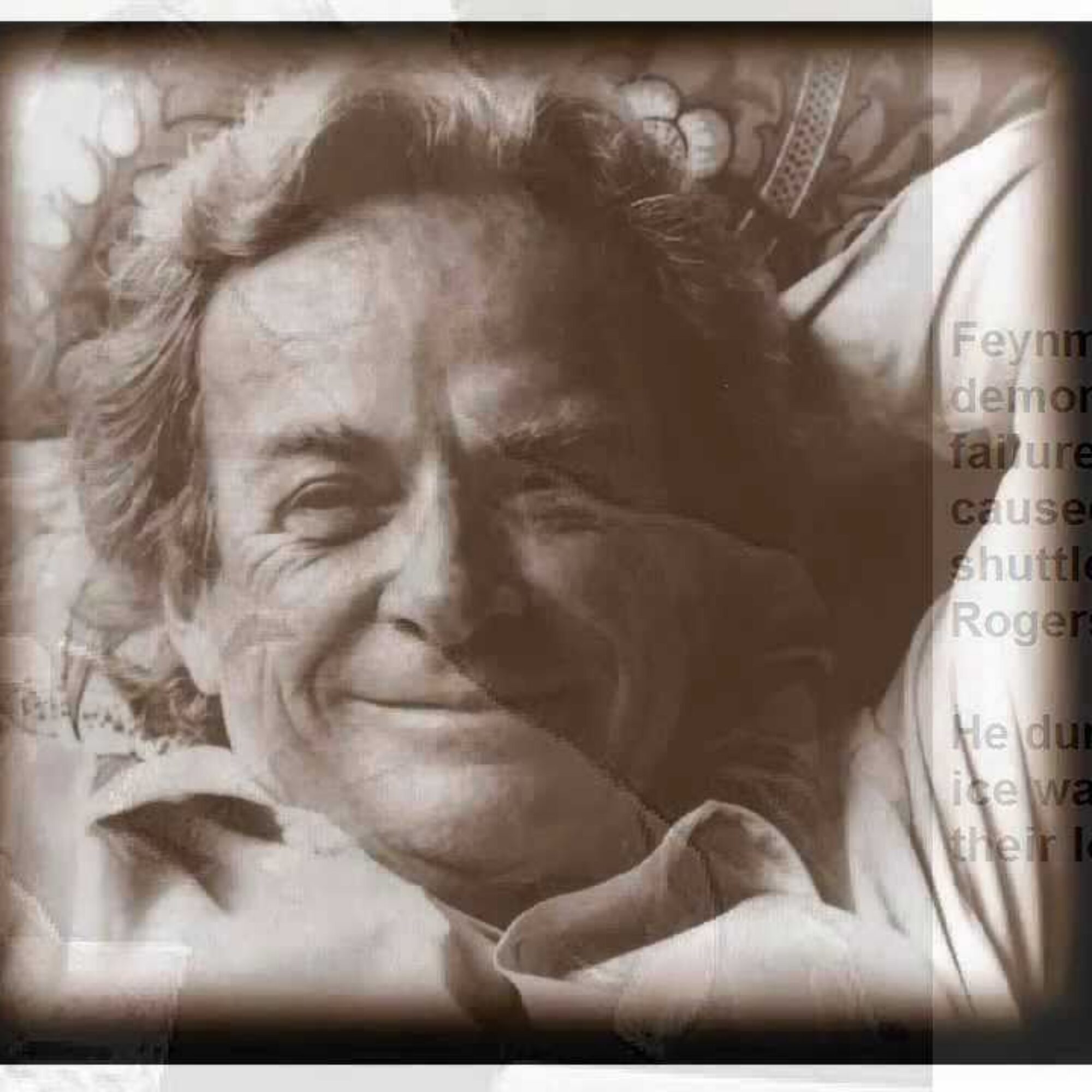
Richard Feynman, one of my heroes, Nobel prize in physics winner, and entertaining guy, had concise advice in his commencement address to Caltech relevant to yesterday's post on not fooling yourself. The first principle is that you must not fool yourself - and you are the easiest person to fool. Here's the text of the full speech, which is famous in scientific circles for his concept of "cargo cult science", and which I recommend reading. Here's a YouTube link I found searching for the text of the full speech. As usual, since China blocks YouTube I can't see the link, so I hope it's relevant. https://www.youtube.com/watch?v=yvfAtIJbatg

0 Comments

Fooling yourself doesn’t help you

I can't help reposting a comment I put on another site. Readers here know that while I don't eat meat I don't consider avoiding it virtuous or better. I don't consider not eating meat any more healthy, virtuous, humane, delicious, or whatever than eating meat. I don't understand why so many people who eat meat call themselves vegetarian. What do they gain? As best I can tell they consider not eating meat better or virtuous. Or maybe they feel special. But then don't they feel bad when they eat meat, having told people they don't? Or when they start eating meat honestly again? Doesn't that make them seem flighty and lower their credibility, which, in turn, hurts people's impressions of them? To me, social skills…

0 Comments

Overcoming Objections and Blocks overview and table of contents

Here is an overview of my recent section on Objections and Blocks with links to all the articles. If you haven't already, I hope they help you learn to look forward to objections and blocks as signs of progress, that your project is significant, and as guidance for how to proceed. As I began the series Whether you want to lead or motivate others or yourself, deciding to lead means you will face objections and blocks. Whether from members of your team or from your anxieties and fears, objections and blocks are similar, as are their solutions. For the next week or so, I'll cover a range of objections, blocks, and various other ways we discourage ourselves or face others being discouraged when we try…

0 Comments

End of content

No more pages to load