Sports and passion

I ask people about their passions a lot. Many tell me they have no passions, which makes me sad for them. I don't think passions are something you find lying around but something you create and build from small interests through self-awareness, effort, and dedication. It means they haven't created something they could have. They either never invested enough to find out what it took to create a passion or, if they did, capitulated on the effort. Or they're young enough not to have had the chance yet. I've written before about the sink-or-swim moment experience in college that taught me the meaning of competition -- that I had to work hard to make something of myself and the decades of reward it brought me.…

0 Comments

People who claim not to judge and blame often do, illustrated, part 2

Following yesterday's post on the Daily Show's showing people saying they include and accept exclude and dismiss, here's another on blaming and finger pointing, claiming others are doing it, not you. Watching the clip is funny, but I'm including it here because it gives us a chance to introspect. The point of this blog is to provide tools and insight to learn and grow, and I think this clip does -- though the surreality of the bit where the guy doesn't stop finger-pointing while saying others should is amazing. The people in the video seem blind about their different standards, begging the question of what we ourselves are blind to. Think you're not blind to some hypocrisy in yourself? So did they. I suggest you…

0 Comments

People who claim not to judge and blame often do, illustrated

Early in my blog I posted about how people often don't realize how much they judge and blame, even when they believe they don't. People often say others judge and blame when the others' values differ. When they themselves judge and blame they just think they're calling it like it is. As I wrote then, it's easy to say you don't judge or blame when talking about other people's values that you don't share. It's more difficult when talking about your values. I find myself judging and blaming more than I want to, but I think I've decreased a lot. I've written about exercises that worked for me, making me pleasantly surprised at how much judging and blaming less improved relationships. As I've written many…

0 Comments

More on power, leadership, lawlessness, justice, and amnesty

The New Yorker published a piece, "The Fairness Trap," echoing the issues I wrote on yesterday in the context of the U.S. foreclosure and Greek economic crises. In both cases, people's desire to punish people conflicted with clearly better economic solutions, according to the author. He talks about fairness, basically the same concept as justice -- reacting to emotions like outrage, indignation, and self-righteousness over agreeing on criteria to evaluate future outcomes on and trying to achieve the best one based on those criteria. A major problem with fairness, justice, outrage, indignation, self-righteousness, and the like is their subjectivity. We may personify justice as holding scales, but no scale can evaluate when an outcome or behavior is right or wrong, just or unjust, fair or…

0 Comments

Power, leadership, lawlessness, justice, and amnesty

I'm going to present an over-simplified case related to issues many of us face in much smaller contexts. The goal is to learn from simple hypothetical cases to build experience for more complex, real-life cases. Normally I separate my North Korea posts from leadership ones, but they overlap here, along with my being in China now. One of the greater challenges the world faces is how to bring some kind of justice, or at least rule of law, to the North Korean regime. I think any community in the world not directly benefiting from the North Korean government's behavior would condemn it and consider punishment appropriate. This raises a challenge: because the regime holds all the power locally, nobody can bring them to justice. Because…

0 Comments

On the values of travel

Last month I wrote how I don't like to travel, just as I embarked on a trip to North Korea and China that ended up including Vietnam too. Then I had another trip of a lifetime! The amount I learn and grow when I travel -- nearly every time -- forces me to rethink that statement. People who've known me for years know I haven't liked to travel for a long time, despite having traveled a fair amount. When I think of traveling, I tend to think of spewing jet fuel into the air and living out of a suitcase, both of which I dislike intensely. I don't think about cost because with rare exception, I travel when someone else pays and I have enough…

0 Comments

Why people flip out (including yourself) and what to do about it

The pattern: overly intense emotions We've all experienced someone losing their cool around us. People flip out. They scream or raise their voices. Or, alternatively, sometimes they withdraw and act depressed or powerless. They make rash decisions. They get difficult to be around, etc. Sometimes you're the one whose emotions get out of control. Some people describe the pattern as "being emotional." Since I say people are always feeling emotions -- calmness, satisfaction, and laziness being emotions, for example -- I specify that losing your cool means your emotions became intense. The problem with the pattern Intense emotions override other emotions and rational thought. People feeling intense emotions react without thinking -- the opposite of leadership. You don't like working with people like that. One…

0 Comments

A leader and physicist’s view on morality, ethics, and judgment

Wrapping up my series on the counterproductivity of leading with morality, ethics, and judgment, I'll present a model based I got from Einstein. Without all the emotion judgment can grip you with, you can understand the physics model easily. Then you can apply it to the emotional situation. Then I bet you'll improve your life. Before Einstein: the problem of the aether Before Einstein, people created a concept called the aether. They saw light traveling through a vacuum and figured something must be there, so they created a concept. For years they looked for properties of it. No one succeeded. You might remember the Michelson-Morley experiment from high school physics that famously couldn't detect the aether. That was a problem. People were looking for something…

0 Comments

How do you lead when you can’t stand working with someone?

Yesterday I wrote on how to lead people (yourself or others) you disagree with without judging them. I skipped cases where you felt you could not work with the person under any circumstances. Let's look at such cases today. I'm going to treat these cases strategically. Most cases will be unique at the tactical level so you'll have to figure out how to apply the strategy. If you can't work with someone, YOU have a problem First things first. No matter how bad you think they are, no matter how much evidence you have pointing out their faults and shortcomings, no matter how many other people agree the other person has problems, you have a problem too. I'm not saying they don't have problems too.…

0 Comments

Deciding right and wrong for others and causing them guilt and blame doesn’t help anyone

Prelude: this is about leadership (of others and yourself) Yesterday I outlined an essay on the counterproductivity of deciding right and wrong for people who disagree with you. Today I'm fleshing out the essay. The point of this blog is to help people lead -- to influence others, to work with them in teams, to negotiate with them, and so on -- even when you disagree. So I'll leave deciding right and wrong for others, figuring that, since some issues haven't been resolved for thousands of years, you might not resolve them before you have to deliver on your project (or while you improve your life if we're talking about leading yourself). Successful leaders ship while attract people to work with them. Today's post covers…

0 Comments

Ecology, economy, population growth and Do The Math

I've written about Do The Math, the blog that takes a quantitative, scientific, and usually non-judgmental approach to understanding our impact on the environment. I posted on it today for the first time about some questions I'd been thinking about for a while but haven't approached in that blog's way. He has written about increasing his efficiency in using energy. I generally applaud that approach and do it myself, but I wonder about its value in the long-term, given population growth. I wrote the following on a thread on conserving energy in the home and persuading others to. Regarding efficiency, while I also try to improve mine, I can't help but put these gains in the context of population growth, mainly driven by having read…

8 Comments

Words of wisdom for crunch time

Crunch time means you don't have a lot of time, you have a lot to do, mistakes can cost a lot, people depend on you, and likely you depend on other people. People make mistakes. Also, sometimes you have to make decisions based on less information than you'd like. If people dwell on the mistakes or find out later that someone else could have made a better decision, they point fingers. Pointing fingers distracts from the task, takes time from productivity, and hurts morale. My general advice Don't look for blame, but take responsibility for making things better to the extent you can applies particularly well in crunch time. I'll add more specific words that seem to come up in many crunch times. I say…

0 Comments

Leadership-based thoughts on economic and energy growth and limits

My closing paragraphs on yesterday's post, anticipating people's reaction, got me thinking about Marshall Goldsmith, one of today's top business thinkers (and a friend). I wrote the following: By now, many of you are probably thinking "we've solved all the problems so far, we'll solve the ones to come" "since before Malthus scientists project doomsday and they never happen, we can ignore this" or "this won't affect me" If so, do the math. Read his blog. At least understand the situation. If he's wrong, show him how. Show me too. I'd love to find out he's wrong. As a scientist, he (and I) would love someone to show him (and me) wrong. That's how we learn. I hope you're open to the same. Now before…

0 Comments

How to attract anyone, part 3

"What if the other person is boring?" People ask me this question all the time when I tell them they can attract people better, especially through genuineness and authenticity. The question reveals a belief about people I disagree with. My belief creates more friendships that are deeper and more meaningful. I'll talk about it here. Two beliefs that create friendships I believe everyone has facets of their personality that are interesting, intriguing, and fascinating. I also believe that you could know someone for decades and still find out new things about them. Think of the person you are closest to. You never run out of things to say, right? Imagine talking to them for fifty years. You'd still have things to talk about with them,…

0 Comments

Forget what you have. What can you create?

Think of what you want in life -- from work, play, relationships, etc. Now think of what you already have in those areas. Many people evaluate their lives by what they have. Great. What you have doesn't tell you as much as what you can create. What you have describes the culmination of a past you can't change. The ingredients to create -- usually skills more than material possessions -- describes your future and suggests how to live now. More important questions for improving your life is do you have the ingredients to create what you want and how do you get them. Since no one will create your future or live your present for you, only you can take responsibility for creating what you…

0 Comments

Don’t let a sour grapes attitude ruin your life

A friend asked why guys who have trouble meeting women insult them. With the worst insults you can think of, no less. As we'll see, not only men in that context do it. In other contexts women do it. And not just about other people. I do it. You do it. Everybody does it. What's going on? Let's look at the pattern. It keeps you from improving your life, so it's important. When people can't attain something they want, they put it down -- a more general effect than in dating. They're resolving a conflict in their mind (aka a cognitive dissonance): "If I can't have it it must be worthless. Or worse!" Like Aesop's fox who can't reach the grapes, they say they must…

0 Comments
The best book for understanding North Korea
The best book to understand North Korea

The best book for understanding North Korea

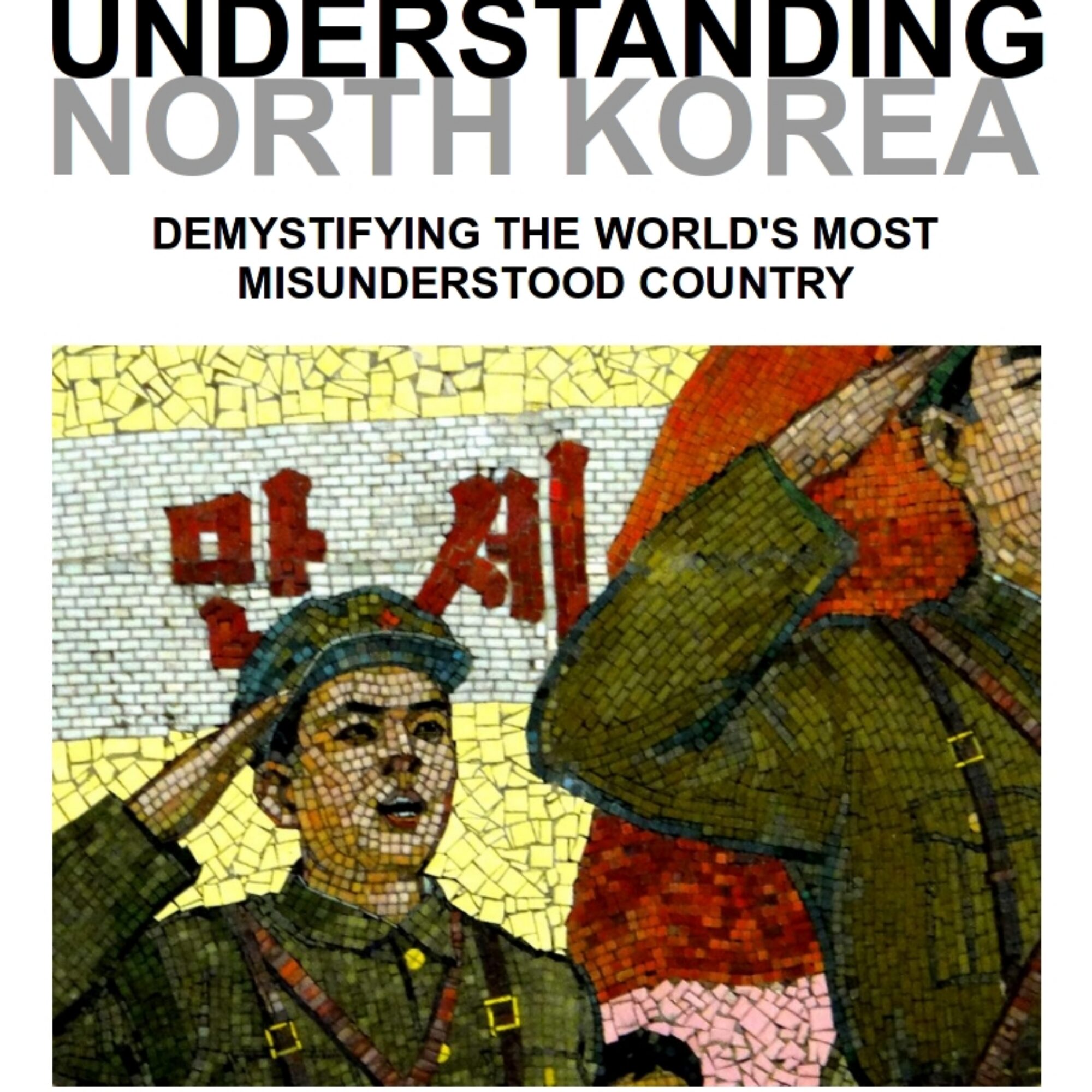
North Korea fascinates us. Its leaders, their posturing and militarism, their economics, and more all fascinate us. Their belligerence puts them in the news often. Yet we know little about them. More than fascinating, they are globally important. They are a nuclear power with the world's fourth largest military and most militarized border. Yet the media, mainstream and otherwise, mystifies them more. No one explains how or why anyone could act like its leaders and population do. Until now. I wrote Understanding North Korea: Demystifying the World's Most Misunderstood Country to explain the situation there. Many books and articles cover border skirmishes, human interest stories, the apparent oddness of their leaders, breaking news, and the like. None before gave the big picture. Understanding North Korea…

0 Comments

Occupy Wall Street and Leadership, part 4: Bloomberg taking sides polarizes situation

After finishing the first three posts in this series I found the first link returned on searching "bloomberg occupy wall street" quoted him Tuesday in the Daily News. Reporters are motivated to play up controversy, so I figure the reporter may have taken the quotes out of context. Based on what I read, I see Bloomberg increasing the polarization, taking sides, and missing his opportunity to lead. As a leader, I think the opportunity is not to delve into what people are saying, except to make sure it's legal and non-violent, but to support their right to speak, as long as they stay non-violent and legal. If you support that, you can come down hard if they become violent or illegal. Once you selectively enforce…

0 Comments

Occupy Wall Street and Leadership, part 3: recommendations

Okay, now we understand the situation. What can be done? As I wrote yesterday, people don't want to protest. They want their voices heard and to understand and agree with the process they're talking about. The opportunity for the Mayor of New York City is to follow a three-fold path Support the right to speak freely in his city Recognize the need for order and non-violence Support the city's great tradition of active participation in politics First, acknowledge protesters' right to free speech... Stating clearly there are multiple issues at play, only one of which is law and order in the street will lose him no support. Another issue is law and order in finance. Most importantly, as Mayor, simply acknowledging citizens want to speak…

0 Comments

Occupy Wall Street and Leadership, part 2: the New York City Mayor’s opportunity

Following yesterday's context... Bloomberg has done a lot for the city. I like the increased bike lanes and pedestrian zones in Times Square, Herald Square, and Madison Square that have appeared under his leadership, for example. But personally I remember him most for what I saw as his lack of leadership during the 2004 Republican convention in New York City. People wanted to protest non-violently. The police refused permission to meet in Central Park, where larger groups had met before. The mayor's voice was largely silent. 500,000 people intended to speak their minds non-violently. The police both prevented it and illegally arrested many protesters. Wikipedia, citing the New York Civil Liberties Union, says 90% of those arrests were overturned. 500,000 people is a substantial fraction…

0 Comments

Occupy Wall Street and leadership, part 1: the context

This series of posts will present easy, low-risk-of-error, high-chance-of-success actions that would-be leaders can do. As always in this blog, it begins with context and an overview of the relevant principles as I see them. So far, the movement has revealed a stunning lack of leadership all around. People ask who is leading the movement. Great question, but the protesters are only one place lacking leadership. While most people point out the protesters' lack of leadership, I am more stunned by two other cases of absent leadership: the government's response and the changes to the financial system that prompted the protests in the first place. The protesters can at least point out they never expected the movement to resonate so strongly — an undeniable sign…

0 Comments

On Responsibility and Occupy Wall Street

Pausing from my series on the Method, I haven't written much about Occupy Wall Street, despite it being the topic of much conversation in New York. On an online community, I couldn't help respond to someone else's post on responsibility. [another community member] wrote: ...taking responsibility for ones self is the clear problem here..They are not taking responsibility for themselves and blaming.. I think they would be better off camping out in front of obamas perch, and going after the lobbyists who essentially run this country. Also this loud gathering has cost the city 3.4 million dollars thus far, and crime rate has gone up due to the fact that 3,000 police officers are babying these entitled people. If they had half a brain why…

0 Comments

How to make people around you miserable

People sabotage their relationships and lives without realizing it. You might too. Today's post will tell you an effective way to make your relationships miserable and shallow, in contrast to yesterday's post on how to get others to improve your life. People do the opposite of that post's ideas and, lo and behold, achieve opposite results. They have apparently valid, but ultimately shortsighted and counterproductive, reasons for their behavior. Their reasons seem valid only when their awareness is low enough. Yesterday's point was that by sharing with people what you love, they'll know what you love and tend to share it with you; likewise that when you know what others love, you'll prefer to share those things with them. Everybody enjoys being on both sides…

2 Comments

Leaders take responsibility

One last behavioral trend to round out a few recent posts on behaviors that correlate with importance. The others were on leaders having the least stuff, being the least hurried, and the most common route to becoming CEO. People know this one, though they don't always act consistently with it. Look throughout an organization. The higher you move in the organization chart, the more responsibility people have. Having responsibility because of your position isn't the same as choosing to take responsibility. But people who choose to take responsibility become more important in their communities. Likewise, people who shirk responsibility lose importance. There are wide exceptions, of course. By the way, accountability and responsibility go hand in hand, so people who choose to make themselves accountable…

0 Comments

Alternatives to counterproductive emotions and behavior

Who likes feeling bad, burdened with emotions we not only don't like, but that, if we act on them, make our lives worse? Yet sometimes countering them with their opposites makes things worse still. For example, trying to calm down when you're angry, especially if someone else tells you to do it, often makes one angrier. Many emotions have complements that are more effective than opposites in dispelling them. I just wrote a series on taking responsibility as an alternative to guilt and blame. Curiosity dispels anger and brings about calmness more effectively than trying to be calm directly. Here are a series of complements to emotions and behavior that I find effective. Responsibility > guilt and blame Curiosity > anger Usefulness > accuracy (in…

0 Comments

End of content

No more pages to load