What I’ve bought this year besides food

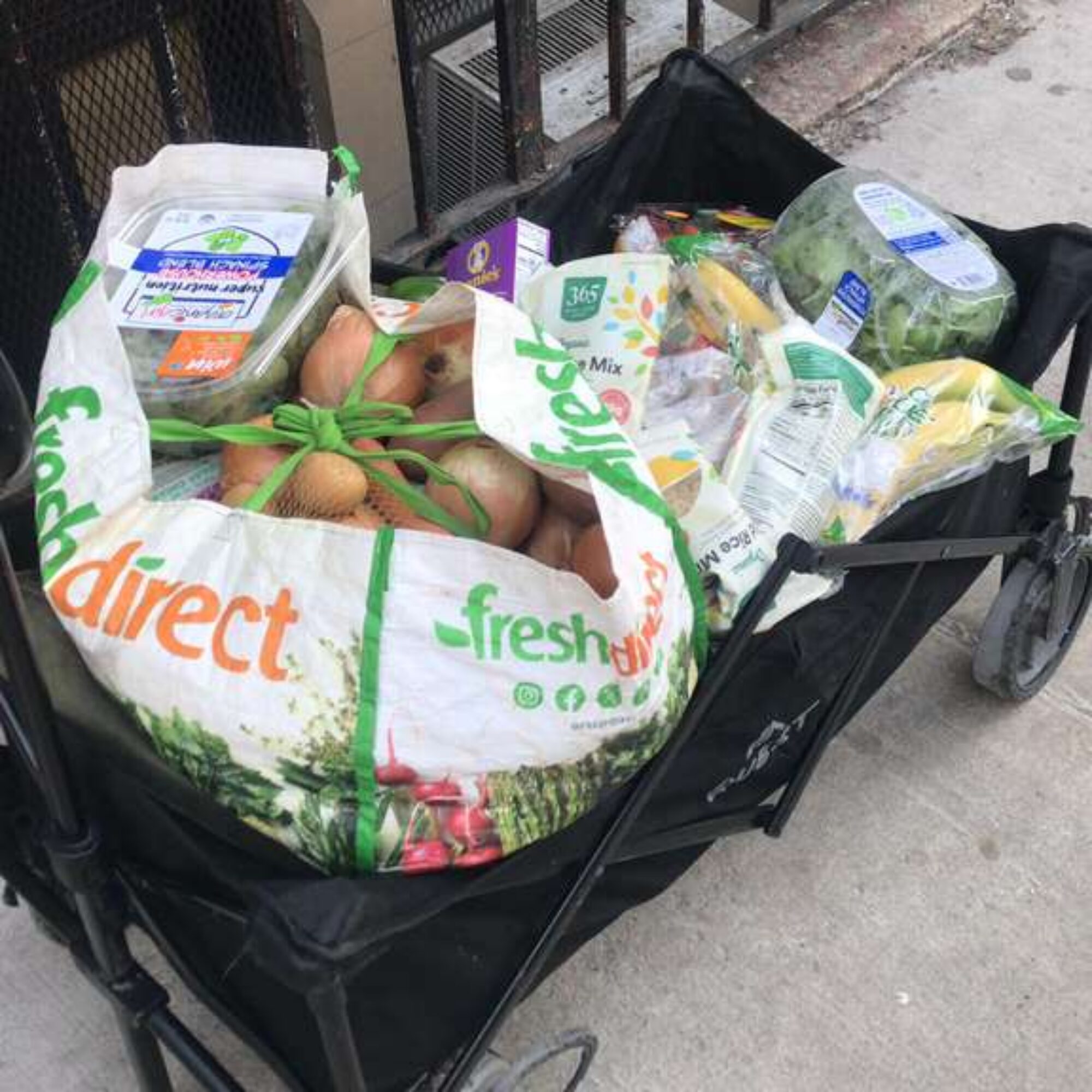
I tried to remember what I bought this year besides food. My doormen remark when a package arrives for me since I get a few per year. I ask if anyone else gets less. They say not even close. They tell me that some people receive more packages in some weeks than I do in a year, and many such weeks. As for food, I probably spend about $200/month, though I don't keep track. My biggest food cost is probably dried legumes in bulk. One example: I had been looking for a pair of shoes in my usual way: checking Craigslist and Offerup when I thought of it for a few months. My current pair has holes in the bottom. Since they're minimal, that means…

0 Comments

This week’s selected media, October 5, 2025: Power and Liberty, two addiction articles, Blood Brothers, and Behind the Curve

This week I finished: Power and Liberty: Constitutionalism in the American Revolution, by Gordon Wood: I've been reading, watching, and listening to Akhil Reed Amar's work. He praises Gordon Wood so I borrowed this book from the library and watched a bunch of videos of his talks. This book covers the history around the Declaration of Independence and Constitution. It covers the events prompting the colonists developing new views on liberty versus monarchical rule, developing principles like separation of powers and the people being sovereign, voting for representatives, checks and balances, and other developments, some new in history. This book led me to realize how easy it's been to consider declaring independence and writing a constitution obvious steps. The parallel processes of creating thirteen state…

0 Comments

A new podcast I recommend: “Bulk Beans & Bicycles”

Regular readers and listeners to my podcast know Evelyn from her being a guest and my mentioning her. I'm not sure if I've mentioned Hayden, but both of them took my workshop in sustainability leadership (I recommend you do too). They started a podcast together called Bulk Beans & Bicycles. They posted the first episode a few days ago. Here's the link to the podcast's home page and to a page that links to all the other places to listen. They cover living more sustainably, each post-mindset shift and continually improving. They aren't just talking theory or telling you what you should do. They're living more sustainably, seriously, also joyfully. They're fun at times, serious at others, but always engaging. They talk based on hands-on…

0 Comments

Birds like playing on my solar panels (cute picture and video)

One day charging with solar in Washington Square Park, I saw a bunch of birds flapping around on the panels. I'm not sure if you can see them playing around in this picture. The video below partly captures their playfulness, but not as much as seeing them. They'd flap up onto the panel, then flap around up and down, solo, in pairs, and in groups. It was a warm day, otherwise I'd presume they were trying to use the warmth of the dark surface to heat themselves up. Adding to the mystery, I've brought the panels out probably hundreds of times and I'd never seen them doing it before or since. If any readers are birders and can tell what they were doing, I'd love…

0 Comments

Year five, day 2 no refrigerator. Did you know power companies promoted them to use more energy (not for health, safety, or flavor)?

The first time I unplugged my fridge was December 2019. A few months later Covid hit and I lived outside the city a couple months. My fridge remained unplugged, but I don't count that time since I wasn't home. The next time I unplugged earlier in the year: November 2020, and made it six months or so before spring warm weather made keeping things fresh harder. The next year I started yet earlier: September 30, 2021. My goal was to make May, I think, but that May I unplugged the whole apartment so made it a year with the fridge unplugged and didn't see a reason to plug back in. Along the way, I learned from the book The Grid that fridges became widespread not…

0 Comments

More delicious free heirloom tomatoes that volunteers and poor people rejected but I turned into gazpacho

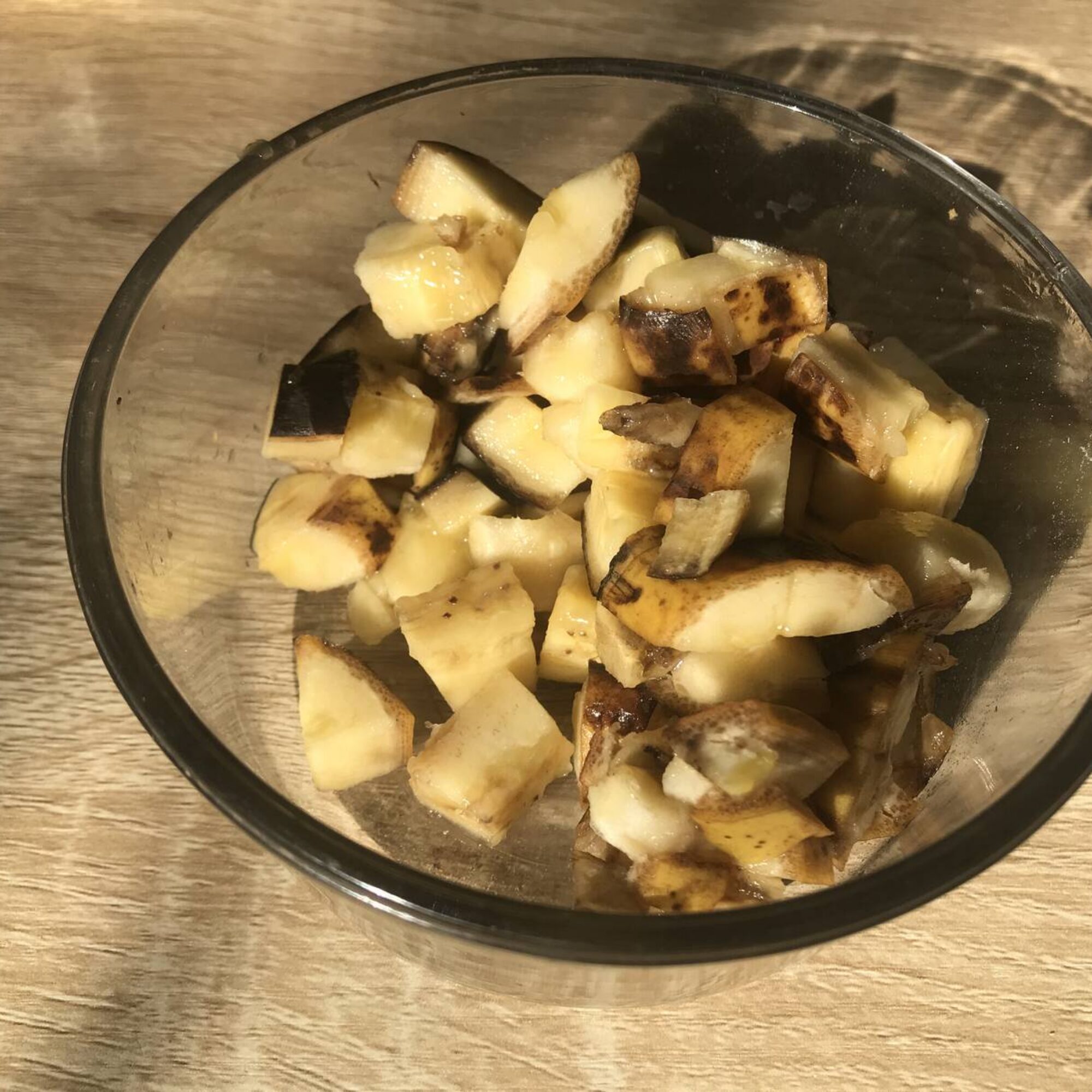
In my newsletter I wrote about heirloom tomatoes that taste delicious that I eat after other volunteers, homeless people, and poor people reject them. Here's what I wrote, followed by a picture of the tomatoes and a picture of the gazpacho, as if it tasted different if the tomatoes weren't bruised. What's wrong with us that we act as if other people waste food? Or all the other garbage we produce? I haven't written about people wasting perfectly good food and heirloom tomatoes in maybe a month, but yesterday, again, there were at 80 pounds of bruised heirloom tomatoes. The volunteers, who volunteer to help hungry and poor people, wanted to throw the bruised one away without even offering them. The hungry and poor people…

0 Comments

I apologized after over twenty years and it turns out he didn’t notice what I did.

In the late 1990s and early 2000s, a friend invited himself into a social group of mine. He was a good friend, as were the people in the other group, but at the time I wanted to keep them separate. As it turned out, my initial impulse to keep them separate was baseless. He fit in the group and everyone got along. Except for one thing. At some of the early times he joined the group, I don't know how to put it: I resented what I saw as him intruding. Whereas normally when we hung out, I'd speak openly, we'd joke around, and enjoy each other's company, while out with the other group, I'd communicate less and more perfunctorily. For a while I looked…

0 Comments

If you build a home where it’s unlivable, on what grounds to you complain when you can’t live there?

First and foremost: any preventable death is tragic. The goal of this post is to prevent deaths while making people's lives more safe, secure, and healthy. Any reading to the contrary misunderstands me. You've seen tragic headlines of people not surviving difficult environmental conditions. A couple recent ones from Phoenix include 'This should be a necessity': Hundreds in Phoenix area die at home without air conditioning and Lack of air conditioning in metro Phoenix can kill. These are the recent victims. Some quotes from the articles: On July 1, 2021, Louis Hernandez Jr. woke in a house already sweltering from the blazing summer heat. His air conditioner had failed the day before, and inside their Peoria home, he waited for the repairman to arrive. Outside,…

0 Comments

This week’s selected media, September 28, 2025: The Devil’s Climb

This week I finished: The Devil's Climb, starring Alex Honnold and Tommy Caldwell: I got tickets to watch this movie followed by a talk including Honnold and Caldwell. My nephew is a rock climber, so I invited him, who invited a climbing partner friend, plus a coaching client is a climber, so the four of us attended. The movie was engaging, heartwarming, and thrilling. It touches on climate but not other issues of polluting and depleting. On the other hand it shows their camaraderie. My nephew's friend said he thought it skimped on the climbing details, but I lacked the background to tell. Plus we met the two stars and members of their team after, in person. It was part of "Climate Week," where something…

0 Comments

838: Zach Rabinor, part 2: What if your business and values clash?

Zach and I got so into our first conversation that we had to take a second one to get to the Spodek Method. Listen for yourself, but I hear Zach working with three motivations: His surfer, outdoors self wants to conserve, protect, and enjoy nature and enable others to do the same by experiencing it. His CEO self wants to deliver what his customers want, despite what they want including polluting and depleting---that is, hurting people and wildlife---beyond what nearly anyone who ever lived has. They don't know it and his company's current message implies that they're helping, not hurting. His leadership self wants to improve himself and his work, to resolve conflict, to explore his boundaries and his team's to see if they can…

0 Comments

Two more times I cried, from laughing

The other day I wrote about the Times I Cried. Those times were occasions of loss or sadness. I had also thought of I time I laughed so hard I cried. I went back and forth about including it but decided against it. I could have included it since it fit the category and the contrast might illuminate. I decided against it because I didn't think I could convey the humor. Telling why something is funny is usually a sign it isn't. The recent time I cried from laughing so hard Then a couple days later, for the first time in years, I found myself laughing so hard I cried. The muscles for smiling hurt from being unable to stop smiling while laughing. It happened…

0 Comments

837: Zach Rabinor, part 1: Getting serious about sustainable travel?

I met Zach at an event I spoke at sponsored by the Young Presidents Organization, whose members tend to be successful in business. The criteria to join require it. I knew the people would be friendly, but suspected they would pollute and deplete more than most without realizing it. Zach plays a leadership role in the local chapter and was one of the organizers for this event so we interacted more. He was open and sincere about learning about my work and sustainability leadership. As you'll hear, he runs a business that pollutes and depletes---that is, hurts people and wildlife---a lot. Like nearly all businesses that do, it portrays itself as clean and helping people stay clean while doing things that pollute and deplete. Not…

0 Comments

My top thought about Climate Week

With a podcast and book on sustainability leadership, I've been invited to many events at so-called Climate Week. It's when people fly from all over the world to talk about what other people should do. I wrote the following as constructive criticism. It's what I would expect people who take personal responsibility for how their actions affect others would want to know. My top thought is surprise, even as jaded as I am about so-called environmentalists: Everyone I heard speak, when they talk about polluters, they talk as if it's different people than themselves. This makes no sense. They are among the greatest polluters on the planet, who have ever lived. Why do they act like the big polluters are other people? It bears repeating:…

0 Comments

836 Dr. Robert Fullilove, part 5: Unsustainability is upstream of imperialism, colonialism, slavery, and racism

Since our fourth recording, Dr. Bob and I spoke at length about what's driving me and keeping me going beyond where nearly anyone else does on sustainability leadership. We cover in this recording most of that conversation, plus we go in other directions. He shares the commonalities of what he sees in me and my work with the people he's known and worked with who are also working or worked to change the world, including Martin Luther King, Stokely Carmichael, John Lewis, and his wife, Mindy Fullilove. In the process, I end up sharing parts of my upcoming book. His experience with them, as well as working with prisoners and his experience with psychology and social work, gave me space to open up about racism…

0 Comments

Times I cried

I had the idea for this post at least a year ago. I have a list of post ideas for days when I can't think of any. This post idea has been on it as long as I can remember. When I think to write it, it makes me feel vulnerable. Does writing about me crying related to what I usually post about? Will I be sharing weaknesses? Will people see patterns I don't notice and make me feel awkward? What might people I don't know think of me? I also know the pattern of feelings like this: I feel awkward writing it, people respond that they love learning more about me for sharing, people share their similar stories and we connect more, I learn…

2 Comments

This week’s selected media, September 21, 2025: The Constitution Today, Groundhog Day, podcasts with Christopher Ryan and Arthur Brooks

This week I finished: The Constitution Today: Timeless Lessons for the Issues of our Ira, by Akhil Reed Amar: I have been studying the Constitution like never before. The path to it was realizing sustainability meant changing culture, which forced me to ask if it was possible, which pointed me to abolitionism, which pointed me to Lincoln and abolitionists, which led me to the Thirteenth Amendment, which led me to the Constitution. Another path branched off to learning about Robert Carter III, which led went through learning the flaws of founders like Jefferson, Madison, Washington, and Franklin, which led to the Constitution. Amar is a constitutional law professor like podcast guest Michael Herz. I first found Amar looking up James Madison. There are dozens, maybe…

0 Comments

The easy and hard parts of exercise and another value of sidchas

This morning's calisthenics involved four sets of burpees. I noticed a funny thought as I started the third set. I had barely done a tenth of a burpee in that third set when I thought, "Only one set left." That's an odd thought. Since I had barely started the third set, I had closer to two sets left. Why did I think I had one set left when I actually had closer to two? Because of an effect nearly all of us have experienced. One version is when you planned to jog or go to the gym but you're sitting on the couch relaxing. It's hard to start, but you also know that once you start running, you're likely to keep running, or once you…

1 Comment
When not to worry about stranded assets, even to prefer them
Oil refinery

When not to worry about stranded assets, even to prefer them

People worry about properties that lose value if we move toward sustainability. For example, if demand for fossil fuels drops then things whose value depend on the price of fossil fuels like factories, refineries, and companies will lose value. If their values drop more than they're worth to use, they become worthless. Finance people call them stranded assets. If enough people stop flying and driving, the stuff in this image could become a worthless stranded asset. People worry about shocks to the economy, but what about values, especially basic human values? Imagine someone found a way to end fentanyl addiction so that all current addicts stopped buying it. Then all illegal fentanyl-producing facilities would become stranded assets. Would we delay ending addiction because those assets…

0 Comments

The paradox of homelessness and dependence nobody seems to see

Why are some people homeless? Why does the problem persist throughout time and across cultures? Learning about dominance hierarchies as systems helps see patterns beyond just what the eye sees. Take, for example, the observation that some cities in the US have greater homeless populations than others. People are quick to assign causality to correlation. To understand helplessness and homelessness, it helps to understand freedom. If freedom is ability to walk away without coercion or fear or risk of retribution, then people who lived where food and other resources were evenly distributed and all know how to live off of them, than egalitarian hunter-gatherers had more freedom than we do. That distribution also put personal responsibility on every individual to maintain mutually agreeable relations with…

0 Comments

“Do the reps, you get the results. Don’t do the reps, you don’t get the results.”

I've been saying these words lately. Do the reps, you get the results. Don't do the reps, you don't get the results. I've said them to myself, my teammates, and my coaching clients. As regular readers know from my sidchas and standard procedures, I live them. When I search the web for them as a quote, I don't find them, so maybe I created the quote. They ring true, particularly based on the Martha Graham and Jocko Willink quotes I live by. Graham: The dancer is realistic. His craft teaches him to be. Either the foot is pointed or it is not. No amount of dreaming will point it for you. This requires discipline, not drill, not something imposed from without, but discipline imposed by…

0 Comments

A paradoxical consequence of considering animals, plants, and rivers people

I've been reading an anti-colonialist pro-indigenous book. The author is very critical of colonists and those who do not honor the lands of indigenous people. The book doesn't mention the recent movement to consider animals, plants, and rivers people. I first considered it crazy, but we treat corporations as legal persons. If we do, does their being people mean the first people in an area are colonists, not indigenous? I think the answer seems clear, so I wonder how the author would treat the consideration. It would seem to mean the people the book treats as innocent are less innocent than presented. In this view, where could humans consider themselves non-invasive, if anywhere?

0 Comments

Stop saying the playbook for doubt and deception comes from “big tobacco.” What to say instead.

When people talk about industries sowing doubt to avoid being scrutinized or regulated, people often say that those industries are using the tactics of big tobacco. It happens a lot with businesses the pollute and deplete a lot. I think they're mostly relying on the book Merchants of Doubt, which wrote about how the tobacco industry created uncertainty and other tactics, not to defend themselves so much as to deflect accountability and interest. I agree with the sentiment, but tobacco companies didn't start the practices. It's been a while since I read the book Industrial-Strength Denial: Eight Stories of Corporations Defending the Indefensible, from the Slave Trade to Climate Change, by Barbara Freese, so I might misremember, but it traced them to the slave trade.…

0 Comments

This week’s selected media, September 14, 2025: Common Sense and A Brighter Summer Day

This week I finished: Common Sense, by Thomas Paine: I read this book because the more I read about it, the more my book seemed to be following its legacy, though I want to be careful about flattering myself, given its sales and influence. I was pleasantly surprised at how much of this book made common sense though the language was hard to understand. I didn't realize a book had affected American history so much. I understand about 500,000 copies sold at a time when the number of colonists was about 2,500,000, meaning 20 percent of them bought it, the equivalent of 60 million copies of a book today. Paine railed on monarchy, especially hereditary, how England was helping itself, not the colonies, and was…

0 Comments

My annual bike ride upstate and lunch at the farm providing my CSA, then riding back by the Little Red Lighthouse under the George Washington Bridge

I've written about Where to buy the best food around New York City and praised the system of CSAs and the incredible flavor, value, and convenience of the one I participate in from Stoneledge Farm. Every year they host a lunch and invite all subscribers. I think I've gone every year since I started, though they may have skipped a couple years during the pandemic. I forget. I don't take many pictures since I don't post to Instagram or social media. Here are a couple pictures from the farm: I have to post a picture of their cherry tomatoes: You can't tell from the picture, but their cherry tomatoes are the best I've tasted. They picked most of them to deliver in past weeks and…

0 Comments

A fun quote/pun I stumbled into making

I try to post things of substance or that will make you think and act. Today might be more silly. More self-indulgent. I'm posting a pun I stumbled on---that is, someone was saying something and the pun came to mind. I liked it enough to burn a post on it. Background: Growing up in the 1970s and 1980s, one of the best known commercials began, "I'm not a doctor, but I play one on TV." It was jaded, and I suppose many would claim it brilliant. For most viewers, it probably reached the value of a doctor endorsing the product, despite the person not being a doctor. On the contrary, they got someone more photogenic than most doctors. Someone (sorry, I forgot who) talking to…

0 Comments

End of content

No more pages to load