I believe that whatever someone does, ultimately I am responsible for my emotions. Someone can try to make me feel unhappy, but they can’t unless I let them. I didn’t always feel that way. I used to blame others for how I felt. Maybe someone more skilled at making me feel bad could outdo my skills at resilience, but it hasn’t happened yet, at least not since I started developing[…] Keep reading →
Category Archives: Models
How you lose weight
on December 27, 2014 in Exercises, Fitness, Models, NatureHave you ever wondered about when you lose weight what happens to the mass you lose? I didn’t think of it either. My first thought was that you excrete it. You lose some water and salt to sweating, but I figured that got replaced so didn’t figure into long-term weight loss. I didn’t wonder how the mass you lose would get to your kidneys or bowels. I read recently that[…] Keep reading →
Protecting the environment improves your life
on December 25, 2014 in Models, NatureThe dominant mainstream mental model I see about protecting the environment associates it with deprivation. I think most people associate helping the environment with driving cars with poor acceleration, eating food they don’t like, and wearing clothes made of hemp. I find this message counterproductive and inconsistent with what works. It’s counterproductive because it repels most people. I find it inconsistent because to me the basic elements of protecting the[…] Keep reading →
The Model: the series
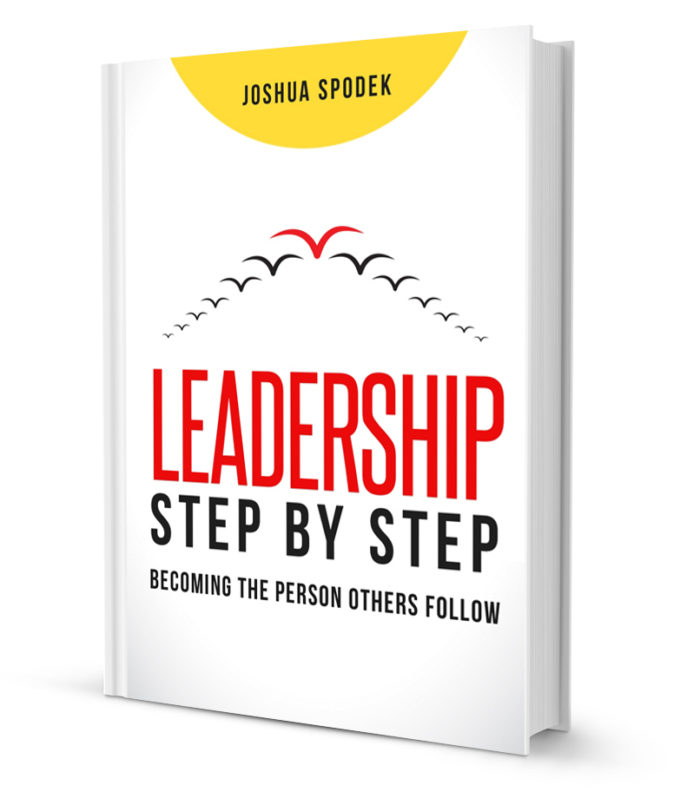
on December 14, 2014 in Awareness, Education, Exercises, Leadership, Models, Nonjudgment, Perception[EDIT: I covered this series in more depth in Leadership Step by Step, so I recommend the book, but the core is here. I use The Model as a part of my life, basically daily.] Here is The Model—my model for the human emotional system designed for use in leadership, self-awareness, and general purpose professional and personal development—in series form. Click in the table of contents to the left for each[…] Keep reading →
My scientific and engineering view of coaching and teaching leadership
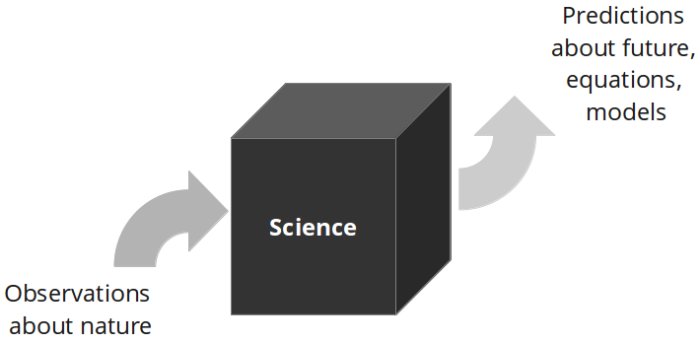
on December 1, 2014 in Entrepreneurship, Leadership, Models, Nature, VisualizationScience is the study of nature, looking for patterns, to predict results. For the moment I’m not approaching leadership with the institutional view of science with researchers applying for grants from the National Science Foundation to do double-blind controlled experiments for peer-reviewed publication, though I’ve had a few graduate students approach me to do research like that. Here’s a simpler view: science turns observations about nature into models and predictions[…] Keep reading →
What makes an emotion a passion?
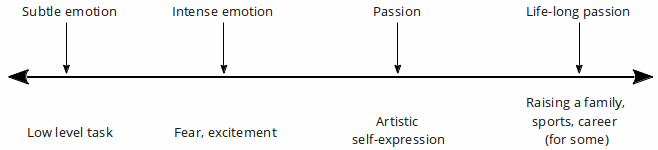
on September 20, 2014 in Evolutionary Psychology, Models, Nature, VisualizationWhat’s the difference between emotions and passions? In a leadership context I look at emotions functionally, as motivations. In an art or music context, I think more about how emotions feel and how to express them. To distinguish them, I think the functional view helps more. A passion is something that motivates you strongly with strong feelings. In other words, a passion is a strong or intense emotion. A lot[…] Keep reading →
Visualizing reactivity and freedom, part 1
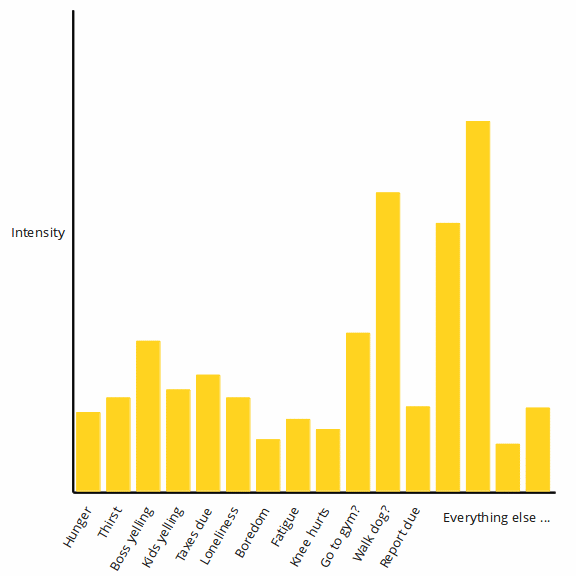
on May 27, 2014 in Creativity, Freedom, Models, Nature, VisualizationThink of a time you reacted blindly. Did it go well? How do you feel about leaders who react without thinking or intuition? You don’t want to react blindly—the opposite of leadership, since it means you’re reacting to someone else, or unpredictable events in your environment, which I call blowing in the breeze. Most people understand the term “reactive” vaguely, so they can’t do much about it. I find visualizing[…] Keep reading →
Explore and expand your boundaries and those of people you lead
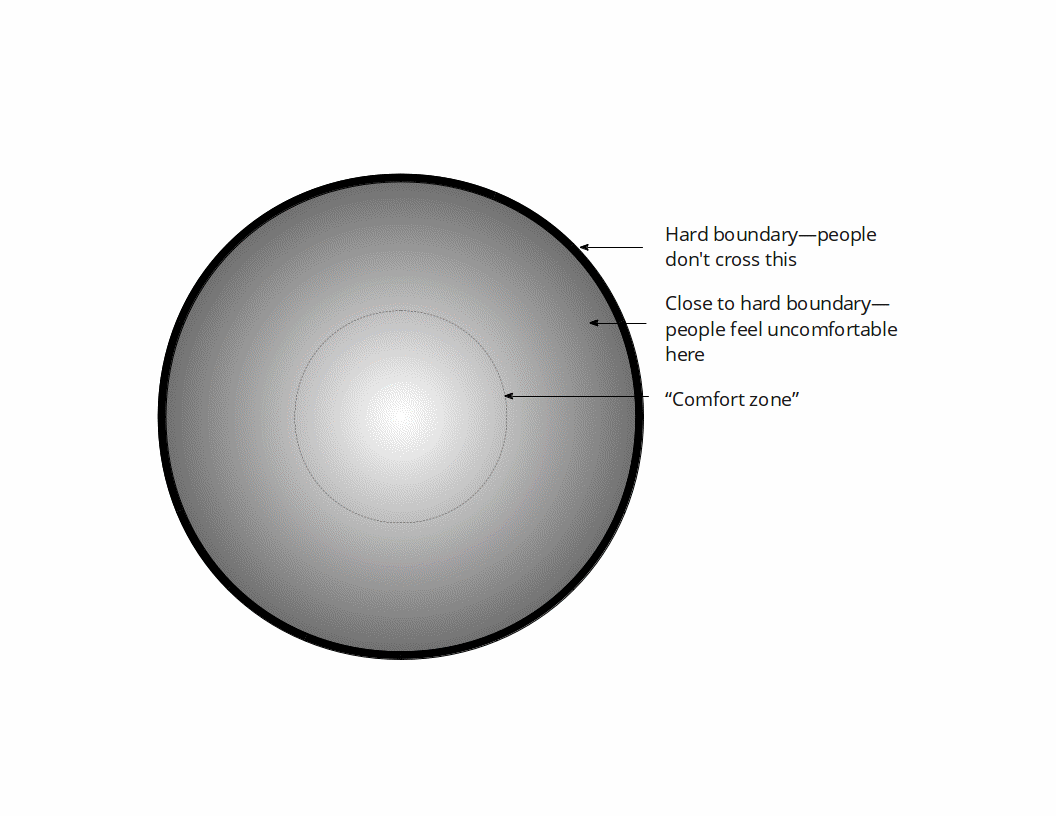
on April 15, 2014 in Awareness, Freedom, Leadership, Models, VisualizationExploring and expanding your boundaries and horizons creates freedom and comfort in your life. Doing so can be challenging—“getting out of your comfort zone,” as many put it—but creates results and emotional reward. The more experience you have in it, the more you can lead others to do the same, creating freedom and comfort in their lives. I’ll illustrate the process with some simple diagrams. I find visualizing would-be complex[…] Keep reading →
Four myths that discourage you from entrepreneurship and how to overcome them
on March 10, 2014 in Entrepreneurship, ModelsI hear similar reasons all the time that discourage would-be entrepreneurs from behaving entrepreneurially—starting business ventures, non-profits, or just projects they enjoy. This series helps you overcome the top ones I hear. Click on the entries in the Table of Contents to the left to see the posts in the series. Entrepreneurship isn’t for everyone, but if it’s for you or your business, counterproductive myths don’t help you. Successful entrepreneurs[…] Keep reading →