Nature


Empathy Gaps — one of the most insidious barriers to getting hard things done and how to overcome it: the series

If you want to change something important in your life, you'd better understand the concept called "empathy gaps." An example of an empathy gap is when you say in December you'll go to the gym twice a week for the next year, that you have the fortitude to do it and will simply will yourself to do it no matter what, then find yourself in February saying you're not in the mood and you'll get to it later. Or you say you'll ask that person out with confidence, but when you go to approach you lose your nerve. An empathy gap is when you feel one way in one situation, like when you plan something and feel enthusiastic and confident, then when the situation changes…

0 Comments

Master introversion AND extroversion

Yesterday I wrote about freeing yourself from constraining beliefs. Today I'll expand on creating new beliefs to free yourself from such constraints. I wanted to illustrate at least one alternative to the standard one-dimensional model of introversion and extroversion that I find impedes self-awareness, understanding, and personal growth and development. Many people continue to believe it because they have no alternative that helps their life more. Others rigidly hold on to their old belief because they can't distinguish between the belief and the object of their belief -- for example, telling people who disagree with their view that they don't understand the definition of introvert or extrovert, not recognizing a definition describes a model not people. If you reject the model, those definitions don't matter.…

0 Comments

Adrenaline-rush activities you can do right now that beat jumping out of planes

[This post is part of a series on Cold Showers. If you don't see a Table of Contents to the left, click here to view that series, where you'll get more value than reading just this post.] Today I'm writing about the value of taking cold showers. Purposefully doing so can change your life more than jumping out of a plane or most other adrenaline-rush activities. You'd be amazed. You can give yourself life-changing experiences as exhilarating as jumping out of planes or bungee jumping without all the baggage people who do those things have to do. My picture at the top of the page swimming across the Hudson River illustrates how anyone can create inspirational, life-changing activities with minimal effort. Today I'm writing about…

3 Comments

Op/Ed Fridays: Is overpopulation a problem?

Is overpopulation a problem? You probably have an opinion. A post on a forum asked that. I wrote the following, which I stand by. -------------------- Dozens of answers and nobody has had the humility to give the answer that we don't know, finding out is complex, the uncertainty on what we do know is large, and we have to extrapolate with many assumptions we can't check to draw any conclusions at all. The question is in principle a scientific question and "I don't know" is the best scientific answer I can think of. Anyone who tries to tell you a definitive answer almost certainly has an agenda beyond mere accuracy. There are many other questions we can probably answer now, for example Is it a…

0 Comments

Eating cookies is easier than exercising and always will be. What to do about it.

I just finished exercising. Starting, as always, was hard. I know it only takes a couple days without exercise for me to start putting on fat and losing muscle definition. I also know if I get some cookies and start eating them I'll feel pleasure right away. There's no obvious reason I should choose the distant, unpleasurable reward of a fit body over the immediate pleasure of eating sweets and junk food. I know I'll feel that pleasure. I don't need anyone else to see it for me to feel it. I can get it myself. The world is increasingly populated with people who choose the pleasure of candy over the complexity of fruits and vegetables. Sometimes I think one of the defining characteristics of…

0 Comments

Op/Ed Fridays: Obesity and wonder drugs

The New Yorker this week published an article titled "Diet Drugs Work: Why Won't Doctors Prescribe Them?" I responded (on Hacker News, where you can see discussion on it) More relevant questions: Why don't we stop subsidizing corn so much? Why don't we teach effective nutrition and cooking in school? Why don't we teach effective exercise, sports, and fitness in schools? If we can ban alcohol and tobacco sales to children, why not things like added sugar, hydrogenated oils, corn syrup, etc? If we can ban alcohol and tobacco advertising to children, why not products with added sugar, hydrogenated oils, corn syrup, etc? Why don't we limit advertising on fast and junk "food"? Why don't we provide healthy lunches to school children instead of using…

2 Comments

Introversion is not the opposite of extroversion, part 2

Yesterday I showed two models for introversion and extraversion. The model you believe filters how you see the world, which will influence your feelings and behavior. I found the following test to see if you're introverted "or" extraverted from a book. You can see it's based on an Or model, I believe designed to show empathy for people who consider themselves introverted. From the And model it's almost painful to read in how it reinforces weakness and constraint. I'll translate it in two ways to reveal other ways of looking at it I suspect you'll find empowering or that undercut this one. First the base test. (By the way, I'll be happy to reject the And model if anyone shows me a reason to that…

6 Comments

Introversion is not the opposite of extroversion, part 1

Here is a common belief for the relationships between introversion and extraversion. I'm going to show how it worsens your life and offer an alternative you will resist and fight against, but if you keep an open mind you'll realize explains your world more effectively and helps you to improve your life. I call it the "Or" model of introversion and extraversion for reasons you'll see below. It says that introverted people have certain properties and abilities, extroverted people have complementary properties and abilities, and you either have one set or the other, but not both. It says some people may lie somewhere in the middle of the axis, having some introverted traits and some extroverted traits, but not the full amount that a pure…

46 Comments

A thought-provoking essay on how we interact with our environment

I saw the following essay on the great geek forum Slashdot, a site that a decade ago published a story on the company I co-founded. The site isn't as important as it once was, but it's still big. I don't know the real-world identity of the essay's writer. I presume he or she wrote it quickly, not aiming for accuracy or to withstand heavy criticism, but to get people thinking. I prefer not quoting others at length, but the essay provoked my thought too much not to. If you read it overly critically you'll miss its meaning. The writer plays loosely enough with details that you know not to take them too seriously, but has enough of them to realize there's something meaningful. That is,…

2 Comments

Op/Ed Fridays: Challenges in helping the planet even if you’re the world’s richest person

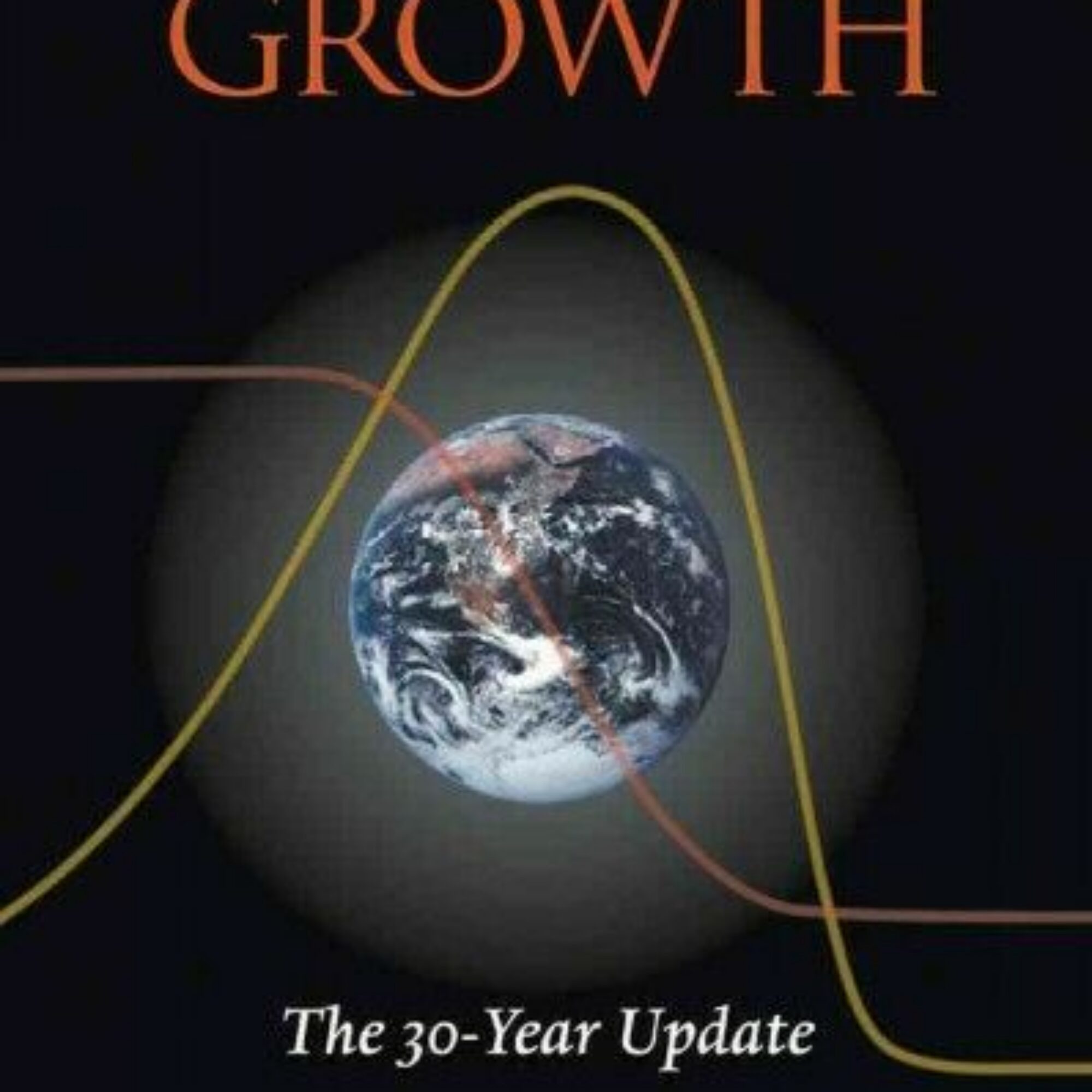
Wired Magazine recently published a piece by Bill Gates called "Here's My Plan to Improve Our World — And How You Can Help." He wrote 40 percent of Earth's population is alive today because, in 1909, a German chemist named Fritz Haber figured out how to make synthetic ammonia. Another example: Polio cases are down more than 99 percent in the past 25 years, not because the disease is going away on its own but because Albert Sabin and Jonas Salk invented polio vaccines and the world rolled out a massive effort to deliver them. Thanks to inventions like these, life has steadily gotten better. More people living doesn't necessarily mean people living better lives. In a finite world with limits to growth, relaxing one…

0 Comments

“Why does the universe exist” and why I prefer living life to philosophizing about it

A reader contacted me and suggested I read the book "Why Does the World Exist?: An Existential Detective Story," by Jim Holt. The author writes for the New Yorker among other things, which implies I'll enjoy his writing. The book promised to explore the question why the universe exists as opposed to not existing. Why being and not nothingness. I borrowed the book from the library. I hadn't considered its main question much before, so it got me thinking about why the universe exists. It's an interesting question that twists your mind just to think about it. Once you posit that the universe exists with the laws of physics we know, I can see how the Sun, Earth, life on Earth, and humans followed from…

2 Comments
Convenience at what cost?
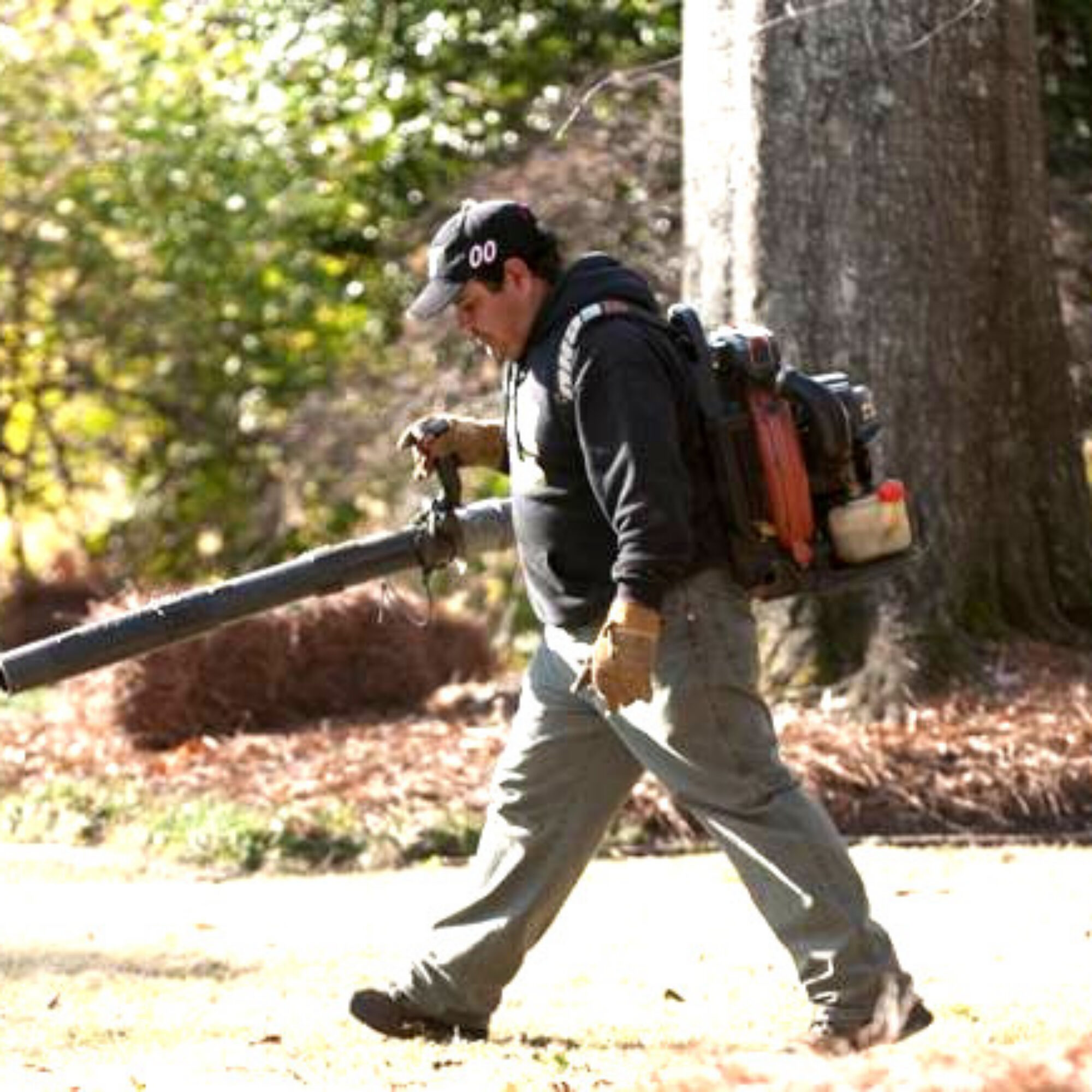
Not the guy I saw or in the park I saw, but similar.

Convenience at what cost?

The other day I passed a guy blowing leaves with a gasoline-powered leaf blower on a paved area in a park by City Hall. This post isn't about him. It's about us, including you. What is wrong with us? We buy oil from countries we have adversarial relations with, pollute the environment, create loud, unpleasant noise, so a fat person can work less, and cart away what would create topsoil, to fill a land-fill. What we could do instead What if we did this instead? Rake the leaves making little extra noise buying no oil from adversarial countries causing no pollution composting the leaves or using them for mulch filling no land-fills giving the guy exercise? Raking leaves on pavement isn't hard. Values What happened…

0 Comments

Choosing idealism in the face of contrary evidence of what works is a recipe for disaster

I posted the following in response to a bunch of articles I've read about a report co-authored by over a dozen science-related organizations describing how reducing funding for science has led to research and the benefits it brings to society leaving the U.S. --- The writing on the wall became apparent to me with the 1993 cancellation of the Superconducting Super Collider, when I was getting my PhD in physics. I didn't know the numbers for a cost-benefit analysis, but I couldn't then nor can I now see cancellation as helpful to the U.S. The U.S. would have stayed way ahead of the rest of the world in particle physics and all the accompanying jobs, discoveries, and innovation. Instead we look to the rest of…

0 Comments

Silent Spring

I finished a book the other day I'd been meaning to read for at least a decade -- Silent Spring, by Rachel Carson, released in 1962. I posted a summary below. I also understood it influenced thought a lot. I had to speak to a few people who were adults when it came out to understand its impact at the time, which they assured me was colossal -- a common-sense bolt out of the blue from a humble woman who simply researched and compiled information anyone else could have. It seems, like Vietnam, one of the major turning points about which the American people began to question their government and find it didn't consistently act in their interests. In fact, it seemed often to work…

0 Comments

I never take responsibility for someone else’s emotions.

I try to understand people. I think doing so improves my relationships with them and my understanding of myself. I find feeling compassion for others helps me improve my relationships with them too. Same with empathy. I find taking responsibility for my emotions helps me improve my life and keeps me from blaming others. I see taking that responsibility as improving my life as much as anything. Taking responsibility for someone else's emotions, on the other hand, I see helping no one. Did I just contradict myself? Why do I value compassion, empathy, and responsibility for my emotions but not responsibility for someone else's? "Josh," you ask, "aren't you undermining your compassion and empathy? Are you saying that if you saw a child lost and…

0 Comments

Start with emotions if you want to motivate yourself … or anyone else

I find Americans try to get precise and scientific about food and exercise, in contrast to how incredibly unfit the country is. I write "try to" because I don't think they succeed in being precise or scientific. The term carbohydrate, for example, used to have a specific scientific meaning. I think it still does, but I think in standard American usage it means "bad" or "evil," like the term fat used to. But I don't think people know what carbohydrate means, but it sounds technical. Same with Omega whatever fatty acids, free radicals, and so on. Same with exercise. People throw around terms like anaerobic, cardiovascular, and VO2 max like candy, rarely knowing what they mean. Jargon devoid of meaning. More than devoid of meaning,…

0 Comments

How would you improve the world if you had supernatural powers?

Here's an exercise to see your values from a new perspective. I used to do it all the time until I learned my lesson from it, which I'll write at the bottom. Answer the question "how would you improve the world if you could have a magical wish come true?" and follow through to see if the change would, in fact, improve your life. To clarify, I mean a supernatural change outside of what you normally do to improve your life and world. I submit that it's not as easy as you think. Say you had whatever magical powers to change the world however you wanted. Could you improve the world beyond what you could do without the magical powers? Quick answers people jump to…

1 Comment

Healthy food mostly replaced my unhealthy food. Here’s how.

How can you expect to lead others if you can't lead yourself? This post, like most of mine, is about leadership. If you can't lead yourself, how can you expect to lead others? If you don't understand your emotions and motivations and how to create the ones you want in yourself, how do you expect to do so with others? Alternatively, the better you can lead yourself, the better you can lead others and, for that matter, yourself the next time. Since most of us want to eat differently than we do and others are constantly trying to motivate us to eat like they want us to, eating is a great place to learn leadership skills. Who do you want leading your eating habits, you…

5 Comments

A systems perspective on population growth

I keep reading about how some technology has or will save billions of lives from starvation or disease. A perfect example comes from the opening paragraph of Wikipedia's page on the "Green Revolution." Green Revolution refers to a series of research, development, and technology transfer initiatives, occurring between the 1940s and the late 1970s, that increased agriculture production worldwide, particularly in the developing world, beginning most markedly in the late 1960s. The initiatives, led by Norman Borlaug, the "Father of the Green Revolution" credited with saving over a billion people from starvation, involved the development of high-yielding varieties of cereal grains, expansion of irrigation infrastructure, modernization of management techniques, distribution of hybridized seeds, synthetic fertilizers, and pesticides to farmers. I disagree with this perspective. I…

0 Comments

Experience guides us more than philosophy.

Have you noticed that people who behave wildly differently can still base their behavior on the same underlying philosophies? Or that people who behave similarly can also base their behavior on different philosophies? Pick a way people behave and you'll find people saying that behavior comes from any source. For example, among the most peaceful people some base their behavior on being religious, some on being atheist, some on not caring about religion or atheism at all. Some of the most belligerent people base their behavior on religion. Some not. People on the left call Hitler right-wing. People on the right call him left-wing. People who exercise say they do it to relax and feel good about their bodies. People who don't exercise say they…

4 Comments

When did walking three miles become a health risk?

Speaking of running, as I did yesterday -- "More benefits of burpees" -- I've been meaning to post something I expect will get me in trouble, but I'll post anyway. If you run a lot in Central Park you see a lot of five-kilometer run/walks -- usually charity events to get people donating for some type of medical research. With all the regalia, I wonder how much money makes it to help people and I feel like health care and drug companies make a lot of money already, but those aren't my points. What got me thinking and posting is that these events always have multiple water stops and tell people to "hydrate" plentifully, implying health risks if they don't. They imply the opposite of…

2 Comments

A mental model on disease and dying

We might as well figure out ways to think about dying because it's going to happen to all of us and people in our lives. Sorry if I broke the news to you and brought you down, but I figured you knew already. I've written before my main thoughts on mourning, mainly based on a Taoist passage, quoted in my post, "Thoughts on mourning." Like you and everyone else, as I get older I face more people recognizing their mortality. More people we know get sick. More people we know die. Some people fear disease and dying. Some repress thoughts on the matter. Some people use the change to live life to its fullest in every moment. I've worked out a model that works for…

0 Comments

Once you start composting, you can’t go back

Once you start putting your food scraps in a separate container from your trash, you can't go back to filling landfills with what could create topsoil and healthier food. Once you start composting, the amount you throw away decreases yet more -- after you presumably started recycling, after you presumably reduced your consumption. You become more aware of food packaging you can't compost. I've noticed that the less healthy a "food product" is the more packaging it seems to have. What is composting? Composting is using old scraps like banana peels and corn cobs for fertilizer by letting them decompose. Since plants tend to be made of materials good for other plants to make themselves out of, compost is useful for growing healthier plants. It…

0 Comments

You probably blow smoke in kids’ faces without realizing. You can stop.

New York City is having the most mild summer I can remember. We've barely hit ninety degrees and that was at least a month ago. Since then we've had cool, spring-like weather most of the summer. The other evening walking with friends, I noticed how loud the sounds of window air conditioners were in the small streets of the West Village. The temperature and humidity outside couldn't have been more comfortable. I could only think the following thoughts about their unnecessarily using their air conditioners: Air conditioners use energy. That energy comes mainly from fossil fuels. Fossil fuels pollute. Pollution makes us unhealthy. Me: With weather this perfect, the air conditioners aren't improving the air for these people. They might as well light up a…

0 Comments

Do you decide rationally or emotionally?

One of this blog's central focuses is self-awareness because I think to improve your life and relationships the best starting point is to know where you are. Know thyself, in other words. Today I want to give you a way to learn deeply about how your mind works. I didn't come up with the idea, but it intrigues me and I'd love to learn other people's thoughts. I think people generally believe they have a voluntary, rational part of their brain that, among its roles, makes decisions. If you're choosing what to order off a restaurant menu, for example, you probably do something like this: You read your options, eliminate those you don't want, consider the ones you do, work through some core decision-making process,…

0 Comments

End of content

No more pages to load