You can still learn new things

After posting about how Churchill and others overcame impediments on their ways to greatness, I saw an article in the New York Times about great historical figures humbly learning things late in life -- Marie Curie learned to swim after winning two Nobel Prizes, Leo Tolstoy learning to ride a bike after writing War and Peace, Dwight Eisenhower learning to paint after World War II ended, and a couple other examples. Inspiration isn't that hard to find. A favorite example for me is Ernest Rutherford, one of the great experimental physicists. To understand the results of what we call the Gold Foil Experiment. I won't go into the details since the link is right there, but it basically discovered the nucleus and established the process…

0 Comments

If you want to change something you do, its opposite usually is no better. Look for its complement.

People seem to want to change a lot about them. I see them trying to do the opposite of what they are trying to change. Sometimes it works. More often trying to do the opposite of what they want to stop reinforces doing it more. Food For example, overweight people often think if they eat too much they should try the opposite and try to eat less. But dieting seems to predict obesity more than prevent it -- that is, people who diet tend to be more obese than those who don't (sorry I don't have a source, so feel free to read this part skeptically). I find the complement to eating too much is not to eat less but to savor and enjoy your…

0 Comments

A model to make hard decisions easier

[This post is part of a series on “Mental models and beliefs: an exercise to identify yours.” If you don’t see a Table of Contents to the left, click here to view the series, where you’ll get more value than reading just this post.] When I worry about a difficult choice I have to make I think of a parable. Some martial arts students ask their teacher how he always keeps his balance. He asks what they mean. They say, well you never fall down so you must never lose your balance. He says, on the contrary, I'm always losing my balance, but I'm also always recovering. I try to live like that. Things are always making me lose my balance but I rarely fall.…

0 Comments

How I got to work a day or two a week

Despite my posting on how I find asking "so what do you do" a boring question, apparently everyone I meet hasn't read every post on my site, so they keep asking me what I do. It's hard to answer the question when you know they want to know your work when work is such a small part of your life. You can talk about making art, writing, travels, etc, but those answers never satisfy them. They want to know your job -- passions, hobbies, relationships, etc be damned. You may want to suggest how they don't have to accept one's job defining so much about a person -- or that if it does you don't have to ask, they'll tell you. But if someone did…

0 Comments

Union Square in Motion named Adobe Design Achievement Award Semifinalist!

Union Square in Motion made the prestigious 2012 Adobe Design Achievement Award semifinals! The Adobe Design Achievement Awards celebrate student and faculty achievement reflecting the powerful convergence of technology and the creative arts. The competition - which showcases individual and group projects created with industry-leading Adobe creative software - honors the most talented and promising student graphic designers, photographers, illustrators, animators, digital filmmakers, developers and computer artists from the world's top institutions of higher education. Adobe sent us the certificate below, somehow not getting around to naming the artists -- Jaqi Vigil, Hilal Koyuncu, Rose Maison, Josefina Santos, Umut Ozover, and me; and co-producer with me, Anezka Sebek -- or the name of the project: Union Square in Motion. Anyway, I couldn't be prouder of…

1 Comment

My essays for getting into an Ivy League business school in 23 days

Here are my Columbia Business School application essays, to complete the series on getting into business school in 23 days. I edited them slightly, mainly to take out personal details. In the optional essay 5, I can see I was blatantly name-dropping Columbia Business School Professors and my experience at the school. I think I could have used more subtlety. My graduate school stipend -- what I lived on in Manhattan for about four years -- surprises me to this day. I think the number was accurate, but wonder if the first number might have been a 2 instead of a 1. Anyway, here are the essays. Essay 1 1. What are your short-term and long-term post-MBA goals? How will Columbia Business School help you…

0 Comments

My background for getting into an Ivy League business school in 23 days

Yesterday I posted about the process I stumbled into for getting into an Ivy League business school in 23 days. How to read this post Today I'll talk about the credentials that made it possible. But please recognize, the point of these posts is not merely to show you how to get into business school, but to show you that you can combine whatever you have in your past into something bigger than you expect. You have to be aware of the possibilities and ready to act on them. If you are insecure and want to justify why can't succeed, you'll read this post to see how other people can achieve big things because they have advantages you don't. I used to look at things…

2 Comments

I started at an Ivy League business school 23 days after deciding to apply. Here’s how.

On December 10, 2004 I decided to apply to business school. I had written no essays, taken no GMAT, reviewed no school's web site or application process, and asked no one for a recommendation. On January 2, 2005, 23 days later, I began orientation at Columbia Business School (ranked #5 by Forbes, Economist, and Financial Times). I got my MBA the following May, less than eighteen months from deciding to apply. Prep schools (such as Manhattan GMAT and Kaplan) recommend starting the application process eighteen months before starting classes. I completed my entire application and degree in less time than they recommend for just applying. Business school ended up one of the best experiences of my life, a turning point improving it in many ways…

0 Comments

North Korean children’s nearly unbelievable performances

The pictures below don't even approach showing the almost unbelievable performance ability of North Korean children. Joseph's pictures showcase their talent better. But no images can show the professionalism, dedication, and raw talent these kids have. The pictures below are from the Children's Palace, which trains children to perform and create art and puts on incredible performances. After their performance last time, my travel groupmate who was starting a school to train opera singers, reacted with disgust at the performance. As I understood, he saw their type of performance -- technical perfection that could only result from repeated drilling and repetition devoid of personal expression -- as destroying everything he valued about art -- personal expression and emotional exploration. He saw children whose artistic world…

0 Comments

What works in X web page mind map

Following up a comment on my post on the What Works in X web page genius idea, I created a mind map as a rough outline for the site to illustrate it better. It's only a rough outline, but I think a good start. Copying from my response to the reader's comment I envision people at What Works in X sharing anecdotes of things they’ve done at a higher level, like how they got hired by doing something different or got into North Korea or things like that... available in any area. Of course, I put the idea up for others to do with it what they want. I’m as happy to inspire someone else’s slightly different vision as for them to implement mine. Also,…

0 Comments

Another genius business idea: the “What Works in X” web page

Following up on yesterdays' genius business idea for a book series of successful solved problems in many fields, today let's look at a web page doing something similar. Instead of making it just like a book, let's take advantage of the web's interactivity and let users create content. It's based on the principles of the Art of What Works (the book I mentioned the other day) The product A web site of user-written anecdotes of successful things they did, categorized by field -- eventually, the global repository of solved problems in every field, free for anyone to access or contribute to. Once populated with content, the main use of the site would be for anyone with a problem to solve. They would log in, search…

2 Comments

Another genius business idea: the “What Works in X” book series

For the first genius business idea (the series I mentioned a couple days ago) I propose a book series based on the principles of the Art of What Works (the book I mentioned yesterday). The product A series of books like the "for dummies" and "for complete idiot" series, all with the same dimensions, cover design and color scheme, tone, writing style, etc called "What works inX", like "What Works in Selling Your House", "What Works in Nursing", "What Works in Teaching High School", or "What Works in Starting Your Own Restaurant." Each book contains anecdotes of people achieving success in the field that you can learn from -- a series of solved problems you can use to solve your problems. The fundamental principle is…

0 Comments

The Art of What Works

One of Columbia Business School's most popular courses in recent years has been in strategy, called Napoleon's Glance, named after a book by the instructor, Bill Duggan. Former students I've talked to rave about it. I was fortunate to do an independent study with him before his course exploded in popularity. Now it's so successful I doubt he could devote that kind of attention to a single student. Despite the course's immense popularity at one of the world's great business schools, I was more influenced by his book The Art of What Works. This excerpt from the back cover gets the gist of the book well for me, especially Jack Welch's quote: While every business situation you confront is unique, it is invariably made of…

0 Comments

A leadership dream

Since posting on lessons leaders can learn from method acting, I've been thinking about parallels between acting and leadership -- in particular how acting changed when Constantine Stanislovski led changing the art to expressive and internal from impressive and external. "Impressive and external" means the actor tried to impress the audience with outward showiness. "Expressive and internal" means the actor tries to find emotions inside and express them. You know what acting before looked like. Jon Lovitz and John Lithgow mocked that style on Saturday Night Live in its Master Thespian sketches in the late 80s (this transcript of a sketch made me laugh after all these years). I haven't studied the history of acting, but I think the comedy sketch gets some of the…

0 Comments

Frederick Douglass on the Fourth of July

As I consider the U.S. Declaration of Independence perhaps the founding concepts of the country I was born in and lived most of my life, I celebrate our Independence Day by reading at least one relevant historical work. Having visited Vietnam and North Korea since last July 4th, I've had pause to think about what freedom means to America and some things of what America is doing to freedom. Vietnam's War Remembrance Museum certainly affected my perception of how the U.S. has affected freedom in other places. To say the least, the Vietnamese government views the United States' activity there differently than does American culture. On the other hand, learning about and observing the North Korean government's oppressing its people -- which I distinguish completely…

1 Comment

Leadership lessons from method acting

Leadership and acting have a lot in common. Both crafts require practitioners to be aware of and to manage their emotions and those of people around them. They evoke different emotions -- leaders generally don't try to get people to cry and actors generally don't get people to work weekends -- but their crafts overlap nonetheless. I've linked to Inside the Actors Studio before and I'll keep linking to them. I'm in the middle of watching the host, James Lipton, interviewed by the great comedian (and apparently friend), David Chappelle for the 200th episode of the show. I'm only half through the episode and I'm already seeing the parallels and learning from them. They show some deeply personal clips of the emotions and techniques to…

2 Comments

My comedy sketch script

I've meant to post this script for a long time. In business school I wrote a script that ended up in Follies, Columbia Business School's student-run sketch comedy and musical production at the end of each semester. In my time there, Follies produced some of the best sketch comedy and musicals, including Every Breath Bernanke Takes, which got us press and a letter from the White House. [youtube]http://www.youtube.com/watch?v=ipJTqCbETog[/youtube] The sketch I wrote ended up a very funny piece. Getting to be on stage for a piece I wrote, including a line or two that got the 500 people in the audience to laugh on cue, with the type of laugh -- I don't know of anything that made me feel better than those moments and…

0 Comments

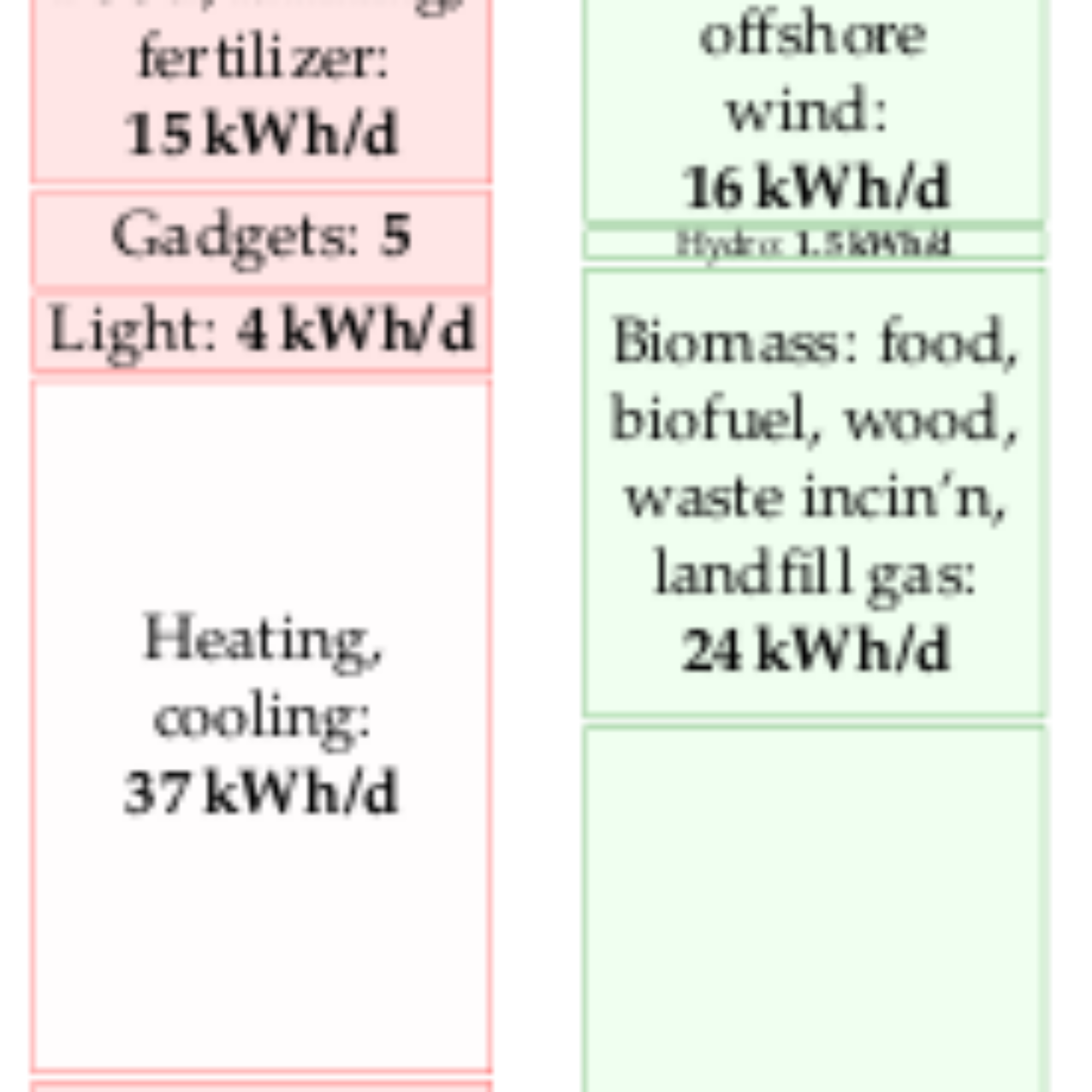
Business people should understand our effect on the environment better than anyone, part 2

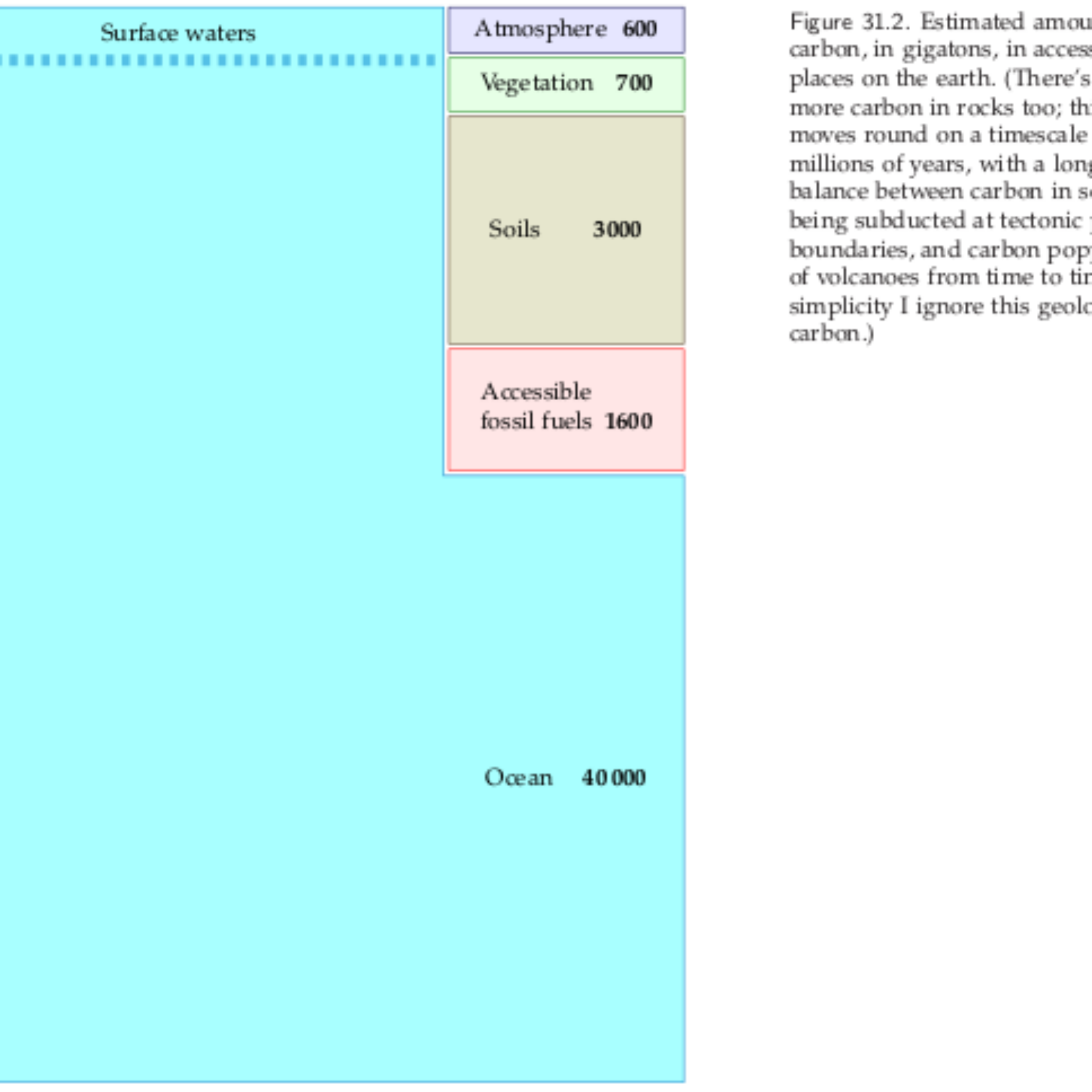
Following up yesterday's post on balance sheets and charts for using and producing energy and reporting our numbers to see if we can make them balance, let's look at carbon flows. People who don't know about carbon emissions, flows, and balance confuse simple ideas with each other. For example, some talk about how volcanoes and cows digestive systems produce tons of carbon and wonder why we should bother changing our practice. When you understand amounts and flows, you don't confuse unimportant effects for important ones, like business people who learn not to be penny wise and pound foolish. Below is a representation of where carbon is on the Earth. It's not exactly a balance sheet, though over time the total numbers have to add up.…

0 Comments

Business people should understand our effect on the environment better than anyone, part 1

People don't realize it, but business people have some of the best the skills to understand our effect on the environment. We should learn those skills from them. I didn't have much (any?) business experience when I co-founded my first company. I couldn't read a balance sheet or know accounting. My science background taught me to understand general and broad patterns, which don't suffice for running a company. Either the check clears or it doesn't. Business school taught me how to manage cash -- accounting, keeping and reading balance sheets, profits and losses, cash flows, and so on. Many people understand how we affect our environment worse than I understood how to understand a business. In other words, they just know information but not how…

0 Comments

One of the best books I’ve read on the environment, our impact on it, and what we can do about it

Imagine living your whole life nearsighted and one day you wear glasses for the first time -- everything going from fuzzy blobs to clear. Or you know after you get out of the pool and your ears have water in them? Imagine you heard like that for your whole life and suddenly they cleared and you could hear properly. Or you've been wearing gloves and for the first time you take them off and feel something directly. That feeling of experiencing something clearly instead of vaguely and indirectly is what reading the book Sustainable Energy -- Without the Hot Air is like. Like the Do The Math blog I've been enjoying and praising, a Cal Tech educated physicist wrote it. This author, David MacKay, has…

0 Comments

Awesome math book and an anecdote on it

Math and science to me are beautiful -- about the most beautiful things in the world. I hope some of that comes across when I write on them. After a couple posts on a physicist's perspective on our impact on the world -- about an awesome blog (called Do The Math, but it has a science perspective) and an awesome video presentation by the blogger, here's something on math. When I started graduate school in physics at the University of Pennsylvania, I thought I could still study some math on the side. It turns out physics grad school takes all your time (I was also playing Ultimate Frisbee), but I had time to establish a relationship with a professor in the math department. He suggested…

0 Comments

Fantastic video on economic and energy growth and limits

I've written about the Do The Math blog, which looks at the numbers underlying how our economy works, particularly the energy part, which is to say, what drives it. If you think something else drives it, do the math! I think you'll see otherwise. Incidentally, analysis like his is one of the reasons I studied physics (if you didn't know, I got a PhD in the subject) -- to understand nature. Many people think of physics as something that happens in a lab or happened a long time ago with Galileo and Newton, but fundamentally physics studies our natural world. And we are part of nature. Anyone who thinks otherwise -- well, I don't know what to say to them. Anyway, Tom Murphy, the guy…

0 Comments

Why don’t they teach emotional intelligence and self awareness in school? (part 1, K-12)

I write a lot about leadership skills and how to improve your life through understanding how emotions work in general, how yours work in particular, and becoming aware of your emotions as well as everyone else's. As a result of focusing on leadership, my community has become full of people with similar interests (you, perhaps?). They all tell me learning and practicing it improves their lives. We prefer having each other in our lives to people who complain all the time or complacently never improve things they could. People complain they don't like their jobs, relationships, identities, hobbies, and so on, but don't know they can change them so they dwell in misery. I haven't found this stuff too hard to learn, though you have…

2 Comments

How to identify great life lessons

Sometimes you recognize something you learned as a great life lesson. Sometimes what you thought was a great life lesson turns out not to be. How can you tell them apart? I've found that the more meaningful a life lesson, the more trivial it sounds when you explain it to someone else. For example, I went to North Korea and saw people living under different conditions than anyplace else, yet observed the commonalities we all share. It profoundly affected my perspective on myself, my culture, and being human. But when people ask why I value my trip so much, saying "I learned that people are people" never conveys that feeling. It sounds trivial. Yet I know I learned something at a deeper level than I…

0 Comments

Yet more perspective on the economy, environment, and ecology

Following yesterday's post on a the blog -- Do the Math -- that covers the economy, environment, and ecology the best I know, along with Limits to Growth, I found another blog that covers a perspective on economics I haven't seen, but consider important. We rely on an economics system based on growth but we live on a finite planet. We will one day reach an equilibrium with our environment. Well, we hope to -- we could enter a perpetual cycle of booms and busts. In equilibrium instead of growth, how do we distribute resources? Mainstream economic theory falls apart, yet it seems obvious to me it can be done. Enter the Center for the Advancement of the Steady State Economy, which promotes understanding economics…

0 Comments

End of content

No more pages to load