Choose easier by visualizing choices, part 2

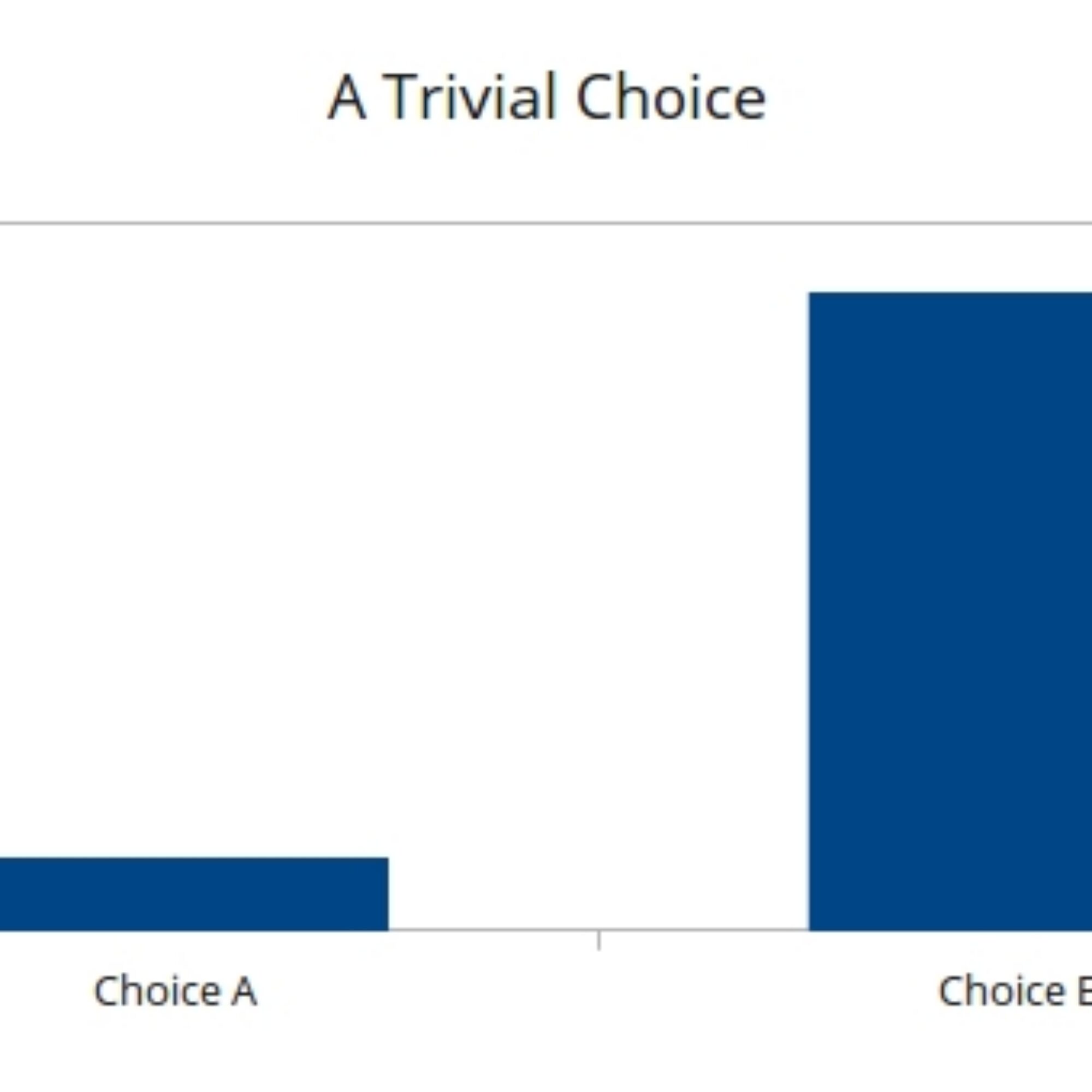
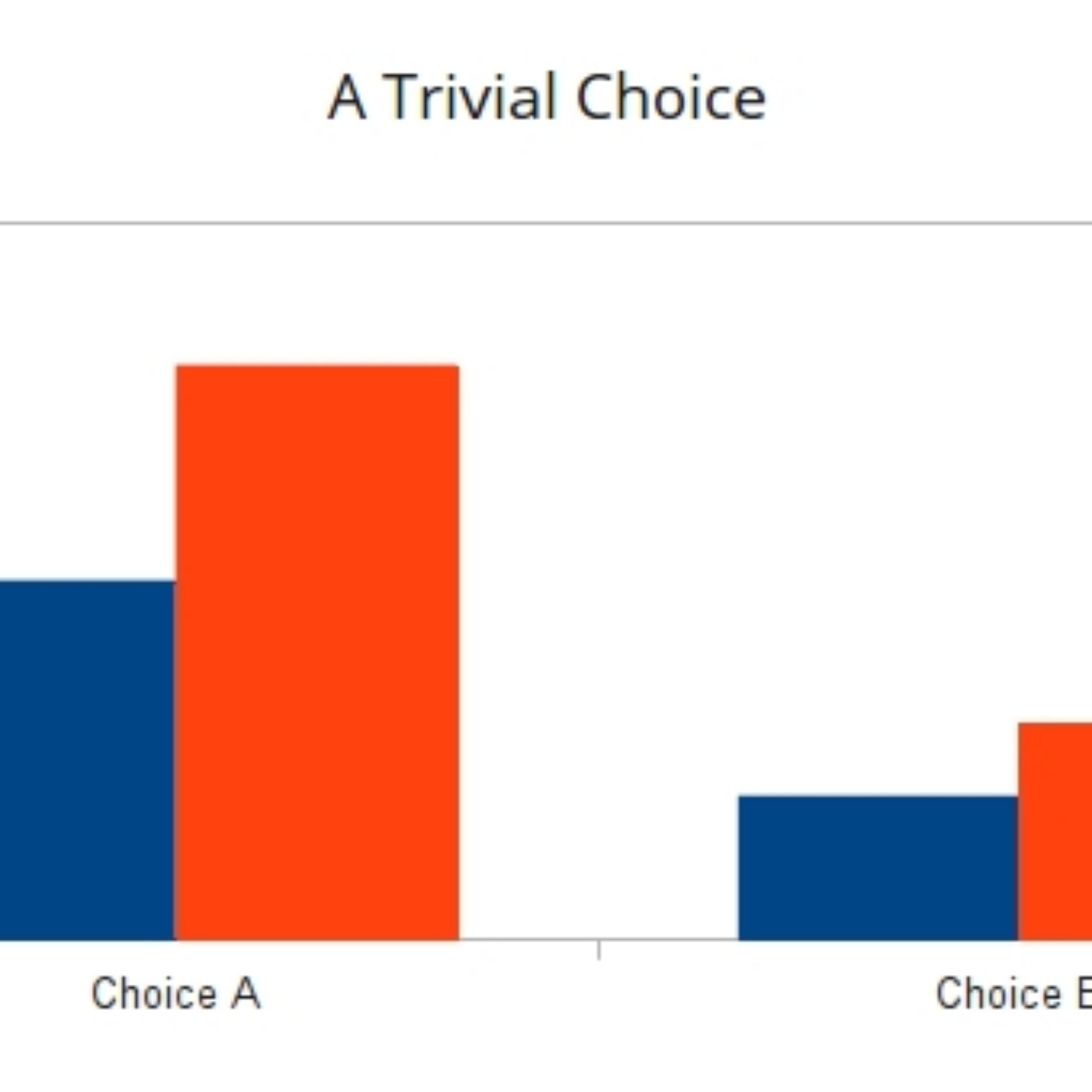
Multiple factors Not all options have only one decision factor. Many have two or more. For example, do you prefer a job with higher pay but lower chance of promotion or higher chance of promotion but lower pay? You have to look case-by-case, but let's see how our visual representation shows them. A trivial choice The easiest two-part case is when you prefer both parts of an option to both parts of the other. Consider if you had to choose between A high-paying job with great benefits and A low-paying job with no benefits. This graph illustrates such a choice. All else being equal, you'd choose the first option. Again, this illustration is simple, but we're just seeing how the visual model works with two…

0 Comments

Choose easier by visualizing choices, part I

You know choosing can be hard. I've written about it before from a few angles: Why are decisions hard? Difficult life decision? Here's how to look at it. How to decide among close options A belief to choose without getting mired in indecision Today I'll give you a tool to simplify decision-making more with a way of visualizing the challenge that shows the hard part. Partly I'm following up on how I visualized emotions in the Passion-Attraction Model, which I recommend looking at if you like this post. I find modeling difficult things with visual representations makes them easier. I'll start simple and build complexity, leading to the more helpful insight as I develop the ideas. A trivial choice Not all choices are hard. If…

0 Comments

How many Mozarts, Galileos, or Aristotles are there today?

Pick any great historical figure. We often regard them as unparalleled geniuses the likes of which we may never see again. On the other hand, they were human beings like us. They performed in some areas well beyond average. What if their abilities or traits weren't once ever but once in a generation? It's interesting to see what you conclude, as I'll show. Then we'd expect to see others of comparable abilities or skills. We could pick any figure, but let's talk about Mozart for concreteness. In his time the earth's population was about 700 million or so, roughly a tenth of today. Could that mean we should expect ten people of Mozart's ability today? In Mozart's times a smaller fraction of the population had…

0 Comments

Reject every belief in my book but learn to create your own before adopting mine without learning that skill

People are emailing about my awesome new book everyone should read, ReModel: Create mental models to improve your life and lead simply and effectively. Several people said they found a concept in the Introduction particularly meaningful, creating enthusiasm to read the rest of the book. I communicated that concept twice, first writing: I'd rather you learned to create your own beliefs and forgot mine than didn't learn the skill and adopted all my models. Later continuing: As valuable and helpful as my beliefs are to me, they are a minor part of this book. The major point is what they illustrate—that you can create and choose your beliefs. Again, I'd rather have you reject every belief in this book but learn to create better ones…

0 Comments

A reader responds: A Question to Help You Intuitively Prioritize and Stop Procrastinating

I reader emailed me a model he uses along the lines of the models and beliefs I put in my series on beliefs and now my book on the same topic. I'm honored and flattered that he used my format. I recommend looking at your beliefs and understanding them. In his email he described how his belief evolved as he wrote it -- an effect I found too. Just writing them raises your self-awareness, editing all the more. I understood it as soon as I read his name for his model/question, which I expect to adopt and use myself. I suspect it will resonate with others as it did with me. I hope to hear from other readers about their beliefs. Here is his belief:…

0 Comments

ReModel: Create mental models to improve your life and lead simply and effectively

I posted my second ebook on Amazon the other day. Longtime readers will recognize I based it on this spring's extended series on beliefs that became one of my more popular series. You can save the cost of the book by reading that series, but I edited the book to make it worth the cost. It's more polished, with tables and reordering for better continuity. I would only post it if I believed the book would rank among the most useful and effective books you could read to improve your life. I believe it is. I believe reading it will help you learn about one of the most fundamental and important parts of your life, something you experience every moment yet few people notice. The…

0 Comments

Jack Welch’s Gardening Model of Leadership

If you read this blog you know I write a lot about beliefs and mental models and how they filter how you perceive your environment and influence your motivations and behavior. If you've read my series on my Model or taken my leadership seminar, you know that models can diverge from what you perceive with your senses and still be more effective than one you consider more accurate. I often illustrate this effect with a few well-known examples, like Men Are From Mars, Woman Are From Venus. I'm not sure how effectively the book helped people, but the model simply and clearly enabled people to see differences between men and women. It worked despite being wildly inaccurate since, in fact, all men and all women…

2 Comments

Reminder: See my leadership seminar this weekend!

Brought to you by the Distinguished Leaders committee of the Columbia Business School Alumni Club of New York (copying the following announcement from that site): Leadership Through Self-Awareness and Emotional Intelligence In a weekend, learn how to develop your personal leadership skills, self-awareness, and emotional intelligence through the latest advances in cognitive behavioral science, evolutionary psychology, and positive psychology. While business schools and corporations are increasingly focusing on personal leadership, self-awareness, and emotional intelligence as foundations for leading others, many MBAs never had the opportunity to take a formal course in personal leadership. Joshua Spodek, MBA, PhD, has developed a two-day weekend workshop in just this area. His experiential course combines advances in cognitive behavioral science, evolutionary psychology, and positive psychology with successful business leadership…

1 Comment

A mental model on disease and dying

We might as well figure out ways to think about dying because it's going to happen to all of us and people in our lives. Sorry if I broke the news to you and brought you down, but I figured you knew already. I've written before my main thoughts on mourning, mainly based on a Taoist passage, quoted in my post, "Thoughts on mourning." Like you and everyone else, as I get older I face more people recognizing their mortality. More people we know get sick. More people we know die. Some people fear disease and dying. Some repress thoughts on the matter. Some people use the change to live life to its fullest in every moment. I've worked out a model that works for…

0 Comments

A model leading to “Nice Guys”

I can't help but comment more on the Nice Guy behavior I mentioned a couple days ago in "The false dichotomy of the nice guy and the jerk and what to do instead." A lot of the guys I coach have what others have called Nice Guy behavior and described problems with it. I don't mean being nice as a guy. I mean how Wikipedia put it in its "Nice Guy" page: When used in a negative context, a "Nice Guy" implies a male who is unassertive, does not express his true feelings and uses acts of ostensible friendship with the unstated aim of progressing to a romantic or sexual relationship. though I would expand the "unstated aim" beyond romantic or sexual relationships to others,…

0 Comments

The false dichotomy of the nice girl and the bitch and what to do instead

After yesterday's pattern I see in men, here's a comparable one I see in women. A woman gets approached by men. Some she likes, some she doesn't. If the ones she doesn't like get too numerous, she may try to limit the number of men approaching her by making herself appear less available or pushing them away. While she intended to change only the number of guys approaching her, she likely changed the type of guy who approaches. The more oblivious to her emotions a guy is, the less likely her efforts will affect him. Non-oblivious guys see her repellent appearance and behavior, take the hint, and leave her alone. She makes herself look and act repellent and ends up skewing the distribution of guys…

0 Comments

The false dichotomy of the nice guy and the jerk and what to do instead

I'll describe a view I've seen many times as a coach and in my regular life. I see it in many variations, but I'll present just one -- the one I can relate to most. Tomorrow I'll write about a comparable trend I see with women. The view is a false dichotomy. It goes like this. A guy grows up learning to treat people nicely and to reciprocate when people who are nice to him. He figures if he treats people nicely they'll reciprocate. As he grows up he starts to like women. He decides to treat them nicely figuring it will prompt them to reciprocate, like everything in life suggested would happen. Unbeknown to him, most women have met many men before him who…

0 Comments

See me on Leadership through Emotional Intelligence and Self-Awareness

Brought to you by the Distinguished Leaders committee of the Columbia Business School Alumni Club of New York (copying the following announcement from that site): Leadership Through Self-Awareness and Emotional Intelligence In a weekend, learn how to develop your personal leadership skills, self-awareness, and emotional intelligence through the latest advances in cognitive behavioral science, evolutionary psychology, and positive psychology. While business schools and corporations are increasingly focusing on personal leadership, self-awareness, and emotional intelligence as foundations for leading others, many MBAs never had the opportunity to take a formal course in personal leadership. Joshua Spodek, MBA, PhD, has developed a two-day weekend workshop in just this area. His experiential course combines advances in cognitive behavioral science, evolutionary psychology, and positive psychology with successful business leadership…

0 Comments

A visual model to understand passion and attraction: The Passion-Attraction Model

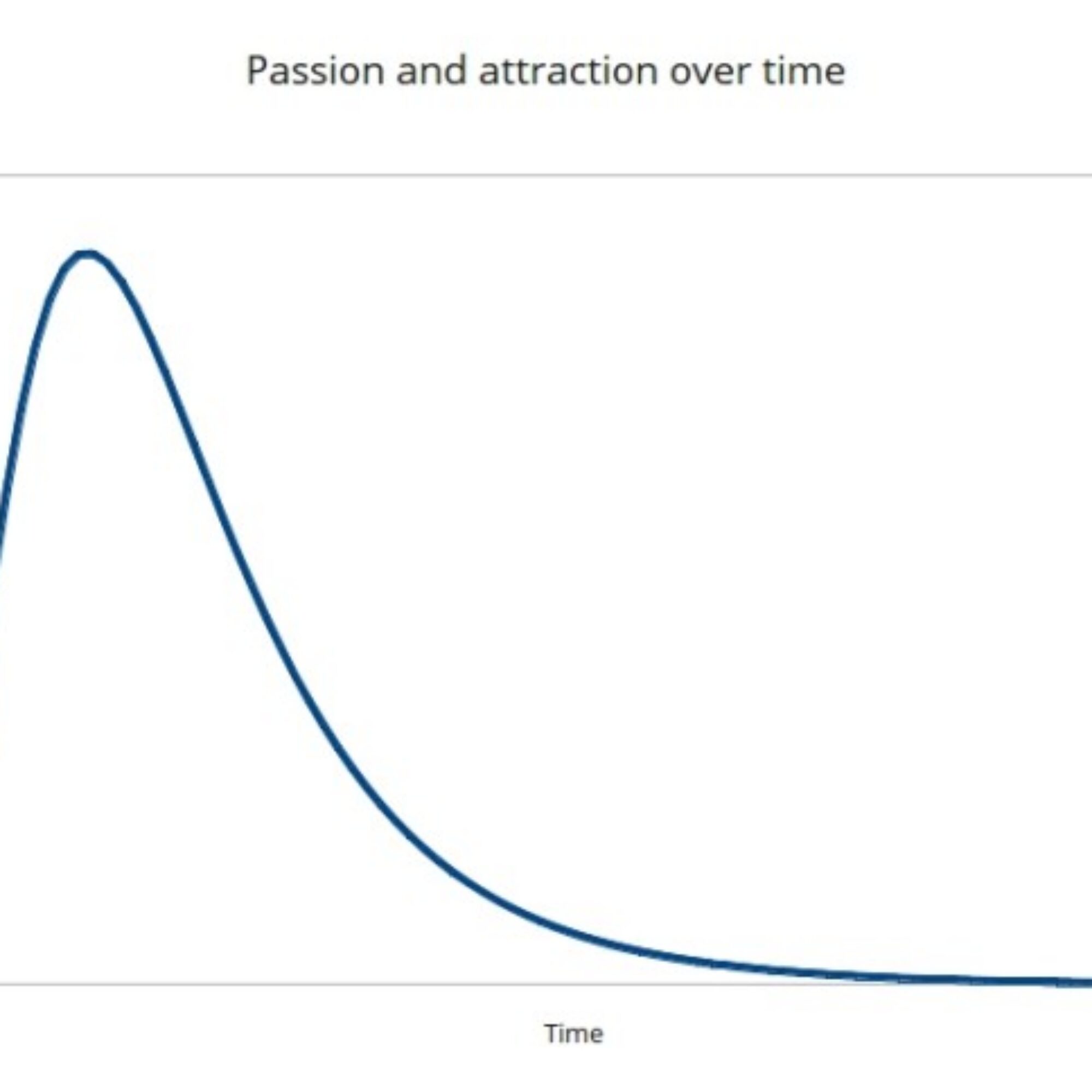
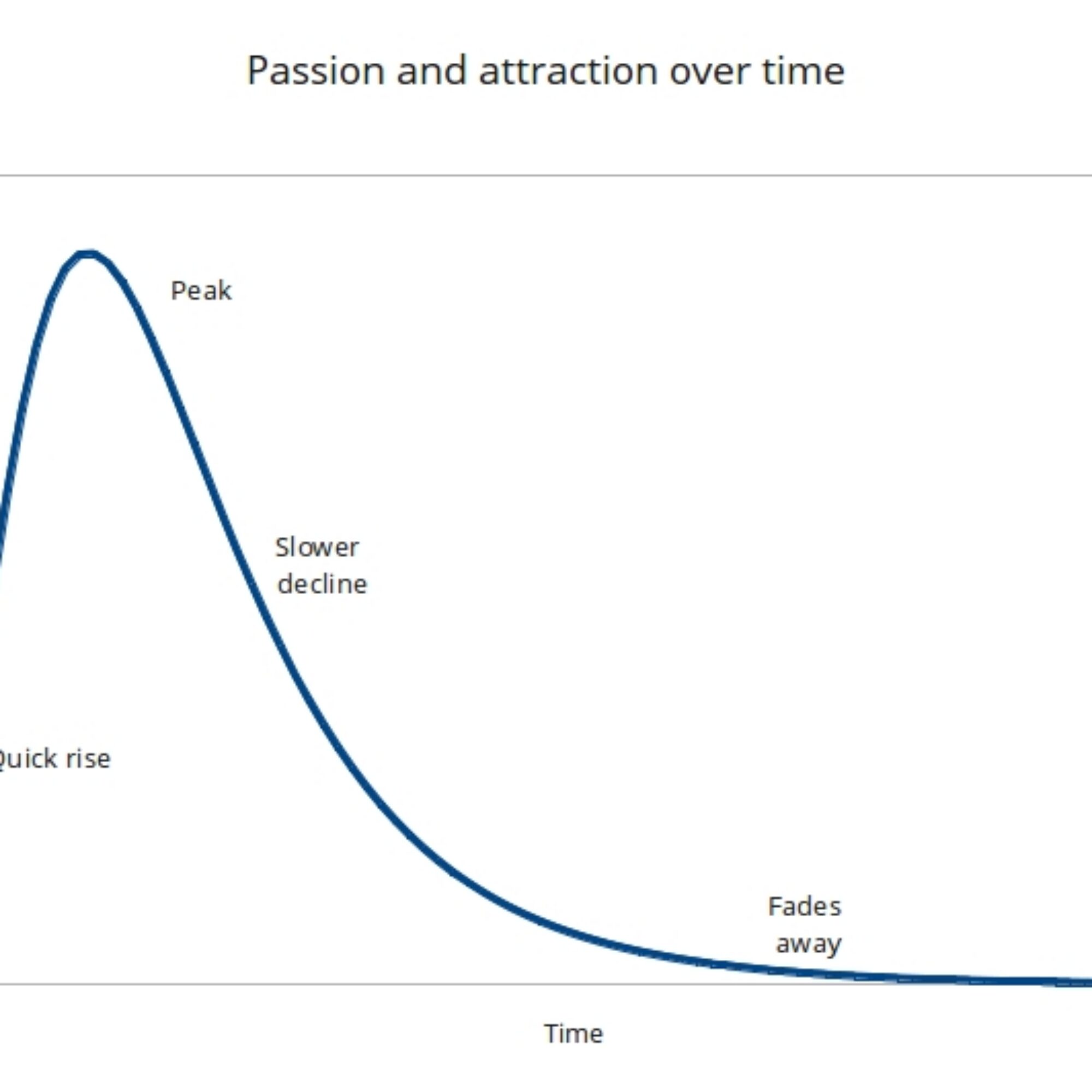
[Last week I posted a five-part series on a mental model I have for how our passion and attraction grows and wanes over time and the consequences of that pattern, according to the model. Today I'm posting them all in one post.] Day 1: Introducing a new model: Passion and Attraction I'm starting a new series today on a new model, this time on passion and attraction. Everyone I showed it to told me it gave them useful insights, so I expect you'll find value in it too. I'll apply the model mainly to intimate relationships, but you can also apply it to anything that evokes passion, attraction, or both, like hobbies, jobs, sports, and so on. So what does a science-trained, leadership-minded, self-awareness and…

0 Comments

How and why I made the Passion-Attraction Model graphs

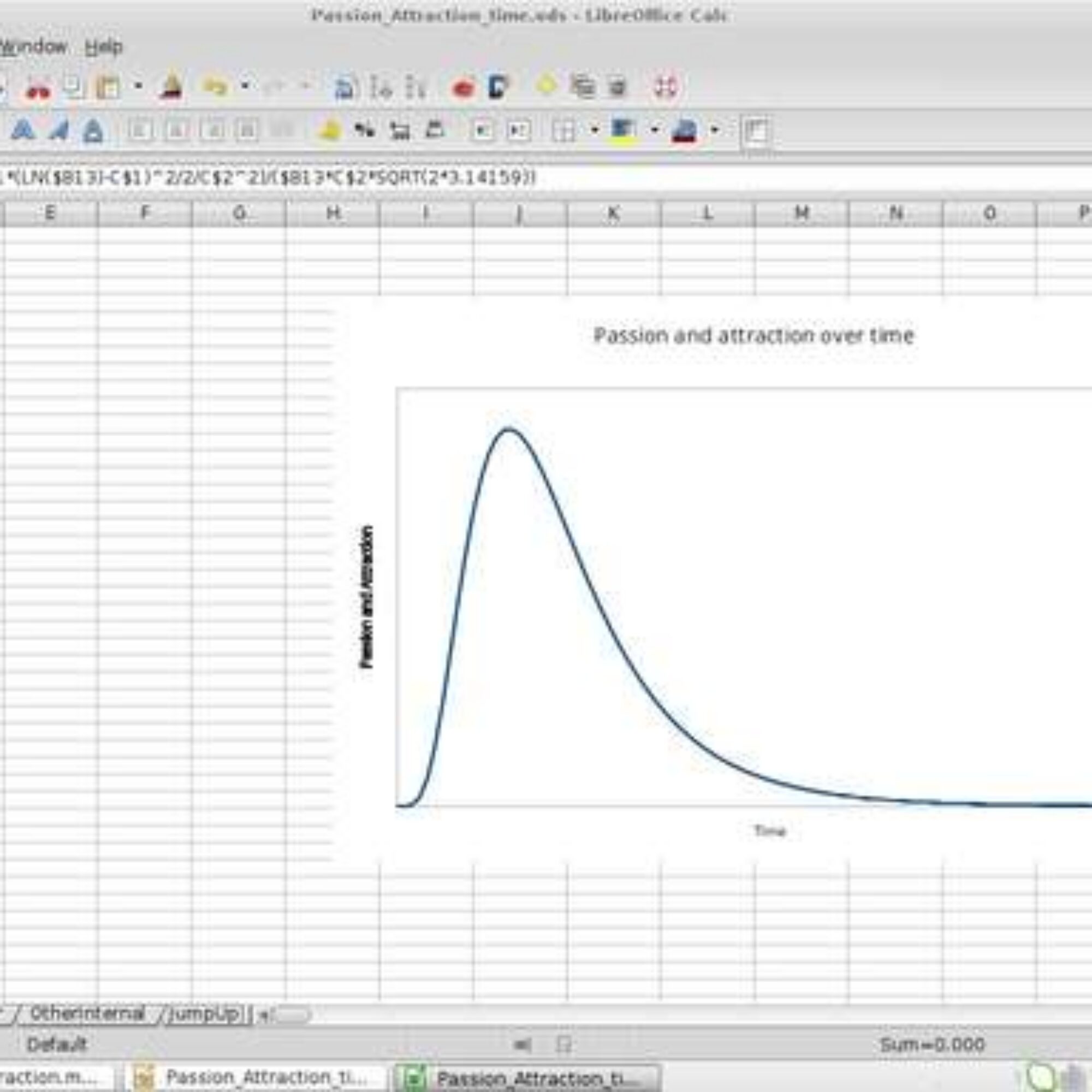
Time I put a lot more time into making the graphs and writing the posts of the past week than usual -- at least a couple full days just graphing before writing a word. Why Why did I put so much time in? Not because I didn't have lots to do. Because people who saw early versions of the graphs told me it helped them better understand Their intimate relationships Their partners, and Themselves. They also enjoyed reading the graphs -- like their eyes opened wide and they looked like kids with new toys, like who would have expected something so science-and-math-like could help them understand their intimate relationships ... and work!?! My main reason for writing here is to increase self-awareness in ways that…

0 Comments

Review and conclusions from the Passion-Attraction Model

What can we learn from the Passion-Attraction Model? While the model can apply to everyone, we each have different values and circumstances, so we each have to choose for ourselves how to live our lives and act in relationships. Understanding the Passion-Attraction Model and its consequences can help you understand yourself and your partners, on your own and in relationships if you feel it describes you well. (If you don't, it may not help you, though it may help you understand your partners if they feel it describes them.) It can help you navigate your emotions and relationships and choose your behavior and partners. You don't have to adopt it verbatim. Like all models, it has flaws and oversimplifications, but so does any other model…

0 Comments

Relationship risks in the Passion-Attraction Model, part 2

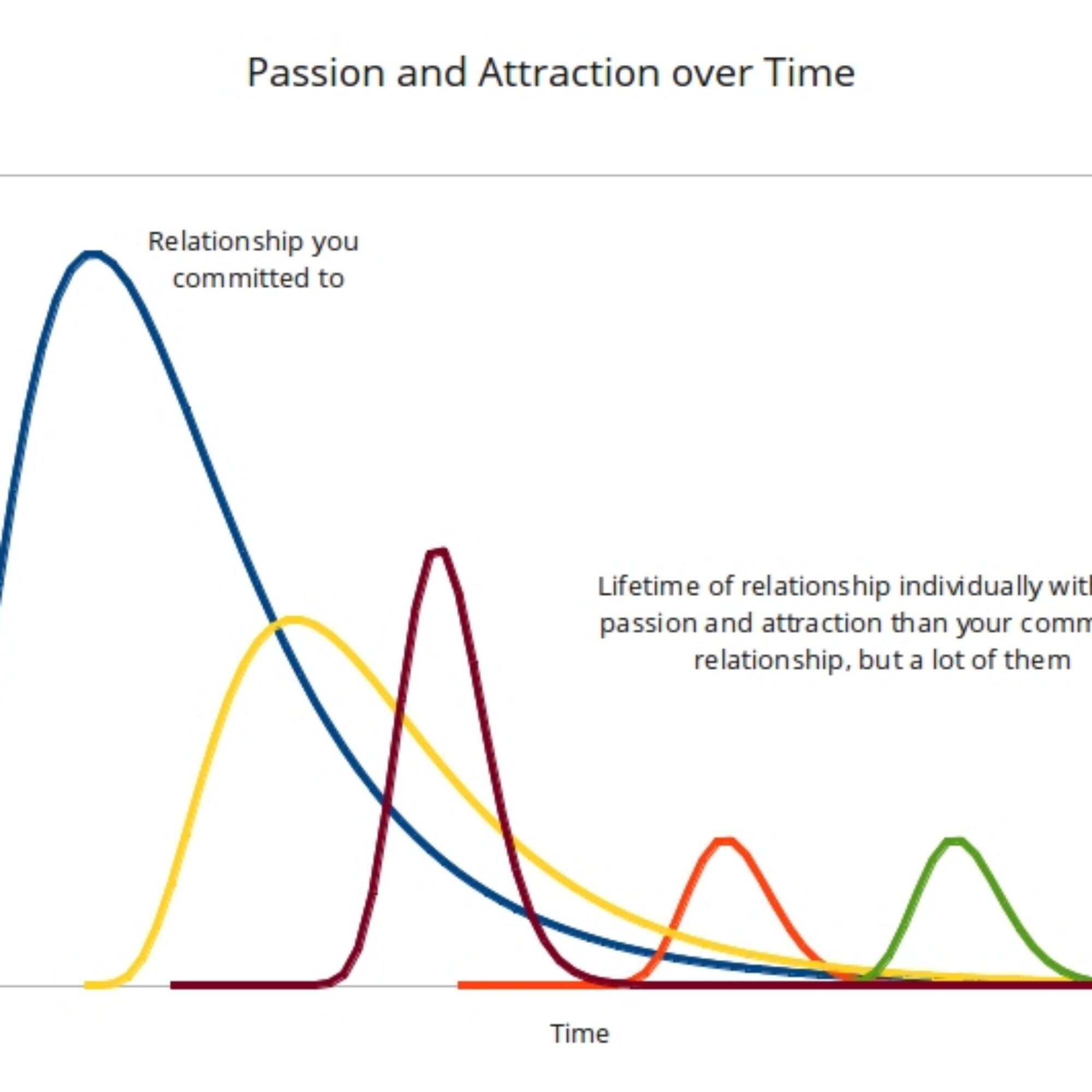
Yesterday's post considered a single alternative to a committed partner. If you plan to commit to someone for ten, twenty, thirty, or more years, you can expect you and your partner will meet people who, in the moment, attract you and excite passion more than each other. Review and discussion about One Alternative Recall, the Passion-Attraction Model doesn't tell you how to behave, though if you feel it represents your experience it may help you respond. Nor am I evaluating possible responses. I'm only using the model to understand how people will feel in relationships. The last section, "One Alternative," for example, predicted that people late in long-term relationships are susceptible to a third person exciting more passion and attraction than the long-term committed partner.…

0 Comments

Relationship risks in the Passion-Attraction Model, part 1

Yesterday's post ended by describing a typical goal -- what you hope to get if you want to commit to a relationship, at least concerning passion and attraction: an enduring relationship with lots of passion and attraction, smooth edges, and never fading away. When you and a partner both reach that goal, many people choose to commit to each other. In my experience, choosing to commit doesn't mean living happily ever after with no more relationship work. It means the beginning of a new type of work -- potentially deeply rewarding work, but work nonetheless. After all, you don't find passion, you create it with your behavior and beliefs. Committing to someone like the blue curve above means you get the high levels of emotional rewards…

0 Comments

The Passion-Attraction Model as you gain experience

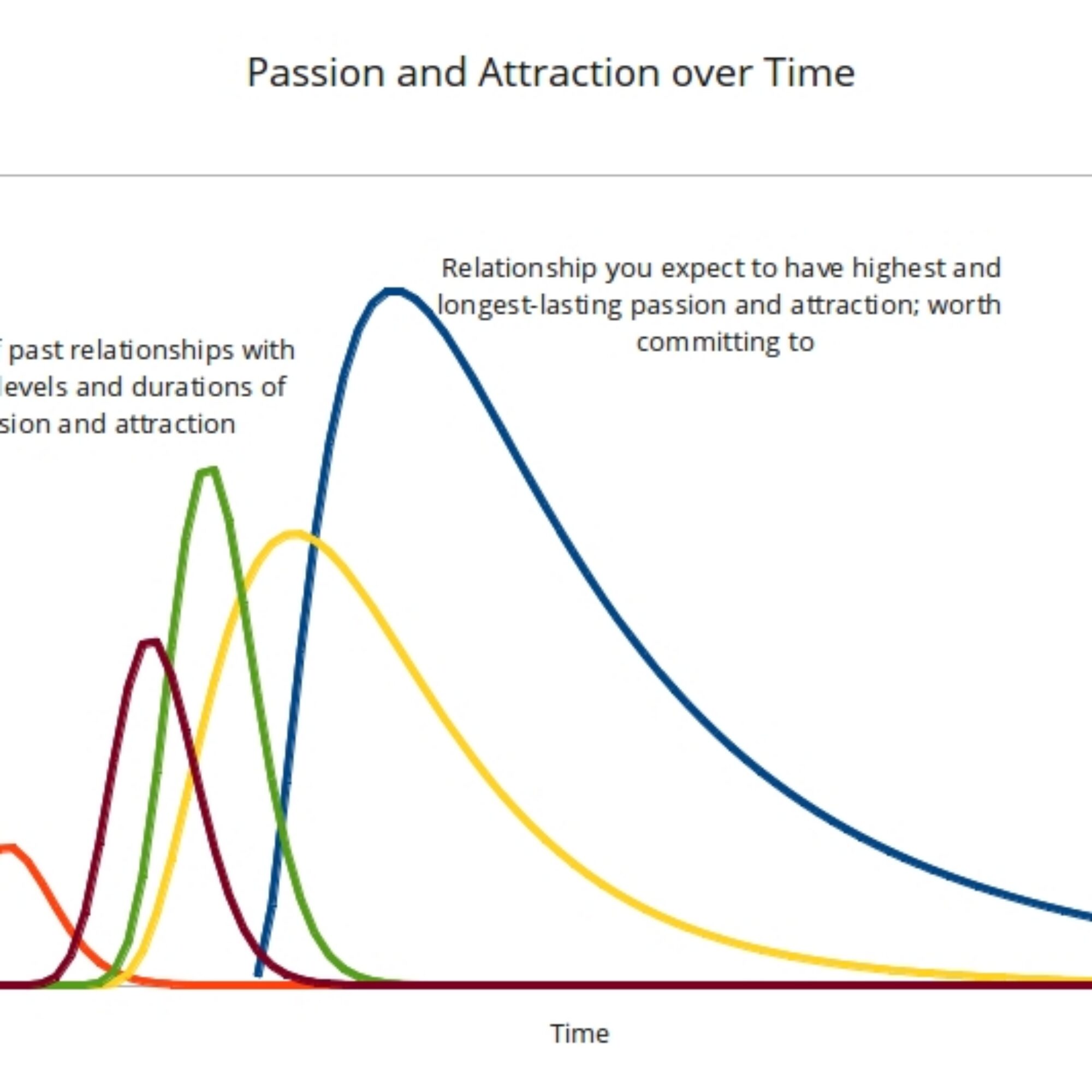
Yesterday covered how the Passion-Attraction Model described passion and attraction in a relationship. Today we'll look at how you might grow as a person and parter. We'll end today with a typical goal you might work toward (before moving on to challenges and risks tomorrow). Despite the nice clean curves in the graphs, you don't know what curve you're on. If you feel like you're at the peak of a relationship, you don't know how long your feelings will last -- that is, you don't know if you're on the red or blue curve below, or a different curve entirely. Is your relationship about to end or will it endure? Or maybe what feels like a long-term peak is just noise that will soon fade.…

0 Comments

The basic Passion-Attraction Model in one relationship

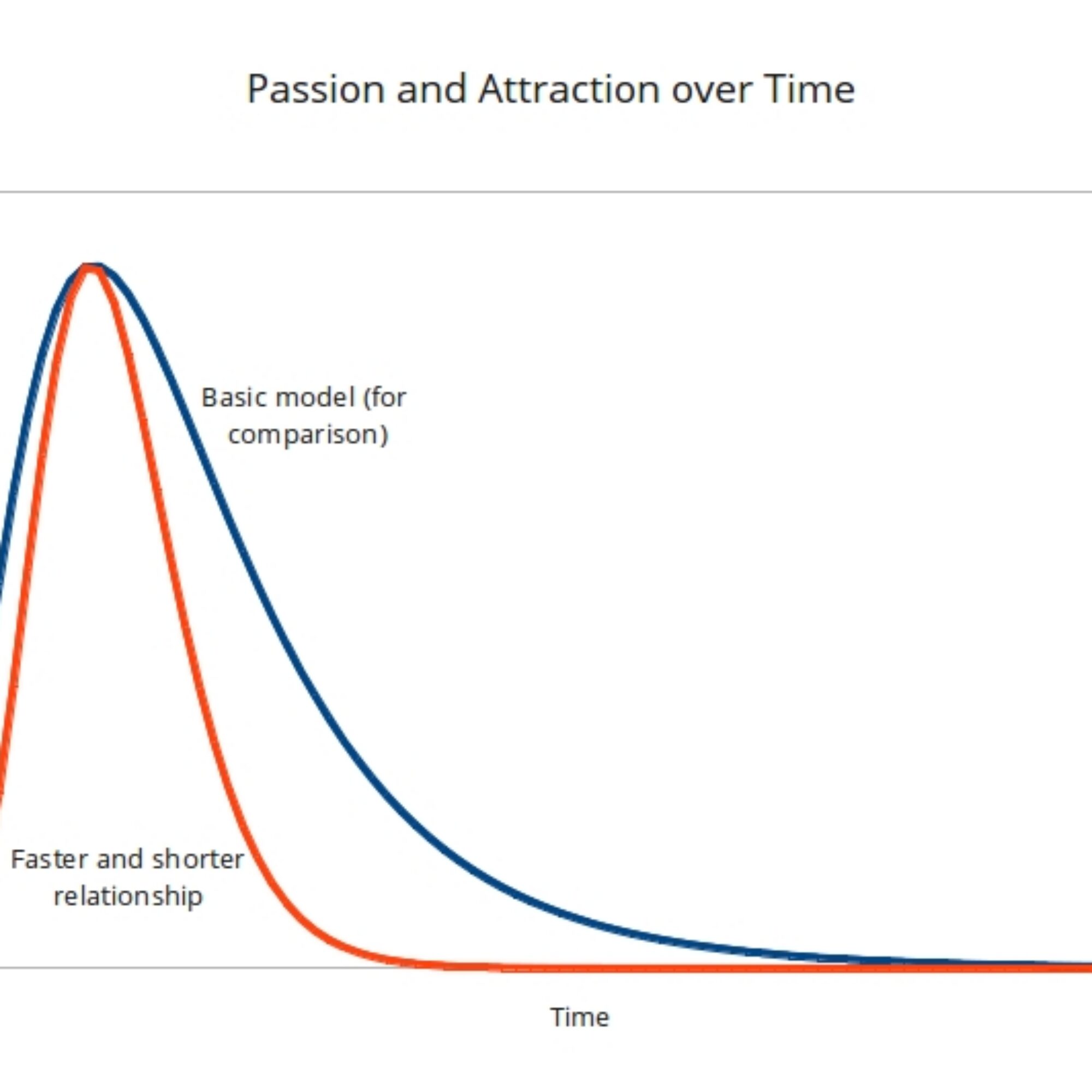
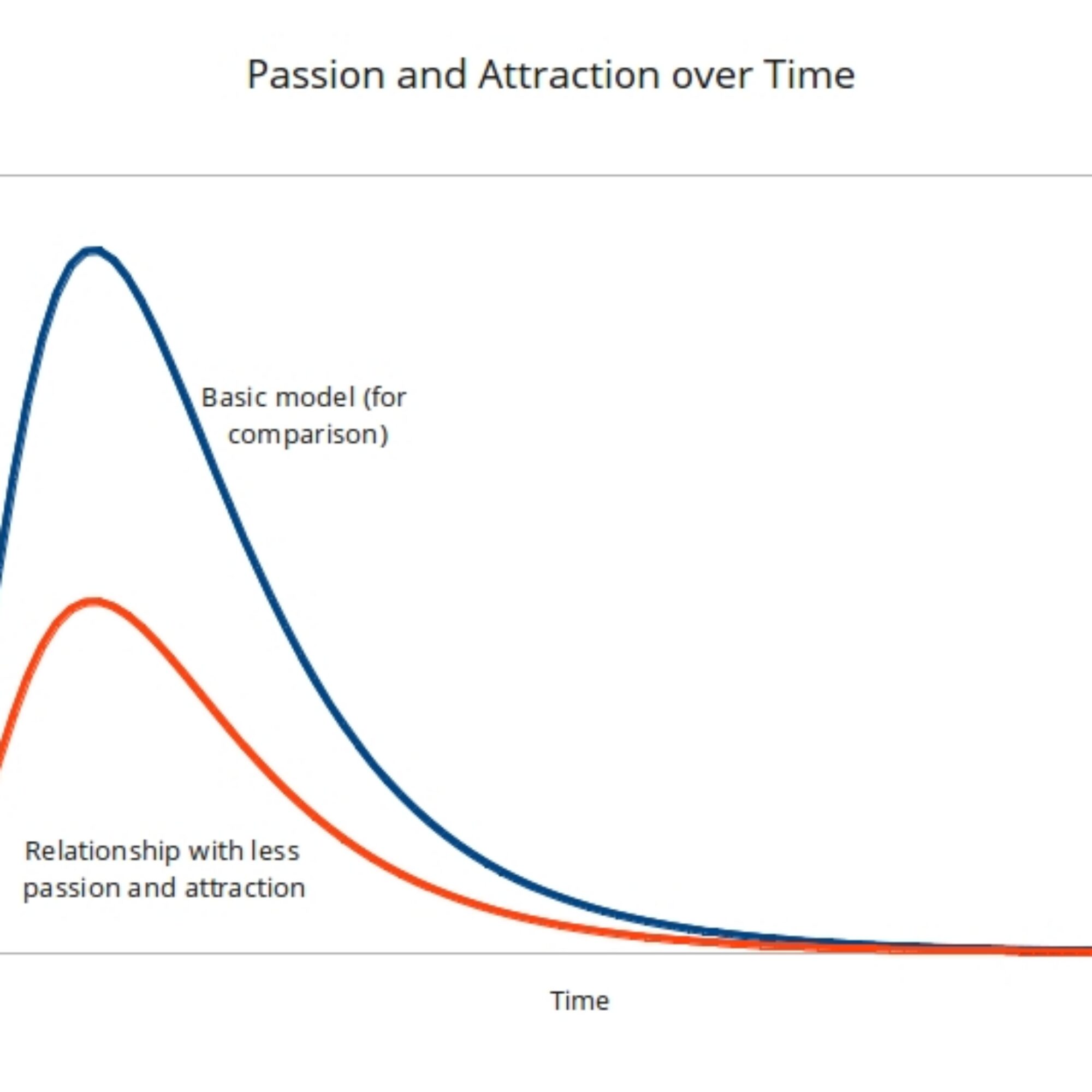
Yesterday covered the basic Passion-Attraction Model and some caveats. Today let's look at how the P-AM models passion and attraction in a single relationship. (Tomorrow we'll look at it multiple relationships). I find that the better I can visualize many ideas, the more clearly I can think about them, so this model's illustrations help me understand my feelings in a relationship. Then I can plan and act to improve myself and understand others in relationships. The Passion-Attraction Model in one relationship As we'll see, the P-AM can explain a lot of about one's feelings of passion and attraction in relationships. Less passion and attraction Some people evoke less passion and attraction in us. The P-AM represents less emotion with a lower peak, as illustrated by…

0 Comments

Introducing a new model: Passion and Attraction

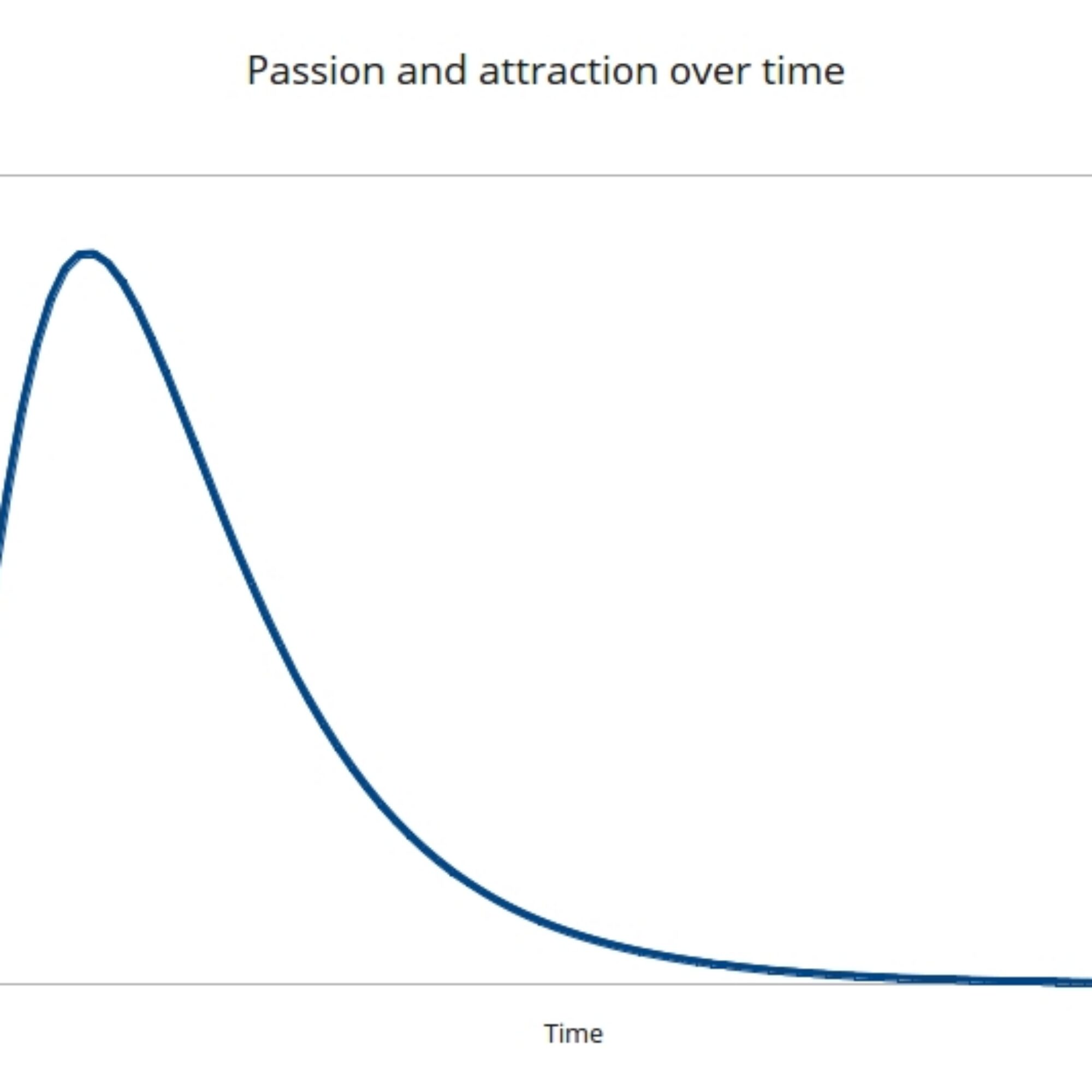
I'm starting a new series today on a new model, this time on passion and attraction. Everyone I showed it to told me it gave them useful insights, so I expect you'll find value in it too. I'll apply the model mainly to intimate relationships, but you can also apply it to anything that evokes passion, attraction, or both, like hobbies, jobs, sports, and so on. So what does a science-trained, leadership-minded, self-awareness and emotional-intelligence focused guy have to say about passion and attraction? I'll start by showing this picture of my Passion-Attraction Model as a taste of things to come, for now without explanation, except that I expect you'll find life-improving insight from a fresh and simple perspective. I find visualizing things makes understanding…

0 Comments

Do you want new beliefs and models?

I've gotten encouraging feedback on my series on my daily beliefs and how to create your own. A friend wrote with an idea to involve readers to help make the series more useful and active: to offer readers suggestions for alternatives to beliefs and models that are holding them back. New ideas could come from me or other readers. I liked his idea. Today I'm opening up to people looking to change their beliefs to send old ones in for this community to help change. Even if you don't act, I expect just thinking about your beliefs, writing them out, or seeing others' beliefs will help. If you share a belief and get a better alternative, you'll improve your life and see how the process works…

0 Comments

Three stages of understanding how ancient Egyptians built the pyramids

I'm sure many people have thought and written great stuff about the Egyptian pyramids and overcoming the challenges to building them. I haven't read much on them, but I'm writing not so much about the pyramids than on how one person's thoughts developed as he learned to solve harder problems, though nowhere near the scale of a great pyramid. Stage 1: The challenges of mechanical engineering When I first thought of the challenges of building the pyramids, I looked at the challenges the way I think most people do -- from a mechanical engineering perspective. I wondered How could they cut, transport, and lift those stones? How could they measure the angles and distances accurately? Stage 2: The challenges of organizing and leading people At…

2 Comments

Sometimes going the opposite way works best

A pattern I've noticed works a lot in life: When everyone is going in one direction, try going as far as you can in the opposite direction. Some examples: When car companies kept making bigger and more dominant SUVs, the Prius did well. In retrospect it seems obvious, but the car appeared nearly alone and successful in the U.S. market for years before other cars competed meaningfully. Now Smart Cars and related little cars seem to be doing well. The other day I wrote about how boxed cereal companies try to offer as many kinds of flavors, textures, and box designs. I prefer simple oats with a few toppings. When mp3 players first came out they looked technical and complex with lots of buttons. The…

0 Comments

How experience often beats creativity, originality, and intelligence

Yesterday I wrote about being called intelligent or smart and the sometimes downsides associated with it. I found that while society seems to value intelligence, on a personal level people value getting the job done, relationship skills, experience, people's networks, and other things, at least in leadership and decision-making roles. For a few roles that don't require teamwork people value intelligence, but they aren't that common in professional environments. What about creativity and originality? It seems to me society and business value them more, though I've written how they are commonly misperceived. Actually, I find people overvalue creativity and originality. They see results they call creative and value the person who created them. To me, I see professional work as problem-solving, whether the work is…

2 Comments

End of content

No more pages to load