A way to attract anyone, part 2: how to do it

How do we become more genuine and authentic, following yesterday's post on the value of genuineness and authenticity? I don't have a magic bullet but I can tell you some of the major steps that helped me. I don't claim to be the most genuine and authentic person, but I'm more so now than I was. First, I came to recognize that all these shells weren't helping me. They seemed helpful locally, but hurt me globally. I realized this by noticing why I liked some of my oldest friends. I felt less inhibited with them because I knew them before I put some shells on. Newer friends got humor, intelligence, and things like that, but more inhibition and less passion, compassion, and empathy. Naturally I…

0 Comments

How to attract anyone, part 1

I know a trick to attract any woman. If you want to attract a man it works too. I use it regularly when I flirt and it always works. I know it works because when I tell the woman I'm flirting with what I'm doing she always says it's working. Just to be sure I predispose her to be skeptical by telling her what I just wrote -- that I know and am using a trick that attracts any woman. She'll look at me incredulously and say, "oh yeah, what?" "You want to know my trick?" "Yes! What is it?!?" Usually I take longer to answer because I know she's curious, but since I'm not writing to flirt with you I'll answer here faster. I…

0 Comments

E. O. Wilson and evolutionary psychology in the New Yorker

The New Yorker has a piece this week on E. O. Wilson and others on current debate in evolutionary psychology and altruism. Online only has the summary, so you'll have to buy a copy, but I expect quality from the magazine. E. O. Wilson published a fictional story on ants I found enjoyable and educational in the New Yorker himself a couple years ago. I saw Wilson speak and got to talk to him briefly at the New York Academy of Sciences. Things I learned from him have affected my views on motivations and emotions as much as from anyone else.

0 Comments

A solution to all ethics problems

During orientation I learned one of business school's most valuable lessons. I learned the first step in resolving all ethics problems. Orientation included a case study on ethics. The case involved a guy who witnessed someone else breaking a rule at a company. If he told on the employee he would escalate the problem, possibly identifying himself as not a team player, no matter how justified his actions. Remaining silent would make him complicit, and who knew how many other rules the person he observed might be breaking? The details were relevant to the case, but keeping things at a high level reveals what I call the classic ethics problem: The Classic Ethics Problem: You have to choose between something you agree with that will hurt…

0 Comments

Vulnerability and opening up first

A friend asked "Why unreservedly open your heart to anyone or anything when there is such strong potential for disappointment, failure, heartache or apocalyptic disaster". I wrote back the following: I experimented along those lines a few years ago and ended up improving my life and nearly every relationship. I'll share my experience in case you can use it. I won't feel bad if you ignore it. Regarding building relationships, I used to have a model, Old model: first get to know someone. If they become a friend, then open up. I saw nothing wrong with the model and figured everyone had a similar model, but people also said things like "I've known you for a long time, but I still don't feel like I…

0 Comments

Josh’s growing list of differences with mainstream American culture

I've noticed many of my values differ from what I see in mainstream American culture. See how yours differ too. What I call mainstream may differ from what you call mainstream and at times I deliberately overstate the mainstream American view to parody it. Category "Mainstream" American view (oversimplified) Josh's view (oversimplified) Jobs Horrible way to waste your time. A necessary evil we have to endure. A source of challenges to overcome and people to collaborate with. Exercise Torture. You inflict it on yourself for a few weeks after New Years, then forget about it. Fun way to pass times with friends. Rewarding source of discipline that gives to everything else in life. Maintains appetite, focus, sleep, mood. Science No idea what it is, but…

0 Comments

Amazing representation of the size the universe and everything in it

I love this representation of the size of things in the universe so much I have to link to it, even though I prefer to post things that I created more of. Please check it out and play with it. (EDIT: alternative link) It's an updated, interactive, unnarrated version of the great educational 1968 short film, the Powers of Ten. I think the movie and interactive representation show some of the greatest parts of the beauty we can find of nature. We can find that beauty everywhere we look. [youtube]http://www.youtube.com/watch?v=0fKBhvDjuy0[/youtube] Here is a simpler version of the representation of distance scales. EDIT: Another representation

2 Comments

More labels not helping: a man’s autism vanishes

If you look for problems you'll find them. And you'll fill your life with problems. But if you look for solutions you'll find them too, and you'll fill your life with solutions. You'll find your problems go away or don't show up at all. A day after posting on labels not helping with introversion and extraversion came this op-ed piece on a guy whom doctors diagnosed with autism, supposedly "a continuous and lifelong disorder," but his symptoms vanished. I exhibited a "qualified impairment in social interaction," specifically "failure to develop peer relationships appropriate to developmental level" (I had few friends) and a "lack of spontaneous seeking to share enjoyment, interests, or achievements with other people" (I spent a lot of time by myself in my…

0 Comments

“Introverted” / “Extroverted”: labels hold you back from improving your life

On a discussion online about introversion and extraversion, I responded to someone pointing out that the labels of introversion and extraversion hurt more than they helped. Labels add no value and hold people back from improving their lives. Dealing with groups requires one set of skills. Dealing with solitude requires another (with much overlap). If you don't have skills for one situation you will avoid it. Once you acquire the skills to handle it, you'll be able to handle either. If you can only handle one now that doesn't mean you can't handle the other, it just means you haven't yet. When you have the skills and experience to handle one situation you will enjoy it and look forward to it, either one. When you…

1 Comment

Models: an exercise in spotting the model

[This post is part of a series on The Model -- my model for the human emotional system designed for use in leadership, self-awareness, and general purpose professional and personal development -- which I find the most effective and valuable foundation for understanding yourself and others and improving your life. If you don't see a Table of Contents to the left, click here to view the series, where you'll get more value than reading just this post.] Let's do another exercise in beliefs and models. One of the challenges in models is that people act on them without realizing them. If someone else acts on one without realizing it, they will stick with it strongly and may influence you to seeing it from their perspective,…

0 Comments

This land was made for you and me

Like most American kids of my generation, I learned This Land Is Your Land as a children's song, never thinking much of its meaning. A decade or two later, I heard Bruce Springsteen's version of it on his Live 75-85 set. His introduction first got me thinking about its meaning, especially in contrast to God Bless America. I didn't know Woodie Guthrie wrote This Land Is Your Land as an angry song. Springsteen's version on the album sounds mournful but then rousing and inclusive. On the Live 75-85 album I have, he introduced it as follows. There's a book out right now. It's called Woodie Guthrie, A Life. It's by this fellow called Joe Klein. And it's really a great book. This song was originally…

0 Comments

Models: an exercise in evaluating models

[This post is part of a series on The Model -- my model for the human emotional system designed for use in leadership, self-awareness, and general purpose professional and personal development -- which I find the most effective and valuable foundation for understanding yourself and others and improving your life. If you don't see a Table of Contents to the left, click here to view the series, where you'll get more value than reading just this post.] I've harped on how the only meaningful value of a model or belief is in how well it helps achieve its goal, not accuracy or if you had it first or anything else. Today's question will illustrate the difference. I'll give you a situation to consider, then a…

0 Comments

Models: examples of the active view

[This post is part of a series on The Model -- my model for the human emotional system designed for use in leadership, self-awareness, and general purpose professional and personal development -- which I find the most effective and valuable foundation for understanding yourself and others and improving your life. If you don't see a Table of Contents to the left, click here to view the series, where you'll get more value than reading just this post.] Today let's look at some examples of applying the active view of models to models you may know or from life. That is, the following examples show how someone created a model specifically not what most people see when they look at the object of the modeling. Jack…

0 Comments

Models: the active view, part 2

[This post is part of a series on The Model -- my model for the human emotional system designed for use in leadership, self-awareness, and general purpose professional and personal development -- which I find the most effective and valuable foundation for understanding yourself and others and improving your life. If you don't see a Table of Contents to the left, click here to view the series, where you'll get more value than reading just this post.] Having seen an overview of the active view, let's look at it in practice. Let's take a passive view from a post a few days ago -- how you perceive a dog based on your beliefs and expectations -- and make it active. Example 1 First let's look…

0 Comments

Models: the active view, part 1

[This post is part of a series on The Model -- my model for the human emotional system designed for use in leadership, self-awareness, and general purpose professional and personal development -- which I find the most effective and valuable foundation for understanding yourself and others and improving your life. If you don't see a Table of Contents to the left, click here to view the series, where you'll get more value than reading just this post.] Actively choosing and managing your models -- what I call the active view of models -- changes how you experience your world. Since you only know your world through your beliefs and models, changing your models effectively changes your world. You need to know about models -- the…

0 Comments

Models: flaws from experts

[This post is part of a series on The Model -- my model for the human emotional system designed for use in leadership, self-awareness, and general purpose professional and personal development -- which I find the most effective and valuable foundation for understanding yourself and others and improving your life. If you don't see a Table of Contents to the left, click here to view the series, where you'll get more value than reading just this post.] Do you think you have some great models and beliefs that no one can prove wrong? Let's look at some examples of experts declaring things most people at the time probably agreed with. I think you'll find many funny today. Imagine trying to argue with the authority who…

0 Comments

Models: why I stress that they all have flaws

[This post is part of a series on The Model -- my model for the human emotional system designed for use in leadership, self-awareness, and general purpose professional and personal development -- which I find the most effective and valuable foundation for understanding yourself and others and improving your life. If you don't see a Table of Contents to the left, click here to view the series, where you'll get more value than reading just this post.] If I stress one thing about models and beliefs, I stress that they all have flaws. None are internally consistent. All contradict something in the world. To recognize that you can't prove most of the basic ideas you hold as truths can be mind blowing. I'm not trying…

0 Comments

Models: the passive view

[This post is part of a series on The Model -- my model for the human emotional system designed for use in leadership, self-awareness, and general purpose professional and personal development -- which I find the most effective and valuable foundation for understanding yourself and others and improving your life. If you don't see a Table of Contents to the left, click here to view the series, where you'll get more value than reading just this post.] Today I'll review the main points arising from simply knowing about that we create models that mediate our interactions with our worlds -- what I call the passive view. Merely knowing about models passively, not what to do with them but just the following points, will help you…

0 Comments

Examples of models: Mexico city, lack of awareness, and leadership

[This post is part of a series on The Model -- my model for the human emotional system designed for use in leadership, self-awareness, and general purpose professional and personal development -- which I find the most effective and valuable foundation for understanding yourself and others and improving your life. If you don't see a Table of Contents to the left, click here to view the series, where you'll get more value than reading just this post.] Leadership depends on understanding that other people have different models. A leader who doesn't recognize people can have different models will create discord and confusion, as today's example will illustrate. I draw this example from my life. After business school a friend told me her consulting job was…

0 Comments

Examples of models: “Everybody does their best according to their abilities and perception of their environment”

[This post is part of a series on The Model -- my model for the human emotional system designed for use in leadership, self-awareness, and general purpose professional and personal development -- which I find the most effective and valuable foundation for understanding yourself and others and improving your life. If you don't see a Table of Contents to the left, click here to view the series, where you'll get more value than reading just this post.] I tend to believe that everybody does their best according to their abilities and perception of their environment. Sure, I know counterexamples, but in general I believe that at every moment, everyone observes their surroundings and, based on their perception and abilities (more precisely, their beliefs about their…

0 Comments

Examples of models: “beliefs and expectations filter your perception”

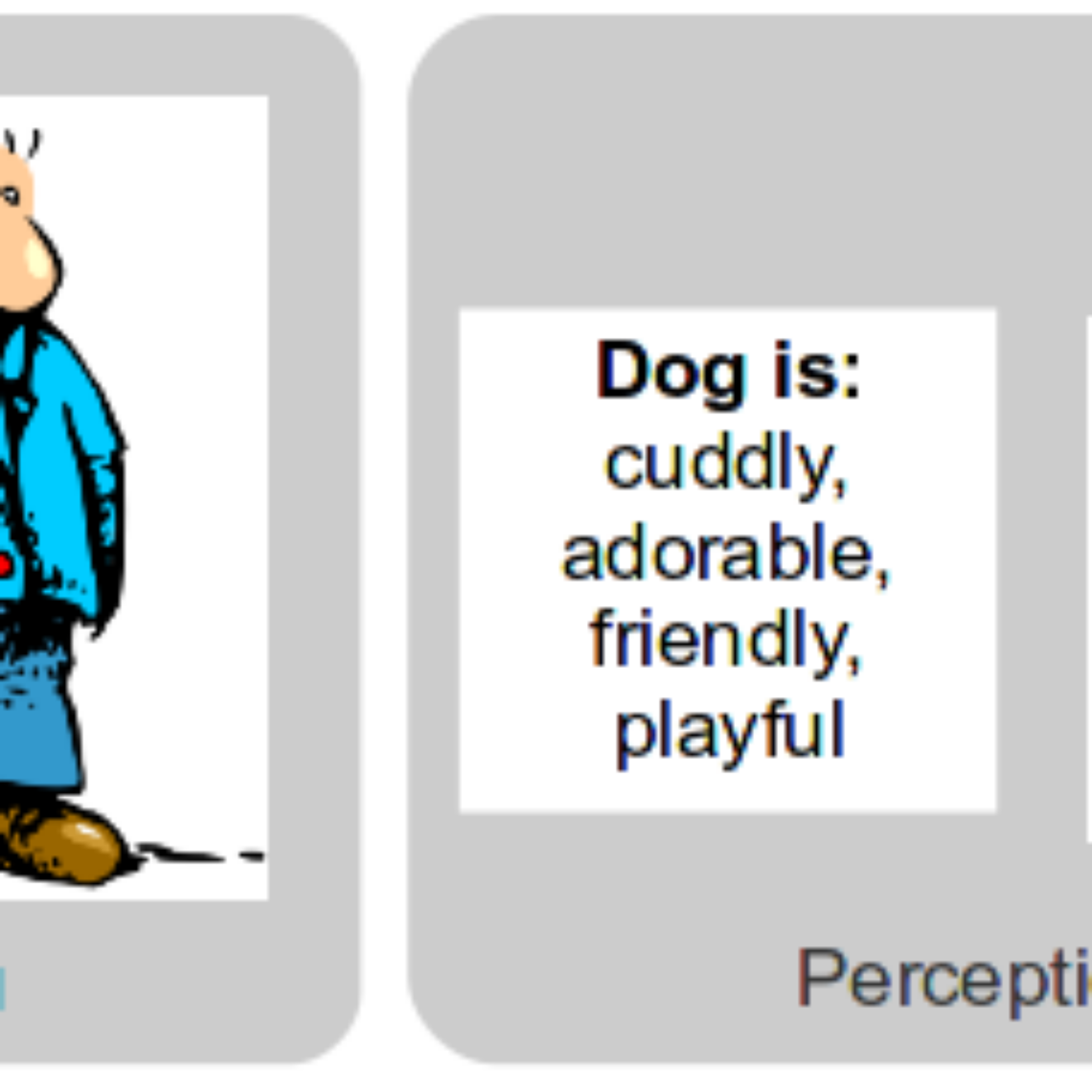
[This post is part of a series on The Model -- my model for the human emotional system designed for use in leadership, self-awareness, and general purpose professional and personal development -- which I find the most effective and valuable foundation for understanding yourself and others and improving your life. If you don't see a Table of Contents to the left, click here to view the series, where you'll get more value than reading just this post.] Let's look at another example of how we use models in more depth. As with yesterday, after treating the example I'll describe the lessons it teaches. Imagine you grew up with a pet pit bull. You might see it as an adorable pet. Someone else who never grew…

0 Comments

Examples of models: why he or she didn’t call

[This post is part of a series on The Model -- my model for the human emotional system designed for use in leadership, self-awareness, and general purpose professional and personal development -- which I find the most effective and valuable foundation for understanding yourself and others and improving your life. If you don't see a Table of Contents to the left, click here to view the series, where you'll get more value than reading just this post.] For the next three or four posts, let's look at examples of how we use models in more depth. After each example I'll describe the lessons it teaches. We'll start with an example we're all familiar with: someone told you they'd call Monday. By Friday, no call. It's…

0 Comments

Examples of models: how a slight change in your model can create big changes in behavior

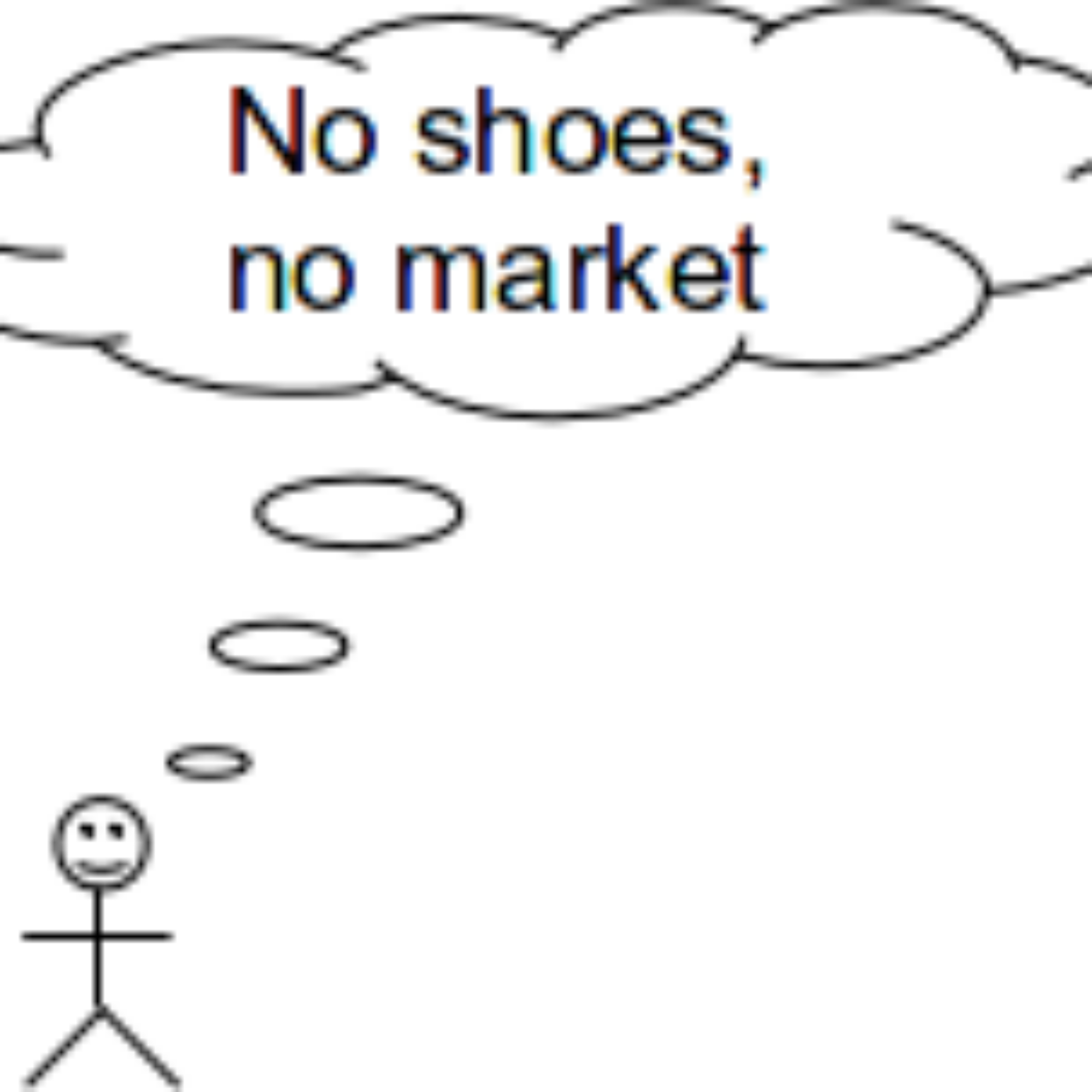
[This post is part of a series on The Model -- my model for the human emotional system designed for use in leadership, self-awareness, and general purpose professional and personal development -- which I find the most effective and valuable foundation for understanding yourself and others and improving your life. If you don't see a Table of Contents to the left, click here to view the series, where you'll get more value than reading just this post.] A famous parable in business literature describes how two competing shoe companies considering expanding into a new market each sent a salesperson to research the market to figure out if they should enter it and how. The first, upon arriving, found that in this market, nobody wore shoes.…

0 Comments

Examples of models: beliefs and mental models

[This post is part of a series on The Model -- my model for the human emotional system designed for use in leadership, self-awareness, and general purpose professional and personal development -- which I find the most effective and valuable foundation for understanding yourself and others and improving your life. If you don't see a Table of Contents to the left, click here to view the series, where you'll get more value than reading just this post.] My past two posts on examples of models showed visual models -- maps and representations of the Earth. Such examples illustrate how models work because they are easy to see, but don't capture the subtlety of distinguishing models from what they represent. Mental models tend to be more…

0 Comments

Examples of models: the Earth from several perspectives

[This post is part of a series on The Model -- my model for the human emotional system designed for use in leadership, self-awareness, and general purpose professional and personal development -- which I find the most effective and valuable foundation for understanding yourself and others and improving your life. If you don't see a Table of Contents to the left, click here to view the series, where you'll get more value than reading just this post.] Yesterday I started with one of the simplest examples of models -- maps. Today we'll look at other models. The image below includes a model of the Earth. You might remember seeing models like this from school. It throws out a lot of information -- it's two-dimensional, showing…

0 Comments

End of content

No more pages to load