One of the best exercises I know to raise your self-awareness

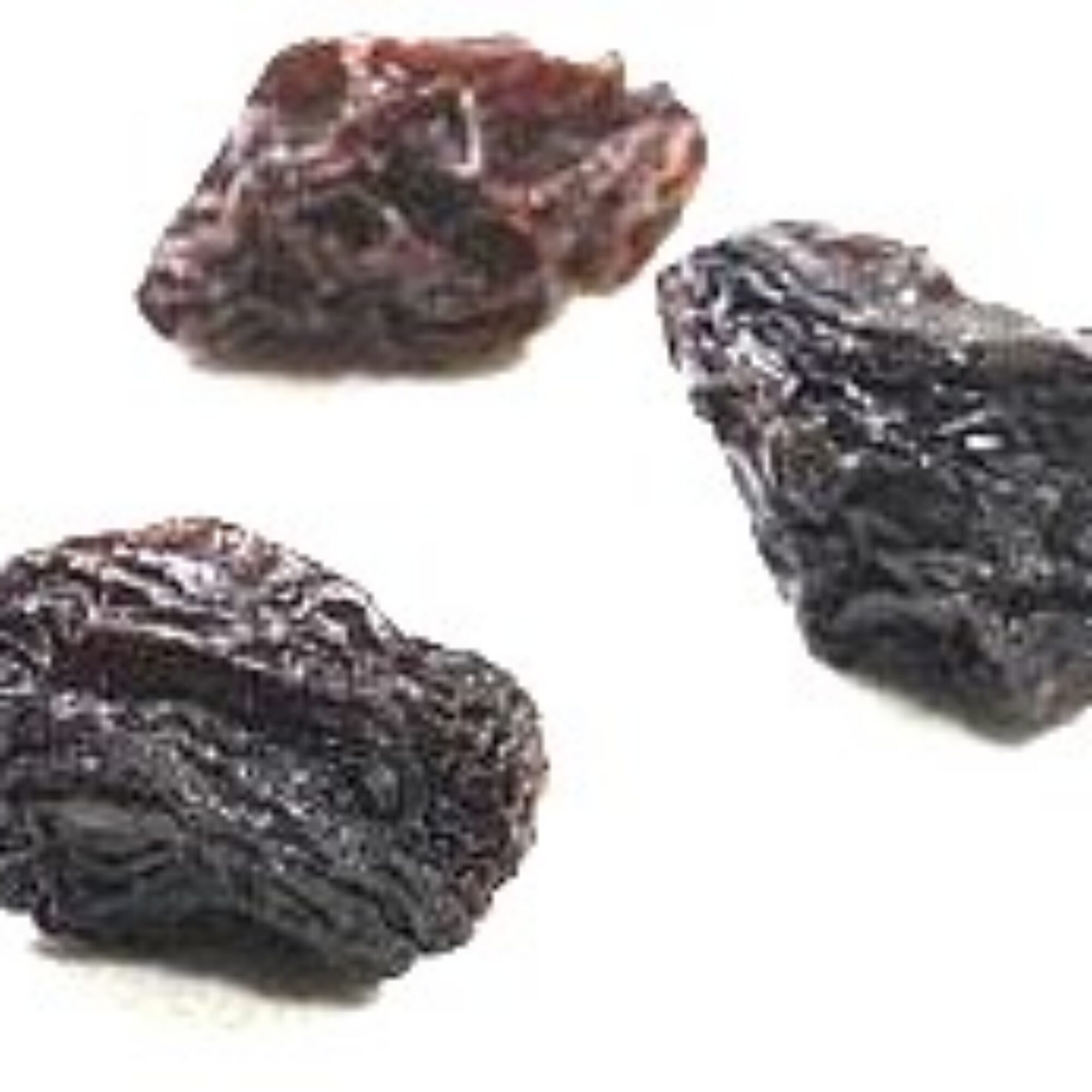
I got this exercise from a book by Jon Kabat-Zinn, who writes on self-awareness, mindfulness, and meditation. I find it helped me understand a lot about how I perceive my world and how I can influence how I perceive it. I don't know if he made it up or got it from somewhere. Anyway, all you need is three raisins and some free time. The Three Raisins exercise Preparation: get three raisins. Put them in front of you. Turn off your phone and computer. Put away any books or anything distracting. Don't schedule anything after.   The exercise: eat the three raisins as if you had never observed one before, like you came from another planet. Use all your senses. Take your time. Feel their…

0 Comments

You can still learn new things

After posting about how Churchill and others overcame impediments on their ways to greatness, I saw an article in the New York Times about great historical figures humbly learning things late in life -- Marie Curie learned to swim after winning two Nobel Prizes, Leo Tolstoy learning to ride a bike after writing War and Peace, Dwight Eisenhower learning to paint after World War II ended, and a couple other examples. Inspiration isn't that hard to find. A favorite example for me is Ernest Rutherford, one of the great experimental physicists. To understand the results of what we call the Gold Foil Experiment. I won't go into the details since the link is right there, but it basically discovered the nucleus and established the process…

0 Comments

A model to make hard decisions easier

[This post is part of a series on "Mental models and beliefs: an exercise to identify yours." If you don't see a Table of Contents to the left, click here to view the series, where you'll get more value than reading just this post.] When I worry about a difficult choice I have to make I think of a parable. Some martial arts students ask their teacher how he always keeps his balance. He asks what they mean. They say, well you never fall down so you must never lose your balance. He says, on the contrary, I'm always losing my balance, but I'm also always recovering. I try to live like that. Things are always making me lose my balance but I rarely fall.…

0 Comments

Facebook’s woes and what it could have done instead

If you know me, you'd expect Facebook's woes to mean the problems Facebook inflicts on its users who haven't left it yet. After all, leaving Facebook is easy and fun. Yes, they're reaching a billion users, but I'm no longer one of them and once you leave the site seems weird, like why would you do business with such a creepy company. From the New York Times, Facebook Shares Plummet in an Earnings Letdown: "Unhappy with Facebook's first financial report as a public company Thursday, investors fled the stock in droves..." Most of you probably expect the drop resulted from my calling the company creepy and you may be right, but I think the greater problems come from inside Facebook, and decisions they made based…

2 Comments

Another genius business idea: real-life fairy tales

Today's post in the series of genius business ideas may not be a sustainable business model, but it covers a product I think today's children would benefit from as adults. Market demand Parents want the best for their kids. They don't want them needlessly hurt, especially by going down paths they know will create unnecessary pain and hardship. A friend suggested to me that many people have problems in relationships because of overly rosy expectations. They envision that calling each other boyfriend, girlfriend, husband, or wife, will lead to them living happily ever after or riding off into the sunset. You can say people know life isn't that simple, but everyone I've talked to about it believes it to some degree despite themselves. Or at…

2 Comments

Things aren’t suddenly getting worse

  Whenever I read about how today's world is moving faster, competition is greater, people are more separated, more together, or whatever superlative that supposedly sets our time different than any other, I think of this quote Our youth now love luxury. They have bad manners, contempt for authority, they show disrespect for their elders and love chatter in place of exercise; they no longer rise when elders enter the room; they contradict their parents, chatter before company, gobble up their food and tyrannize their teachers. This quote defines our time, doesn't it? Except that it was written centuries ago. I've seen it attributed to Socrates, but I've seen people claim it's much younger, but still generations old. Every generation changes its values from the…

0 Comments

Proof you can change even very important beliefs in an instant

Clients and nearly everyone I talk to about it consider changing beliefs one of the hardest things to do. Changing beliefs voluntarily is fundamental to the Method, so I help people develop the ability a lot. Experience has made me pretty good at it, at least compared to my ability in the past. Based on how much I used to argue, I don't think I started with any particular advantage in this area, so I think whatever I could do anyone else can too. The value of being able to change beliefs I forget if I mentioned it here, but a psychologist who studied intelligence once told me she considered flexibility in beliefs and models one of the most important components of intelligence and many…

0 Comments

“Extremes” usually aren’t

I've written before on the persuasive but specious rhetorical trick that goes something like John is very conservative about these things. Mary is very liberal. Me, I'm practical and... Do you sense that you're probably going to agree with what the speaker next says? Extremists like John and Mary are difficult to deal with. People reject extreme views out of hand. You don't want to be like that, do you? Being practical makes more sense, doesn't it? The speciousness is subtle. I'll point the flaw out in a second. When you get it, you realize what the other person is doing and how to protect yourself from their influence when you don't want it. You'll start to see people doing it all the time. The…

0 Comments

Every word you say counts

A couple clients recently thanked me for some advice I had given outside our main conversation, almost as asides, but that worked. Every word counts I told them that every word you say contributes to your identity, even if only to yourself. And that every word influences how everyone, including yourself, perceives you. Context They were talking about some problems they were working through. They said things like "I have anxiety in social situations" "I don't know how to talk to people I don't know." "Changing yourself is hard and takes time." I suggested changing statements like those to "I used to have anxiety in social situations" "I'm getting over anxiety from social situations" "I get less anxiety from social situations than I used to"…

0 Comments

The difference between men and women

I'm going to explain a major difference between men and women that will help men understand women and women understand men. It won't explain everything, but it will help you understand the opposite sex better than most perspectives. I'll overstate the point for clarity. You have to figure out for yourself how much to dial it back. And keep in mind, I'm presenting a model. If it works for you, use it. If it doesn't, you don't have to. If you feel compelled to point out the model is wrong or missing data, review what I wrote about models -- I probably agree with you, but that doesn't mean the model doesn't improve your life. You might as well point out that men aren't from…

0 Comments

Business people should understand our effect on the environment better than anyone, part 2

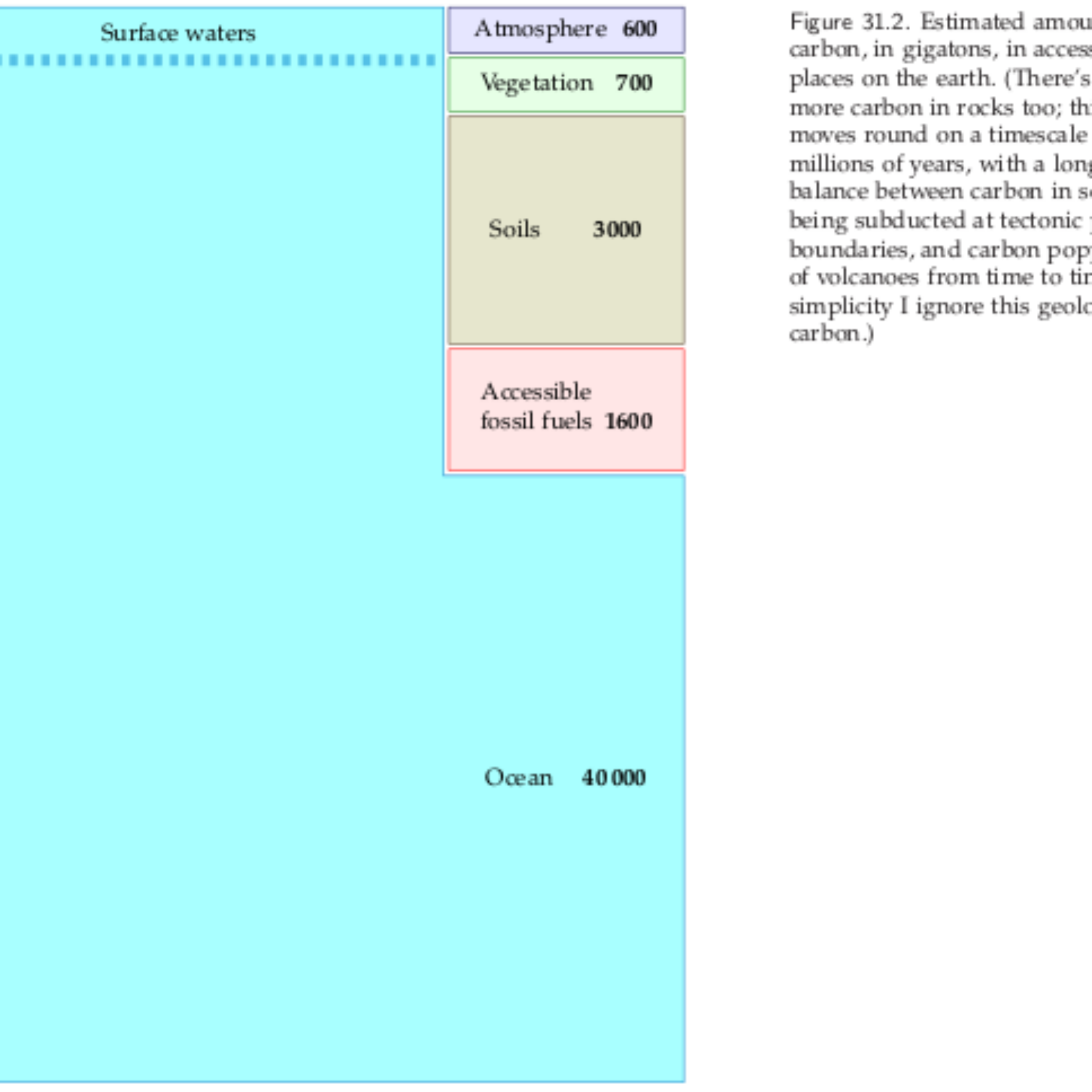
Following up yesterday's post on balance sheets and charts for using and producing energy and reporting our numbers to see if we can make them balance, let's look at carbon flows. People who don't know about carbon emissions, flows, and balance confuse simple ideas with each other. For example, some talk about how volcanoes and cows digestive systems produce tons of carbon and wonder why we should bother changing our practice. When you understand amounts and flows, you don't confuse unimportant effects for important ones, like business people who learn not to be penny wise and pound foolish. Below is a representation of where carbon is on the Earth. It's not exactly a balance sheet, though over time the total numbers have to add up.…

0 Comments

Business people should understand our effect on the environment better than anyone, part 1

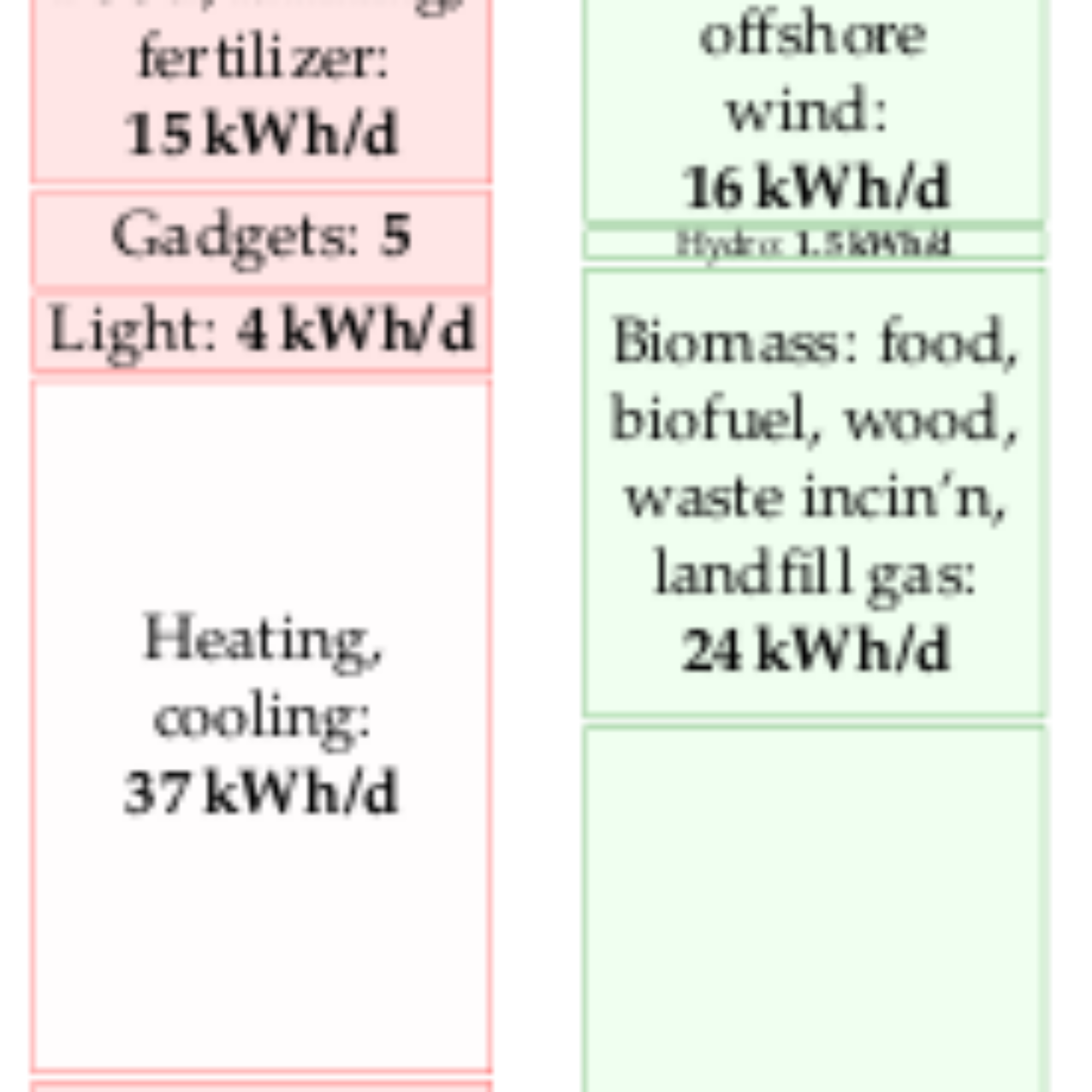
People don't realize it, but business people have some of the best the skills to understand our effect on the environment. We should learn those skills from them. I didn't have much (any?) business experience when I co-founded my first company. I couldn't read a balance sheet or know accounting. My science background taught me to understand general and broad patterns, which don't suffice for running a company. Either the check clears or it doesn't. Business school taught me how to manage cash -- accounting, keeping and reading balance sheets, profits and losses, cash flows, and so on. Many people understand how we affect our environment worse than I understood how to understand a business. In other words, they just know information but not how…

0 Comments

One of the best books I’ve read on the environment, our impact on it, and what we can do about it

Imagine living your whole life nearsighted and one day you wear glasses for the first time -- everything going from fuzzy blobs to clear. Or you know after you get out of the pool and your ears have water in them? Imagine you heard like that for your whole life and suddenly they cleared and you could hear properly. Or you've been wearing gloves and for the first time you take them off and feel something directly. That feeling of experiencing something clearly instead of vaguely and indirectly is what reading the book Sustainable Energy -- Without the Hot Air is like. Like the Do The Math blog I've been enjoying and praising, a Cal Tech educated physicist wrote it. This author, David MacKay, has…

0 Comments

A leader and physicist’s view on morality, ethics, and judgment

Wrapping up my series on the counterproductivity of leading with morality, ethics, and judgment, I'll present a model based I got from Einstein. Without all the emotion judgment can grip you with, you can understand the physics model easily. Then you can apply it to the emotional situation. Then I bet you'll improve your life. Before Einstein: the problem of the aether Before Einstein, people created a concept called the aether. They saw light traveling through a vacuum and figured something must be there, so they created a concept. For years they looked for properties of it. No one succeeded. You might remember the Michelson-Morley experiment from high school physics that famously couldn't detect the aether. That was a problem. People were looking for something…

0 Comments

How do you lead when you can’t stand working with someone?

Yesterday I wrote on how to lead people (yourself or others) you disagree with without judging them. I skipped cases where you felt you could not work with the person under any circumstances. Let's look at such cases today. I'm going to treat these cases strategically. Most cases will be unique at the tactical level so you'll have to figure out how to apply the strategy. If you can't work with someone, YOU have a problem First things first. No matter how bad you think they are, no matter how much evidence you have pointing out their faults and shortcomings, no matter how many other people agree the other person has problems, you have a problem too. I'm not saying they don't have problems too.…

0 Comments

Deciding right and wrong for others and causing them guilt and blame doesn’t help anyone

Prelude: this is about leadership (of others and yourself) Yesterday I outlined an essay on the counterproductivity of deciding right and wrong for people who disagree with you. Today I'm fleshing out the essay. The point of this blog is to help people lead -- to influence others, to work with them in teams, to negotiate with them, and so on -- even when you disagree. So I'll leave deciding right and wrong for others, figuring that, since some issues haven't been resolved for thousands of years, you might not resolve them before you have to deliver on your project (or while you improve your life if we're talking about leading yourself). Successful leaders ship while attract people to work with them. Today's post covers…

0 Comments

The New York Times had a contest about my post

What a coincidence. The day after my long post on the counterproductivity of moralizing for leading people, using the example of deciding for others whether they should eat meat or not, the New York Times published the results of a contest to do exactly what I described as counterproductive. No contradiction here -- the New York Times's goal is not to lead people, but to sell newspapers and what works against leaders' interests (depending on how you want to lead) -- polarization and argumentation -- works for news media. Here is the statement of the contest Here are the submissions with the most votes Here is the winning submission This difference in interests illustrates a glaring bias inherent to news reports. Promoting division and argument…

0 Comments

Fantastic video on economic and energy growth and limits

I've written about the Do The Math blog, which looks at the numbers underlying how our economy works, particularly the energy part, which is to say, what drives it. If you think something else drives it, do the math! I think you'll see otherwise. Incidentally, analysis like his is one of the reasons I studied physics (if you didn't know, I got a PhD in the subject) -- to understand nature. Many people think of physics as something that happens in a lab or happened a long time ago with Galileo and Newton, but fundamentally physics studies our natural world. And we are part of nature. Anyone who thinks otherwise -- well, I don't know what to say to them. Anyway, Tom Murphy, the guy…

0 Comments

More on the subjectivity of “truth”

Another perspective on truth and its subjectivity came from my musician friend. He described to me the concept of truth in music, which at first didn't make sense to me. Since music doesn't make verifiable or falsifiable statements it wasn't obvious to me how it could be "true"? He described music being true by how it made you feel. He's a composer and he described how when you write a piece, if you do it right, it becomes true. Listen to any great work and it feels right, or true. When you do it wrong it doesn't sound true. Composers struggle to find that truth and express it. His description sounds like what I hear from other artists, especially actors and performers, who tell me…

0 Comments

Do you think truth is objective?

People imply by the concept "truth" something objective. They'd like it to mean they know something that could never be false, I don't think it means what they think it does. I've come to believe the concept of truth describes a feeling attached to believing you know something. That is, the difference between saying "The sky is blue" and "It's true that the sky is blue" is in your feeling, not in the meaning. Simply that people describe "your truth" or "my truth," which you've no doubt heard at least once, should suffice to show truth isn't objective. When two people agree on their truths, no problem. But sometimes people's truths disagree. Then big problems can occur. If you don't attach the feeling that you…

0 Comments

Yet more perspective on the economy, environment, and ecology

Following yesterday's post on a the blog -- Do the Math -- that covers the economy, environment, and ecology the best I know, along with Limits to Growth, I found another blog that covers a perspective on economics I haven't seen, but consider important. We rely on an economics system based on growth but we live on a finite planet. We will one day reach an equilibrium with our environment. Well, we hope to -- we could enter a perpetual cycle of booms and busts. In equilibrium instead of growth, how do we distribute resources? Mainstream economic theory falls apart, yet it seems obvious to me it can be done. Enter the Center for the Advancement of the Steady State Economy, which promotes understanding economics…

0 Comments

How to feel good anytime

Once I was waiting for a bus in Queens. I had work to do, but no way to do it while waiting, and I didn't know how long I'd have to wait. People typically feel frustrated or bored in situations like that. I did. But I noticed people on vacation sit around doing nothing too. So I thought to myself "what's the difference between doing nothing while waiting for a bus and doing nothing on vacation, say lying on the beach or looking at the Grand Canyon?" Either way, I'm not doing any work. The main difference I came up with was how I felt. On vacation I might feel "I've got it made" or the like instead of boredom or frustration. But I can…

0 Comments

One way to accept without judging

Here's an old story that comes in many versions (here are seven), but I learned from Srikumar Rao's book Are You Ready to Succeed (text from this blog). An old man lived in a valley with his son, a handsome and dutiful youth. They lived a peaceful life despite a lack of material possessions. They were very happy. So much so, that neighbors began to get envious. One day, the old man used all his savings to buy a young wild stallion. It was a beautiful horse that he planned to use for breeding. The very same day he bought it, the horse jumped the fence and ran off. The neighbors came over to sympathize. "How terrible!" they said. "Good thing? Bad thing? Who knows?"…

0 Comments

The slides from my North Korea talk at Columbia Business School

Saturday's talk on North Korea at Columbia Business School went great -- a full room, an attentive audience, and great questions at the end. I didn't leave as much time for questions as I wish I had, but the organizer told me people told her they liked the talk a lot. Several people asked for copies of the slides so I'm posting them here instead of sending multiple emails.

0 Comments

How to attract anyone, part 3

"What if the other person is boring?" People ask me this question all the time when I tell them they can attract people better, especially through genuineness and authenticity. The question reveals a belief about people I disagree with. My belief creates more friendships that are deeper and more meaningful. I'll talk about it here. Two beliefs that create friendships I believe everyone has facets of their personality that are interesting, intriguing, and fascinating. I also believe that you could know someone for decades and still find out new things about them. Think of the person you are closest to. You never run out of things to say, right? Imagine talking to them for fifty years. You'd still have things to talk about with them,…

0 Comments

End of content

No more pages to load