Common objection 8: But it’s embarrassing or it makes me anxious

[This post is part of a series on internal objections and blocks and how to overcome them. If you don't see a Table of Contents to the left, click here to view the series, where you'll get more value than reading just this post.] Objection Yesterday I posted how fear of feeling fake after changing holds people back. Today I'll note how some people don't start because they feel embarrassed or anxious now. But I'm embarrassed! I'm too nervous to even think about it! Many people prefer not to think about problem areas of their lives. Example The big one here is out-of-shape people not going to the gym because they're embarrassed about being the fat person at the gym. I speak from experience. I…

0 Comments

Common objection 7: I’ll feel fake

[This post is part of a series on internal objections and blocks and how to overcome them. If you don't see a Table of Contents to the left, click here to view the series, where you'll get more value than reading just this post.] Objection People worry that changing themselves will make themselves fake. It won't be the "real" them. My new beliefs will be fake. It won't be the real me. I'll be acting. Example As a coach I hear this all the time when someone changes even small things about themselves. People may feel fake from wearing different styles of clothes than they used to, speaking more slowly, calling someone outside their network, taking on leadership positions or even just any new position…

0 Comments

Common objection 6: That’s just the way it is

[This post is part of a series on internal objections and blocks and how to overcome them. If you don't see a Table of Contents to the left, click here to view the series, where you'll get more value than reading just this post.] Objection People think some things can't change. They say It's a fact. That's just the way it is. You have to accept that some things are just that way. Examples Bureaucrats consistently tell me how their process works, saying I can't do it any other way. They probably tell you the same thing. (I hope you, like me, consistently achieve things they call impossible.) My leadership seminar includes a couple slides with quotes from experts then stating how things had to…

0 Comments

Common objection 5: I have to take care of “real world” issues first

[This post is part of a series on internal objections and blocks and how to overcome them. If you don't see a Table of Contents to the left, click here to view the series, where you'll get more value than reading just this post.] Objection People often say things like I have to take care of “real-world” issues like earning money first. or their bosses, parents, or teachers say things like You have to take care of "real-world" issues first, like getting a job or paying your bills. or they believe things other than “real-world” issues are indulgent. Or they have to be “practical” or “pragmatic.” Alternatively: My job doesn't allow it or give me time to do it. That's fine and well for others…

0 Comments

Common objection 4: I don’t know how to do it, I’m too introverted, I’m not smart enough, etc

[This post is part of a series on internal objections and blocks and how to overcome them. If you don't see a Table of Contents to the left, click here to view the series, where you'll get more value than reading just this post.] Objection People often complain that the project they want to do requires skills or abilities they don't have: I don't know how to do it. I'm too introverted. I'm not smart enough. Example I hear people claim they can't perform plenty of business and social interactions because they just don't get along with people; they want to do things alone. Or people claim they've never been that smart. Underlying belief Their usual underlying belief is that only extraordinary people can achieve…

0 Comments

Common objection 3: I don’t have enough money/time/connections/etc

[This post is part of a series on internal objections and blocks and how to overcome them. If you don't see a Table of Contents to the left, click here to view the series, where you'll get more value than reading just this post.] Objection People usually state this objection as I would do it but I don't have enough money. You need connections to do that and I don't have them. I would if only I had time. or some appeal to needing more of something external to them. Tomorrow I'll write about internal obstacles or blocks. Example Would-be entrepreneurs often say they can't start businesses because they don't have the money. People don't go on vacations, decrease their working hours, or do plenty…

0 Comments

Common objection 2: I’m not good at X. I can’t do Y. I’m not a Z person

[This post is part of a series on internal objections and blocks and how to overcome them. If you don't see a Table of Contents to the left, click here to view the series, where you'll get more value than reading just this post.] Objection People usually state this objection as a statement like these. I'm just not a leader. Leaders are born, not made and I wasn't born a leader. I've tried losing weight a million times. I'm just not a gym person. I'm no good at math. Example Too many to list. The above statements suggest a few. Underlying belief The underlying belief to these statements is that Existing or past patterns can't change. or Describing how things are says how they have…

0 Comments

Common objection 1: I want to understand the root of the problem before solving it

[This post is part of a series on internal objections and blocks and how to overcome them. If you don't see a Table of Contents to the left, click here to view the series, where you'll get more value than reading just this post.] Objection People usually state this objection with something like I want to understand the problem before acting. I want to get at the root first. If I don't, it will just happen again. You can also call this objection Analysis Paralysis since it leads people to analyze over acting. Again, some problems require analysis, but I bet you'll find that the more you learn alternatives, like the ones below, the more you'll learn to solve problems faster. Example My classic example…

0 Comments

How to view objections and blocks as advantages

[This post is part of a series on internal objections and blocks and how to overcome them. If you don't see a Table of Contents to the left, click here to view the series, where you'll get more value than reading just this post.] Yesterday introduced obstacles and blocks as inevitable parts of leadership and personal development. It also suggested you can see them as advantages, or at least solving them as advantages. How do you train yourself to see problems as advantages? That's like the solution to all your problems, right? Once problems become fun, or at least rewarding growth opportunities, nothing holds you back from taking on whatever challenges come your way. Most people wouldn't believe some of my current projects. But Submedia's…

0 Comments

Overcoming objections and blocks in leadership and personal development: The overarching principles

[This post is part of a series on internal objections and blocks and how to overcome them. If you don't see a Table of Contents to the left, click here to view the series, where you'll get more value than reading just this post.] Whether you want to lead or motivate others or yourself, deciding to lead means you will face objections and blocks. Whether from members of your team or from your anxieties and fears, objections and blocks are similar, as are their solutions. For the next week or so, I'll cover a range of objections, blocks, and various other ways we discourage ourselves or face others being discouraged when we try to motivate them. Someone who can consistently overcome challenges in themselves or…

0 Comments

Thriving in challenging situations

I asked my friend in Bayonne that I wrote about yesterday, whose neighborhood the storm destroyed, to review yesterday's post before putting it up. I found his comments inspiring. I know when reading them I hear his voice. As a personal trainer, he's almost always upbeat and I can hear his motivating tone in these words. I hope that upbeat, non-judgmental tone comes across in the words. Other people have lost their homes and I've been helping them with it. In my household though, everyone has a different negative attitude about it. One panic, the other inconvenience, and next door someone is in complete despair, crying every day trying to recharge their phone. One of my clients' daughter has croupe and she's worried about her…

0 Comments

How do you respond to others’ suffering?

A reader raised the question for me of how to respond to others' suffering. She wrote about my recent posts about the aftermath of the storm: You may want to show some empathy at your blog for those hardest hit who have been displaced from their homes with children, not knowing whether to stay or go, not having many options at their disposal, worried for the safety of their children, getting by on no heat, no clean water or any water at all, and felt out of the loop while the local government seemed most focused on Manhattan where most of the young people were walking around like nomads happy they had off from work or little work and looked to it as a huge…

0 Comments

Misconceptions about values

People have a lot of misconceptions about values that make it hard for people to know and live by theirs. In particular, people imagine sticking to their values in challenging situations hard. Misconception 1: It's hard to stick to your values during crises, conflict, and ethical dilemmas A lot of people think that crises, conflicts, and ethical dilemmas entice you to drop your values and just do what's easy. I suggest those situations make it easy to learn your values -- they're what you do. Everyone always does something in any situation. What you do, that's your values. Some rise to the occasion, some avoid problems, some run from them, some sit and analyze them forever, some ask others for help. And so on. So…

0 Comments

You’re always emotional, not only when you’re angry or excited

People often look at someone acting with intense emotions -- like when they're excited, angry, enraged, passionate, etc -- and say that they are "emotional" at times like that. They misunderstand emotions. Understanding emotions is one of the most important parts of self-awareness and therefore leadership of yourself and others. Emotions motivate you. As long as you're awake you feel motivation. Everyone is always emotional all the time. Calmness is an emotion. Just because you aren't running around yelling or losing control doesn't mean you aren't feeling emotions. You could just as well call someone serenely under control and relaxing emotional. They're feeling contentedness or calmness or something like that. Why is this distinction important? Some people think of emotions as bad or something that…

0 Comments

Non-attachment, caring, and motivation, part 2

A couple months ago I posted a question on awareness, non-attachment, caring, and motivation I'd been thinking about for a decade or so, unable to answer it in all that time. I came up with an answer I like, that satisfies my curiosity, and helps me understand more. First let me remind you of the question. It came when I was learning in college about Buddhism. I learned the story that Siddharta Gautama, the guy who we know as the Buddha, became enlightened while meditating under a tree. I don't like fuzzy terms like "enlightened," but I understand it means, among other things, he no longer had attachment to anything. Contemplating the concept of non-attachment satisfied me in some ways but confused me in others.…

0 Comments

INSEAD leadership seminar

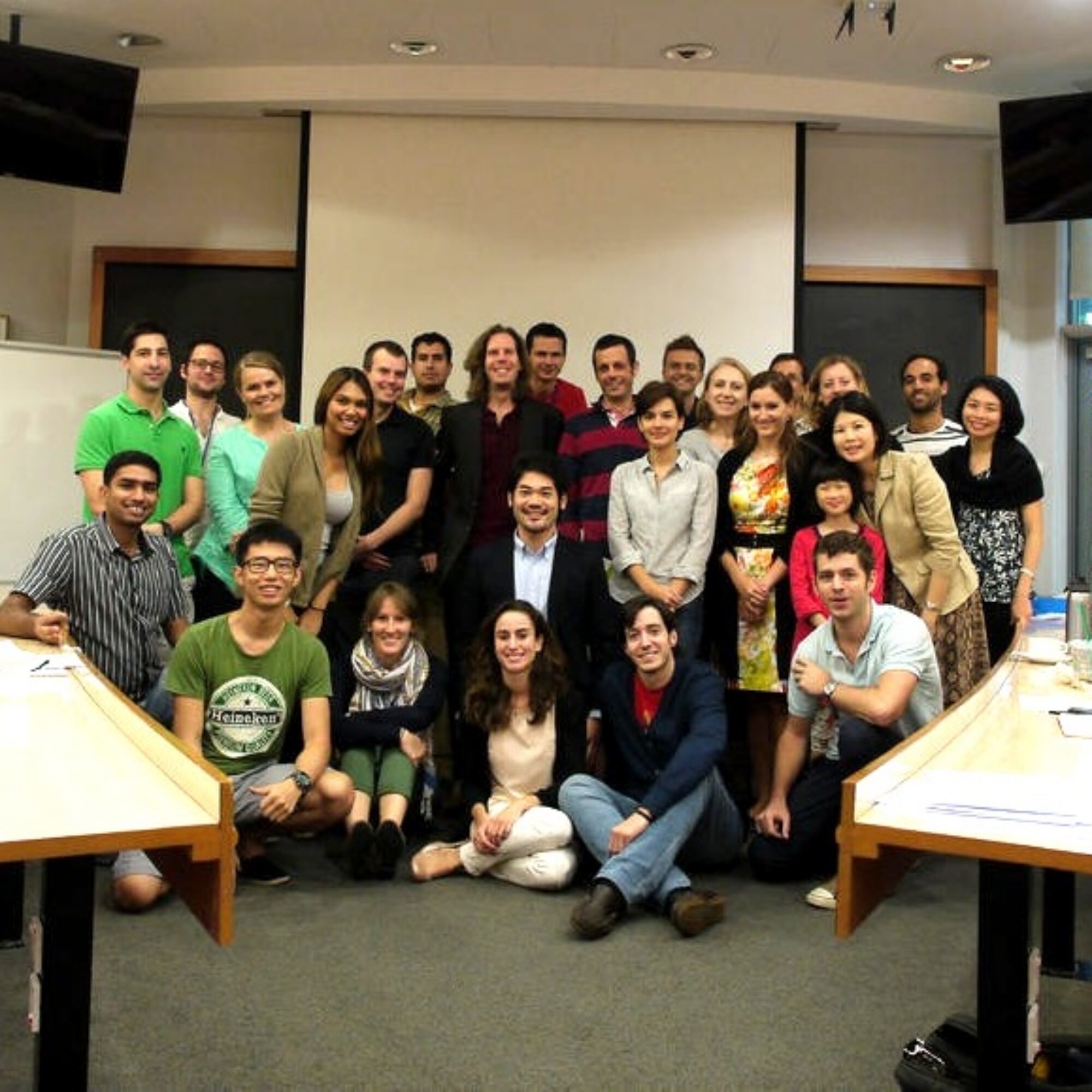
When I met Jose Gaztelu, my business school classmate and friend who did the bulk of the organizing for this weekend's INSEAD leadership seminar in Singapore, at the hotel Friday, he asked how many people I thought were signed up. When my flight had taken off that morning from Shanghai it was ten or twelve so I guessed about a dozen. "Thirty-two" So the attendees filled the room -- a great group. They were attentive, asked great questions, and started applying the material before the seminar ended. When I mentioned burpees, they wanted to get me to do a few and all started clapping to force me to do it. I said I would if they would. So about half the room did five burpees…

0 Comments

Leadership lessons from 360-degree feedback charts

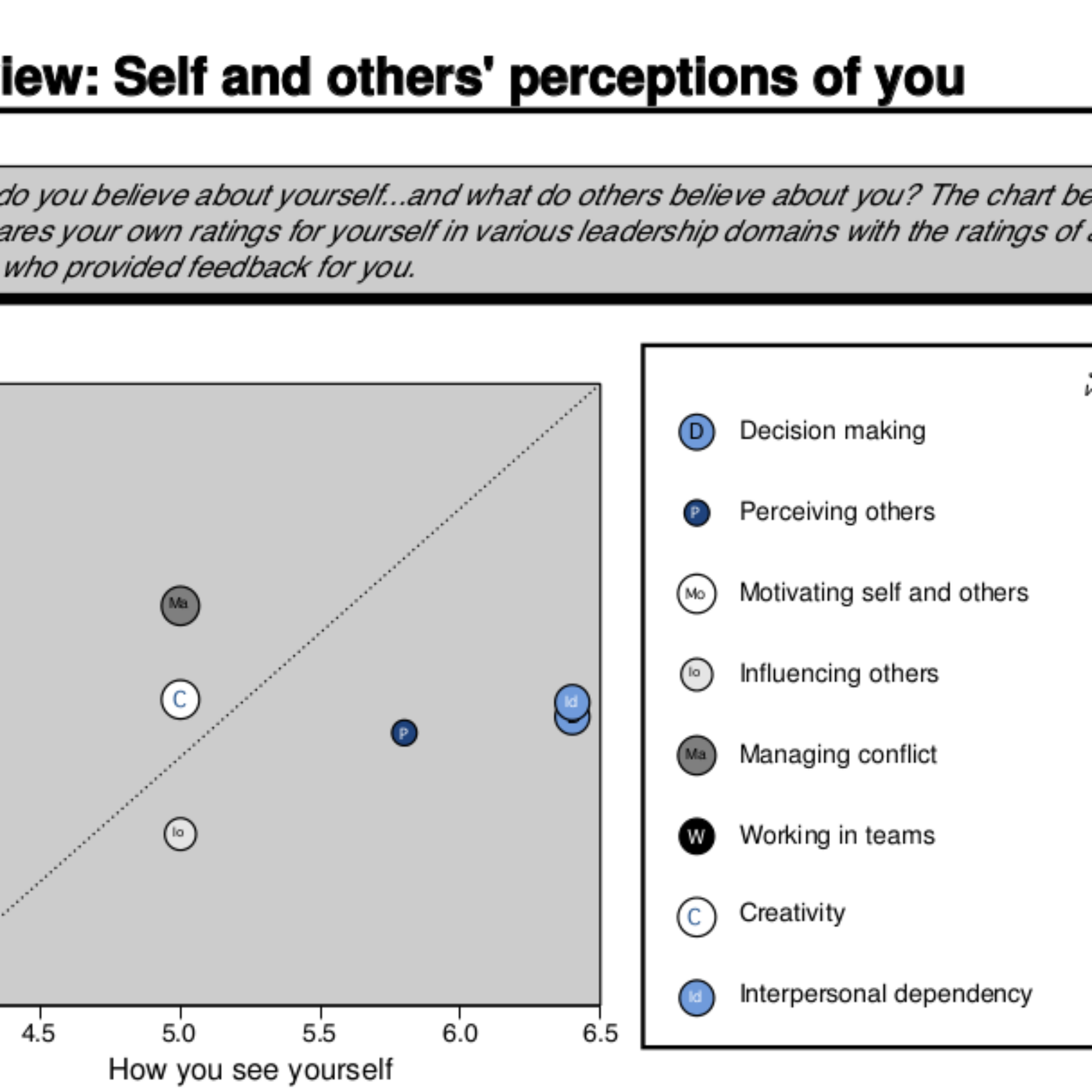
[This post is part of a series on Coaching Highlights from coaching Columbia Business School students. If you don't see a Table of Contents to the left, click here to view the series, where you'll get more value than reading just this post.] Just the structure of yesterday's charts teaches a lot about leadership. They emerged as main tools for communicating leadership ability and guiding improvement so even if you're never the subject of one, you can still benefit from knowing about them. Let's see a few reasons why. Let's look at one again. The chart breaks leadership into sub-skills My Core Leadership class at Columbia began with asking the professor asking us to define leadership. It's notoriously difficult to define. So instead of trying…

0 Comments

See Joshua Spodek at INSEAD Singapore next week

I'll be delivering my seminar on  next weekend in Singapore, October 6 and 7, at INSEAD. Here's the announcement. I hope to see you there. Leadership Through Self-Awareness and Emotional Intelligence Workshop led by Joshua Spodek, MBA, PhD; supported by the INSEAD Toastmasters Club INSEAD Toastmasters Club is pleased to announce a two-day (half-day) experiential workshop focused on how to develop personal leadership skills, self-awareness, and emotional intelligence by using the latest advances in cognitive behavioral science, evolutionary psychology, and positive psychology. We are lucky to have Joshua Spodek in Asia (he lives in New York City), who has delivered the workshop in New York and London with much success, to many different audiences, e.g., the New York Academy of Sciences, Columbia Business School Alumni…

0 Comments

Sports and passion

I ask people about their passions a lot. Many tell me they have no passions, which makes me sad for them. I don't think passions are something you find lying around but something you create and build from small interests through self-awareness, effort, and dedication. It means they haven't created something they could have. They either never invested enough to find out what it took to create a passion or, if they did, capitulated on the effort. Or they're young enough not to have had the chance yet. I've written before about the sink-or-swim moment experience in college that taught me the meaning of competition -- that I had to work hard to make something of myself and the decades of reward it brought me.…

0 Comments

Motivating populations

I figure most people have seen this quote before. It's scary -- particularly for how matter-of-fact it is. You get the idea he has no doubt of the effectiveness of his strategy, probably from years of trial and error. It's scary not just for its historical roots, but for how well it seems to work in more mundane but still important contexts -- particularly with national leaders. People as individuals consider themselves (ourselves) independent and intelligent. Large groups of people seem to lose those properties. Anyway, sorry about posting something so serious out of the blue. I just keep meaning to refer to this quote many times and expect to again. I wanted it here for reference. If you haven't read it before, I expect…

0 Comments

Non-attachment, caring, and motivation

I'll post today's topic as a question. I've asked it of people who know more about Buddhism than me for more than ten years. No one has given me an answer I've found satisfactory. Though I put it in Buddhist terms, I hope no one gets hung up on the details of one religion or philosophy. I mean the question in a general way because his actions and philosophy, while magical, have analogies in our lives. We might not believe in Buddhism, but we don't exactly consider the concepts foreign. Some element of being detached from outcomes seems common to personal development, whether in Buddhism or in the common advice of our times "You shouldn't care so much what other people think," which I don't…

4 Comments

Being overweight looks depressing

Some people choose to be overweight -- Mario Batali, for example, seems to love fattening food, knows how eating it will affect him, and eats it, accepting, even celebrating, the consequences with pleasure. I take my hat off to him. This post isn't about him. I should also point out I don't consider being overweight bad. Regular readers know I don't consider such things good, bad, right, or wrong. I'm mostly interested in consequences. If someone achieves whatever weight they want, I support them, independent of what a doctor says. I should also note that I think tracing causes of obesity leads to our huge agri-business subsidies that make unhealthy food cheaper than healthy and to what I consider counterproductive laws that allow poor labeling,…

0 Comments

Motivation, energy to act, and expectation of success

Do you suffer from low motivation, not knowing your passions, laziness, and other forms of just not feeling like putting the effort in? Do you want to have more motivation and passion? Most people tell me they're lazy about a lot of things and don't know their passions. Luckily, you can change that. Personally I don't like being that way or hanging around with people like that. I connect with people on their passions. I've written on this topic before. Today I want to state very simply where motivation and energy, and their lack -- laziness, lethargy and lack of energy -- come from. Unlike chemical energy, you can't measure emotional energy in calories. Your amount of motivation to do something is so simple and…

0 Comments

More on becoming a superstar

I wanted to comment on a quote in yesterday's post about becoming a superstar that illustrates an aspect important for the aspiring star -- you. And, again, superstardom can mean breakout success in any area -- starting a company, making CEO, being a superstar boyfriend, girlfriend, or spouse, etc. A musician I quoted yesterday commented that American Idol's shooting-the-moon style isn't really about music. It's about all the bad aspects of the music business – the arrogance of commerce, this sense of 'I know what will make this person a star; artists themselves don't know.' I've only seen a few minutes of the show, but it looks like the judges speak authoritatively (not that they have authority, just that they speak that way) on what…

0 Comments

How to become a superstar

This post is about breakout success in any area -- starting a company, making CEO, being a superstar boyfriend, girlfriend, or spouse, etc -- but I'll put it in the language of entertainment superstardom. I'll leave translating it to the language of the field you want to succeed in as an exercise. But I guarantee it applies. Superstars make it look so easy. They dress how they want, say what they want, and do what they want and the world loves them for it. Everyone else has to think about what they say and do all the time -- and then gets judged for it. How do they do it? Building a solid foundation I'm conservative about hitting it big. This quote on a Bruce…

0 Comments

End of content

No more pages to load