Telling my awesome story on stage about inspiring my mom’s first marathon

Monday night I told my second story at the Moth, to about two hundred people. A bit scary, though not as scary as last time, but awesome! Improving public speaking improves your abilities in almost any field. Few structures match the story structure in engaging people to listen. That's why I stuck my neck out to practice storytelling in public -- to exercise useful skills. And to have fun, of course. Here's my second on-stage story, based on inspiring my mom to run her first marathon. I'm happy with how the story came out, despite my nerves and inexperience. I see ways to improve, though welcome feedback. I owe thanks to my friend Mick who recorded it, though he missed the opening line, which says…

0 Comments

Hard projects will be harder than you expect. How to prepare.

[This post is part of a series on empathy gaps. If you don't see a Table of Contents to the left, click here to view the series, where you'll get more value than reading just this post.] A second post from the book Willpower... Leading yourself and others requires foreseeing that doing something hard feels harder, longer, more frustrating, and so on than you expect. At the beginning you say, "I'm strong, diligent, and capable. I'll power through no matter what comes my way." Intellectually anticipating it will be hard doesn't and can't prepare you for the emotional motivation to stop you'll feel in the moment. One of my main reasons for running marathons (as if being cheered on by millions of fans isn't enough)…

0 Comments

E. O. Wilson and evolutionary psychology in the New Yorker

The New Yorker has a piece this week on E. O. Wilson and others on current debate in evolutionary psychology and altruism. Online only has the summary, so you'll have to buy a copy, but I expect quality from the magazine. E. O. Wilson published a fictional story on ants I found enjoyable and educational in the New Yorker himself a couple years ago. I saw Wilson speak and got to talk to him briefly at the New York Academy of Sciences. Things I learned from him have affected my views on motivations and emotions as much as from anyone else.

0 Comments

An essay on money

People don't talk about how much money they have in this country. I wrote the following essay on money for a class I'm taking. I hope it's not too much or too little information. I don't remember money concerning my family growing up. Sometimes we had more or less, but I don't think anyone called us spoiled when we did well. I don't think we felt hopeless when our block got free welfare food from the government for any child (bologna on white bread with bright yellow mustard). I don't remember us feeling particularly rich or poor or wondering where our next meal would come from. Nor did I feel we had anything we didn't earn. We had some feeling of sour grapes toward the…

0 Comments

A bad day skiing beats a good day of almost anything else

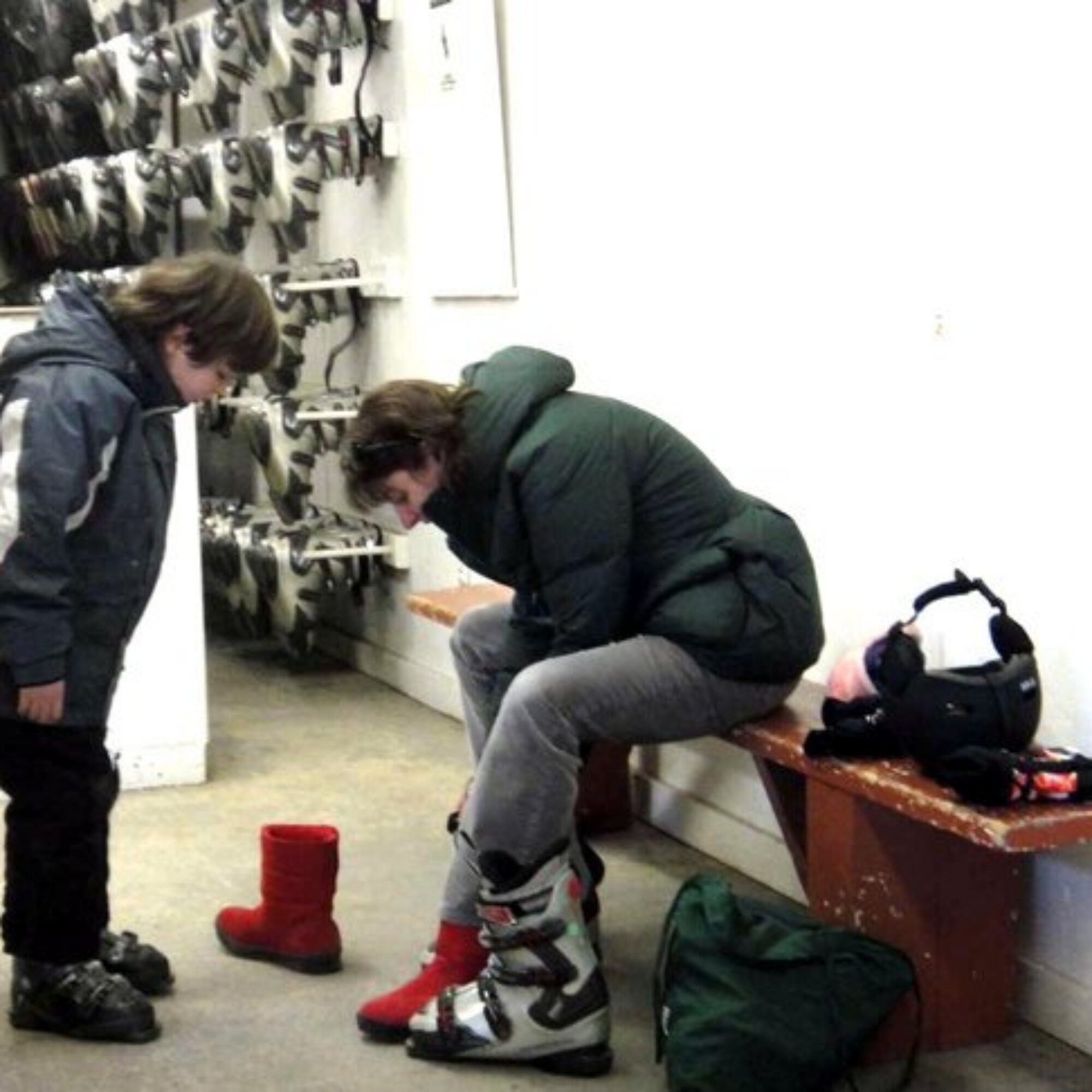
Kids learn to ski easily, before they learn to fear falling. After I learned to ski in my mid-twenties I asked my mom why they never took us skiing. She answered "We couldn't afford that" quick enough I could almost hear an unspoken "duh!" following it up. I love skiing so much I suggested my sister take her kids while they were young. President's Day weekend she told me she had decided to take them but her husband had been called to perform an emergency surgery. Could I join them, having booked rooms already? Three kids for a mom who didn't know how to ski would be a handful. So despite 40+ degree weather, I figured out how to cancel or postpone my other plans…

0 Comments

Planet Money on the North Korean economy

A podcast from NPR called Planet Money did a twenty-minute podcast last summer on the North Korean economy. I thought they did a great job, covering its size, its challenge of getting hard currencies other countries will accept, and its solutions. Since the country can't feed its people or fuel its army, the leaders have had to solve how to get themselves luxury goods. The solutions include leasing land rights, water rights, and its citizens' labor to China, Russia, and South Korea; selling statues to despotic regimes; and some exports on the legal side. On the illegal side it covers how North Korea sells weapons, drugs, and counterfeit money. The story interviewed a one-time North Korean cop who defected who helped the North Korean government's…

0 Comments

A solution to all ethics problems

During orientation I learned one of business school's most valuable lessons. I learned the first step in resolving all ethics problems. Orientation included a case study on ethics. The case involved a guy who witnessed someone else breaking a rule at a company. If he told on the employee he would escalate the problem, possibly identifying himself as not a team player, no matter how justified his actions. Remaining silent would make him complicit, and who knew how many other rules the person he observed might be breaking? The details were relevant to the case, but keeping things at a high level reveals what I call the classic ethics problem: The Classic Ethics Problem: You have to choose between something you agree with that will hurt…

0 Comments

Forget what you have. What can you create?

Think of what you want in life -- from work, play, relationships, etc. Now think of what you already have in those areas. Many people evaluate their lives by what they have. Great. What you have doesn't tell you as much as what you can create. What you have describes the culmination of a past you can't change. The ingredients to create -- usually skills more than material possessions -- describes your future and suggests how to live now. More important questions for improving your life is do you have the ingredients to create what you want and how do you get them. Since no one will create your future or live your present for you, only you can take responsibility for creating what you…

0 Comments

Hopeless or worth it? When should you give up on a project going nowhere?

Discretion is the better part of valor yet quitters always lose. When do you give up on a project you love that's going nowhere and when do you give more to make it work? Both ideas make sense in different situations. I learned an answer that has worked well for me every time. Entrepreneurs face such questions all the time. Small companies often walk the line between abject failure and outstanding success. How long do you walk the line before giving up? The question arises everywhere. Do I stay in this relationship in the hopes it improves or give up? Do I keep working for this terrible boss who might get better or leave? The list goes on. You leave when you realize you can…

0 Comments

How not to fail

Today I'll cover one of my most liberating allegories. I don't remember where I heard it. Some karate students asked their teacher how he always kept his balance no matter what happened. He said, "On the contrary, I'm always losing my balance. But I'm always regaining it too." Since I learned that lesson, I stopped trying to avoid making mistakes. I say and do what I feel is right or best. If it turns out I messed up, I recover. The result is greater freedom. People see me not falling, so they think I never lost my balance and I don't correct them.

0 Comments

Does greatness require letting go of your safety net?

I've struggled with some questions for a while. What enables greatness? Do you need to let go of your safety net to become great? We all know stories of people who sacrificed everything sensible to reach greatness. They sold all their possessions and went to Hollywood. They practiced day and night for years, sacrificing fun times. They gave up on promising careers to reach their dreams. If you jump a motorcycle over the Grand Canyon, you don't want to wind up short of the landing ramp. But if you love jumping far and you don't try to jump as far as you can, what have you achieved? For some people these questions don't matter. They don't know what they love or they don't mind abandoning…

0 Comments

Nobody is normal

Sometimes hearing something bluntly makes you realize new things in areas you thought you knew. That happened to me recently. A friend said something that dramatically improved how I thought of people and how I get to know them. The perspective becomes more liberating and improves your relationships more the more you understand it. She said, "Josh, nobody is normal." Nobody is normal! At first I the bluntness caught me off guard. I wanted to disagree. Aren't there lots of normal people? I mean, aren't they the ones who buy the stuff in ads. Isn't that who shops at the Gap? I kept thinking, though. I have plenty of friends, many quirky. I like them for their quirks. The quirks make them interesting. As I…

0 Comments

What I learned from football ads

I like watching football. I think it shows people pushing the limits of what people can do, full of drama and excitement. People keep respond with surprise when I tell them. Frankly, it never occurred to me that anyone didn't enjoy watching football. At least among guys. I was curious. Do I fit into the type who watches football? So how do you find out who watches a show? You look at the ads. I noticed this year during the playoffs that few ads advertised anything I bought. In a typical game I'd see about a hundred ads and maybe two would connect with me -- my cell phone provider and my credit card. So I bet my friend during the Superbowl who would have…

0 Comments

How to respond to insults

Nobody likes being insulted. We often feel compelled to respond in kind, all too often exacerbating problems. I haven't found advice to have a thick skin or not to let it affect you helpful, especially when angry or feeling attacked. It feels like letting the other person win. Understanding the situation from a different perspective makes responding easier. The main principle: When people insult, they say more about themselves than the person they insult. To clarify, everybody has values and standards. When they evaluate others they come up with their judgments. Insults express how their perception of someone measures up to their standards. In other words, when someone insults someone, they are telling you about their standards. Often they say nothing about the other person.…

0 Comments

Vulnerability and opening up first

A friend asked "Why unreservedly open your heart to anyone or anything when there is such strong potential for disappointment, failure, heartache or apocalyptic disaster". I wrote back the following: I experimented along those lines a few years ago and ended up improving my life and nearly every relationship. I'll share my experience in case you can use it. I won't feel bad if you ignore it. Regarding building relationships, I used to have a model, Old model: first get to know someone. If they become a friend, then open up. I saw nothing wrong with the model and figured everyone had a similar model, but people also said things like "I've known you for a long time, but I still don't feel like I…

0 Comments

Josh’s growing list of differences with mainstream American culture

I've noticed many of my values differ from what I see in mainstream American culture. See how yours differ too. What I call mainstream may differ from what you call mainstream and at times I deliberately overstate the mainstream American view to parody it. Category "Mainstream" American view (oversimplified) Josh's view (oversimplified) Jobs Horrible way to waste your time. A necessary evil we have to endure. A source of challenges to overcome and people to collaborate with. Exercise Torture. You inflict it on yourself for a few weeks after New Years, then forget about it. Fun way to pass times with friends. Rewarding source of discipline that gives to everything else in life. Maintains appetite, focus, sleep, mood. Science No idea what it is, but…

0 Comments

Amazing representation of the size the universe and everything in it

I love this representation of the size of things in the universe so much I have to link to it, even though I prefer to post things that I created more of. Please check it out and play with it. (EDIT: alternative link) It's an updated, interactive, unnarrated version of the great educational 1968 short film, the Powers of Ten. I think the movie and interactive representation show some of the greatest parts of the beauty we can find of nature. We can find that beauty everywhere we look. [youtube]http://www.youtube.com/watch?v=0fKBhvDjuy0[/youtube] Here is a simpler version of the representation of distance scales. EDIT: Another representation

2 Comments

Don’t let a sour grapes attitude ruin your life

A friend asked why guys who have trouble meeting women insult them. With the worst insults you can think of, no less. As we'll see, not only men in that context do it. In other contexts women do it. And not just about other people. I do it. You do it. Everybody does it. What's going on? Let's look at the pattern. It keeps you from improving your life, so it's important. When people can't attain something they want, they put it down -- a more general effect than in dating. They're resolving a conflict in their mind (aka a cognitive dissonance): "If I can't have it it must be worthless. Or worse!" Like Aesop's fox who can't reach the grapes, they say they must…

0 Comments

Some reasonable talk on the China Study

I wanted to love the China Study, a bestselling book by a scientist and doctor on nutrition. It's gotten a lot of media attention (from the NY Times, Huffington Post, Bill Clinton, and Oprah, for example). It's based in science, promotes healthy eating, and does two main things -- one well, one not so well. Overall, I like the book and recommend it. At the end of this post I wrap it up. The not-so-well part The not-so-well part started off looking great. The authors researched nutrition, found evidence for the healthiness of eating plants, unhealthiness of eating meat, and major problems with food in the U.S. I expected to learn important new things. I thought it might make my resource list. I was hoping…

0 Comments

Getting through the challenges of personal development

I gave this advice to someone I coach going through a difficult period and got feedback it was "golden." So if you're someone endeavoring to develop personally or professionally and making progress but feeling despair, impatience, frustration, or something similar, I hope this advice helps you. I've come to believe all meaningful personal development has periods of self-doubt, wondering if it's worth it, and such. Anyone can sit on a couch and watch tv all day without feeling that way. They don't have to think for themselves. The media occupies their minds so they are pacified. These periods are what differentiate an easy meaningless life from a challenging one of purpose. They are part of what keep most people from realizing their potential. They are…

0 Comments

Improve your public speaking through storytelling, part 2

Yesterday I suggested ways to improve your storytelling skills through practice. Performing in public can be daunting, so today I'll tell about my first experience telling a story in front of hundreds of people, being judged. First, despite my anxiety before going up, I loved the experience, learned a lot, and without a doubt will do it again. I recommend it to anyone, especially if you're scared, like I was. Here I am, telling my story: The storytelling began with my friend David, with whom I swam across the Hudson River, originally told me about the Moth years ago, suggesting telling our Hudson River swim story when he heard the theme for Monday's event was sports. We planned to do something perhaps for the first…

3 Comments

Improve your public speaking through storytelling, part 1

Want to improve one of the most important skills for any field, almost free? Want to hook and engage anyone you communicate with? Tell a story. Everyone knows it, but it bears repeating. All communication can benefit from having it tell a story. Whether you're pitching a product, pitching your company, answering a question in a job interview, talking to a friend, flirting on a date, or anything, humans love stories. I posted earlier on how to structure stories effectively (I only need to remember "CCSG"). Besides structure, you need to tell the story. Your voice, body language, pacing, and so on matter. How do you tell better stories? The same way you do anything better. Practice! How do you practice? One simple, free way…

0 Comments

More labels not helping: a man’s autism vanishes

If you look for problems you'll find them. And you'll fill your life with problems. But if you look for solutions you'll find them too, and you'll fill your life with solutions. You'll find your problems go away or don't show up at all. A day after posting on labels not helping with introversion and extraversion came this op-ed piece on a guy whom doctors diagnosed with autism, supposedly “a continuous and lifelong disorder,” but his symptoms vanished. I exhibited a “qualified impairment in social interaction,” specifically “failure to develop peer relationships appropriate to developmental level” (I had few friends) and a “lack of spontaneous seeking to share enjoyment, interests, or achievements with other people” (I spent a lot of time by myself in my…

0 Comments

“Introverted” / “Extroverted”: labels hold you back from improving your life

On a discussion online about introversion and extraversion, I responded to someone pointing out that the labels of introversion and extraversion hurt more than they helped. Labels add no value and hold people back from improving their lives. Dealing with groups requires one set of skills. Dealing with solitude requires another (with much overlap). If you don't have skills for one situation you will avoid it. Once you acquire the skills to handle it, you'll be able to handle either. If you can only handle one now that doesn't mean you can't handle the other, it just means you haven't yet. When you have the skills and experience to handle one situation you will enjoy it and look forward to it, either one. When you…

1 Comment

End of content

No more pages to load