What is meaning? How do I create more meaning in my life?

Three days ago I started my post with There it is at the top of every page, right under my name: “Values.” What does value mean? What are values? Right after "Values" up there under my name is "Meaning." Do I have to justify the importance of having meaning in your life and therefore of understanding the concept of meaning? The quintessential philosophical question is "what is the meaning of life?".  We all want meaning in our lives. Nobody wants their life to be meaningless. So what does meaning mean? What makes something meaningful? I won't even mention the dictionary and Wikipedia content on "meaning." Click the links if you want, or just take my word for it, if you want to understand what meaning…

0 Comments

Understanding others’ value and their values

Following up on the past two days' posts on values, let's look at understanding other people's values. I don't think I need to explain the value of understanding others' values in developing a relationship with them, especially if you want them to like you to for you to influence them. I need only point out at that since you almost certainly wish more people understood you better, they feel the same way -- be they coworkers, colleagues, friends, family, etc. When you identify values as based in emotion, you realize understanding other people's values means more or less empathizing with them. Most people wish others understood them better. I think a lot of people wish they understood others better. If you want to lead others,…

0 Comments

What is value? What are values? (short version)

I wanted to simplify yesterday's post. The following is just my perspective. I find it helpful, simplifying and clarifying an otherwise vague and complex topic, basing it in something everyone can understand -- how they feel. Understanding the concept of value helps you create value in your life, which everyone benefits from. In more basic terms, it helps you create more emotions you like. I consider talking about emotions more basic than talking about values because you know what you feel. What is value? The term value describes what emotions something evokes in you. You value things that evoke emotions you like. You devalue things that evoke emotions you don't like. If you like your family, you'll value them. If you don't you won't. Same…

0 Comments

What is value? What are values?

There it is at the top of every page, right under my name [Edit: I changed the page design since writing this post]: "Values." What does value mean? What are values? Everybody knows the value of values. You can find plenty of books on values-based leadership. Everybody knows you should stick to your values. Nobody suggests knowing you should know your values less. Few people can define the meaning of values precisely. Yet I suggest, in Socrates' spirit that the unexamined life is not worth living, that you'll never appreciate values any more than you understand what they are. In other words, the better you understand the concept of value, the more value your life will have. Or at least the more value you can…

0 Comments

One of the most insidious barriers to getting hard things done, part 5: examples

[This post is part of a series on empathy gaps. If you don't see a Table of Contents to the left, click here to view the series, where you'll get more value than reading just this post.] As a final note on empathy gaps, I wanted to note a few examples of empathy gaps -- using them, observing them in others, and observing them in yourself. Researchers normally present empathy gaps as problems. I like to think of them as a part of life like any other. We can use the effect to help us. Teenager egg-carrying exercise I remember a high school assignment for students to carry an egg with them everywhere for a week or a month. Eggs, of course, are fragile, so…

0 Comments

One of the most insidious barriers to getting hard things done, part 4: overcoming them

[This post is part of a series on empathy gaps. If you don't see a Table of Contents to the left, click here to view the series, where you'll get more value than reading just this post.] Now we are familiar with empathy gaps -- that when you feel one emotion you generally can’t conceive of your motivations when feeling a different emotion. We get how insidious they can be in keeping us from improving our lives. What do we do about them? How do we shield ourselves from them undermining our efforts? I haven't found research on effective techniques (please contact me if you know of any) in avoiding, overcoming, or developing resilience to empathy gaps. I only have my understanding of them and…

0 Comments

One of the most insidious barriers to getting hard things done, part 3: why empathy gaps make sense

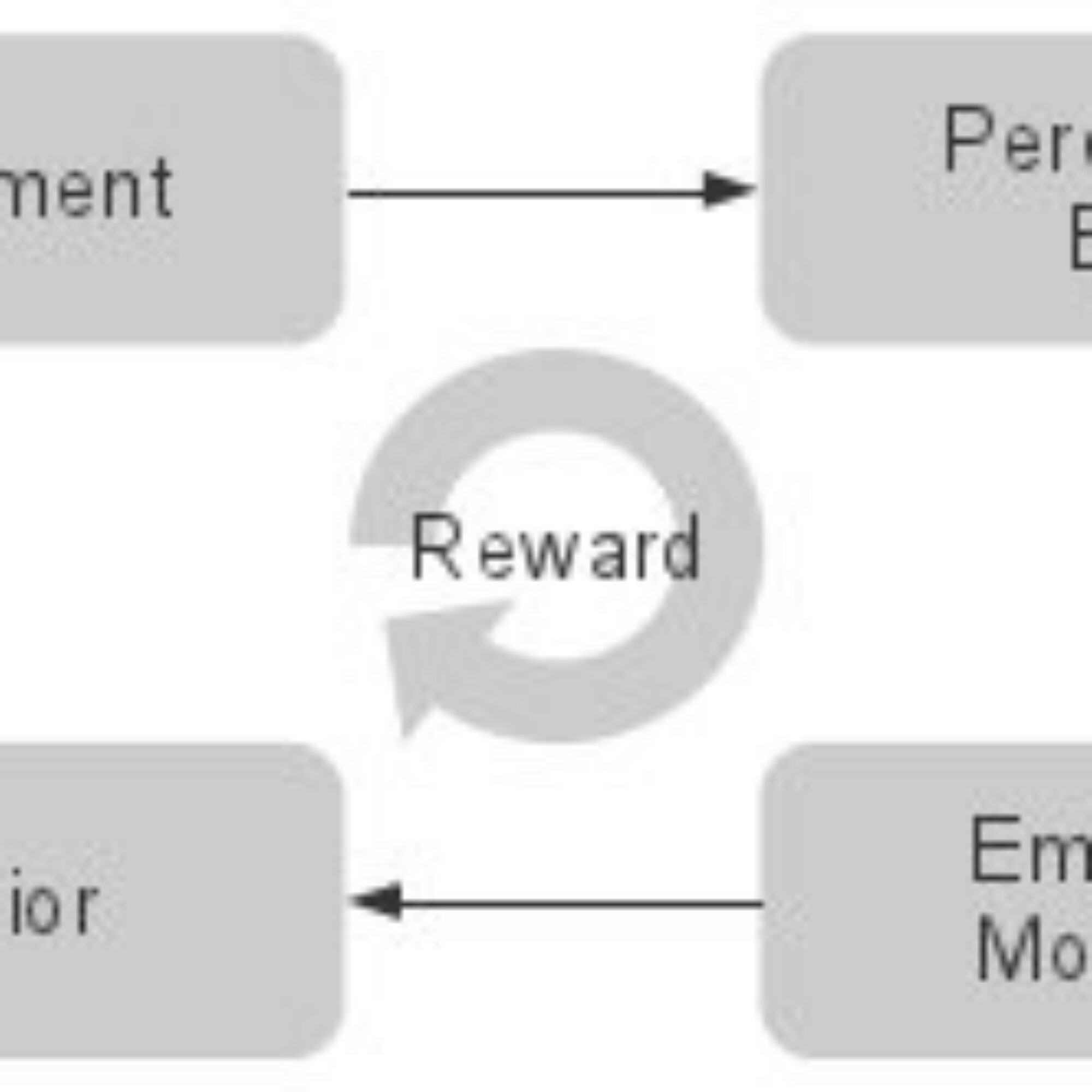
[This post is part of a series on empathy gaps. If you don't see a Table of Contents to the left, click here to view the series, where you'll get more value than reading just this post.] As usual, understanding ourselves better helps us overcome the problems of empathy gaps -- that when you feel one emotion you generally can’t conceive of your motivations when feeling a different emotion. Yet as they fundamentally concern being unable to understand things about ourselves, you'd think they were difficult to understand. On the contrary, you can understand them if you understand your emotional system. Luckily we have an easy way to understand our emotional systems. Empathy gaps depend on your emotional system Also as usual, the Model explains…

0 Comments

One of the most insidious barriers to getting hard things done, part 2: research and experiments

[This post is part of a series on empathy gaps. If you don't see a Table of Contents to the left, click here to view the series, where you'll get more value than reading just this post.] Yesterday I talked about the effect that when you feel one emotion you generally can’t conceive of your motivations when feeling a different emotion, nor do you realize you can't, also known as empathy gaps. Today let's look at some research and experiments. Sexual arousal A comedian once remarked on the question people suggest you asking before considering unprotected sex, "would you die for it." He said sometimes when you're in the moment, you think you might. Dan Ariely, in his book Predictably Irrational (which I recommend), wrote…

0 Comments

Common objection 5: I have to take care of “real world” issues first

[This post is part of a series on internal objections and blocks and how to overcome them. If you don't see a Table of Contents to the left, click here to view the series, where you'll get more value than reading just this post.] Objection People often say things like I have to take care of “real-world” issues like earning money first. or their bosses, parents, or teachers say things like You have to take care of "real-world" issues first, like getting a job or paying your bills. or they believe things other than “real-world” issues are indulgent. Or they have to be “practical” or “pragmatic.” Alternatively: My job doesn't allow it or give me time to do it. That's fine and well for others…

0 Comments

Measuring costs of disasters, modeling your world, and accounting

A hurricane or tropical storm is hovering in the Atlantic soon to hit the east coast, including my home in New York City. I keep seeing predictions of the size of the damages from however the storm affects us. You see similar predictions of the size of how many things affect us -- people estimate, say, how much money in productivity traffic delays cause us and things like that. I always wonder, relative to what? And when I answer, I feel I find untested, unchallenged, and often unjustified assumptions in people's models for their worlds. Or misattribution of cause and effect. It seems to me the storm, as a part of nature, isn't causing damage so much as we built things in ways that were…

0 Comments

If we return to the same happiness level eventually, why do we prefer winning lotteries to becoming quadriplegic?

(Working on a presentation, I had to rewrite a post from a couple months ago. It's very similar to the original, but I thought there'd be value in posting a slightly different way of putting it. I hope that value is more important than the repetition). If you read this blog you know about the researchers who asked people who won huge lotteries and people who just had accidents leading to becoming quadriplegic how happy they were. The lottery winners were happier. But when they asked them a year later, the difference in happiness disappeared. Everyone seemed about as happy as they had been before either event. I'm going to draw two different, more valuable conclusions than most. If we end up at the same…

2 Comments

The metric system isn’t that much better

I think it helps to look at the world from a different point of view sometimes. You see things differently. When I did yoga, sometimes my teacher would have us cross our arms left over right instead of right over left (or vice versa, depending on how you did it normally). If you've never done it, try it. I doubt it will make you suddenly enlightened, but it feels weird in a way that might make you wonder how many other things you assumed were just one way don't have to be. So today's post is about values, understanding why you have yours, and how you probably have some for reasons you don't understand or care about. You may think you're reading about measurement systems,…

10 Comments

Coaching highlights from coaching Columbia Business School students: Review

I'm sure I'll continue it with other thoughts soon, but for now I'm wrapping up the series on highlights from coaching Columbia Business School students with a review of the major point from it, particularly on 360-degree feedback reports. First, I commend Columbia for offering coaching to all MBA candidates. When I went there we got the reports and reviewed them overall in class but didn't get personalized coaching. Giving them coaching adds tremendously to understanding the feedback process, how to read the reports, and how to use them to improve their leadership skills. Especially for students who don't choose the big corporate route, many students have few other opportunities to get such reports or coaching. Overall understanding The structure alone of the 360-degree feedback…

0 Comments

Coaching highlights from coaching Columbia Business School students: Shortcomings of 360-degree feedback reports

[This post is part of a series on Coaching Highlights from coaching Columbia Business School students. If you don't see a Table of Contents to the left, click here to view the series, where you'll get more value than reading just this post.] In the context of the lessons from coaching Columbia Business School students in leadership, I've mostly written about the value of 360-degree feedback processes and reports and how to use them. Their shortcomings, costs, and problems are mostly obvious, but I'll cover them anyway since I've covered so much about them. I'll include ones that don't apply to MBA candidates, despite the context here. I'll try to mention how to avoid or work around problems too. Costs First, 360-feedback reports cost a…

0 Comments

Coaching highlights from coaching Columbia Business School students: Weaknesses are often strengths misapplied

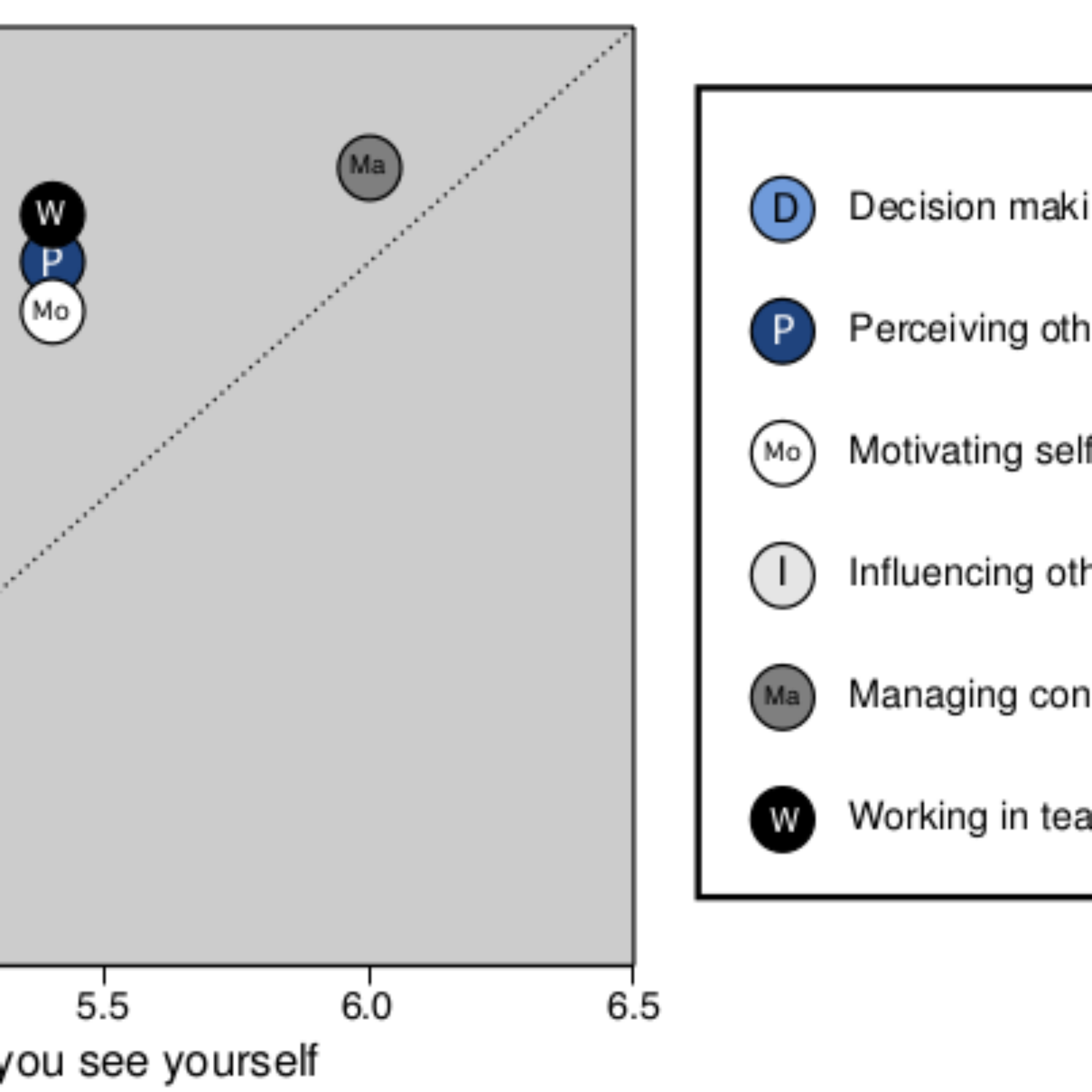
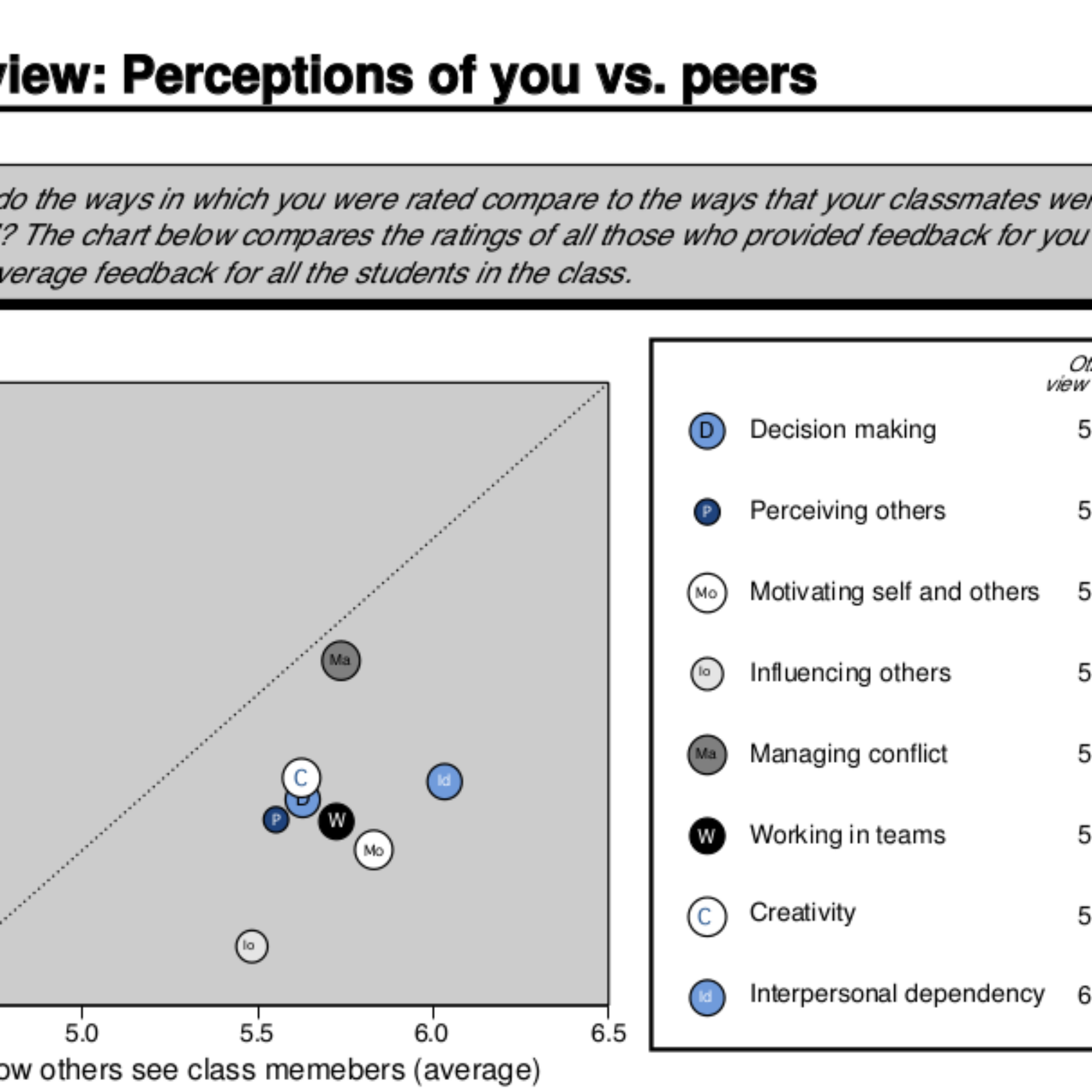
[This post is part of a series on Coaching Highlights from coaching Columbia Business School students. If you don't see a Table of Contents to the left, click here to view the series, where you'll get more value than reading just this post.] Today I'll cover one of the most encouraging perspectives for many students and clients whose reports show they underperform in a few areas. For example, this student's ability to influence appears low (see my earlier post on these charts can help you understand them) ... in both perspectives ... Anybody would say this chart says this person has a weakness influencing others, right? Maybe not, and it could be a strength. You may imagine you have an outlying weakness too that may…

0 Comments

Coaching highlights from coaching Columbia Business School students: foreseeing challenges

[This post is part of a series on Coaching Highlights from coaching Columbia Business School students. If you don't see a Table of Contents to the left, click here to view the series, where you'll get more value than reading just this post.] Learning leadership and developing leadership skills isn't like learning history or any other academic subject. Learning leadership and developing leadership skills means learning about yourself and other people, understanding your and their motivations, changing how you view the world, for starters. Well, you can learn to lead without those things, but you'll limit yourself without them. While learning math or a new language may teach you new knowledge and skills, it's hard to say they change you as a person. I learned…

0 Comments

Coaching highlights from coaching Columbia Business School students: Focus on the client

[This post is part of a series on Coaching Highlights from coaching Columbia Business School students. If you don't see a Table of Contents to the left, click here to view the series, where you'll get more value than reading just this post.] Effective coaching means focusing on the client's interests and progress, not the coach's. I like working with clients, especially students where I used to go to school, so it's easy to think about my interests. But I know that in the long term, a client telling me they got out of our interaction everything they wanted and more is my greatest reward. To do that my focus has to be on them. Use the meeting structure to focus on the client This…

0 Comments

Coaching highlights from coaching Columbia Business School students: Use Feedforward

[This post is part of a series on Coaching Highlights from coaching Columbia Business School students. If you don't see a Table of Contents to the left, click here to view the series, where you'll get more value than reading just this post.] If I talk about coaching, especially in limited times with very talented people, I have to talk about Feedforward. I refer to my previous post on it for a thorough description of it. It's one of the best tools for finding out what about yourself to improve and how. If you don't have access to a 360-degree feedback (almost no one does and even people who do only get them less than once per year), you can use Feedforward anyway. I'll mention…

0 Comments

Coaching highlights from coaching Columbia Business School students: Create accountability for yourself

[This post is part of a series on Coaching Highlights from coaching Columbia Business School students. If you don't see a Table of Contents to the left, click here to view the series, where you'll get more value than reading just this post.] Adding accountability to your transformation increases its chances of working and the quality of your work. I hope I've written this idea in many other posts. I say it to nearly every Columbia Business School student I coach. It's a fundamental part of my role with coaching clients. We all know we get done what we're accountable for. What we aren't accountable for we don't focus on nearly as much. So when you create a plan to improve your leadership style, your…

0 Comments

Coaching highlights from coaching Columbia Business School students: find a relevant exercise

[This post is part of a series on Coaching Highlights from coaching Columbia Business School students. If you don't see a Table of Contents to the left, click here to view the series, where you'll get more value than reading just this post.] No matter what you want to improve about yourself, no matter how important the insight of feedback, and no matter how much you can learn from books, ultimately you have to practice to improve meaningfully. Find an exercise I think one of the greatest values a coach can add, especially in a short session, is to give someone who has identified an area to improve and indicated wanting to improve an exercise to have them experience improving in their desired area. A…

0 Comments

Coaching highlights from coaching Columbia Business School students: figuring out what to start with

[This post is part of a series on Coaching Highlights from coaching Columbia Business School students. If you don't see a Table of Contents to the left, click here to view the series, where you'll get more value than reading just this post.] When your 360-degree feedback report features this chart and you want to start improving something, what do you start with? Keep in mind, you don't need a 360-degree feedback report to have to decide what to work on. Today's post applies to any time you want to pick something to improve yourself. You know from two days ago to focus on one meaningful thing at a time, but which? Nearly all the students I work with pick the farthest down dot, in…

0 Comments

Coaching highlights from coaching Columbia Business School students: Personal development skills

[This post is part of a series on Coaching Highlights from coaching Columbia Business School students. If you don't see a Table of Contents to the left, click here to view the series, where you'll get more value than reading just this post.] Leaders learn and push themselves to develop personally constantly and consistently. They don't see it as a burden, just something they do. Nor do they feel compelled from outside to do it. They enjoy learning. Nor do they feel like they need to accomplish some goal. They just enjoy doing things better. At least that's what I've seen and experienced. One of the reasons stems from an effect of yesterday's post that working on one complex, long-term thing at a time --…

0 Comments

Coaching highlights from coaching Columbia Business School students: Improve one thing at a time

[This post is part of a series on Coaching Highlights from coaching Columbia Business School students. If you don't see a Table of Contents to the left, click here to view the series, where you'll get more value than reading just this post.] A lot of students see the dots on the charts in their reports and decide they want to improve a few. In this chart, for example, they'll look at all the dots below the line, think "Uh oh, I'm behind my peers in everything," and decide to work on everything at once, or at least a few things. Most coaches I've talked to about it agree working on one area at a time makes the best progress not just in the area…

0 Comments

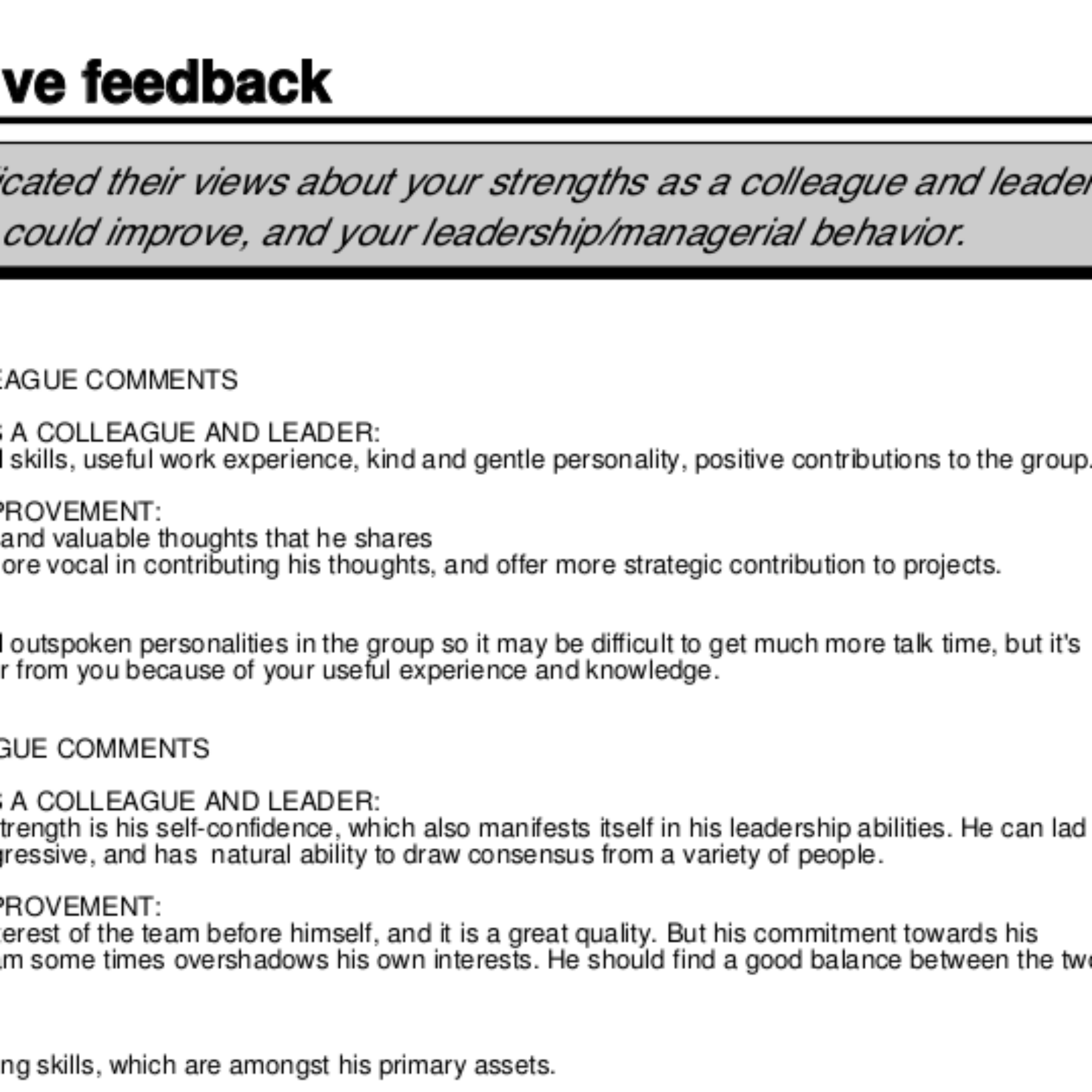
A sample 360-degree feedback report: qualitative feedback

[This post is part of a series on Coaching Highlights from coaching Columbia Business School students. If you don't see a Table of Contents to the left, click here to view the series, where you'll get more value than reading just this post.] Any feedback report has to include qualitative feedback -- that is, free form feedback that describes how the subject performs and how to improve. In my experience the feedback I've seen hasn't been as useful as feedforward. It's been more feedback, which generally means evaluation of an unchangeable u, but feedback can still be useful. In any case, here are examples of qualitative feedback. It can't b e combined with other quantified results, but can give you some of your most useful…

0 Comments

A sample 360-degree feedback report: more detail

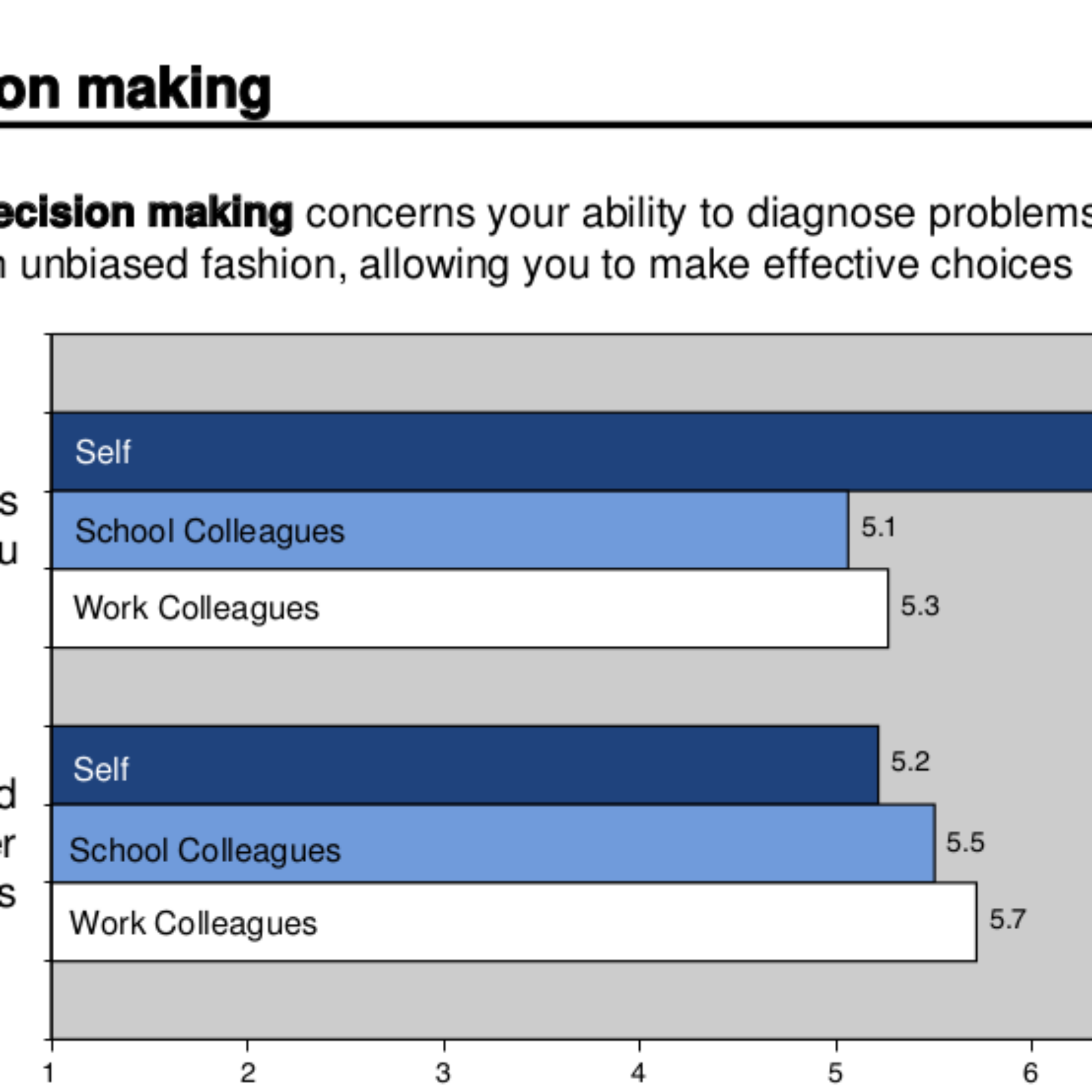
[This post is part of a series on Coaching Highlights from coaching Columbia Business School students. If you don't see a Table of Contents to the left, click here to view the series, where you'll get more value than reading just this post.] Yesterday's post covered what for most people are the highlights of a 360-degree review -- charts comparing how your leadership skills compare to others'. Those charts summarize most of the information in a 360-degree feedback report. One should always remember they summarize. They don't present all the information. Sometimes details tell a different story but get lost in the summary. Also, details may show how to improve better than a mere summary. Most 360-degree feedback reports include more detailed numbers. Here is…

0 Comments

End of content

No more pages to load