Tips


Four counterproductive myths about entrepreneurship, part Ia

[This post is part of a series on four main myths that discourage entrepreneurship and how to overcome them. If you don't see a Table of Contents to the left, click here to view the series, where you'll get more value than reading just this post.] Google's history backs up that people did not believe good idea to start with, no matter what we think of it today. I couldn't resist looking up Google's history after yesterday's post. The overwhelming evidence that people didn't think their idea was good is, as this page puts it, Reluctant to leave their studies, Page and Brin offered to sell their search engine for $1 million to AltaVista. To their disappointment, AltaVista passed, as did Yahoo!, Excite, and other…

4 Comments

Four counterproductive myths about entrepreneurship, part I

[This post is part of a series on four main myths that discourage entrepreneurship and how to overcome them. If you don't see a Table of Contents to the left, click here to view the series, where you'll get more value than reading just this post.] Many classmates in business school said they wanted to start businesses yet few did. For that matter, many people in life say they want to start businesses yet few do. I asked many why they don't. Four reasons dominate my non-scientific survey, all of them myths. Myths aren't necessarily problems, but each of these discourage people who want to start businesses from doing so, so they are counterproductive in most cases. Also, since entrepreneurial behavior and beliefs are useful…

2 Comments

Improving on focusing on what rewards you

Focusing on what creates emotional reward is great. If it works for you, you can do better. When something brings you emotional reward, here are two things you can do more than just focusing on it to bring more reward into your life: overindulging in your emotional reward and sharing the reward. Overindulging in reward means if your manager pats you on the back and you feel good about it, find a way to feel great about it. If you finished a project and you'd normally feel great for a day about it, find a way to feel great about it for a week. Overindulging in reward achieves two things. First, reward motivates similar behavior. Bluntly, you train yourself to do things you find rewarding.…

0 Comments

Choosing what you like is not denying what you don’t

Do you feel if you don't deal with difficult things you're denying or avoiding reality? Does that bring you down or make you feel irresponsible? Does that compel you to do things you don't want to? Here's how to make sure you don't. After a conversation last night, my friend said she looked at enjoying life in a whole new way for the better.Let's start with an analogy. On a corner of Manhattan, dozens of people may pass you in a minute. You could stop and talk to any one of them. It's so diverse, one might be a student, another a dancer, athlete, lawyer, CEO, model, housewife, and so on. If you began a conversation with any about his or her life, you'd get…

0 Comments

How do you keep going in the face of adversity?

Here's a model for you: think of a baby learning to walk.No baby learns to walk right the first time. Not even the tenth time. So-called failure for them is not just figuratively painful, it looks physically painful. Yet babies learn to walk. They try and fail. And try and fail. And try and fail. For months they try and fail.This model alone shows how poorly the popular use of the term failure describes that part of the learning process. Failure is inevitable. Failure teaches. Failure is what experience means. Babies build experience when they fall. That's how they learn to walk so well.Can you imagine if after one fall a baby said, "Oh well, I tried my hardest. I just can't walk. I'm not…

0 Comments

Another way to reduce stress more

After yesterday's post, I thought of another little rule I made that makes something some people consider difficult into a game. I'm almost embarrassed to share it because of how geeky it is, but it makes something otherwise challenging into fun, or at least a way to make myself a better me. First, you should know, I love eating food that tastes good and chips are included. I can eat a big bag in one sitting, no problem. But I like to keep myself in good shape and chips have a lot of empty calories. So here's the rule: I have to take at least three sessions to eat the full bag of chips, counting no more than one session per day. One exception: if…

0 Comments

One way to decrease stress

Here is a simple way to reduce one type of stress. I used to get annoyed when people would show up late to meet me. I imagined them disrespecting me and such. One day I made a rule for myself: Everybody gets fifteen minutes. That's it. If someone shows up anywhere less than fifteen minutes late, it's fine. I don't ask questions, I don't ask where they were, I don't suggest anything. After practicing the rule enough, I genuinely don't care. It's fine. Before this rule I might have wondered if I would lose time, people would take more for granted, or other unintended side effects. The contrary has been the case. A huge source of stress and judgment disappeared. My feared unintended consequences never…

0 Comments

What do you never regret?

One measure of something worth doing is if you would ever regret it. I'm making a list of things that no one would ever on their deathbed look back and say "I did X too much."I doubt anyone looked back at their life and said, "I danced too much," "I sang too much," or "I played with my nieces and nephews too much." Can you add to the list?No one ever saidI danced too muchI sang too muchI played with my nieces and nephews too muchI spent too much time outdoorsI skied too muchI laughed too muchI played sports too much...What others?

0 Comments

Responsibility versus blame

The following statement has become a personal guideline since I first came up with it. It's served me well. Don't look for blame but take responsibility for making things better to the extent you can. You can always find someone to blame if you want. Blame is fundamentally about the past, which you can't change, and judgmental, which repels people. But the main issue is that when you blame someone else for your situation you reinforce a belief that their influence on your life is greater than yours, likely in a situation you consider important. We usually blame people for things that affect us significantly. The problem with blaming Blaming, therefore, disempowers us and and reinforces unrewarding feelings. Guilt is blame directed toward ourselves, usually…

0 Comments

Do you want to win debates or enjoy life?

Do you or people you know get stuck "winning" arguments only to find they've annoyed or alienated people around them? It's hard to do anything about it because when people aren't arguing they tend to feel they don't do it -- that only others do. And when they are arguing they're often least open to exiting argument mode into self-reflection mode. A scene in The Big Lebowski that illustrates the effect perfectly. Here is a version in not such great quality: https://joshuaspodek.com/wp-content/uploads/2011/02/Walther-Glock-freaks-out-at-bowling-alley-Big-Lebowski.mp4 Here's a version with cool typography. http://http://www.youtube.com/watch?v=Hq8mcAd9nlA It's overly dramatic to be funny and has a lot of cursing, but it covers most major points on the counterproductivity of "winning" arguments. People debate issues that can have multiple "right" answers depending on your…

0 Comments

Less lingo please. More plain talk.

People use too much lingo. What do I mean by too much? I mean it when big or out-of-context words confuse more than illuminate or create meaning. Everybody knows it, we still do it more than we mean to. I'm going to examine the issue from a few perspectives.Having a background in science I see a lot of scientific sounding language where it seems people use it more to sound scientific than to convey meaning. Often they end up sounding less scientific. Science isn't the only place where people get lingo from, but it's a good example.Today I read a New York Times article on How Meditation May Change the Brain. The article is okay, but it illustrates how people misuse information and confuse it…

0 Comments

An alternative to truth and lies

An incredibly useful perspective in some half-baked notes to a friend. I'll develop them more in future posts. Feedback and criticism appreciated. --- You wrote about lying as an example of a "bad trait". I'd like to suggest another perspective (generalizable from just lying to other aspects of apparent lack of empathy): that the reason people communicate is not to convey truths. Evaluating people according to truths and lies holds them to impossible standards that hurts oneself in the long run by creating judgmental emotions and decreasing your ability to influence people who are hurting you. A perspective I find more helpful is that we, like all animals, communicate to influence others to help us in our goals. All animals communicate and all animals deceive…

0 Comments

The empowering relationship between time and priorities

One of the great lessons I learned from my father was that when people talk about how they spend their time, they're talking about priorities. As he put it, "When people say they don't have time to do something, they mean they prioritized something else higher. People have time to do anything. The question is if what they put aside to do something."Internalized over the years, the perspective seems obvious to me now, but it clarifies. If you don't know your priorities you don't know how to spend your time, so you can work long hard hours and achieve little.The main value in the perspective for me is that it enables you to do what you want. Time flows as time flows, outside of your…

0 Comments

Crowding out beats letting go

I have a friend who says he can voluntarily let go of emotions he doesn't want to hold on to anymore. I've let go of many things, but never in the moment from conscious intent. He sounds sincere, but frankly I doubt him. Like telling an angry person to calm down, suggesting someone let go of something is counterproductive advice. Trying to let go of something voluntarily focuses your mind on it, often achieving the opposite of your goal. Whenever I've let go of something important, I've always noticed it after the fact. One day I realize I haven't been thinking about some girl or dwelling on a past event for a while. I can't identify the time of letting go. To let go of…

2 Comments

How willing are you not to judge?

Many people are quick to say they don't judge. People seem to value not judging others. Come to think of it, I do. People all too commonly say they aren't judgmental when someone else is judgmental about something they aren't. For example, when one person says "Americans are too fat," the other may say "Don't be so judgmental" or, more mildly, "I'm not so judgmental." It's all too common because it's easy to say you don't judge when talking about other people's values that you don't share. It's more difficult when talking about your values. That is, a person who is live-and-let-live about things they don't care about may get incensed or enraged about things that do matter to them. If they think their thing…

0 Comments

Unsolicited advice annoys people: how to avoid giving it.

Some people like to give advice. Maybe everyone does, despite knowing how annoying it can be. Sometimes we think we can help so much or don't think of the other person's perspective enough that it feels worth it. We're all used to our thoughts preparing the advice: hoping to avoid stepping on toes, to avoid insulting, and so on. The other person's annoyance is often justified. That is, our advice invites it. We may not think of it explicitly, but when we give unsolicited advice we imply "Your life isn't as good as it could be and I know better than you do how to live it." Who wouldn't be annoyed? Most people think they are living great lives. Since their values aren't the same…

1 Comment

Demotivating acceptances

[This post is part of a series on turning rejections into motivation. If you don't see a Table of Contents to the left, click here to view the series, where you'll get more value than reading just this post.] Despite ourselves, accepting things can demotivate as much as rejections can motivate us. Physics, at its core, has always meant to me studying the most basic elements of our environment: space, time, matter, forces, charge, and so on. Though today I view experiment as its equal, in graduate school I wanted to study theory -- particle theory, in particular. When I was choosing my direction in graduate school, my old undergraduate adviser pointed out to me how little money there was in theory. Without money, there…

0 Comments

Motivating rejections IV

[This post is part of a series on turning rejections into motivation. If you don't see a Table of Contents to the left, click here to view the series, where you'll get more value than reading just this post.] Growing out of its start-up phase and in a recession, Submedia's needs expanded beyond what my skills could handle a few years after we incorporated -- physics trains you well to develop products, and passion will carry you far, but not knowing the value of a balance sheet and not even having taken a class in management, marketing, or finance can hold you back. I wanted to keep working with the medium while no longer CEO. The company, having promised returns to its investors, was only…

0 Comments

Motivating rejections III

[This post is part of a series on turning rejections into motivation. If you don't see a Table of Contents to the left, click here to view the series, where you'll get more value than reading just this post.] A PhD in physics is a challenge by any measure. Choosing to start the major in your junior year makes catching up that much harder. I felt I was always catching up, filling in details I missed having had to teach myself required classes from a textbook over the summer. Many physics majors know what they want to pursue when they start and finish college with twenty or thirty math and physics classes. Though I was always good at math and science, I hadn't yet learned…

0 Comments

Motivating rejections II

[This post is part of a series on turning rejections into motivation. If you don't see a Table of Contents to the left, click here to view the series, where you'll get more value than reading just this post.] Ultimate Frisbee was one of the great passions of my life. I played for most of twenty years, competing at Nationals, Worlds, and playing with some of the best players in the game. I played in high school, though we didn't know the rules then. If you don't know the sport, do yourself a favor and find a way to watch one at the highest level. It's beautiful, incredibly athletic, and fun. Joining Uptown Local, the Columbia College team, was one of the first things I…

0 Comments

Motivating rejections

[This post is part of a series on turning rejections into motivation. If you don't see a Table of Contents to the left, click here to view the series, where you'll get more value than reading just this post.] We've all been demoralized and discouraged by rejection. Have you ever been energized and motivated by one? Has one ever been the driving force behind a major projects in your life? So-called failures are often the learning opportunities launching the successes of many of the most successful people I've known or heard of. I presume you've found that pattern too. Rejections can work the same way, motivating you to succeed beyond what they expected you to. In my case, some of the most rewarding parts of…

0 Comments
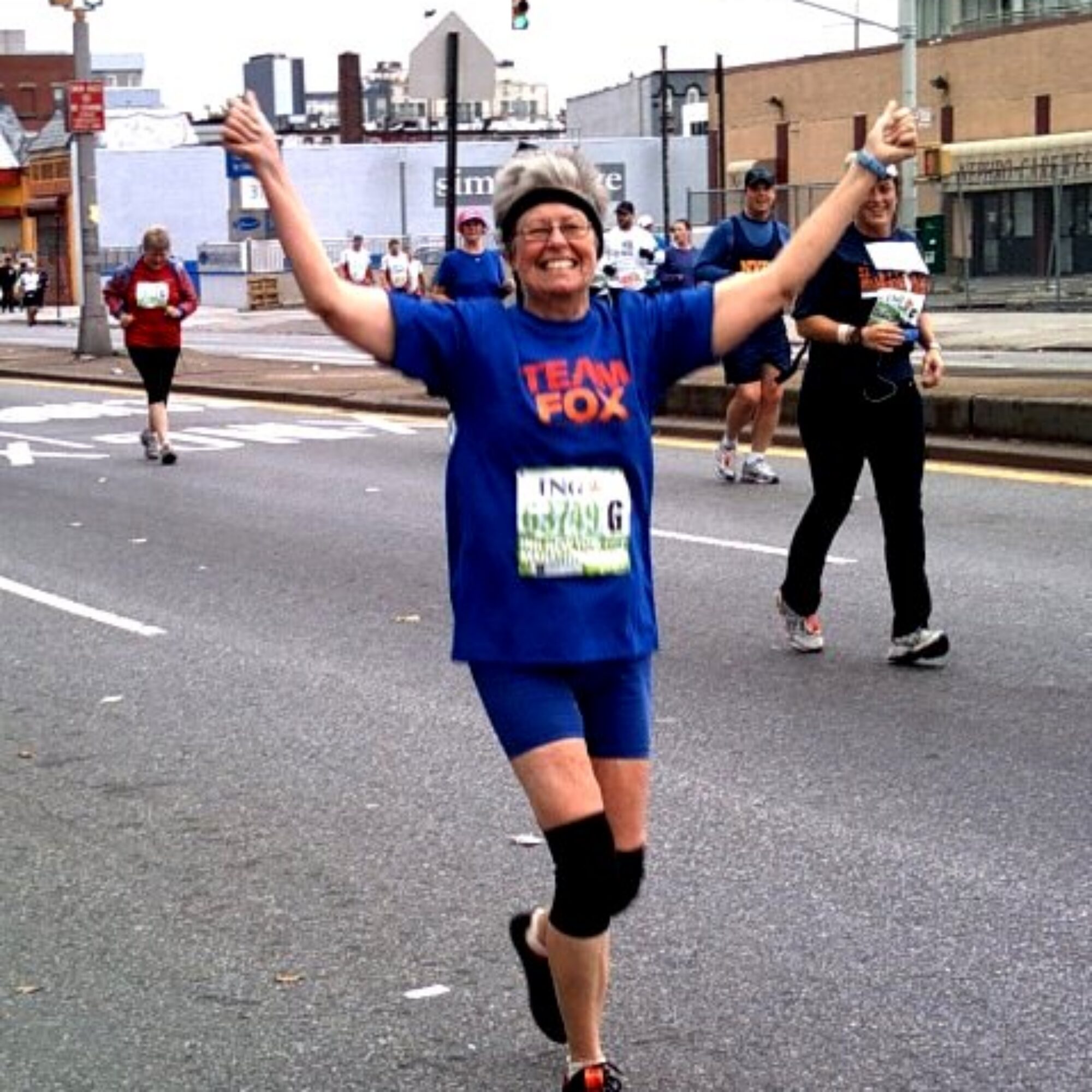
Redefining Possibility: My mom ran her first marathon at 67 years old.
Mom, around mile 7 in Brooklyn. (The "Fox" on her shirt is for the Michael J. Fox Foundation, the charity with which she ran)

Redefining Possibility: My mom ran her first marathon at 67 years old.

I've run a few marathons. In New York they publish the finishing times in the paper the next day. For some reason I would look at the later finishers to see the oldest ones. I don't know why. I guess I found it inspirational. In the ones I've run a 91 year old man and an 88 year old woman finished. I used to tease my mom: "You could train for twenty years and still be younger than a woman who finished one I was in." At the finish of my last one, the only one she had been able to attend, overcome with emotion, she said she would train for one. The farthest she had run by then was five kilometers, ten years ago,…

0 Comments

Discipline

On a scorching August day, running along the Hudson I passed a sign: "Runners: Free T-shirt for Interview." I stopped and agreed to be interviewed. A sports apparel company was interviewing runners for a commercial. They had constructed a small plywood hut with the cameras inside that was air-conditioned. They had me wear a shirt over the one I had been running in to cover their competitor's logo. The interviewer sat facing me just to the side of the camera, clipboard in hand. He perfunctorily asked questions, which I answered, not sure if I should look at him or the camera. The questions were good, along the lines of why I ran, what about it I enjoyed, how running made me feel, how I prepared…

0 Comments

Less, please

I used to view books like most people seem to. Books reflected who I was, they added to my home, let people know more about me, were good to have for quick reference, etc. I went through an experience that changed that. It started innocently enough. I decided to get rid of only the most useless books I had. The ones I would never miss and had for no good reason in the first place. Looking at my shelves it was easy to figure out those from the ones worth keeping. Actually there were some borderline ones. I decided to be conservative so I kept all the borderline ones. I still got rid of a good portion of my books. Some time later I found,…

2 Comments

Acceptance and Celebration

If you can accept something you can celebrate it. Who among us hasn't had to interact with a jerk at some point? A common "virtue" is to accept that person for who he or she is. People aspire to accept what they can't change and expect frustration, disappointment, impatience, and related emotions to yield to acceptance with enough understanding. While acceptance isn't necessarily bad, it isn't that great either. I've come to view it as a sign of complacency -- that with more work I can improve my life, but I'm not there yet. To accept something says you don't like it. If what you are accepting is, say, a person or their behavior, it shouldn't be hard to realize they don't merely "accept" themselves.…

0 Comments

End of content

No more pages to load