157: Tom Szaky, part 1: TerraCycle’s new initiative: Loop

Tom Szaky has been working on waste since his undergrad days at Princeton in 2001. Then I suddenly heard about him from many sources in the past few months. His company, Terracycle, recycles waste others don't. The new initiative, Loop, got attention at Davos and support from many companieswhose business plans depend on producing waste, within an economic model that promotes growth. He also published a book, the Future of Packaging, coauthored by top executives from these waste and growth places. I wrote more notes from that book to prepare for this conversation than any book, including Bob Langert's, McDonald's former head of Corporate Social Responsibility (that episode is still being edited). It never mentioned reducing consumption, twisting, as I saw it, the idea to…

0 Comments

The Ethicist: Is It O.K. for a Chinese Restaurant to Favor Chinese Patrons?

My series answering the New York Times' Ethicist column with an active, leadership approach instead of an analytical, philosophical perspective continues with "Is It O.K. for a Chinese Restaurant to Favor Chinese Patrons?". At a Chinatown restaurant we go to for lunch, there is a "lunch menu" and a "dinner menu." Whenever a Chinese person comes in, he or she is automatically given the lunch menu. When a non-Chinese person comes in, he or she is usually given the dinner menu. The dinner menu is considerably more expensive and does not have the low-cost luncheon choices. We know this, and so we always ask for the lunch menu, which they bring without a problem. However, a majority of other non-Chinese (usually foreign tourists) who come…

0 Comments

156: Pale Blue Dot Today

If you've never heard Carl Sagan's spoken essay Pale Blue Dot, you'll get to hear it in today's episode. It still chokes me up. Here is an Earthrise image taken a few years ago like those he contrasts the pale blue dot image with. The Earth straddling the limb of the Moon, as seen from above Compton crater. Taken by the Lunar Reconnaissance Orbiter in 2015. Here is the Pale Blue Dot image. Seen from about 6 billion kilometers (3.7 billion miles), Earth appears as a tiny dot (the blueish-white speck approximately halfway down the brown band to the right) within the darkness of deep space.

0 Comments

155: Margot Machol Bisnow, part 1: Raising an Entrepreneur

A few months ago I attended the Summit. It was expensive, so I wasn't sure I'd get the value out of it that I paid. As it came together for me, I met the founder, Elliott Bisnow, and then happened to meet his mother, Margot, this episode's guest. She was a big part of making the event great for me. As you'll hear in the conversation, she was like a force of nature, connecting people, doing what leaders do despite no formal role, as many leaders work. To give you some background on her formal leadership, she was an FTC Commissioner and Chief of Staff of the President's Council of Economic Advisers. Today we more talk about her book: Raising an Entrepreneur: 10 Rules for…

0 Comments

Treat Failure With Respect

"Fail early and often" "Fail forward" "Fail, fail, fail" The business world, especially around entrepreneurship, promotes failing as a way to learn. I recognize its inevitability and necessity for learning, but I suspect many people who promote it have never experienced devastating failure. I've failed huge in life and I wouldn't speak about it as cavalierly as many do. I consider physical injury inevitable in fitness and learning and I never hear people say "get injured early and often" or the like. Some of my failures Researchers ask people how long they think they can keep their hands in freezing cold water. Nearly everyone overestimates the time. They estimate minutes and then pull their hands out after a few seconds. Knowing your hand will feel…

0 Comments

154: Why You, Famous Person, Will Like Being a Guest on this Podcast

Today, I'm sharing what value being a guest offers to influential, well-known people. I call Oprah and her peers the single-name people -- people everyone knows by single names: LeBron, Serena, Sergey, Larry, Barack, Elon, Bill, Mark, Madonna, Giselle, Venus, Meryl, Bruce, Maradonna, Cher, Beyonce, Messi, Jay-Z, and so on. I also mean anyone influential or with an audience -- people in politics, accomplished actors, journalists, singers, artists, and the like, bestselling writers, public speakers, winning athletes, and so on. If anyone listening is someone like them or knows them, this episode is for you. I'll say it bluntly, but nothing you haven't heard before: we could potentially could lose civilization. If we don't, it will likely be because people changed culture. Rare moment in…

0 Comments

153: Sean O’Connor, part 1: From paper cups to evaluating life

Today's guest, Sean, is a friend. We recorded this conversation before the podcast launched in November 2017. It took a while to get through the editing process, but I wanted to post it to document the evolution of the podcast and me. For Sean, it shows him as a leader of leaders, since all the guests since followed him. In showing that I grew as an interviewer, finding a purpose, strategy, and voice, I hope it shows the accessibility for anyone to take an environmental leadership role. This conversation helped the podcast's strategy emerge. It's largely based on learning that community influences behavior more than facts. So I'm bringing world-renowned guests -- people in everyone's communities. If Oprah shares her environmental values, acts on them,…

0 Comments

152: Peter Gray, part 1: Free to Learn

Nobody likes being coerced to do something you don't want under threat of punishment. Nor do people like being told they're wrong or ignorant by someone else telling you they know better. Yet it happens all the time. Much of our politics and public dialog -- our leadership -- is about coercion, self-righteousness, hitting people over the head with facts, and the like, especially around the environment. It doesn't work. Rather it works at something -- at people resisting, disengaging, undermining leaders' authority. The opposite of what we want. Particularly in the area of environmental behavior. There's a lot of self-righteousness, attempts to coerce, expectations that facts will change behavior. Why do we do it? Would you be surprised to find that our educational system…

0 Comments

151: What Al Gore Misses

Since seeing Al Gore's movies and speaking in person in November, I've wanted to share what I see as the next step in leading people to live by their environmental values. I love what Al Gore has done so far and could learn more from him than he could from me, but I think the next step of environmental leadership will come from leaders living by their environmental values far more than any I know of are. An environmental leader causing more greenhouse gas emissions than the IPCC recommends, for example, is like a Surgeon General who smokes or eats sugar cereal. Changing his behavior without losing effectiveness may look hard, but I believe he can do it and will increase his effectiveness, though only…

0 Comments
Why call using no sugar extreme but not using no heroin?
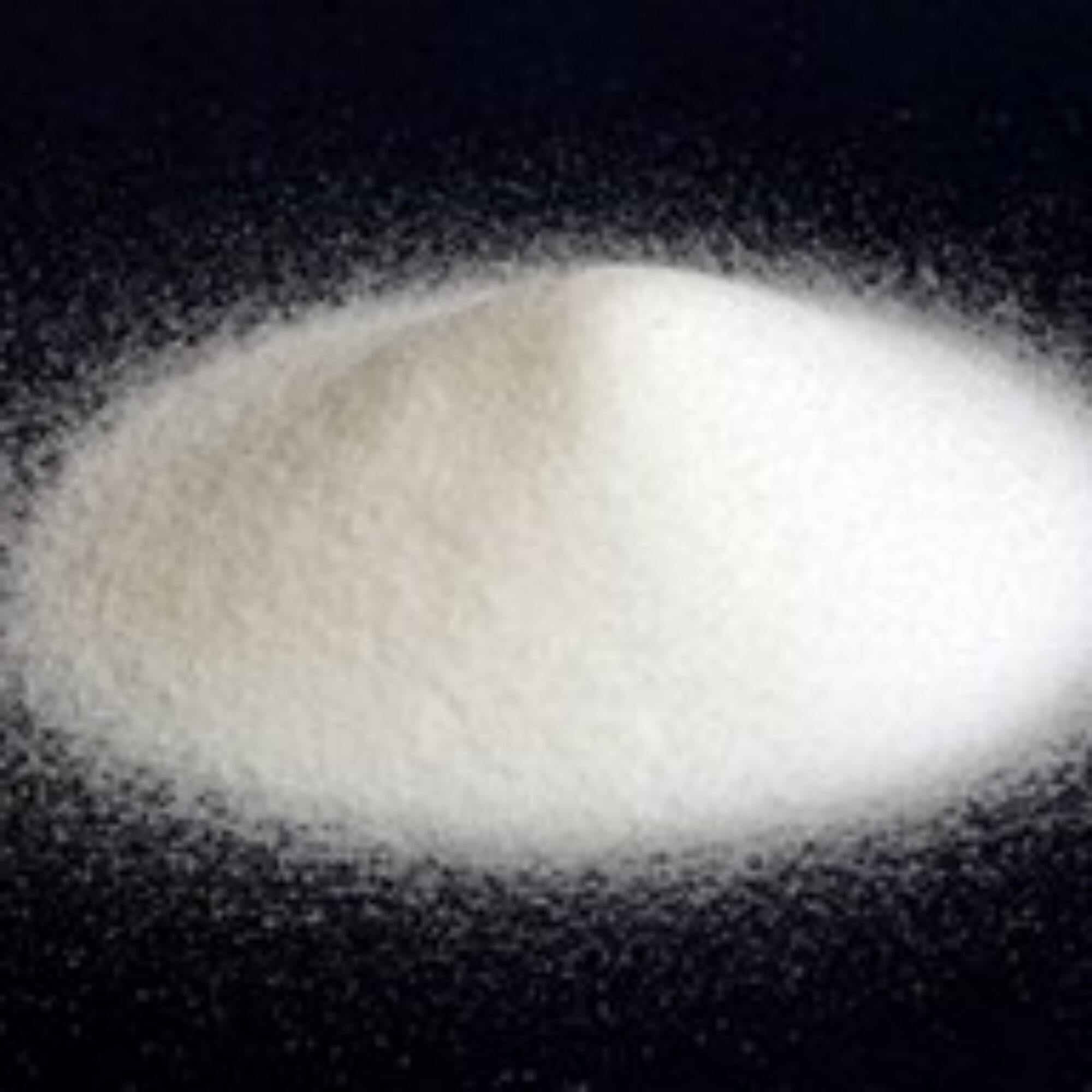
Pile of Refined Sugar

Why call using no sugar extreme but not using no heroin?

People keep describing my unbroken sidcha practices and avoiding polluting as disciplined. Regarding avoiding packaged food and not flying, they describe it as extreme. Actually, some describe it all as extreme. Let me ask you this: which is easier, to take heroin sometimes and try to avoid getting addicted or never to take heroin at all? Sugar, heroin. . . why get addicted to either? It seems to me easier never to take it. Then the risk of getting addicted and throwing your life away seems minimal. So I don't take heroin. The solution seems obvious and simple. It takes no willpower or discipline. By contrast, using it sometimes seems it would require more. Nobody calls my zero heroin use as extreme. Nor does anyone…

0 Comments

150: Tom Murphy, part 1: Do the Math, the language of nature

Everyone thinks about the environment. Nearly everyone gets bogged down in questions. What's best?Will this or that change make a difference?What does all the science mean?What should I do? Science answers some of these questions. Science is the study of nature. People associate it with going to the moon or people in lab coats, but it's about nature -- sunsets, gravity, why the sky is blue, as well as global warming, pollution, and resource depletion. Using computers, motors, eye glasses, and so on means your life relies on science. I find it beautiful, which is why I got the PhD in physics. Not understanding science or math means not knowing how to reach or understand answers resulting from studying nature and its patterns. Even understanding…

0 Comments

149: Ana Rocha, part 1: Cleaning Dar Es Salaam, Tanzania

Ana works in Dar Es Salaam, Tanzania, Executive Director for Nipe Fagio (Give Me the Broom! in Swahili), my first guest who works in Africa. This conversation is about leadership in an area lacking it -- environmental action. I wish I met her before! It sounds to me like she leads effectively -- not telling people what to do but leading them. Ana promotes doing things, focusing on action, creating the joy of living by your values. She's starting with beach clean ups and organizing people to act, but you can tell her vision is broader. I've spoken a lot about people delaying action by making a goal of awareness when they're already more than aware enough that their values are telling them it's time…

0 Comments

147: Ron Gonen: Closed Loop Solutions

When I met Ron in business school, he and Recycle Bank, which he co-founded, were well regarded. He's continued to grow since. Beyond contributing into entrepreneurship in sustainability as an entrepreneur, he's helped create policy, appears often in the media, and now invests. In our conversation you'll hear on the personal side his passion. On the business side you'll hear the opportunities to start businesses and solve problems are increasing -- from the sounds of it, dramatically. He puts his money where his mouth is. If you came here for examples of leadership in the area of the environment, I'd say he sounds like a role model. He achieves business success. It emerges from transparency, which creates, as I hear it, trust, joy, and liberation…

0 Comments

My humbling leadership start

Business school humbled me from before I started my first classes there. I came in thinking, "I have a PhD in physics, so all the math will be easy, and I ran a company, so I know all the business. I'll have fun for a couple years and earn a degree that will be my passport to success." On the contrary, I found finance and accounting not about math, but organization that I didn't understand. Moreover, all my classmates understood it better. And business was about people, emotions, relationships, and other blind spots I didn't know I was blind to. Again, all my classmates seemed to know these areas better. For that matter, at all. Below I offer two specimens I recently stumbled across from…

0 Comments

146: To Sam Harris: A preface following meeting at the Beacon

I recorded a preface to episode 142 because I got the backstage pass, attended the meet and greet, shook Sam's hand, and asked him if he was open to alternatives to conversation and violence. I won't be able to do his answer justice here, but his views of conversation and violence were broader than mine, so if he hears episode 142 without this preface, I suspect he'll think I don't understand his views. In a funny way, I hope he sees I misunderstood what he meant by conversation and violence because, as he'll recognize, I recorded that episode before his explanation, but more because I hope my being open to his more expansive view will open him to mine. He asked me about alternatives. I…

0 Comments

The Ethicist: I Think My Former Employer Is Underpaying a Black Employee. Should I Tell Her?

My series answering the New York Times' Ethicist column with an active, leadership approach instead of an analytical, philosophical perspective continues with "I Think My Former Employer Is Underpaying a Black Employee. Should I Tell Her?". I worked in human resources at a national nonprofit organization with more than 100 employees. In the summer, we hired two people for the same position. They had similar educational and work experience. One of the employees is a black woman living in a large city in Florida, and the other is a white woman living in a small city in the Midwest. When the employee in the Midwest was offered the position, the hiring manager did not consult the human-resources department and offered her a salary above the…

0 Comments

News roundup: drugs, sex, and injuries

I read the news---more specifically, pages that refresh daily or more frequently---a couple times a month and usually regret it. It usually reminds me that their main goal is to keep people reading, which it achieves by prompting outrage or some other emotion that keeps bringing you back but doesn't necessarily improve your life. That is, news is more "want more" than "tastes good." Anyway, since I read some news, I'll comment on some stories. Sex On the sex front, Rather than wrestle a girl in the state championship, this high schooler forfeited. The headline doesn't specify that the wrestler who chose to forfeit is male. Assuming he would be seems to perpetuate that wrestlers are male. What gets me is the number of commenters…

0 Comments

145: Rob Greenfield, part 1: Abundance without stuff

This conversation is about joy, responsibility, community, and values you undoubtedly share. Rob Greenfield lived like an average American. He saw the environmental problems we all see on headlines and dismissed them as most do. Then he decided he could no longer abdicate the responsibility of how he affected others and our world. I consider him a role model. Nearly everyone I talk to describes what I do as a big deal. I'll grant I'm far from mainstream -- about 10% of the pollution of the average American -- but it's not a big deal. The more you act on your environmental values, the more you'll find typical American behavior is extreme. An aberrant from how humans act. Once not polluting was normal. It's returning…

0 Comments

144: Nikole Beckwith, part 1: Education and leadership

While Nikole's being a celebrated director and writer is a great reason to feature her and listen to her, I approached her because she graduated from Sudbury Valley School. I hope you've heard of Sudbury. If not, it's likely a different school than any you've heard of. Learning about in inspired me to learn as much as I could about it. Here are many of the links I read on it. As an educator I am as fascinated by its success and how it overturns my view of childhood, education, and humanity, as well as my own childhood. What better background could I find and feature on it than a student who loved her experience there and shares it. Nikole shares openly about herself, her…

0 Comments

I rowed a marathon today

Three weeks ago, inspired by an Olympic gold medalist and Crossfit Games champion podcast guest, I rowed my first half-marathon. Before then, I don't think I had rowed more than 7,500 meters at once, and even that distance happened probably five years ago. But the inspiration came from seeing the Crossfit competitors rowing a marathon, not a half marathon, so the I knew I had to go the distance one day. Why today? Because I exercise on a five-day cycle of lifting and cardio and February, with 28 days, gives the longest break between cycles. It was also crisp outside, about 30 degrees, making for comfortable rowing conditions on my rowing machine. A side benefit I didn't think about until starting was that my stomach…

0 Comments

143: Dune Ives, part 2: How Did Plastic Pollution Become Normal?

Martin Luther King, Jr. talked about a negative peace, where a problem exists but people don't face it or deal with it, and a positive one, where people solve the problem, which requires facing it. He used non-violent civil disobedience to lead people to face problems that affected others, but as voters and citizens, they could do something about. People didn't always like it, but you can't get change otherwise. Nonviolent civil disobedience works with human laws but doesn't apply so much with our environmental problems. So how do we face these problems? How do we get people who are already aware that they are polluting and emitting greenhouse gases way beyond what risks undermining society, yet people using 90% less are more happy to…

0 Comments

142: To Sam Harris, whom I hope to meet backstage Friday at the Beacon Theater

In End of Faith Sam Harris says "We have a choice. We have two options as human beings. We have a choice between conversation and war. That's it. Conversation and violence." I like his podcast, listened to most episodes, read several of his books, support him with cash. I will see him in person this week for the first time at the Beacon Theater in Manhattan with Nobel Laureate Daniel Kahneman. It looks like I'll get back stage passes so may meet him. One of my goals with today's recording (that isn't obviously about the  environment) is to prompt the chance of meeting in person. I support his initiatives on free speech, not just for myself and people who agree with me, freedom from religious…

0 Comments

The Ethicist: Can I Turn Down Family Requests for Money?

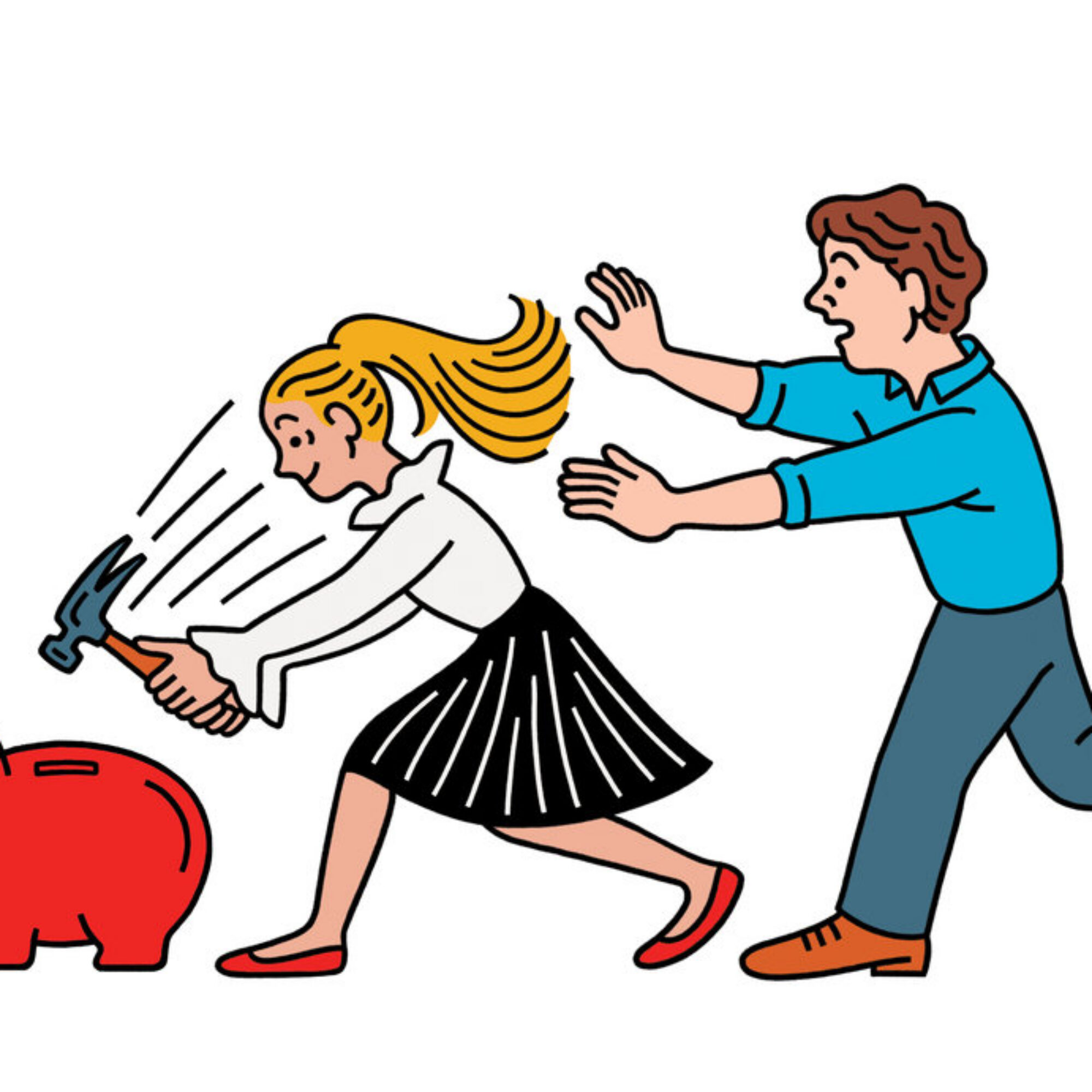
My series answering the New York Times' Ethicist column with an active, leadership approach instead of an analytical, philosophical perspective continues with "Can I Turn Down Family Requests for Money?". My family splits into two camps: people who have money and people who don't. We didn't start in different places; we evolved into them. My father, my brother and I are savers and planners. My sister, my aunt and my mother received the same inheritances, the same educational opportunities and the same career options, but they have spent everything they have and more. My mother and sister each filed for bankruptcy (my mother passed away with more than $1 million in debt). My aunt is hanging by a thread. The question is how to deal…

0 Comments

Diversity: where are my invitations?

I believe that diversity in teams helps improve outcomes by the team's values. Some places have more diversity than others. A big part of culture I see is to increase diversity, particularly in places with authority like government, corporate boardrooms, and STEM fields. People point out that those places are overrepresented by people who are combinations of male, white, rich, straight, fit, and a few other characteristics. Making them more diverse means bringing in people with other characteristics. There are many programs, initiatives, and resources to help them reach those places. If those places are overrepresented by people of those characteristics, other places must be overrepresented by people of other characteristics. There must be places with more females than males, more non-whites than whites, more…

1 Comment

148: Dawn Riley, part 2: Minding her beeswax

Right off the bat, we talk about Olympians, Americas cup winners, and a Crossfit games champion. The places Dawn brought me to were elite -- this time a fundraiser on Wall Street, the first time the New York Yacht Club, the next time her sailing facility for world-class athletes, Oak Cliff. Yet Dawn is as down to earth as anyone I've met -- scrappy, as she put it. She makes pickles for world-class athletes. She already reduces waste and tours composting facilities. So hear how someone like her, probably busier than you and I and responsible for people's hopes and dreams, takes on environmental challenges many people consider distracting. She makes it fun. On another note, I recommend learning to to sail. You meet people like…

0 Comments

End of content

No more pages to load