A model to handle pain

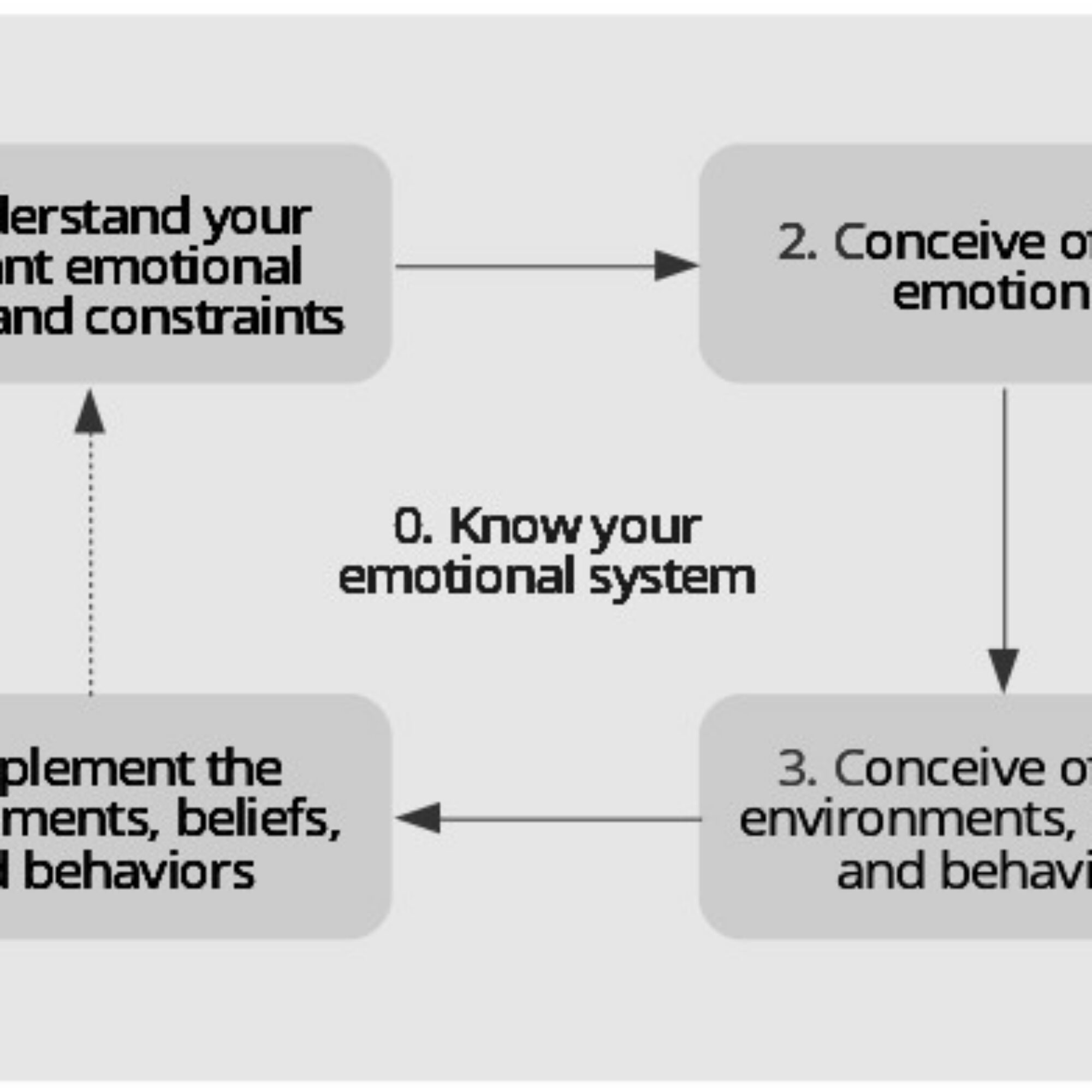
[This post is part of a series on “Mental models and beliefs: an exercise to identify yours.” If you don’t see a Table of Contents to the left, click here to view the series, where you’ll get more value than reading just this post.] Does pain make you miserable? I like the phrase "Pain is inevitable, suffering is optional." It says that pain doesn't have to make you feel bad emotionally. How you respond to pain is what makes you feel emotionally bad, and you can control that response. I prefer to say it more broadly. A model to handle pain: Pain isn't bad. Most people understand the value to their lives of physical pain. Our bodies can be damaged and pain motivates us to…

0 Comments

A model to implement the answers to all of life’s most important questions

[This post is part of a series on “Mental models and beliefs: an exercise to identify yours.” If you don’t see a Table of Contents to the left, click here to view the series, where you’ll get more value than reading just this post.] Putting into practice the answers to all of life's most important questions -- that is, the Model -- may seem like a tall order, but I've written up how to do it. I call the process the Method. If you worked with the Model long enough, you'd probably develop the Method yourself, but why not learn from my mistakes and get farther with less effort? A model to implement the answers to all of life's most important questions: The Method I've written…

0 Comments

Model to motivate putting in the effort to get good at something

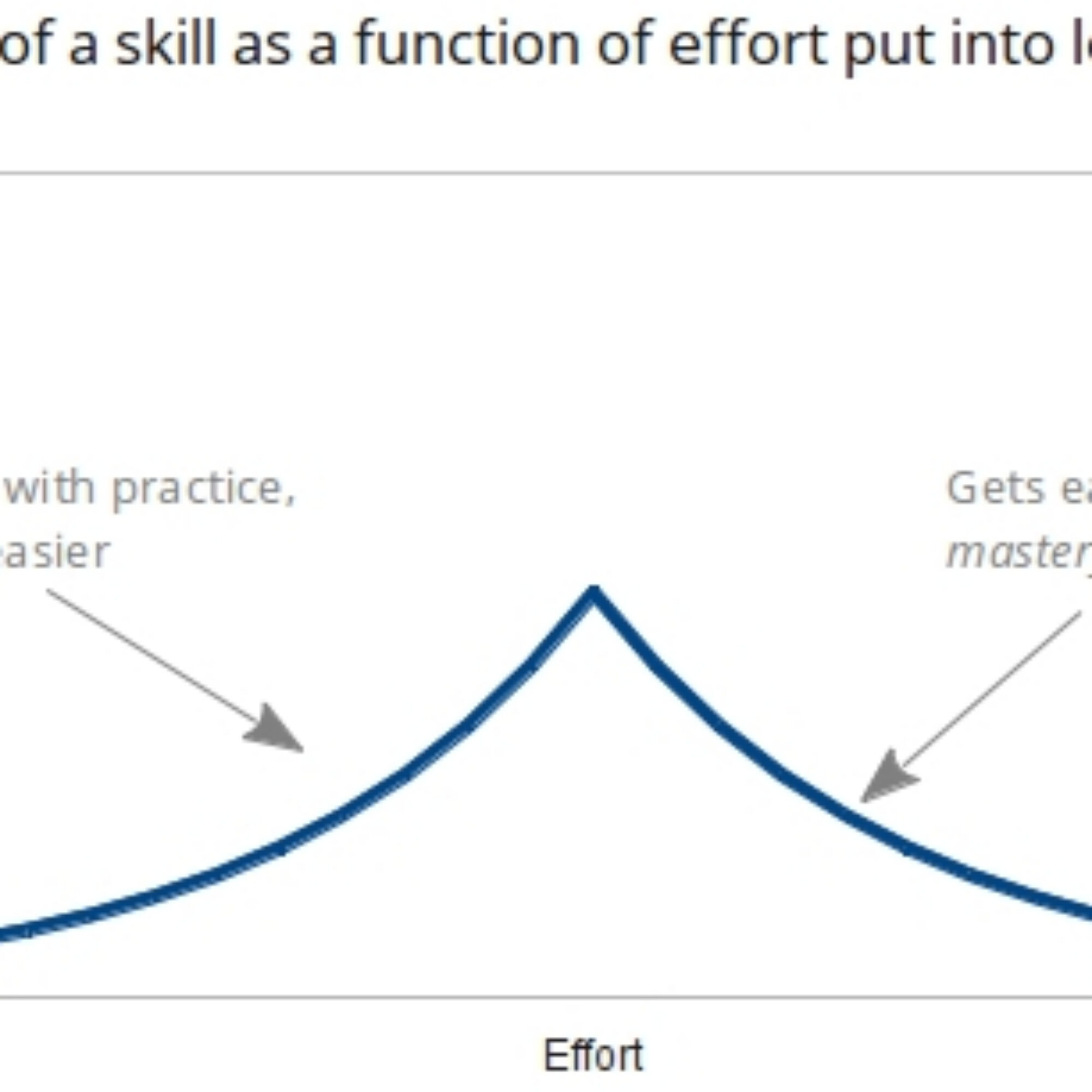
[Today is the sixteenth in a series on daily and weekly beliefs that improve my life and may improve yours, in no particular order. See the introduction to the series and the value of flexibility in beliefs for background.] Today's model is a simple picture that illustrates the difficulty in getting good at a complex skill. It motivates me to put in the effort to get good at something and prepares me for the challenges. A model for how hard it is to get good at something This graph illustrates how hard I think getting good at something is. It shows that before you put significant effort into learning a new skill, it doesn't create any difficulty in your life. As you put in more…

5 Comments

A model to rid your life of guilt and blame in favor of getting things done

[This post is part of a series on “Mental models and beliefs: an exercise to identify yours.” If you don’t see a Table of Contents to the left, click here to view the series, where you’ll get more value than reading just this post.] Do you get that guilt and blame don't help your life but you can't stop yourself from blaming others sometimes and feeling guilty other times? Do you wish you could get over feeling guilty for things you can't change? Do you want to stop getting into arguments and losing friendships over blaming them? Today's model almost completely removed my habit of blaming others and of blaming myself, which led to guilt. I wrote about this topic at length about two years…

0 Comments

A model to motivate success instead of feeling sorry of yourself

[This post is part of a series on “Mental models and beliefs: an exercise to identify yours.” If you don’t see a Table of Contents to the left, click here to view the series, where you’ll get more value than reading just this post.] Do you envy others' achievements? Or happiness? Or true love? Or something someone else has that eludes you? Today's belief helps keep me resilient to feeling bad in such cases and motivates me to improve my life. I expect it will work for you too. A model for what you can do: Anything one person can do I can too I believe that for anything important in life, anything someone else can do, I can too. I don't think anyone else…

0 Comments

A model for stress that calms you down

[This post is part of a series on “Mental models and beliefs: an exercise to identify yours.” If you don’t see a Table of Contents to the left, click here to view the series, where you’ll get more value than reading just this post.] Does the world stress you out? Do people and things cause you stress? Do you get even more stressed at your helplessness to reduce how stressful the world is? Do you get even more frustrated and depressed at your bad luck that you had to be born at a time when the world was so stressful? Would you be glad to know you can decrease all that stress? No medicine required. You don't have to change anything except your beliefs. But…

0 Comments

A belief to motivate trying new things

[This post is part of a series on “Mental models and beliefs: an exercise to identify yours.” If you don’t see a Table of Contents to the left, click here to view the series, where you’ll get more value than reading just this post.] Are you nervous to try new things? Do you wish you tried more things? Do you see others enjoying things you're too scared to try? I found a way to motivate trying new things. My model to try new things: I have low standards the first time. That is, the first time I do something, I consider it successful if I just do it at all, not by how well I do it. I wrote about this model almost two years…

0 Comments

Should you change your beliefs? Or at least consider alternatives?

[This post is part of a series on “Mental models and beliefs: an exercise to identify yours.” If you don’t see a Table of Contents to the left, click here to view the series, where you’ll get more value than reading just this post.] Say you have an identical twin and you walk into a party together. Now say your twin finds the party fun while you find the it boring and yourself in a miserable mood. Same party. Similar backgrounds and abilities. You'd rather have fun than be miserable. Why are in different moods and what can you do about it? You could say it's just your mood and moods are random, but can we say more? Since you and your twin have roughly equal…

0 Comments

How not to overspend on things you don’t want

I can't resist reposting a comment I posted on the forum of one of my favorite other blogs, Mr. Money Mustache. I'm reposting it because two other readers rated my response highly, one giving my response this animated image, making me proud. The post I responded to Alright mustachians [the term for people in the Mr. Money Mustache community who practice his principles of not spending money on stuff that doesn't improve your life] I need your sage advice. In the last three months I have really cut down on my bad habits. I pack my own lunch to work every day. I broke up with cable. I stopped ordering books from amazon on a regular basis. I changed my eating habits from quick and…

0 Comments

How to avoid temptation

Today's post will sound like it's about food, but it's about a lot more. The other day I was at a party with a great spread -- rich, delicious food and a lot of it: cheese, crackers, chips, cake, ice cream, and so on. I liked eating some, but realized I didn't want to eat too much. But everyone was talking around the food table and I find it hard not to eat delicious food right in front of you that everyone else is eating too. So I used my favorite strategy anyone can use to avoid eating too much of what they don't want. I didn't try not to eat the rich foods. I didn't try to eat less at all. I found the…

0 Comments

I felt miserable this morning. Then I got out of it.

[This post is part of a series on my daily exercise and starting and keeping challenging habits. If you don't see a Table of Contents to the left, click here to view the series, where you'll get more value than reading just this post.] How do you handle miserable days? I think today started like many people's does. I don't know how most people handle down days, but I'll share a typical case that I think could apply universally. People sometimes tell me I always seem in a good mood. I have to point to Marshall Goldsmith, his trademark phrase "Be happy now," and his practices that back it up as having inspired me to realize how much you can take control of your emotions.…

0 Comments

A few minutes on one of the best leaders in U.S. history

While searching for videos on Lou Gehrig for yesterday's post, I happened on a short video on John Wooden, one of the great coaches of any sport. According to Wikipedia John Robert Wooden (October 14, 1910 – June 4, 2010) was an American basketball player and coach. Nicknamed the "Wizard of Westwood", he won ten NCAA national championships in a 12-year period—seven in a row—as head coach at UCLA, an unprecedented feat. Within this period, his teams won a record 88 consecutive games. He was named national coach of the year six times. As a player, Wooden was the first to be named basketball All-American three times and he won a national championship at Purdue. Wooden was named a member of the Basketball Hall of Fame…

0 Comments

Insight into what you’re good at and why from Evolutionary Psychology

I copied this quote from a book on Evolutionary Psychology without writing the source. Sorry for not giving the source (please write me if you know it), but I find it summarizes the challenge we all face in having a motivational system that evolved to solve certain problems but living in a world with different types of problems. In other words, our modern skulls house a stone age mind. The key to understanding how the modern mind works is to realize that its circuits were not designed to solve the day-to-day problems of a modern American -- they were designed to solve the day-to-day problems of our hunter-gatherer ancestors. These stone age priorities produced a brain far better at solving some problems than others. For…

2 Comments

One way to help prevent unhappiness

When people feel unhappy or depressed they often stop doing things. They don't feel motivated to work or go out so they don't. You know how when you're happy, you tend to smile? Most people also know smiling makes you feel happier, at least for a moment. Forcing a smile won't solve all your problems, but we can build on what it demonstrates. Not only does emotion motivate behavior, but behavior influences mood. While brief behavior influences emotion briefly, longer term behavior influences emotion long term. To keep your mood stable, keep up your habits consistently. It may not make your life perfect, but it helps a lot. It gives you a solid platform to build the rest of your life on. I've written about…

0 Comments

How to ruin getting useful feedback on customer service

Last week I got great customer service. So great I don't mind sharing here that at the Staples on Sixth Avenue and Eighth Street there is a tech named Genghis -- yes, that's his name -- who knows cell phones better than anyone I've met. He treated me friendly, gave my project his full attention, and did the best job I could imagine. I would recommend him to anyone with cell phone problems. I was happy to pay for his time. I'll add that if you know me enough, you know I don't like box stores and national chains that I think decrease the variety of an economic system, which I think decreases the system's resilience. So for me to promote such a store means…

0 Comments

Redefining possibility again

Are you younger than 89? Can I ask you to think critically. Forget for a moment about logistics and if you have the time or interest to do it. Just ask yourself if you think it's possible. Do you think you could finish a marathon? Do you think it's possible? Many people I ask consider their finishing a marathon impossible. Not difficult but impossible. They explain why and their reasons never hold water for me, but they seem conclusive to them. Sometimes it's as simple as knee problems (note I asked about finishing a marathon, not running one, which would allow for using a wheelchair or crutches, both of which I've seen racers use. For that matter, seeing a blind runner in a marathon. Whatever…

0 Comments

Stephen King on motivation

An early piece of advice many starting writers hear is to read Stephen King's On Writing. He is best known for his horror and fantasy writing, selling more than 350 million books (putting me only about 350 million books behind him), but writers know this short book of his as one of the most helpful books on writing. Ironically, In 2008, Entertainment Weekly listed On Writing 21st on their list of The New Classics: Books – The 100 best reads from 1983 to 2008, making it King's only entry, according to Wikipedia. I wanted to comment on what he wrote on his motivation to write. Quoting him One more matter needs to be discussed, a matter that bears directly on that life-changer and one that…

1 Comment

Video: North Korea’s incredibly talented and rehearsed children performers — and comparison with some Americans

Our guides took us to see the children's performance palace (I forget its official title), where they put on display groups of children whose performances were incredible. I wrote and posted images of them before. Who knows what training they've had or what motivates them to get to this level. I think the usual first guess of people who are critical of North Korea is that the government coerces them -- that if they don't perform well someone will harm their parents or something like that. Someone also told me that these children hold very high status, so maybe they have internal motivation. I'll never know if they are pushed, pulled, motivated on their own, something else, some combination, or what. All I can say…

0 Comments

Don’t be Walter: an example

Yesterday I wrote about the quintessential I'm-right-you're-wrong-and-I'm-going-to-convince-you-of-it-no-matter-what-it-takes situation with extreme escalation by Walter in the Big Lebowski. The last edit I made was to add the parenthetical comment in "What makes this clip so funny and brilliant (besides the movie's running jokes, like the Vietnam references) is...". I couldn't help but notice, if you don't look too carefully, that you could understand the Vietnam conflict from this perspective, with the United States political decision-makers as Walter. Read the archetype as I listed it yesterday with that conflict in mind. (Before you start to write to tell me how much I missed and how wrong I am, my point isn't to be right, just to give another perspective. See what you can learn from it.) You…

0 Comments

George Clooney on accountability

Following up yesterday's post on George Clooney on living well, I sampled another clip from the same interview in which he talked about accountability. The context is his winning an award for his work on Darfur. I think the clip illustrates how to keep focused on results, not accolades. And even to remember that the results you can achieve don't necessarily mean results that you want to achieve in the long run. Reporting on hidden problems helps -- how else can you try to solve them -- but it doesn't solve them. http://www.youtube.com/watch?v=xyl5vQCiOrk Accountability: without it things don't get done. Leaders almost necessarily have it because their team depends on them. Even if they don't have accountability, effective people ask for it.

0 Comments

More on leadership and success from Inside the Actors Studio: what anyone overcame, you can too

Following up yesterday's post on how so many great actors, at least among those I saw interviewed on Inside the Actors Studio, faced so many challenges before their careers took off (and many after, as well, given the challenges of celebrity), I looked up one in more detail. I also covered how acting and leadership both require self-awareness, emotional-intelligence, and ability to manage your and others' emotions. I think the field of training leaders can learn from the more mature field of training actors. People who have attended my leadership seminar know I use Johnny Depp as an example there, but I could have picked any number of other great living actors. As one measure of his success, movies with him in them have grossed…

0 Comments

Observations on leadership and success from Inside the Actors Studio

I've watched a lot of episodes of Inside the Actors Studio. I've referred to it before and I'll keep referring to it as a resource for leadership because actors and leaders share this common element to their craft: part of our jobs is to recognize and manage emotions in ourselves to communicate them and create and inspire emotions in others. Actors tend to inspire laughter, tears, and catharsis whereas leaders tend to inspire motivation, dedication, and action, but those are just different ranges of emotions. Both crafts inspire emotions in others through identifying and creating emotions in ourselves. That common part of our crafts means the training of both crafts requires developing emotional intelligence and self-awareness. The field of acting makes that requirement obvious to…

0 Comments

A great model to allow yourself to fail

This model is one of my most important ones I think about almost daily. It fits with my practice of having low standards the first time. It also enables you to act on the perspective most successful people I know of realizing the importance of failing. The scene is a martial arts class. A few students learning from a great master. The students ask the master how he never loses his balance. He asks, surprised, "what do you mean?" They say "You're always on your feet. You never fall. How do you never lose your balance?" He says, "On the contrary, I'm always losing my balance, but I'm always recovering." I love this line. It tells me I can fail. I just recover. As long as…

0 Comments

An exercise in doing what you have to even when you don’t want to

Everybody faces tasks they don't want to start, know they have to do, but also know won't take that long -- things you might characterize like pulling teeth, holding your nose and taking your medicine, or grinning and bearing it. We all want to learn to motivate ourselves better. Examples include talking to your boss about a raise, talking to a significant other about a problem that's been bothering you for a while, or finally sitting down and doing your taxes. You know the task won't take that long. It probably won't even hurt. But you have to do it. When you read a lot of leadership and personal development literature, you come across some odd practices. Sometimes it helps more than you expect. I've…

4 Comments

Dustin Hoffman on Picasso on persistence and dedication

I saw Dustin Hoffman speak on persistence and dedication to one's craft by quoting Pablo Picasso. I loved it. He quoted Picasso as saying if someone took away his paints he would use pastels. If someone took away his pastels he'd use crayons. If he didn't have crayons he'd use pencil on paper. If he didn't have pencil and paper he'd spit on his finger and draw with the wetness on the wall. Who doesn't want passion like that? I hope people who think you just find passion realize Picasso didn't just find how much he loved creating art. He wasn't born knowing what paint and pastel was so how could he have loved them so much? For that matter, he wasn't born knowing what…

0 Comments

End of content

No more pages to load