The UN’s three-pronged attack on sustainability

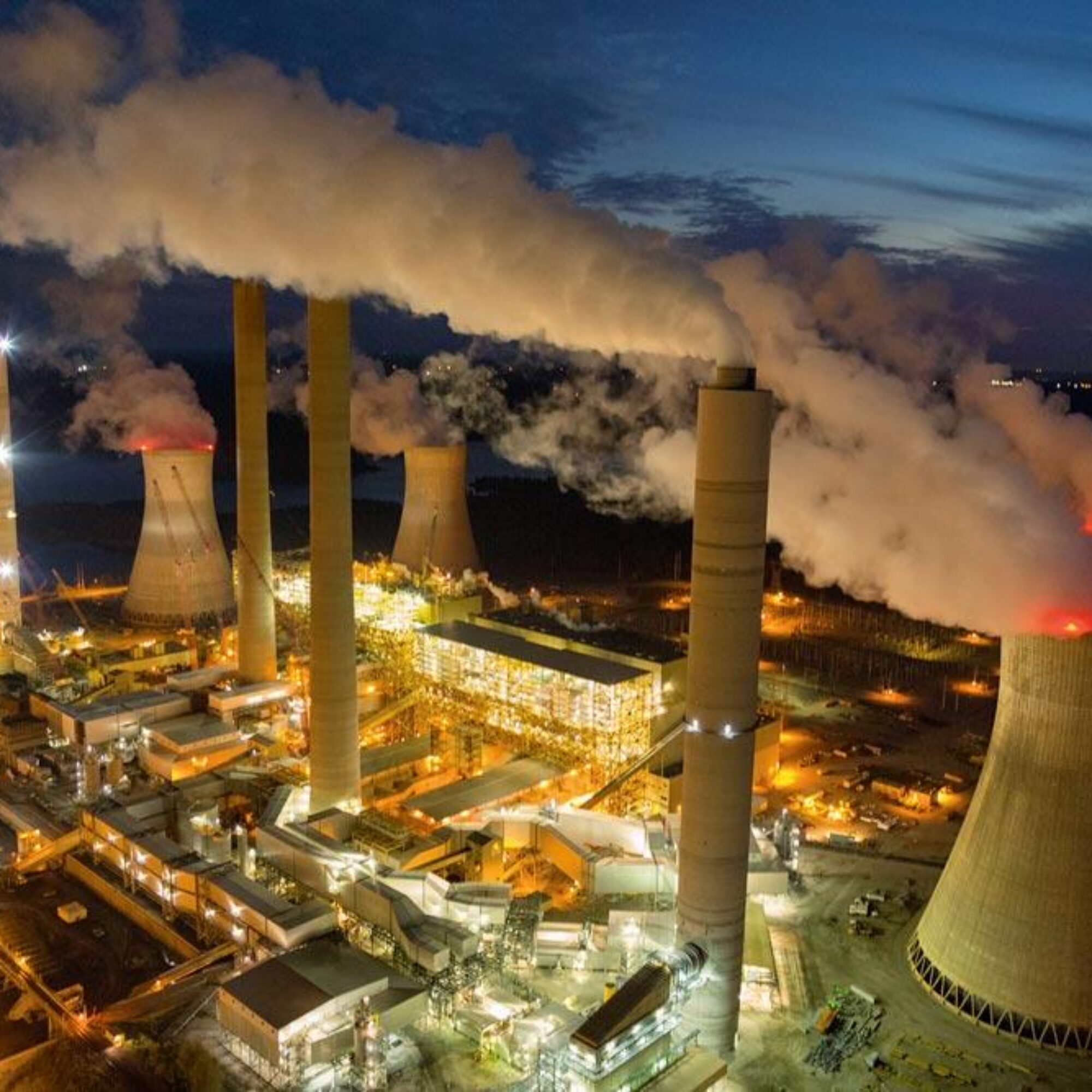
The United Nations may be delivering the most effective attack against sustainability of all. I can only see its three messages below leading people not to change or, if anything, to accelerate business as usual. Message 1: "CODE RED" The United Nations created the IPCC (Intergovernmental Panel on Climate Change). I see two predominant messages from the UN and IPCC. The first is DANGER DANGER DANGER, or in the words of António Guterres, UN Secretary-General: CODE RED and The evidence is irrefutable: greenhouse gas emissions are choking our planet & placing billions of people in danger. Global heating is affecting every region on Earth, with many of the changes becoming irreversible.We must act decisively now to avert a climate catastrophe. and The era of global…


0 Comments

Only specify fixing climate and carbon if you want to wreck everything else (forests, biodiversity, rivers, etc) because that happens when you do.

People talking about the environment focus on climate and carbon. Only talk about climate, carbon, and greenhouse emissions if you want to disregard all other environmental problems because doing so will augment them. The problems result from our behavior, which results from our culture. Don't change our culture and we'll keep lowering Earth's ability to sustain life. Focus only on one symptom and like whack-a-mole, or a stream flowing around a boulder, our culture's demand for energy and growth will degrade everything else if we fix climate change. Talking about climate only will increase the other problems more, and increase our total problems, with rare exception. I recommend only talking about fixing climate and carbon if you deliberately want to degrade everything else.

0 Comments

707: Arnold Leitner, part 1: The founder of YouSolar, more than off-grid living

Do you like my work because of my nearly unique background of a PhD in physics, having cofounded a couple companies, and having an MBA? You're in luck with Arnold, who has done the same. We got our MBAs together at Columbia so inevitably met. He was working on his solar startup then, Skyfuel, which was making news, though I wasn't working on sustainability yet the, still feeling like individual action wouldn't matter yet. We ran into each other and talked about his new company, YouSolar, comparing how much power, energy, and reliability he supplies his clients with my little portable battery and panels I have to carry to my roof. In today's conversation, after he shares his background, he shares YouSolar's grand goal, which…

0 Comments

This week’s selected media: The Great Dance, Atlas Shrugged, and Natural Population Decline

This week I read and watched: The Great Dance, directed by Craig and Damon Foster: I re-watched this documentary helped open my eyes and mind to the sophistication and complexity of people and cultures we call indigenous. I grew up to see them as stuck in the Stone Age and to fear the possibility of regressing to be like them if we don't keep progressing. Learning some anthropology from The Dawn of Everything and Tribe starting lifting my ignorance, as did learning to use less power from the grid, which, however small, was experiential. This movie showed things reading books can't convey. It was made by the team behind My Octopus Teacher from 20 years earlier, described as "A story of three San (Bushman) hunters…

2 Comments

706: What I sound like talking sustainability when I forgot I was being recorded

You've heard me talk sustainability leadership on this podcast and probably others. Have you wondered what I sound like talking to friends unrecorded? A friend who also teaches leadership at NYU knew my background and had talked about climate with her students. She scheduled a call to talk sustainability leadership with me to help prepare. She told me she would record it, but since we were talking on the phone and I wasn't using my recording microphone, I forgot. I felt like I was just talking to a friend. I'm posting that recording: what I sound like when I haven't prepared and don't know I'm being recorded. In this case, I'm talking with someone I know who wanted to talk about sustainability, so it's not…

0 Comments

The electric company is texting me to use less electricity, but I’m using none. Stop wasting so much, people.

I closed my account with Con Ed since I wasn't using their power, but apparently Americans are too entitled and can't stop themselves. They're complaining and unhappy. I wish I could help them enjoy life more, but the technology they thought brought them comfort and convenience seems to have made them less resilient, happy, healthy, or safe and more addicted, dependent, and petulant. I prefer freedom to addiction, which I think in 2023 makes me un-American. Sad, I remember it being the other way. Here's the text Con Ed sent: ConEd Alert: We're preparing for the heatwave in your area. Please, limit your energy use between 2 pm and 10 pm to help keep service reliable. If you lose power, reply OUT to get updates.…

0 Comments
The Sacklers must be looking at social media and doof companies with envy.
Mandatory Credit: Photo by Toby Talbot/AP/REX/Shutterstock (6220781c) OxyContin pills are arranged for a photo at a pharmacy in Montpelier, Vt. on . Drug overdose deaths rose for the 11th straight year, federal data show, and most of them were accidents involving addictive painkillers despite growing attention to risks from these medicines. As in previous recent years, opioid drugs - which include OxyContin and Vicodin - were the biggest problem, contributing to 3 out of 4 medication overdose deaths Overdose Deaths, Montpelier, USA

The Sacklers must be looking at social media and doof companies with envy.

You probably know the Sackler name, but if you don't, the Sackler family pushed the opiate Oxycontin on an unsuspecting public, playing the largest role in the opiate crisis that has led to millions of addictions and deaths. They avoid admitting wrongdoing and avoid prosecution through legal wrangling that looks like it's abusing the legal system in a way rich people can. Meanwhile, doof makers addict people with substances derived from plants like opiates from poppy. Doof isn't food, but doof manufacturers promote it as food, even to kids. Imagine marketing morphine to kids. The Sacklers must look at McDonald's, Whole Foods, Starbucks, Panera, Keebler, Ben & Jerry's, and all the other doof manufacturers with envy. Doof manufacturers do what the Sacklers did---selling addictive plant…

0 Comments

705: Greg Bertelsen: A bipartisan climate roadmap including a carbon tax

Recent guest Bob Litterman spoke highly of Greg and his work at the Climate Leadership Council, a rare bipartisan effort on climate. He put us in touch. In the meantime, I was curious about a climate group started by Secretaries of State James A. Baker and George P. Shultz along with Ted Halstead. But they and other prominent Republicans published The Conservative Case for Carbon Dividends. Greg is CLC's CEO, leading that project on the ground working with politicians. If you're curious how it can work, he explains it in our conversation. You'll hear my long-standing concern that people and organizations who focus on climate and greenhouse gases end up increasing other problems. He sees in some areas that if you solve part of the…

0 Comments

We’re replacing flowers and grass with plastic. It’s unhealthy and disgusting, not pretty, but apparently I’m the extreme one for having a problem with it.

Restaurants, stores, and playgrounds for kids around me put up plastic flowers and grass to make things look pretty, but plastic is the opposite of flowers and grass. If it hasn't hit you, take a moment to ponder what we've done. We're replacing lovely, healthy things with what kills them and us. We're accepting the opposite of life and nature in favor of kills nature because of the most superficial resemblance. How do we accept this travesty? It's like someone replaced your child with a Barbie doll or your pet with a Mr. Potato Head. Are we complete idiots? Who is the bigger idiot, the people manufacturing these things, the people buying and putting them up, or the people who fund it by patronizing the…

0 Comments
704: Gernot Wagner, part 1: Guiding Misguided Economic Forces in the Right Direction
Gernot Wagner

704: Gernot Wagner, part 1: Guiding Misguided Economic Forces in the Right Direction

Gernot and I go back a few years from meeting online over sustainability issues, finding out that we lived about a mile from each other, then meeting in person. Our first meeting, we got annoyed at each other, but our second we found we agreed on more controversial topics and had a grand old time. We also ran into each other at the conference where I met his longtime collaborator Bob Litterman, who was a recent podcast guest. Gernot combined economics with sustainability before others did and kept at it, putting him at the forefront of environmental economics. As regular listeners know, I value experience and living by one's values, not just talking about it. How else can you gain relevant experience, credibility, integrity, and…

0 Comments

This week’s selected media: July 23, 2023: Pro-slavery thought in the old South; When McKinsey Comes to Town; The Year of Less; John Locke

This week I read Pro-slavery thought in the old South, by William Sumner Jenkins: You and I live in an economic system that hurts and kills people near and far, now and in the future, for our wants and needs. We feel we are good people, yet we do things we believe are wrong; we buy fast fashion, fly, drive SUVs, and so on. To maintain our positive self-perceptions and sleep comfortably at night, we rationalize and justify. Anyone not benefiting from the system would identify our rationalizations and justifications as self-serving bunk, but we do benefit. How do we sound to impartial observers not benefiting from our behavior? We sound like slaveholders did. This book from 1935 quotes many slaveholders' rationalizations and justifications. The…

0 Comments

The stages of environmentalism leading to counterproductive work or capitulation (and how to avoid them)

People who work on our environmental problems seem to go through stages. I'll describe them, if you don't mind I haven't studied them in detail, just painting broad strokes. We start with ignorance, generally gaining knowledge and ideas of what they can do. We move from ignorance to basic knowledge. Some drop off there. Others continue to more knowledge. Some of them move to realizing they can act. The details of each stage aren't my main point. The last stage is, or what would be the last stage except that everyone turns back from it. Those who keep going reach where they realize we have to change our culture. Few reach that realization, since most stop at some point to focus on developing a technology,…

0 Comments

703: David Gessner, part 1: A Traveler’s Guide to the End of the World

What does the world look like today with regard to our environmental situation? Not the latest news about a disaster we can write off as a one-time event, even if yet another once a once-in-a-century event now common, but what does it look like on the ground. We know there have been record-breaking fires, floods, and storms. What are they like? David travels the United States to record what he sees and reports it in Traveler's Guide to the End of the World. He comes from a literary background, so he puts it in the context of past nature writers. He also has a daughter so asks scientists what the world will be like when she is his age. The book is not always easy…

0 Comments

My last electric bill?

I posted last week At last, I dropped my electrical utility account. They sent me this bill off-sequence for a smaller amount than usual. Might it be my last electric bill ever? I don't know how far I should extrapolate. I'm sure life will change in ways I can't predict, maybe necessitating reconnecting to the grid. For now, at least, I'm enjoying the freedom, fun, and discovery of keeping my apartment disconnected from the electric grid. I could have disconnected years, maybe decades ago, though I'm not sure when portable batteries and solar panels made it this easy. Well, they're here now so others can do it too.

0 Comments

How much of history I’ve lived through

On my birthday, I find it fun to calculate how much of history I've lived through. Depending on your age, you might have lived through similar percentages of history. [EDIT: I attached the spreadsheet to calculate the numbers below if you want to calculate for your life.] Some numbers, for example: I've lived about 2.6 percent of the time Christianity has existed, but only 0.3 percent of the time since agriculture started. I've lived 10 percent of the time since Columbus reached North America and Copernicus suggested the Earth went around the Sun. I've lived about one fifth of the Unites States' existence and nearly two thirds of the time since the U.S. entered World War II. I've lived almost the entire time since a…

2 Comments

Why we need a constitutional amendment on environmental sustainability

The United States has a Bill of Rights in its Constitution guaranteeing several freedoms around religion, speech, the press, bearing arms, search and seizure, speedy trials, and a few others. Imagine you woke up to headlines that for some technicality no one had noticed for over two centuries, the Bill of Rights had been improperly processed and turned out it was invalid. That is, imagine the Bill of Rights didn't exist. The government could write laws limiting religion, speech, the press, bearing arms, and so on far more than before. People and corporations with power would see a sudden opportunity to gain power by encroaching on rights you thought you had. The government could take over the media and churches. It could stop you from…

0 Comments

Where Artificial Intelligence will go and why (it’s not where everyone is saying)

ChatGPT is surprising everyone with what it can do, how far beyond expectations, and in so many areas. Where will artificial intelligence go next? What will it do? Whom will it affect and how? It's hard for people who didn't live when people viewed beating a human at chess as absolutely impossible for computers, let alone playing a decent game. Today we can only conceive of chess as something computers can do, no problem. Each stage of chess going from being impossible for computers to play, then possible, then better than any human surprised nearly everyone. Then computers went from best at chess to best at go effectively overnight, notwithstanding the recent quirk a human found that computers will overcome if they haven't already. People…

0 Comments

702: Peter Singer, part 1: Calm, reflective talk considering not flying

With Peter Singer, I could have picked several topics relevant to sustainability leadership: veganism, vegetarianism, and charity come to mind, as does my post about him six months ago, Fixing Peter Singer’s drowning child analogy for sustainability. The day before recording, I saw him speak live and asked during the question-and-answer period at the end about not flying. He answered thoughtfully and reflectively, not with the usual reactivity and emotional intensity most people do, protecting their feelings of guilt and shame, as I see them (I wrote The reason you feel judged isn’t because environmentalists are judging you. It’s because you have a conscience.) Several audience members told me they appreciated my asking the question. So when we spoke after he finished his stage performance,…

0 Comments

This week’s selected media: July 16, 2023: The Sorrow and the Pity, by Marcel Ophuls, The Comfort Crisis, by Michael Easter, and The Perfect Storm (the movie), based on the book by Sebastian Junger

I read and watched this week: The Sorrow and the Pity, by Marcel Ophuls: I started watching this four-and-a-half hour documentary months ago. I'd been meaning to watch it for years, as I think it's regarded as one of the great movies of all time. It interviews French, British, and Germans who lived in a French city under Nazi occupation, about 1940 to 1944, or worked with them. It doesn't fall into easy cliches. The people are human, including the German and the French fascist. The French were more divided than I expected. Some admired Petain. Some fought for the resistance. Others resisted in different ways. Some supported communism; others detested it and hoped Hitler would defeat that element in Europe. The German still wore…

0 Comments

701: Robert Litterman, part 2: “We need legislation, we need a price on carbon.”

You won't hear many finance people promoting more taxes, though it's increasing. Bob talks beyond our conversation a few weeks before about a carbon tax, integrity, permanence, standards, measurement, and many different angles. He talks about responsibility and holding the companies creating the problems responsible. It just takes courage. Regular listeners know I find that when anyone focuses only on carbon, greenhouse emissions, and climate, they almost always miss our other environmental problems, like plastic, pollution, deforestation, and you know the rest, Bob agrees the tax incentive should apply to these other areas, though I'm not sure he acts on them. It's easy not to change the system, but to make it more efficient and accelerate it overall, even if you lower problems in one…

0 Comments

At last, I dropped my electrical utility account

Despite using zero watts over more than a year, I've been paying over $20 per month for an electric bill. Part of it was to a power company that uses more wind and solar that charged me a monthly fee of another $6 or so. The other part was $17 a month to Con Ed, the power company, simply for being connected to the grid, not even using power. I considered it insurance in case something failed, but I figured two things. First, I haven't used power in my apartment in over a year. Second, they said I could restore power with a call. So I cancelled my Con Ed account. This is freedom. Here's what I stopped funding: Smart aleck, know-it-alls will point out…

0 Comments
Looking to Silicon Valley, Elon Musk, Bill Gates, Washington DC, or Academia for sustainability solutions is like looking to the Sacklers for opiate addiction solutions
Mandatory Credit: Photo by Toby Talbot/AP/REX/Shutterstock (6220781c) OxyContin pills are arranged for a photo at a pharmacy in Montpelier, Vt. on . Drug overdose deaths rose for the 11th straight year, federal data show, and most of them were accidents involving addictive painkillers despite growing attention to risks from these medicines. As in previous recent years, opioid drugs - which include OxyContin and Vicodin - were the biggest problem, contributing to 3 out of 4 medication overdose deaths Overdose Deaths, Montpelier, USA

Looking to Silicon Valley, Elon Musk, Bill Gates, Washington DC, or Academia for sustainability solutions is like looking to the Sacklers for opiate addiction solutions

The title says it all: Looking to Silicon Valley, Elon Musk, Bill Gates, Washington DC, or Academia for sustainability solutions is like looking to the Sacklers for opiate addiction solutions. The Sacklers know how to increase opiate use. They profit from it. They know how to increase sales. They know how to rationalize and justify addicting and hurting people so they can feel good hurting people. They have convinced themselves that their actions harming people are helping them. Why would they stop? The people and communities in the title relate to polluting, depleting, and, for that matter, addicting as the Sacklers do to addicting. That includes most of (though, not all) the Silicon Valley, Washington DC, academia communities, including Bill Gates and Elon Musk. They…

0 Comments

700: Matt Matern, part 2: Plant a Tree

Matt shared last time about the redwoods I keep hearing about in California that I've never seen but find they transform people. His goal was to plant a tree. He ended up with a new tree, plus he planted other plants. Listen to hear the story. More than what he did, I recommend listening to his emotional experience. Did he have to do all the things he did? Could he do other things that are more mainstream but might pollute more if he wanted? We talked first about the problems with what most people mean when they talk about teaching children, helping poor people experience nature, and a few other tactics people promote without thinking them through, as I believe. They sound great. What are…

0 Comments

Me singing, mortified, but how else do we improve? What else are we here for?

I'm going to embarrass myself with this post. So be it. Longtime readers know I didn't sing growing up beyond Happy Birthday, Take Me Out to the Ball Game, and some drunk karaoke, but as a result of being led through the Spodek Method, started practicing singing. First I sang fifteen minutes a day, turning off all my electronics. Later I started practicing singing exercises. I wrote a couple posts on it: Thoughts on singing and Why I’m singing. I didn't learn to sing well. I did learn that people who sing well got there through practicing. The better they sing, the more they practiced. Somehow, though I know in every other area people perform, you need to practice, somehow I hadn't put two and…

2 Comments

Liberate scientists to do science, not to try to lead.

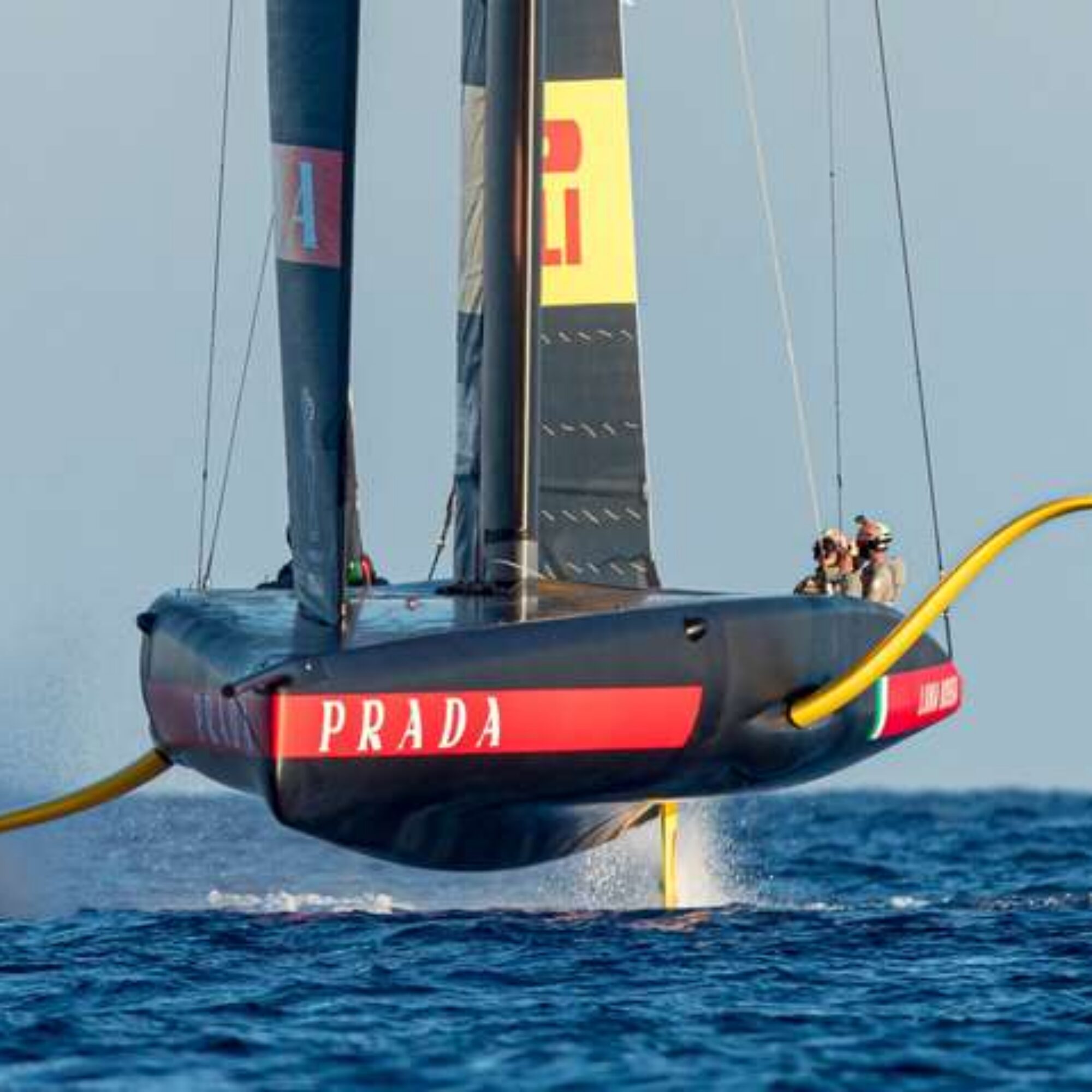
Consider a team sport like the Americas Cup, where technology plays a major role. The winning boats have long needed to be at the leading edge of ship design, requiring aerodynamics, hydrodynamics, materials science, and more. Today with the foils, people describe the boats as flying more than sailing. Many skills to pilot these ships didn't exist a generation ago. The scientists and engineers who design the ships are part of the team. They and the sailors need to communicate with each other their needs, goals, and limitations, especially the skippers. Since nothing happens without the ship, you could say everything begins with them. Do we expect the ship designers of the Americas Cup to win the race? No, they work with the athletes, funding…

0 Comments

End of content

No more pages to load