Nature


Leadership-based thoughts on economic and energy growth and limits

My closing paragraphs on yesterday's post, anticipating people's reaction, got me thinking about Marshall Goldsmith, one of today's top business thinkers (and a friend). I wrote the following: By now, many of you are probably thinking "we've solved all the problems so far, we'll solve the ones to come" "since before Malthus scientists project doomsday and they never happen, we can ignore this" or "this won't affect me" If so, do the math. Read his blog. At least understand the situation. If he's wrong, show him how. Show me too. I'd love to find out he's wrong. As a scientist, he (and I) would love someone to show him (and me) wrong. That's how we learn. I hope you're open to the same. Now before…

0 Comments

Fantastic video on economic and energy growth and limits

I've written about the Do The Math blog, which looks at the numbers underlying how our economy works, particularly the energy part, which is to say, what drives it. If you think something else drives it, do the math! I think you'll see otherwise. Incidentally, analysis like his is one of the reasons I studied physics (if you didn't know, I got a PhD in the subject) -- to understand nature. Many people think of physics as something that happens in a lab or happened a long time ago with Galileo and Newton, but fundamentally physics studies our natural world. And we are part of nature. Anyone who thinks otherwise -- well, I don't know what to say to them. Anyway, Tom Murphy, the guy…

0 Comments

Yet more perspective on the economy, environment, and ecology

Following yesterday's post on a the blog -- Do the Math -- that covers the economy, environment, and ecology the best I know, along with Limits to Growth, I found another blog that covers a perspective on economics I haven't seen, but consider important. We rely on an economics system based on growth but we live on a finite planet. We will one day reach an equilibrium with our environment. Well, we hope to -- we could enter a perpetual cycle of booms and busts. In equilibrium instead of growth, how do we distribute resources? Mainstream economic theory falls apart, yet it seems obvious to me it can be done. Enter the Center for the Advancement of the Steady State Economy, which promotes understanding economics…

0 Comments

Finally, more great perspective on the economy, environment, and ecology

I've written before on the poor dialog I've seen on the environment, ecology, and economy. Almost everyone seems to promote an agenda or not know what they're talking about. Today I found a blog called Do the Math that compares with the book Limits to Growth in treating those topics thoroughly and intelligently. It covers the issues as I would, but in much more depth than I could, clearly explaining its points and assumptions. Instead of hand-waving, acting on hopes or assumptions, or promoting an agenda, it creates plausible models, varies its inputs, and examines the results. Very refreshing. A physics professor at UC San Diego who got his PhD at Caltech writes it. He calls it Do the Math because he quantifies and calculates…

0 Comments

Finding home by traveling far

My interactions with North Korea have taught me more about myself and my values than anything else in recent memory. I was going to say it taught me more about being an American, but being an American means something different to me today than it used to, and means something different to everyone. I'm thinking about America in the context of North Korea today because I'm in the middle of reading what appears a great work of American writing, or at least a companion to one. Anyone who knows me well knows my ranking of the top such works include the Declaration of Independence, the Constitution, and Thoreau's Civil Disobedience, and King's "I Have a Dream" speech. I haven't yet read Moby Dick and have…

0 Comments

North Korea, the environment, and trees

This NY TImes article on North Korea and its environment, Q. and A.: North Korea's Choked Environment, reminded me of other routes to create bonds and understanding with North Korea -- nature and science. The article describes the current environmental situation there, some history, and how a conference on it went. Since the Korean War North Korea has lost trees, exacerbated by famine, mismanagement, flooding, and so on. Everybody gains from helping make an environment sustainable. Nearly everybody gains from free exchange of scientific information (people whose power depends on faith and dogma might not see how they do). Anyway, this article points out the usual problems with how North Korea communicates with the rest of the world -- spending resources showing off its leaders…

0 Comments

Creating miracles

I just finished an exercise on "How to Create Miracles in Your Life." I wrote up the following. It's out of context so it may not make sense to everyone, but you may get the gist of it. I found it important. I had my biggest problems with this exercise last time. In the end I figured out the exercise with my interpretation. At first my biggest problem was with the term miracle, which to me inextricably implied supernatural. I haven't found the supernatural helpful. More recently I realized a conflict with "Good thing bad thing." Nothing inherently wrong with conflict, but if the train coming just in time was so miraculous, did that imply something un-miraculous about the train not coming on time? If…

0 Comments

Spring in New York 2012, part 1

Nearly everyone who has eaten with me in my neighborhood knows Benny's Burritos is my favorite place (though they took my favorite dish off the menu again -- the bowl of vegetarian chili). Spring must be here because they put the outdoor tables out. This patron, Winston, was too cute not to take his picture. Maybe it's not what I normally blog about but can you really complain?

2 Comments

What is status?

Yesterday I wrote on what power is. Today let's look at status, again because I find the more precisely you understand a concept, the better you can use it. Status is important. Nearly everybody wants to have a higher status. Nobody wants to have the lowest status. So what is status? I came across this definition that works well for me. It doesn't work as well as yesterday's definition of power, but it works. Status is access to resources People with greater access to resources have greater status. When resources get scarce, people with status become important. I like this definition because it's simple and connects an otherwise vague concept to something measurable. It also shows how to increase your status. Making money gives you…

0 Comments

Psychologists on self-awareness

This quote on self-awareness, from the book Willpower, describes some psychologists' perspectives on self-awareness. I like its perspective. It asks how self-awareness could have evolved and notes the importance of the behavior the mental ability motivates By the way, I recommend the book for its content and engaging writing style, although I prefer the advice and perspective in my willpower series. Read both. (Edit: and my Empathy Gap series. Read all three.) In the 1970s, social psychologists studying subjects in self-conscious situations began to understand why self-awareness developed in humans... When people were placed in front of a mirror, or told that their actions were being filmed, they consistently changed their behavior. These self-conscious people worked harder at laboratory tasks. They gave more valid answers…

0 Comments

Hard projects will be harder than you expect. How to prepare.

[This post is part of a series on empathy gaps. If you don't see a Table of Contents to the left, click here to view the series, where you'll get more value than reading just this post.] A second post from the book Willpower... Leading yourself and others requires foreseeing that doing something hard feels harder, longer, more frustrating, and so on than you expect. At the beginning you say, "I'm strong, diligent, and capable. I'll power through no matter what comes my way." Intellectually anticipating it will be hard doesn't and can't prepare you for the emotional motivation to stop you'll feel in the moment. One of my main reasons for running marathons (as if being cheered on by millions of fans isn't enough)…

0 Comments

E. O. Wilson and evolutionary psychology in the New Yorker

The New Yorker has a piece this week on E. O. Wilson and others on current debate in evolutionary psychology and altruism. Online only has the summary, so you'll have to buy a copy, but I expect quality from the magazine. E. O. Wilson published a fictional story on ants I found enjoyable and educational in the New Yorker himself a couple years ago. I saw Wilson speak and got to talk to him briefly at the New York Academy of Sciences. Things I learned from him have affected my views on motivations and emotions as much as from anyone else.

0 Comments

A bad day skiing beats a good day of almost anything else

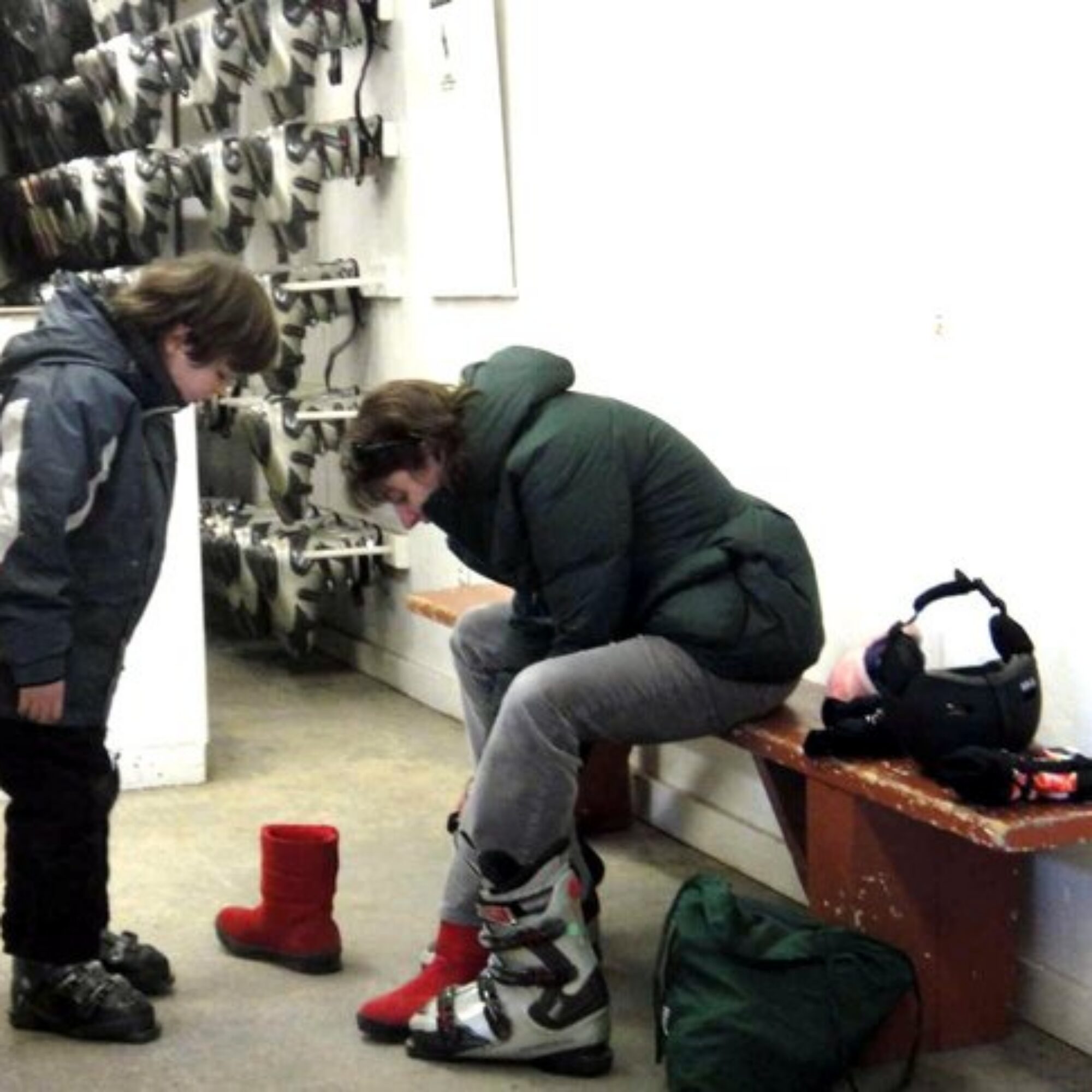
Kids learn to ski easily, before they learn to fear falling. After I learned to ski in my mid-twenties I asked my mom why they never took us skiing. She answered "We couldn't afford that" quick enough I could almost hear an unspoken "duh!" following it up. I love skiing so much I suggested my sister take her kids while they were young. President's Day weekend she told me she had decided to take them but her husband had been called to perform an emergency surgery. Could I join them, having booked rooms already? Three kids for a mom who didn't know how to ski would be a handful. So despite 40+ degree weather, I figured out how to cancel or postpone my other plans…

0 Comments

Amazing representation of the size the universe and everything in it

I love this representation of the size of things in the universe so much I have to link to it, even though I prefer to post things that I created more of. Please check it out and play with it. (EDIT: alternative link) It's an updated, interactive, unnarrated version of the great educational 1968 short film, the Powers of Ten. I think the movie and interactive representation show some of the greatest parts of the beauty we can find of nature. We can find that beauty everywhere we look. [youtube]http://www.youtube.com/watch?v=0fKBhvDjuy0[/youtube] Here is a simpler version of the representation of distance scales. EDIT: Another representation

2 Comments

Don’t let a sour grapes attitude ruin your life

A friend asked why guys who have trouble meeting women insult them. With the worst insults you can think of, no less. As we'll see, not only men in that context do it. In other contexts women do it. And not just about other people. I do it. You do it. Everybody does it. What's going on? Let's look at the pattern. It keeps you from improving your life, so it's important. When people can't attain something they want, they put it down -- a more general effect than in dating. They're resolving a conflict in their mind (aka a cognitive dissonance): "If I can't have it it must be worthless. Or worse!" Like Aesop's fox who can't reach the grapes, they say they must…

0 Comments

Some reasonable talk on the China Study

I wanted to love the China Study, a bestselling book by a scientist and doctor on nutrition. It's gotten a lot of media attention (from the NY Times, Huffington Post, Bill Clinton, and Oprah, for example). It's based in science, promotes healthy eating, and does two main things -- one well, one not so well. Overall, I like the book and recommend it. At the end of this post I wrap it up. The not-so-well part The not-so-well part started off looking great. The authors researched nutrition, found evidence for the healthiness of eating plants, unhealthiness of eating meat, and major problems with food in the U.S. I expected to learn important new things. I thought it might make my resource list. I was hoping…

0 Comments

More labels not helping: a man’s autism vanishes

If you look for problems you'll find them. And you'll fill your life with problems. But if you look for solutions you'll find them too, and you'll fill your life with solutions. You'll find your problems go away or don't show up at all. A day after posting on labels not helping with introversion and extraversion came this op-ed piece on a guy whom doctors diagnosed with autism, supposedly "a continuous and lifelong disorder," but his symptoms vanished. I exhibited a "qualified impairment in social interaction," specifically "failure to develop peer relationships appropriate to developmental level" (I had few friends) and a "lack of spontaneous seeking to share enjoyment, interests, or achievements with other people" (I spent a lot of time by myself in my…

0 Comments

“Introverted” / “Extroverted”: labels hold you back from improving your life

On a discussion online about introversion and extraversion, I responded to someone pointing out that the labels of introversion and extraversion hurt more than they helped. Labels add no value and hold people back from improving their lives. Dealing with groups requires one set of skills. Dealing with solitude requires another (with much overlap). If you don't have skills for one situation you will avoid it. Once you acquire the skills to handle it, you'll be able to handle either. If you can only handle one now that doesn't mean you can't handle the other, it just means you haven't yet. When you have the skills and experience to handle one situation you will enjoy it and look forward to it, either one. When you…

1 Comment

Is New York City’s warm February weather scaring you?

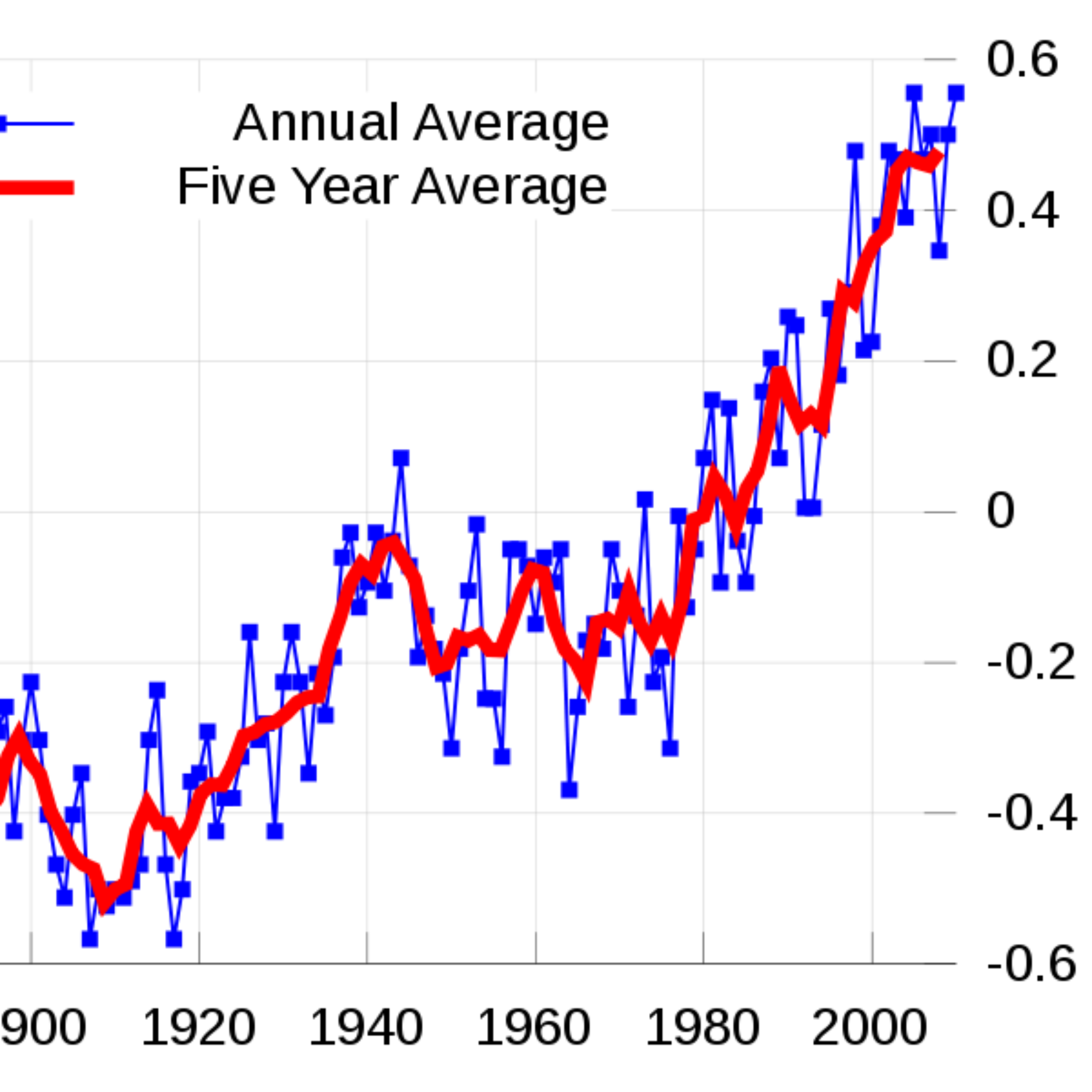
I don't see many people celebrating New York City's incredibly comfortably warm January and February weather. I think it's scaring people. When I was a kid people would have celebrated 62 degree weather in February. Now, with each of the past eleven years registering in the hottest twelve years on record, the chance we may see that the worst fears of global warming not only in our lifetimes, but in the next few years, seems scarily likely. When charts like this feel more relevant, who wants to celebrate balmy weather when next year may feature global scale crop failures, islands submerging, and worse?

0 Comments

Models: an exercise in spotting the model

[This post is part of a series on The Model -- my model for the human emotional system designed for use in leadership, self-awareness, and general purpose professional and personal development -- which I find the most effective and valuable foundation for understanding yourself and others and improving your life. If you don't see a Table of Contents to the left, click here to view the series, where you'll get more value than reading just this post.] Let's do another exercise in beliefs and models. One of the challenges in models is that people act on them without realizing them. If someone else acts on one without realizing it, they will stick with it strongly and may influence you to seeing it from their perspective,…

0 Comments

This land was made for you and me

Like most American kids of my generation, I learned This Land Is Your Land as a children's song, never thinking much of its meaning. A decade or two later, I heard Bruce Springsteen's version of it on his Live 75-85 set. His introduction first got me thinking about its meaning, especially in contrast to God Bless America. I didn't know Woodie Guthrie wrote This Land Is Your Land as an angry song. Springsteen's version on the album sounds mournful but then rousing and inclusive. On the Live 75-85 album I have, he introduced it as follows. There's a book out right now. It's called Woodie Guthrie, A Life. It's by this fellow called Joe Klein. And it's really a great book. This song was originally…

0 Comments

Models: an exercise in evaluating models

[This post is part of a series on The Model -- my model for the human emotional system designed for use in leadership, self-awareness, and general purpose professional and personal development -- which I find the most effective and valuable foundation for understanding yourself and others and improving your life. If you don't see a Table of Contents to the left, click here to view the series, where you'll get more value than reading just this post.] I've harped on how the only meaningful value of a model or belief is in how well it helps achieve its goal, not accuracy or if you had it first or anything else. Today's question will illustrate the difference. I'll give you a situation to consider, then a…

0 Comments

Models: examples of the active view

[This post is part of a series on The Model -- my model for the human emotional system designed for use in leadership, self-awareness, and general purpose professional and personal development -- which I find the most effective and valuable foundation for understanding yourself and others and improving your life. If you don't see a Table of Contents to the left, click here to view the series, where you'll get more value than reading just this post.] Today let's look at some examples of applying the active view of models to models you may know or from life. That is, the following examples show how someone created a model specifically not what most people see when they look at the object of the modeling. Jack…

0 Comments

Models: the active view, part 2

[This post is part of a series on The Model -- my model for the human emotional system designed for use in leadership, self-awareness, and general purpose professional and personal development -- which I find the most effective and valuable foundation for understanding yourself and others and improving your life. If you don't see a Table of Contents to the left, click here to view the series, where you'll get more value than reading just this post.] Having seen an overview of the active view, let's look at it in practice. Let's take a passive view from a post a few days ago -- how you perceive a dog based on your beliefs and expectations -- and make it active. Example 1 First let's look…

0 Comments

Models: the active view, part 1

[This post is part of a series on The Model -- my model for the human emotional system designed for use in leadership, self-awareness, and general purpose professional and personal development -- which I find the most effective and valuable foundation for understanding yourself and others and improving your life. If you don't see a Table of Contents to the left, click here to view the series, where you'll get more value than reading just this post.] Actively choosing and managing your models -- what I call the active view of models -- changes how you experience your world. Since you only know your world through your beliefs and models, changing your models effectively changes your world. You need to know about models -- the…

0 Comments

End of content

No more pages to load