517: Michael Carlino, part 2: Faith, God, the Bible, and Values

Nearly everyone I talk to who works on conservation or would call themselves an environmentalist or something like it treats American conservatives and evangelicals as adversaries, lost causes, hurdles, or even the enemy. They love Katharine Hayhoe for being on their side while also practicing a Texas-friendly version of Christianity. They figure she'll fix them for them. (We're scheduling her appearing on this podcast, if you're wondering). What do conservatives and evangelicals believe? If you're so right, why don't they agree? Do you believe they're stupid, ignorant, gullible, greedy, or what? I don't think I've heard anyone talking about them from a place of understanding. I only hear them treated as caricatures with beliefs and motivations they only see as wrong, backward, or ignorant. I…

0 Comments

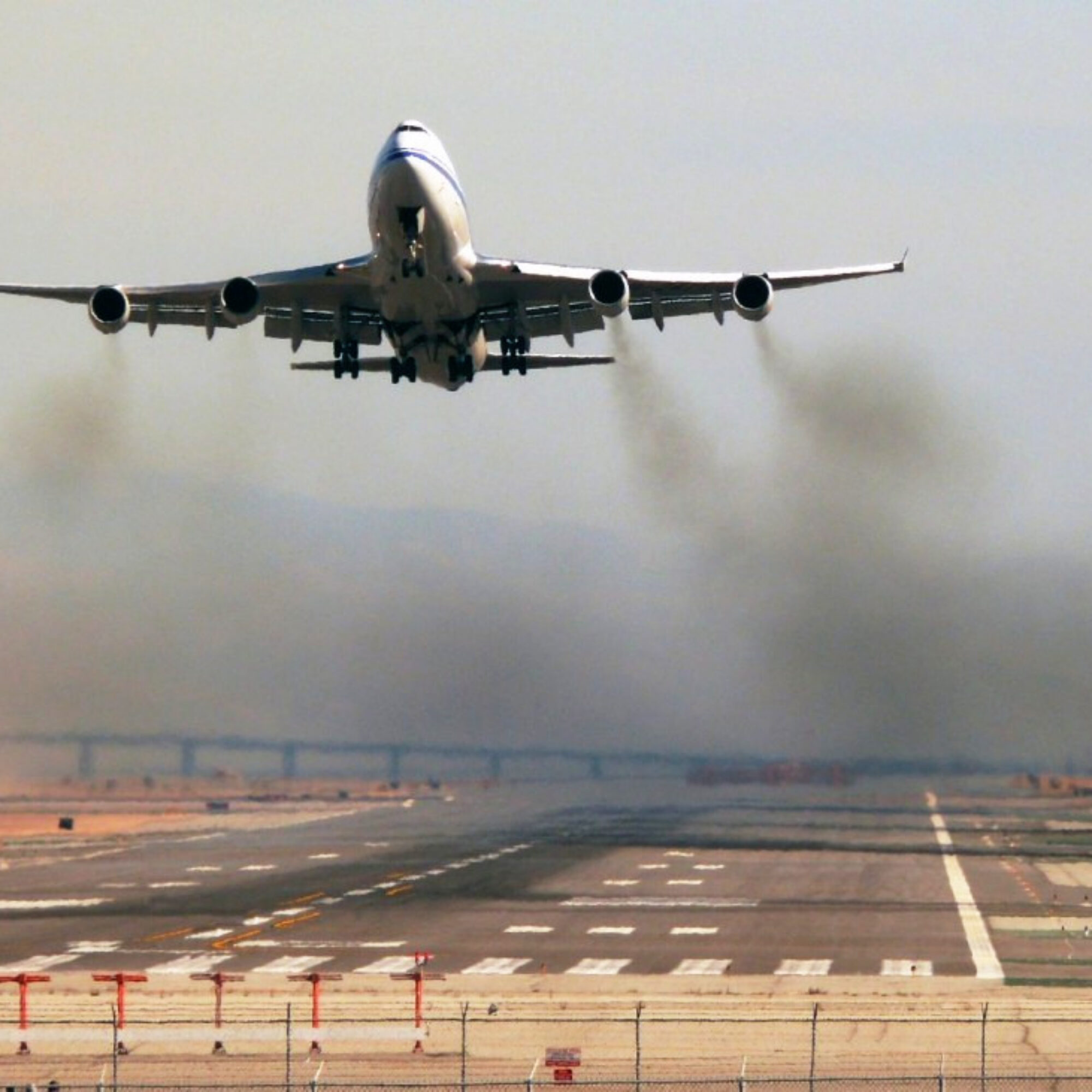
You knew flying, plastic, etc were too good to be true. You didn’t earn them.

It's nice to think of how lovely flying and plastic are, so convenient and amazing, especially if you ignore the parts you don't like. Both are recent inventions, along with countless others. Humans lived without them for hundreds of thousands of years. Why didn't people develop them before? Because they weren't smart enough? No, our ancestors' brains a few hundred thousand years ago were like ours. We wouldn't have them without our cleverness and intelligence. But what happened a century or so ago that enabled these inventions if not new intelligence? Fossil fuels happened. We didn't earn or create them. We found them and are spending them like a spoiled kid with a trust fund. Not just we, though. If you fly or buy things…

0 Comments

Robert McNamara and Geoengineering

Following up my podcast episode 516: Geoengineering: Prologue or Epilogue for Humanity?, I rewatched the documentary The Fog of War: Eleven Lessons from the Life of Robert S. McNamara. The movie is fascinating, relevant, and poignant to our geoengineering question, particularly Robert McNamara's approach to major decisions he played major roles in. The big ones were firebombing Japanese cities in World War II, the Cuban Missile Crisis, and escalating the war in Vietnam. The movie goes into more depth, but here's a quick quote of McNamara describing how right a decision seemed in the moment and how wrong it seems now. He is aching for people to learn from past mistakes. I see how he views those decisions as prescient to those people promoting geoengineering…

0 Comments

2021 Nobel Prize in Physics: Climate Science and my response

Press release: The Nobel Prize in Physics 2021: 5 October 2021 The Royal Swedish Academy of Sciences has decided to award the Nobel Prize in Physics 2021 "for groundbreaking contributions to our understanding of complex physical systems" with one half jointly to Syukuro ManabePrinceton University, USA Klaus HasselmannMax Planck Institute for Meteorology, Hamburg, Germany "for the physical modelling of Earth's climate, quantifying variability and reliably predicting global warming" and the other half to Giorgio ParisiSapienza University of Rome, Italy "for the discovery of the interplay of disorder and fluctuations in physical systems from atomic to planetary scales" My response The climate and environment are critically important, as everyone knows from daily front page disasters that will increase. I have a PhD in physics and have…

0 Comments

516: Geoengineering: Prologue or Epilogue for Humanity?

Here are the notes I read from, responding to this op-ed piece and this review for a book I've talked to the author about but haven't read. Geoengineering Prologue or Epilogue for Humanity? Introduction, context Geoengineering is becoming a more common topic as people feel more desperate. The common theme is that when things get serious, we have to put everything on the table, even things that may not work. The problem isn't if they'll work on their intended goal, but everything else. Over and over again in history, the unintended side-effects dwarf the intended ones. In fact, the story of oil, plastics, and most of our environmental problems today, since nobody chose to pollute but did try to improve people's lives despite side-effects they…

0 Comments
Technology is less important than you think to change culture.
Japanese train

Technology is less important than you think to change culture.

If we changed all the technology from Japan's or Europe's rail systems with ours, in Japan and Europe, they'd have their now-crappy trains on crappy tracks to dilapidated stations running on time and the US would have its now super-advanced trains running late and missing stops. Japanese train If we changed the people instead, the US would start running its trains on time and Japan's would run late. Think of that next time someone tries to solve a social problem like the environment with technology. I'll take culture over technology any day. I'd rather have both, but American culture needs fixing more than technology. Our technological innovations exacerbate our cultural problems because technology augments the values of the people and culture wielding it. In the…

0 Comments

515: Chad Foster, part 2: A blind man overcoming the trap of feeling you have to fix the world

Our conversation in this episode starts by covering his commitment from last time. After a few minutes, it becomes apparent he picked a commitment based on feeling he had to fix the world---that is, extrinsic motivation disconnected from his heart. We revisited his intrinsic motivations and came up with a new commitment. Acting on intrinsic motivation is leadership. Your emotions create meaning or not. If you've been acting halfheartedly on stewardship, you may have fallen into a trap of feeling you have to act because the media or whoever warned you that you have to but the warnings didn't connect with you. So you feel you have to act for abstract, impersonal reasons. No wonder anyone would fall into that trap. Nearly all loud voices…

0 Comments

“Touch grass”

I've seen this phrase more lately: "touch grass." When someone starts sounding stir-crazy---that is, sounding as if they've been cooped up too long---someone will say "touch grass." They mean, go outside and connect with nature. When did you last walk barefoot on land that humans didn't manicure, or even that they did, like a lawn? It's fall here, so maybe you walked on the beach. How about in a stream or woodland path? When did you last eat a fruit, vegetable, or fungus you picked, within minutes of picking it? Maybe touching grass would make a good sidcha. Podcast guest Dr. Michael Greger did a video on forest bathing, a therapeutic practice of visiting nature: https://youtu.be/AV4g_wMpE5g Our ancestors only ate and lived this way for…

0 Comments

514: Jojo Mehta: Ecocide: why you want this law more than you’ve imagined

First, I'm so used to talking to people who don't act and try to convince themselves and others that individual actions don't matter, I loved talking to someone inspiring a movement to change international law, making progress, and enjoying the process. If you like meeting people improving the world, you'll love this episode. If lowering Earth's ability to sustain life is such a problem, why not just make it illegal? Problem solved, right? It sounds too easy, or simplistic, too naive. Or does it? Genocide wasn't once a crime and now is. Slavery wasn't a crime and now is. Land mines were made illegal and the group to make it happen won a Nobel prize. Making something illegal doesn't end it. People still commit genocide.…

0 Comments

512: Perhaps our most useful lesson, from of a Paralympic athlete who endured catastrophe

"Unearned suffering is redemptive," said Martin Luther King. In today's episode I share what I learned today recording with Blake Haxton, a guest whose episode will appear soon. He lost two legs to flesh-eating disease in 2009. Tragedy? Yes. Reason to give up? On the contrary, according to him, his one unlucky event in life. I contend that his outlook on life and message that we all face setbacks, we can still live to our potential can help us learn to live sustainably than any number of windmills and solar panels. After all, which would you prefer, to live without fossil fuels and take others into account for all you do or to lose both your legs. If you prefer to live sustainably, then his…

0 Comments

“Even when it doesn’t taste as good, it tastes better when you cook it yourself.”

I've been saying this phrase lately. As far as I remember, I made it up. It comes in several versions. For home cooking: Even when it doesn't taste as good, it tastes better when you cook it yourself. For gardening Even when it doesn't taste as good, it tastes better when you grew it yourself. I don't own a pet today, but grew up with dogs, cats, fish, birds, lizards, snakes, and other pets: Even when it's not as cute, it's cuter when you take care of it yourself. not that cuteness is a pet's only property. I could substitute training, loyalty, etc. I'm not a parent, but some equivalent must apply to children. I welcome parents suggesting refinements: Even when they don't make you…

0 Comments

511: Joe Collins, part 1.5: Can We Clean South Central Los Angeles?

Last time Joe committed to organizing and participating in a beach clean-up as part of his campaign. In today's episode he shares the state of the region, including the extent of homelessness, drugs, and violence, which made acting so far impossible. We revisit the commitment as well as personal thoughts on what's happening to America, at least in its major cities of New York City and Los Angeles. Then Joe recommits and shares his new expectations of success. Joe's campaign page

0 Comments

My little litter poem

When I pick up litter from a pile or collection, I don't always pick up all of it. I imagine conversations in my head if someone asked why I left some. Sometimes the drug users in Washington Square Park will point me to pieces I didn't pick up. I think they feel like they're doing me a favor, maybe based on thinking I like picking up trash just because and not condescending. Anyway, I think the following words, which I'm deciding comprise a poem. I'm not going to pick up everything. But I'm going to pick up something. I'm not going to pick up nothing. Will you pick up anything? I'm no poet, so don't ask me if it counts as rhyming when the words…

0 Comments

Another morning walk seeing litter in my neighborhood.

I took another early morning walk last weekend to take pictures of our world. New York City seems intent on pushing more outdoor restaurants. They aren't the only cause of this situation, but they augment it. I'm sad anyone has to see things like this. If you want commentary, watch my videos in my post Pride Destroyed the Park. If you want to help, say by lowering litter in your area, please contact me. Systemic change begins with personal transformation. My big goal in this area is for people to stop buying packaged food and doof, the source of most of this litter, so they stop manufacturing it. (By the way, I'm pretty sure the guy next to the restaurant shed wrapped under the blanket…

0 Comments

Spodek’s Law of environmental debate

You know Godwin's Law, right? It says: As an online discussion grows longer (regardless of topic or scope), the probability of a comparison involving Nazis or Adolf Hitler approaches 1. It has a corollary that Whoever makes the comparison loses the debate. Well, I'm stating a similar law about discussions on the environment, Spodek's Law: In a discussion on the environment, anyone who bases their point on an economist is wrong. First things first: I'm not comparing economists to Hitler. That should appear obvious since it is, but I'm clarifying it anyway. I also concede that exceptions will exist, as in all laws, but fewer than you'd think. Also, I'm partly joking. The more I read and learn about economists' views on the environment, the…

0 Comments

My main discovery that makes The Spodek Method work

Those who listen to my podcast or attended my workshops know The Spodek Method, my two-stage interaction to lead someone to share their intrinsic emotions about the environment, think of a way to act on them, and share their results. I find people enjoy the process and results. They share them openly. I contrast it with nearly all other techniques I see people trying to influence others' environmental behavior. I see them relying on techniques like logical debate, instruction, convincing with data, appeal to emotions that aren't intrinsic, and so on. At first I thought my discovery was to appeal to intrinsic motivations. Then I realized I already used that technique. It's in my book, Leadership Step by Step. It's also time-tested, for example, paraphrasing…

0 Comments

510: Jonathan Hardesty, part 6: “This method of doing things is making me become a better husband and parent”

Jonathan and I continue practicing the Spodek Method. Since last recording, he practiced it with his wife. This time he shares how it went. I picked up on a nuance, that she picked a commitment disconnected from her intrinsic motivation and ended up not finding the task meaningful. What we covered relates to leadership and relationships in general. The major theme we covered is uncovering people's intrinsic motivations. People often suppress them, sometimes consciously often unconsciously. They make us vulnerable. We also talked about art. I find Jonathan's explanations and insights fascinating for revealing what artists do and how they represent more than what we see, to what we feel. If you want to motivate yourself and others to act more sustainably, this episode reveals…

0 Comments

Would Jesus or Buddha fly in 2021?

I've often suggested that if an ancient sage like Jesus, Buddha, Laozi, Confucius, Aristotle, or other renowned enduring figure, lived today, I doubt he or she would say, "I thought I attained happiness/enlightenment/etc, but now I realize I can do better with an iPhone." I suspect they'd say how what they figured out then worked as well today. They'd look at iPhones, social media, flying, and all that and think, "more distraction," and stick with what worked before, like spending time with family and friends and helping people less fortunate. Lately, I've wondered would Jesus buy a plane ticket and fly somewhere today, or Buddha or any of them? Presumably Jesus could fly or teleport if he's omnipotent, but let's imagine he isn't. Maybe he…

2 Comments

509: Joe Romm: From science to working with James Cameron, leading through story

Coming from a background in science but realizing that sharing numbers and data didn't influence, Joe had to unlearn a lifetime of mainstream science education. He recognized that the best known scientists, like Darwin and Einstein, were great writers. He followed in their footsteps to learn what works while maintaining scientific integrity, which he shares in this episode. In a world of storytellers and would-be leaders who don't know science and scientists who don't know how to influence, I found talking to Joe relieving. The job ahead is hard, but he shares with us the basics and it's not just avoiding plastic, however important. He's written books on effective communication. He's worked in government and more to see the communication devoid of science we have…

0 Comments

How to remember e to 20 decimal places

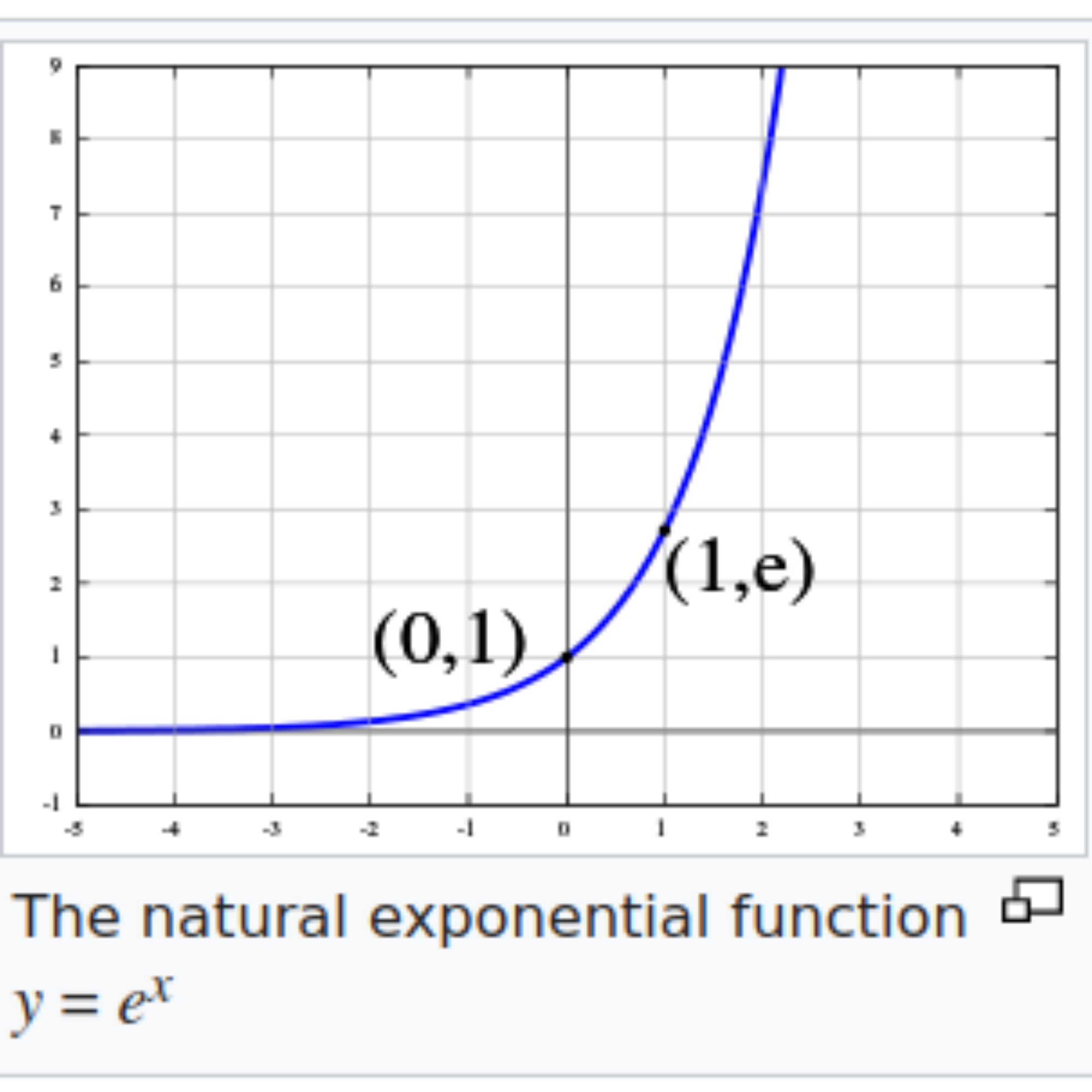
One of my graduate school professors told us the following way to remember the natural logarithm/exponential number e to 20 decimal places, which I'll share with you what some scientists consider fun. I forget which professor told us, but I think I was at Penn, which means 1993-94. He only told us once. It stuck effortlessly, so I consider it effective. And fun. How to remember e to 20 decimal places Everyone remembers 2.7. Years you can chunk as a single number, so with the year 1828, you get the next eight digits because it repeats: 18281828. So remembering one number gives you: 2.718281828 Next remember 45, which gets you the next eight digits because you double it, then repeat it, then halve it: 45904523.…

2 Comments

The two biggest chips on my shoulder

Since sharing my September 11 experience on the podcast, I lost $10 million on September 11, 2001. Here is what I learned from those who sacrificed and served, I've shared my story of loss with friends and family. As I have for twenty years, I hedged describing that loss with the context of those who died, those who volunteered to put themselves in harm's way with the intent to defend freedom (even if thwarted by their leaders), and their families. I shared that I was saved from dwelling on my sorrow by my need to pay my mortgage and eat. I had foregone most of my salary. Before Submedia, I lived on a graduate student stipend in Manhattan, meaning nearly no savings. I got a…

0 Comments

Imagine India without Gandhi, South Africa without Mandela, the U.S. without King. Now imagine Earth today with their equivalent.

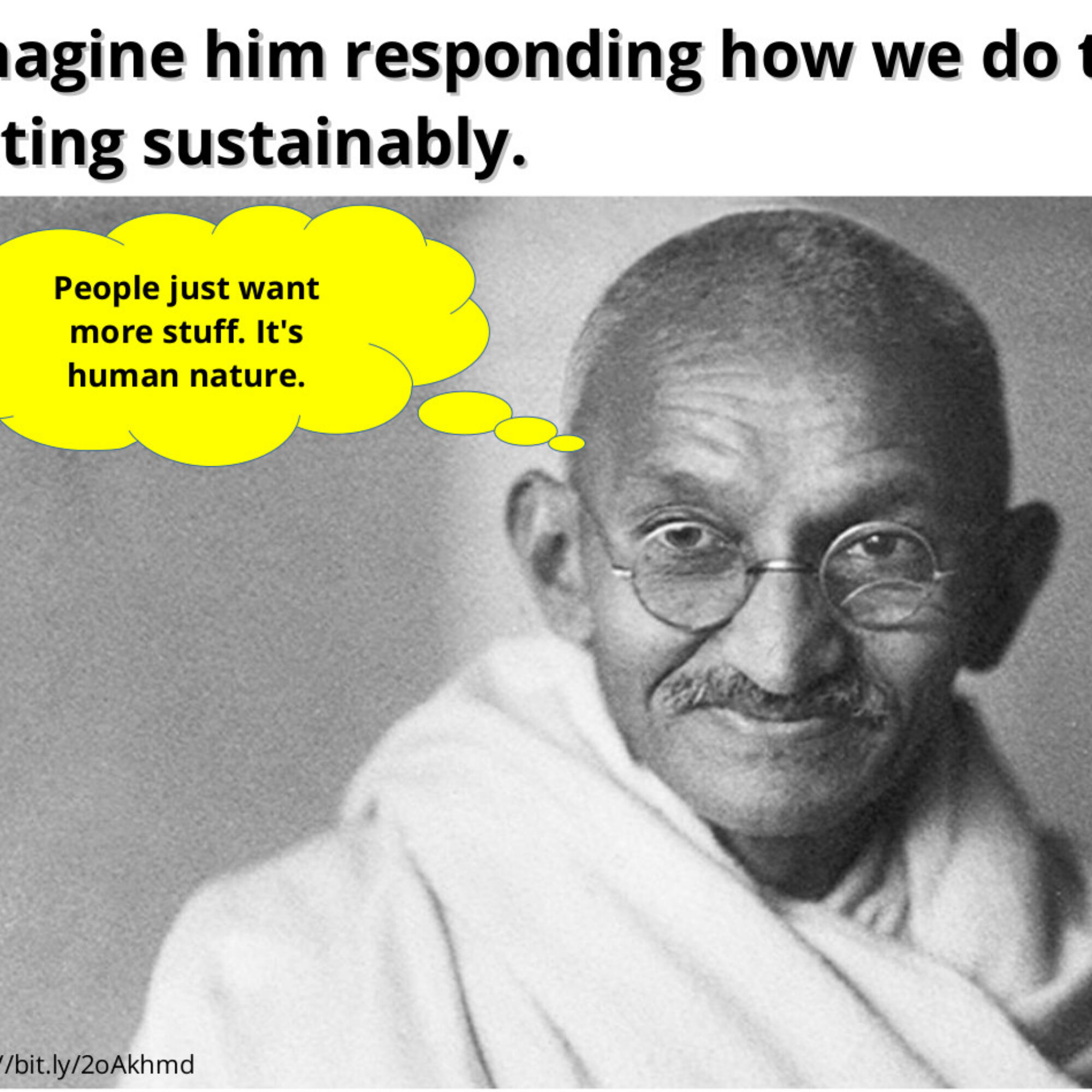
Imagine India in the time of Gandhi, but without him. Without nonviolent civil disobedience and all he led the nation with, could the nation have gained independence? Most people at the time questioned or criticized what they saw as not fighting back. But England was stronger, so fighting back was a losing proposition. I think most people scoffed at their prospects. Yet he created a strategy that worked. I don't mean to oversimplify. Maybe I should say beyond him to include many others. Notice he didn't start within government nor a corporation, but he led one of history's greatest changes in leadership. Without him, might India remain an English colony? What if Indians had waited for governments and corporations to change? I'm inclined to believe…

0 Comments

My first open letter to the leadership training community

Regular readers know I first called my podcast Leadership and the Environment because I saw our response to the environment lacking leadership. As a leadership coach, I'm in touch with many leadership coaches, including some of the most renowned who have been guests on the podcast. Leaders and leadership coaches could play the most important role addressing our environmental problems. Instead, nearly none act. Those who act to so ineffectively, hindered by not trying to act sustainably themselves, so not knowing what changing a lifestyle to sustainability takes or means. To leaders and leadership coaches,Our environmental problems are dominating the front page and growing. We've all heard "We can solve these problems. The question is will we." That is, it's a matter of leadership. Yet…

0 Comments

508: Eric Orts, part 2: To the U.S. Senate by living the values he leads

Since Eric's last time here, he formally declared he is running for office. Now he's reporting back months into his campaign. Did Trump not being in office slow him down? Or did our environmental problems motivate him even more? How about his commitment to avoid flying? Surely he gave it up to campaign, right? Or did he? Whichever way he went on that commitment, the decision must have been difficult, so we'll get to hear about his values. We talked about half about running for office, the challenge of choosing, consulting with people from President Biden to his wife, raising funds, handling his job as a tenured professor, considering travel across a large state and to Washington DC, and more. This podcast was one of…

0 Comments

End of content

No more pages to load