Nature


Nearly everyone is misguided on global warming
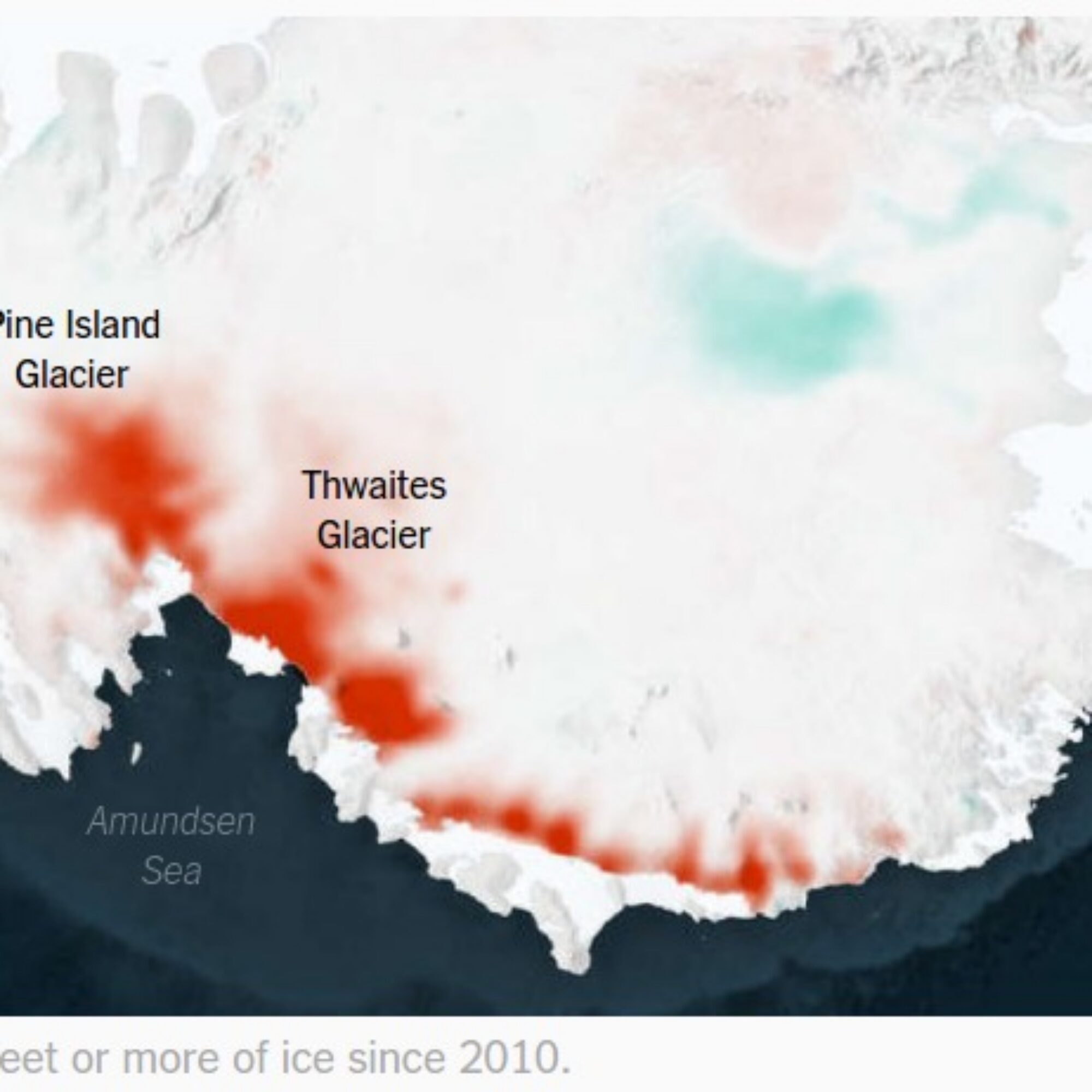
A NYTimes graphic on Antarctica

Nearly everyone is misguided on global warming

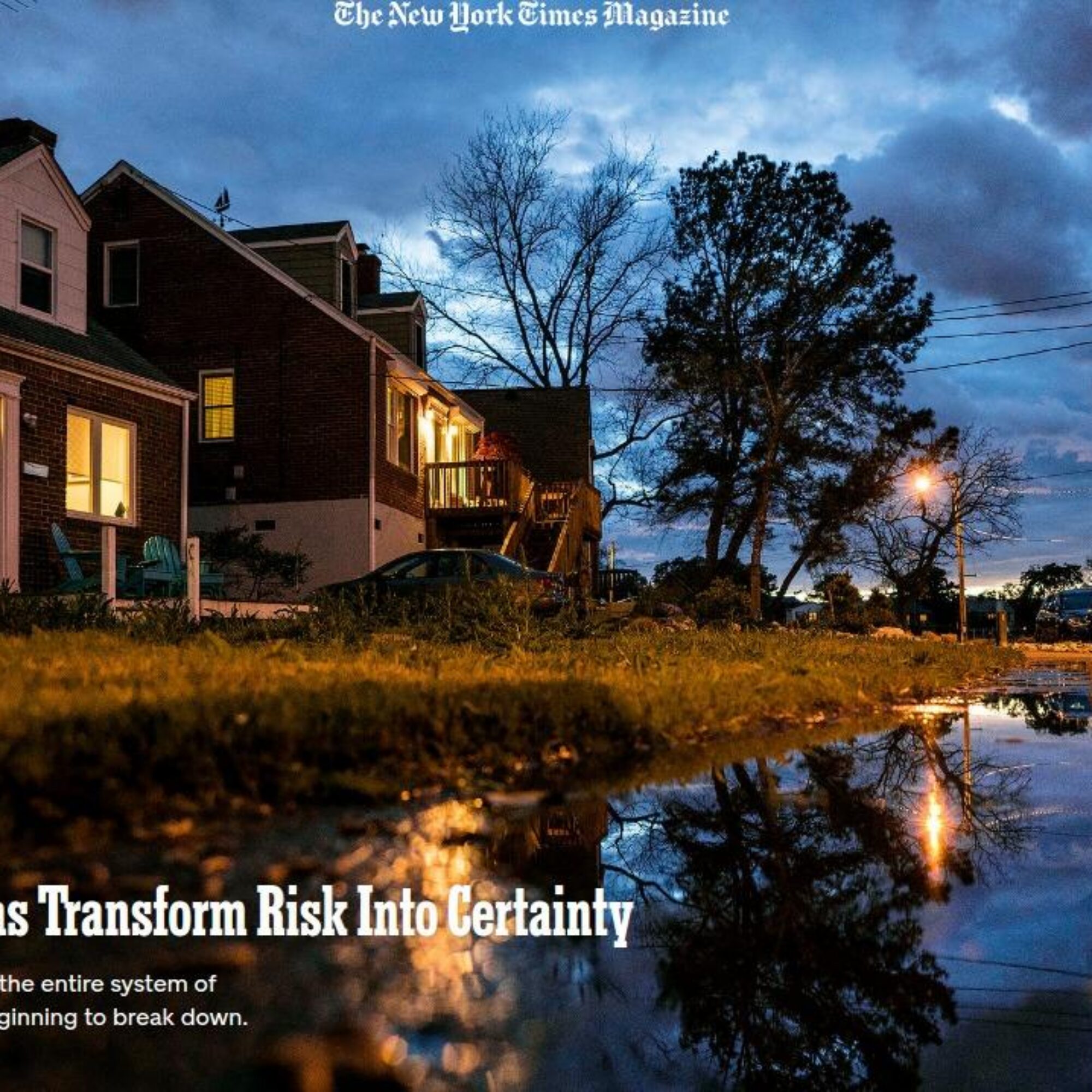
The New York Times has a series on Antarctica. As usual, like everyone, they focus on what people are doing now: For scientists working in Antarctica, the situation has become a race against time. I support scientists and I understand newspapers want to engage readers to attract more of them and sell more ads, but the story that scientists are collecting data is old news. More old news and pointless reporting: these scientists understand that political leaders — and cities already feeling the effects of a rising sea — need clearer forecasts about the consequences of emissions. They get to what matters later, still missing the importance and what's missing: Remote as Antarctica may seem, every person in the world who gets into a car,…

2 Comments

How science improves leadership and coaching: My conversation with Ron Potter

Does a background in science help someone lead? ... does it help someone coach? If so, how? I spoke with longtime leadership and executive coach Ron Potter, who came from an engineering and technical background to coach executives at top levels of major global companies, about how our backgrounds help. We covered: How a science and technical background helps us understand and work with emotions better than others ... and the limits of rationality ... and how to work with them effectively, calmly, and productively How science helps change beliefs, freeing yourself and teams from mental jails How a science background helps coaching Stories illustrating why More... You'll hear that I've held back on the value of my science background despite others working with me…

0 Comments
Personal responsibility, leadership, and global warming
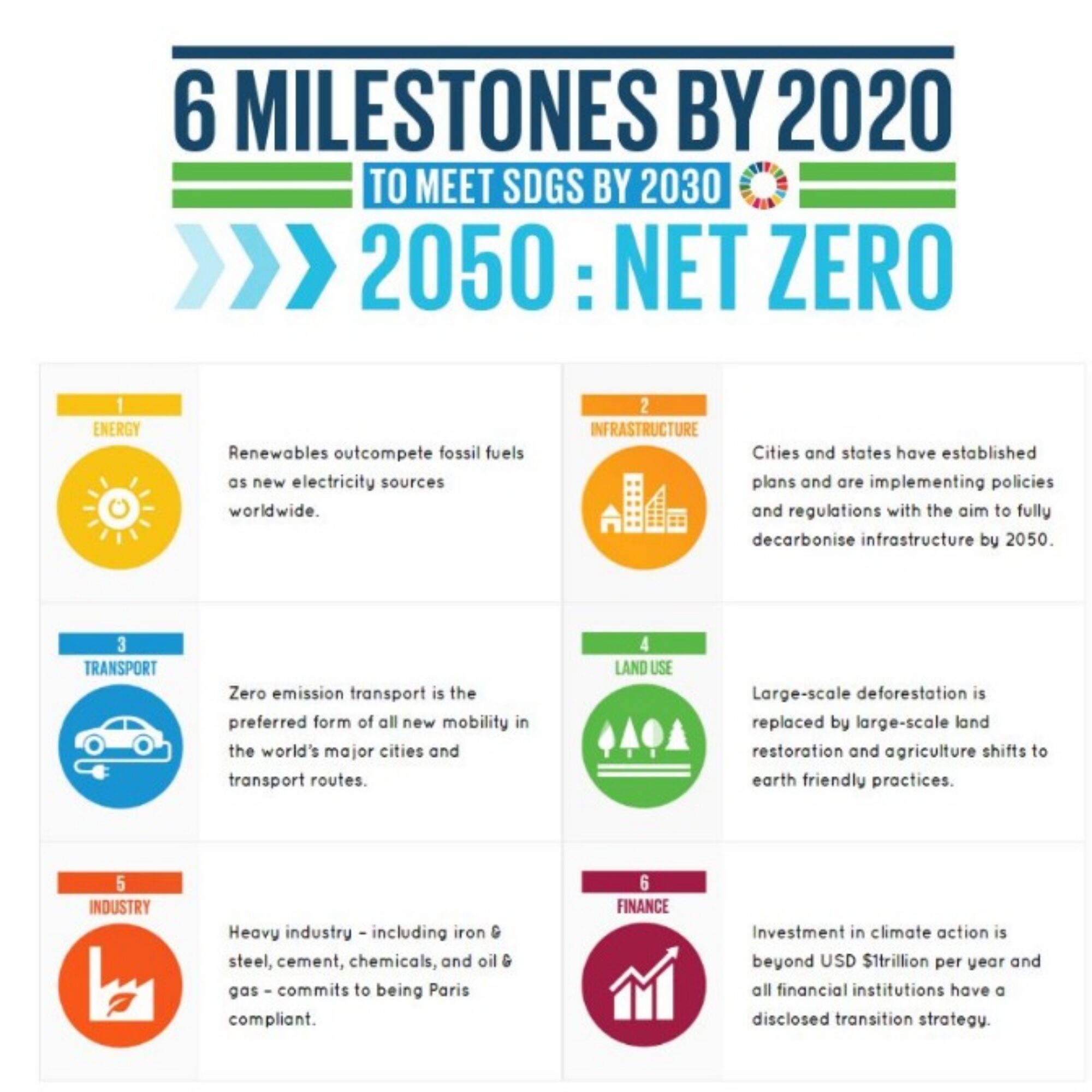
UN climate change milestones. Note lack of personal change, motivation, or responsibility.

Personal responsibility, leadership, and global warming

Global initiatives miss the one big change you, the person reading these words, have control over and nobody else does, which is your behavior. If you don't change what you have control over, why would you expect or suspect anybody else would? Will you change what you can? Though I can't prove it, I know that if you do and you stick with it, however much it looks like sacrifice now, you will be glad you did. In fact, you will rank it among the best changes you've made in your life. The above words were my response to a link a friend sent on some United Nations climate change goals. I put the graphic from the article below. My interests in leadership and the…

0 Comments

Op/ed Friday: How climate change scientists are undermining efforts to slow global warming

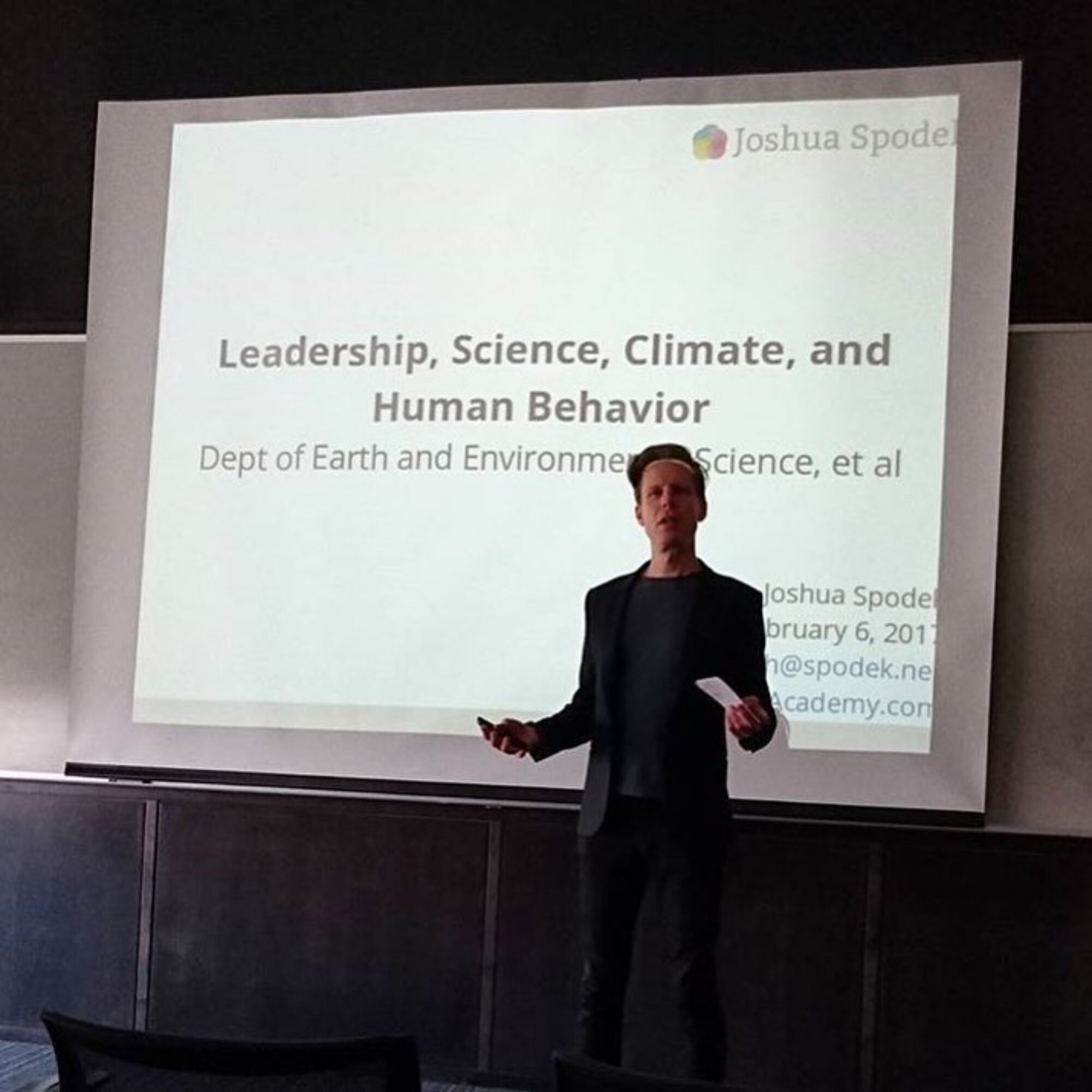
I wrote how much my visit to Columbia's Department of Earth and Environmental Studies left me. The scientists, who know more about global warming than anyone, 1) didn't seem to change their polluting behavior and 2) to the extent they tried to influence others, did so ineffectively, or even counterproductively. They shared information, expecting that people would change their behavior for learning the information. Not only did the information not influence their own behavior, facts rarely change behavior, especially away from comfort and convenience, as evidenced by the global obesity rates in the face of our knowing more about nutrition and diseases of excess than ever. Or, as Marshall Goldsmith puts it In life our problem isn't understanding, it's doing. I think most people understand…

0 Comments

Will market forces fix global warming? It would be a global catastrophe.

In the past: "We don't have to act on global warming. The market will take care of everything." When the market responds to global warming: "Help! Subsidize us! Protect us from the market!" Many people think we'll avoid the worst predictions about global warming because market forces will drive up costs of fossil fuels as they become more scarce and motivate entrepreneurs to create new solutions. I don't think they realize what "market forces" means in this context. A business that becomes unprofitable often downsizes, meaning it finds the part of it that is losing money most and sells it. Doing so is often difficult, but when a company has too many people it has to get rid of them. If the Earth's ability to…

0 Comments

Science: College Can Decrease Your Understanding of It. A Harvard Physicist Is Undoing the Damage

My Inc.com article, "Science: College Can Decrease Your Understanding of It. A Harvard Physicist Is Undoing the Damage," begins Science: College Can Decrease Your Understanding of It. A Harvard Physicist Is Undoing the Damage Studies show that traditional lectures tend to lower students' understanding of physics. Harvard professor Eric Mazur developed techniques that work, and innovators can learn from them. If we want to improve our world, we need to know science--not just to solve problems, but to understand the underlying patterns of nature. Many of humanity's greatest advances came from physics: radio, transistors, lasers, the world wide web, leaving Earth, and so on. Science and physics will be essential in solving our future challenges: global warming, fusion, alternative energy, and so on. Society, innovation,…

0 Comments

What 80s pop music teaches us about global warming

Most people seem to view acting to avoid polluting and caring about the environment as deprivation and sacrifice. They seem to ask, "why should I sacrifice something I like, like flying, meat, air conditioning, etc? If billions of others don't, then what I do doesn't matter. The result is most of the world, or at least most of America, contributing to global warming beyond nearly any contribution by anyone in history, well beyond the Paris agreement's allotment per person. For me the answer is clear, that behaviors that pollute less, like not flying, eating fresh vegetables, and dressing for the weather so you don't have to heat or cool the air, improve my life. Not polluting improves my life. Few people see not flying as…

0 Comments
The Great Barrier Reef’s Demise and You
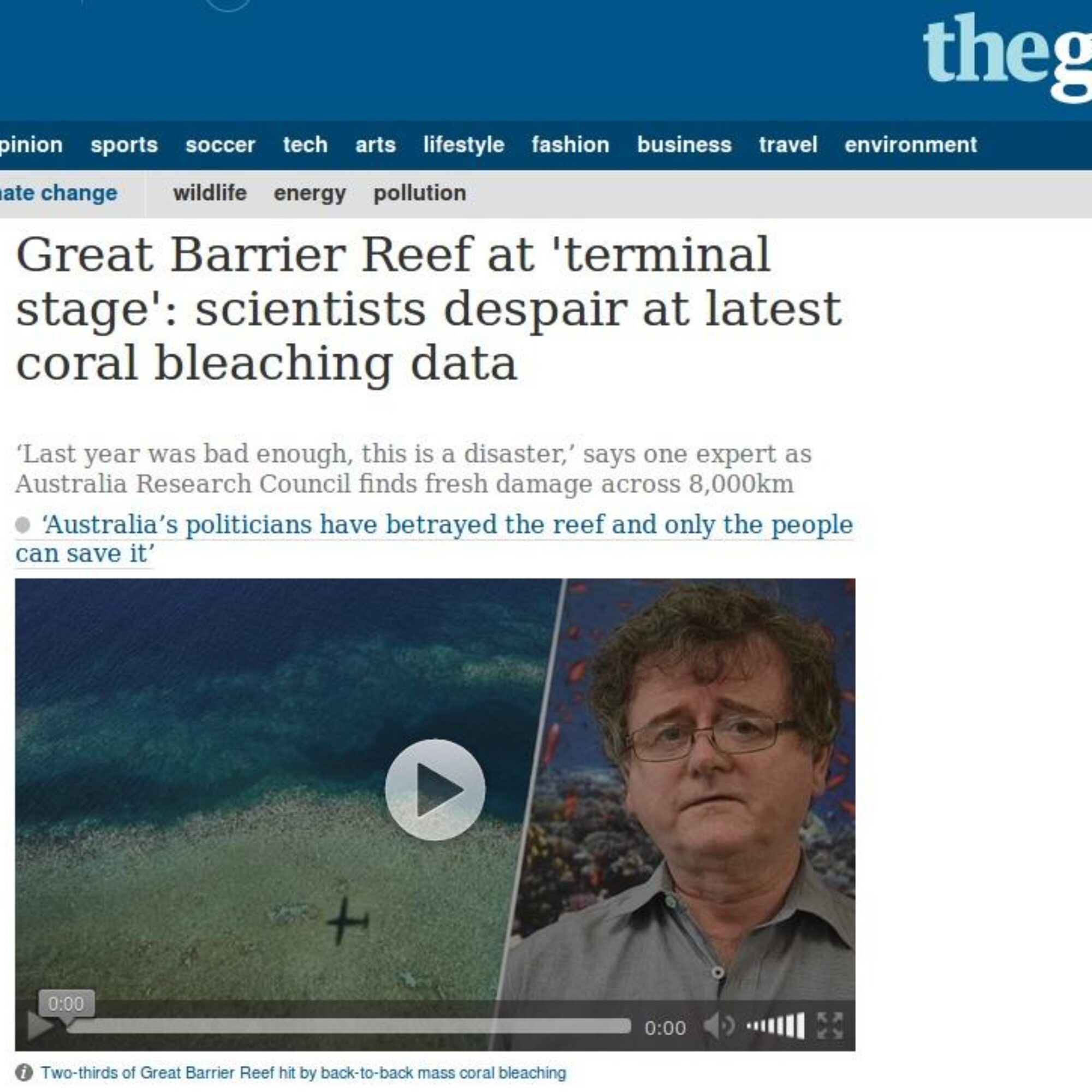
Great Barrier Reef at 'terminal stage'

The Great Barrier Reef’s Demise and You

According to The Guardian: Great Barrier Reef at 'terminal stage': scientists despair at latest coral bleaching data 'Last year was bad enough, this is a disaster,' says one expert as Australia Research Council finds fresh damage across 8,000km I read this at a message board for geeks and entrepreneurs and shared the following, which I wanted to share here: Many posts here about how sad and disgusted people are. Not much about people taking personal responsibility. What do people think the carrying capacity of the planet means? Sustaining more humans means sacrificing other life that competes for our resources. It means pollution rising until it doesn't quite kill us but is well above the levels of a pristine, clean environment. Nobody wants to live near…

0 Comments

If no one is leading in the environment, maybe I’ll have to

After my disillusioning visit and presentation to the scientists at Columbia's Department of Earth and Environmental Sciences, I attended a presentation of a couple NYU researchers who study and teach about our garbage and waste. One studied and documented the amount of waste hospitals create, which is more than you'd expect. The other described how New York City developed its Department of Sanitation, how that department cleaned the city, and some of how it handles the city's garbage today. The talks were engaging and their results clear and informative, but I felt they missed the point, like they were measuring and documenting the size of the hole in the Titanic's hull but not acting on it. Of course learning more detail is useful. I support…

2 Comments

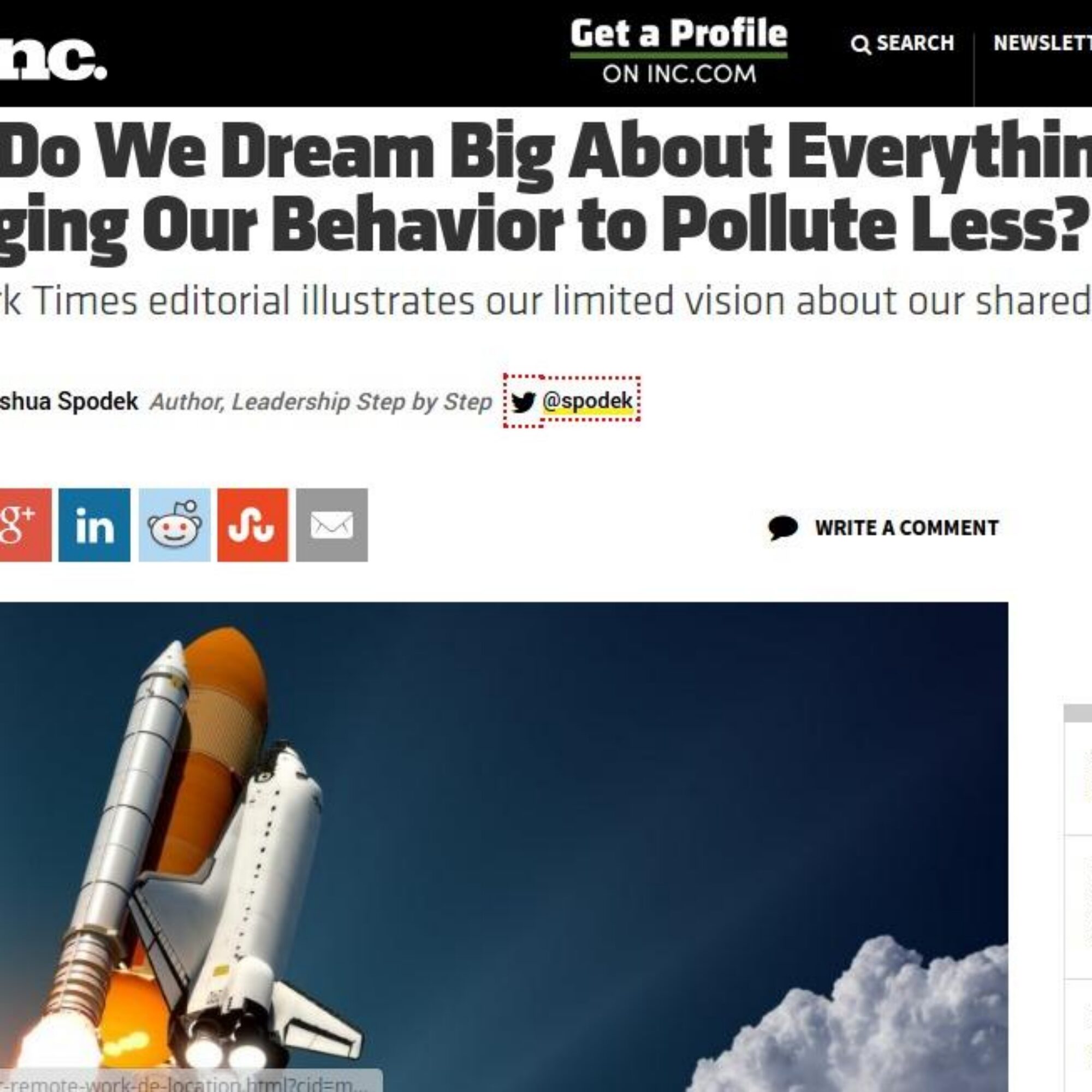
Why Do We Dream Big About Everything Except Changing Our Behavior to Pollute Less?

My Inc. article today, "Why Do We Dream Big About Everything Except Changing Our Behavior to Pollute Less?," responded to a New York Times opinion piece yesterday that I found lame, even sad. My piece begins Why Do We Dream Big About Everything Except Changing Our Behavior to Pollute Less? A New York Times editorial illustrates our limited vision about our shared world Inc. readers are resourceful. We dream big. We entrepreneurs and visionaries are inspired by our predecessors in science, technology, entrepreneurship, leadership, NASA, and so on. People who launched humans to the moon, doubled transistors per chip every 18 months for generations, worked for equality and fairness, beat humans at chess and Jeopardy!, and more. We look to Mars, fusion, and artificial intelligence…

0 Comments

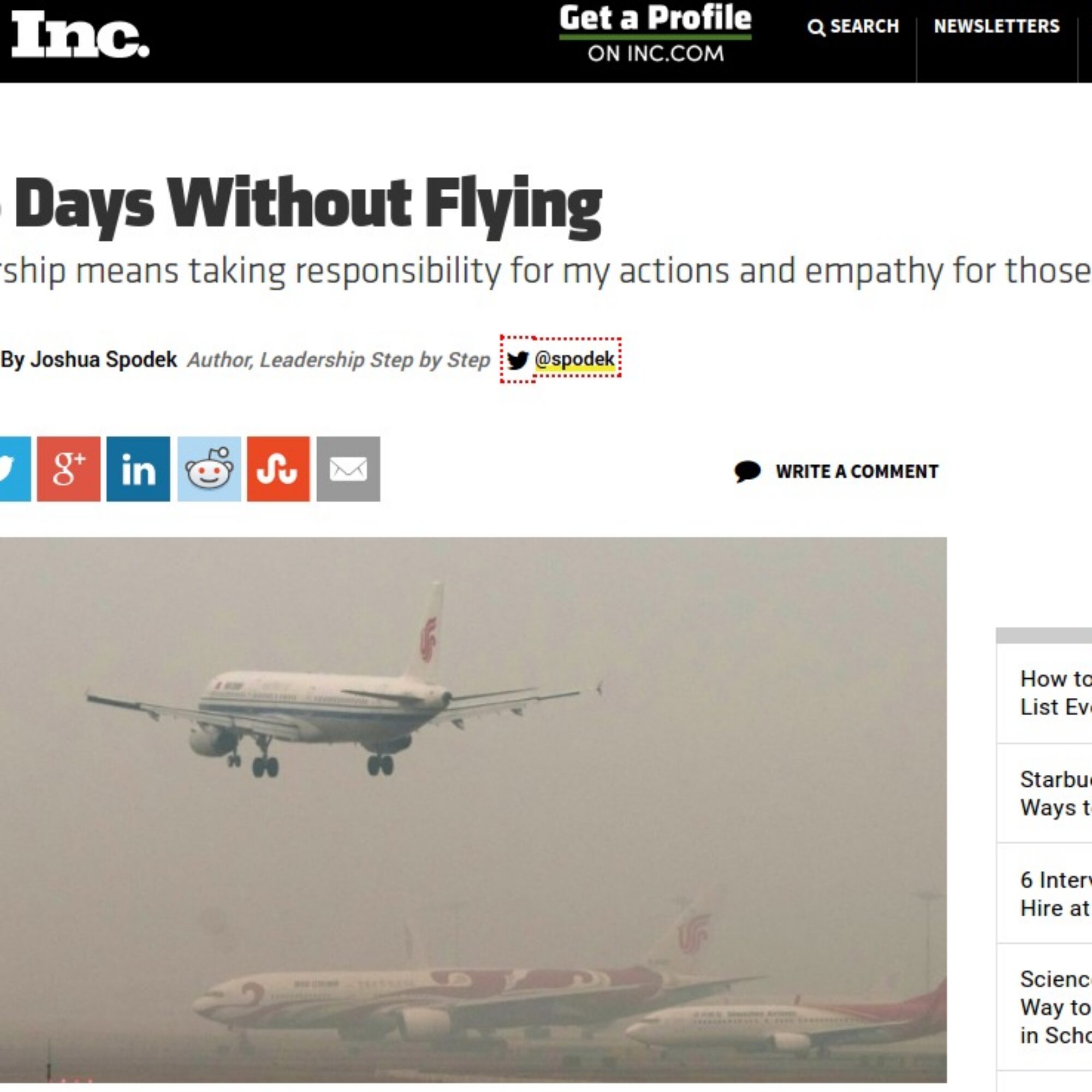
365 days without flying

My Inc. article yesterday "365 days without flying," began 365 Days Without Flying Leadership means taking responsibility for my actions and empathy for those affected It's so easy to think greenhouse gases come from "other people," but when I learned that a flight across the country polluted roughly one year of driving, I could no longer tell myself flying wasn't that big a deal. So I told myself I would not fly for one year. I returned from my last trip March 23, 2016, so today marks day 365. Everyone loves travel, so I probably lost most readers who don't want to sacrifice seeing the Great Barrier Reef before it dies, or acknowledge what's killing it. But this article isn't about deprivation or sacrifice. The…

0 Comments

One of the most important videos on the internet barely has 10,000 views: Donella Meadows on Sustainable Systems

I just watched what I consider one of the most important videos I've seen. It's not exciting, but it covers what I consider the most important issue of our time---how to understand global warming and what we can do about it. Not just the usual questions about science, numbers, and politics. The video is of Donella Meadows speaking at the University of Michigan. She approaches the topic through systems thinking, which is, in my opinion, the most useful and illuminating way to understand it. The talk explains systems, systems thinking, the environment, and how we, as humans with technology, values, economies, and so forth interact with it. By the way, I've long ranked Donella Meadows near the top in my influences and resources page. I…

0 Comments

Judgment is automatic, what you do with it is your choice

People are so quick and smug to say, "You shouldn't judge so much" or that they don't judge. Next time you notice yourself judging, try to notice if you chose to create that feeling of judgment or if the feeling happened without conscious intent. The involuntary part I haven't experienced how anyone's mind works but my own, but as best I can tell, feelings of judgment happen automatically, without conscious intent on my part. In this sense, they're like the feelings of pleasure when I eat delicious food. I don't choose to feel pleasure when I eat a fresh, ripe mango. When I bite into it, I experience feelings of reward that come from part of my mind I don't control. Same if someone gives…

0 Comments

Avoiding other people bringing garbage into my home

Since I've grown to love cooking so much and have taken to calling my stews my famous no-packaging vegetable stews, I invite people over more than ever. Cooking my famous no-packaging stews tastes better, is more convenient, costs less, pollutes less, and is better by nearly all my relevant values. Read some reviews of the experience. People who come over often feel compelled to bring something. I've been emailing the following message. By the way, no need to bring anything, but if you do, I avoid packaging, so please don't bring anything packaged---no bags, bottles, rubber bands, cans, etc. That usually means fresh fruit or vegetables carried in bags you brought to the store, but as I said, bringing nothing is fine. Here's some background:…

5 Comments

My disillusion from visiting Columbia’s Earth and Environmental Science Department

I'll get in trouble for describing this visit as one of the most disillusioning interactions I've had for a long time. This post is part of a work in progress, of me disentangling my thoughts and impressions to figure out how to act in a community I'm partly an outsider, but whose involvement I consider critical for achieving goals I consider important. I welcome perspectives. I know I didn't write that clearly. You can tell from the date in the picture below that I've taken nearly a month to process my thoughts to reach this level. It will take a lot longer for me to process them enough to communicate them clearly and concisely. I was going to describe it as discouraging, but in the…

2 Comments

To avoid “processed” or “refined” foods, avoid food with fiber removed

In response to someone posting how he avoided sugar, I shared my practice, which I find simpler, less artificial, and closer to the original plants and fungi, which is to avoid foods whose fiber has been removed. (EDIT: see an image of the results at the bottom of the page) Here are a few posts I wrote, first my original response, then my responses to responses. I worked at finding a simple policy for myself and settled on: I avoid food where fiber has been removed. That cuts out sugar, white flour, corn syrup, oils, and basically all junk, forcing me to eat tons of vegetables, fruit, legumes, and nuts. I already didn't eat animal products. I haven't cut them to zero, but fiber-removed foods…

8 Comments

Does holiday joy and family require chainsaws and landfills?

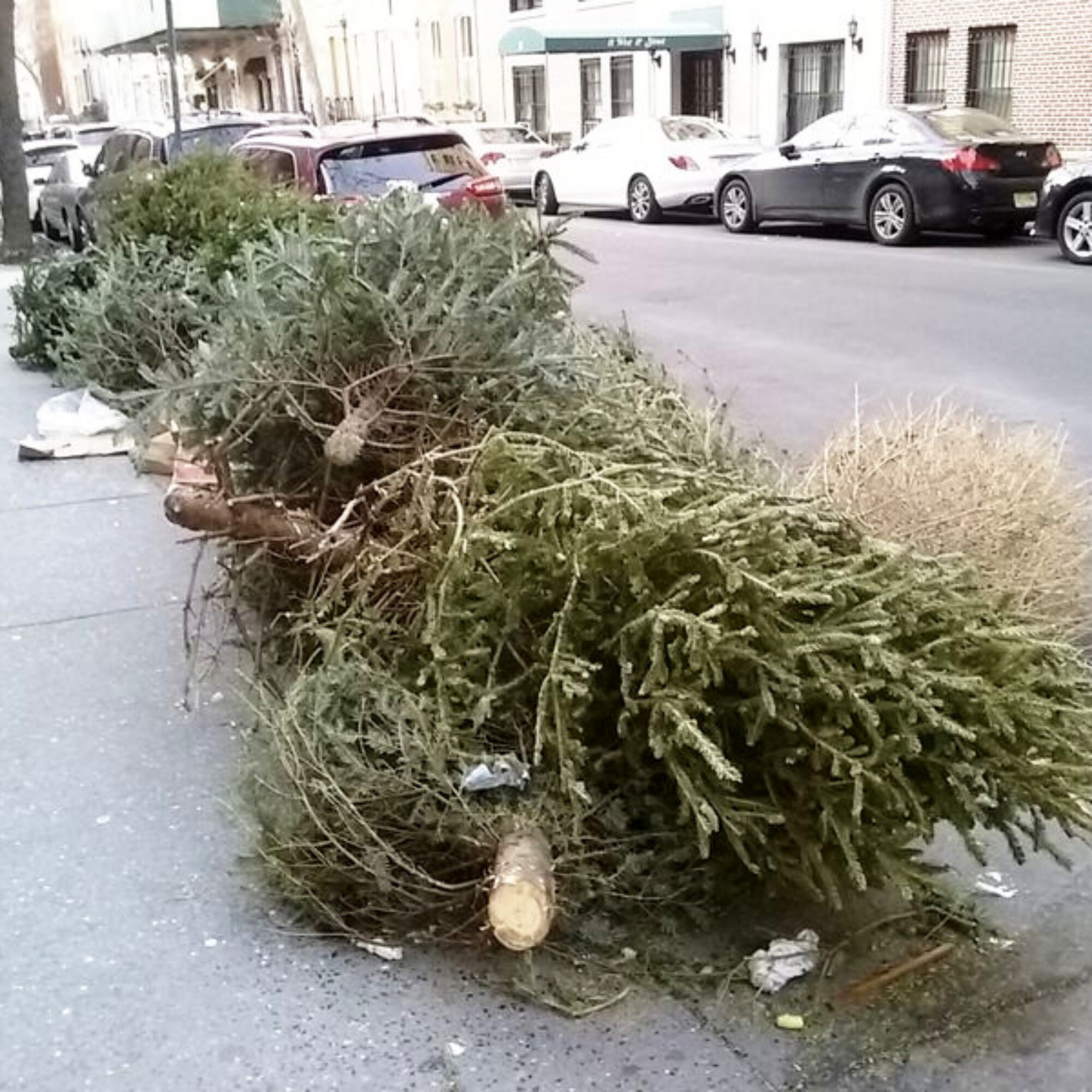
Look at these wasted trees. I took these pictures in one-and-a-half blocks! ... about two weeks after Christmas, not even after the peak of trees being out on the street. The city is filled with trees chain sawed for a brief stand and then thrown away. I don't think Manhattan is unique. Where you live probably has similar waste. Talk about a disposable culture. How much gas does it take to cut these things with a chainsaw, truck them to the city, truck them out of the city, and dump them in a landfill or wherever they go? I'm sure they farm them, but why not let that land revert to forest? Mulching seems to use a lot of gasoline too. Jesus was born in…

0 Comments

New York Times front page normalizes what makes people fat

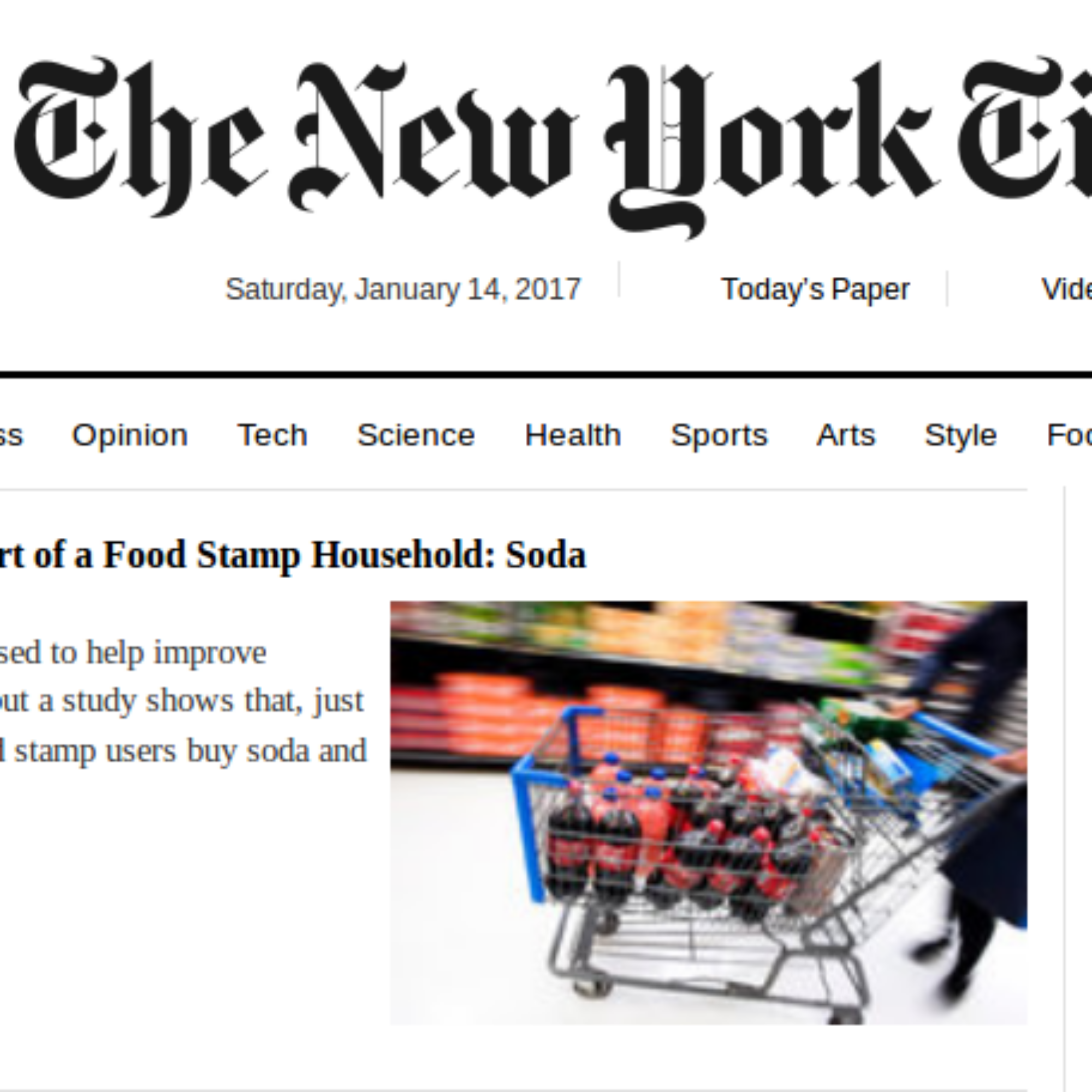
The New York Times wrote Saturday on the front page: Food stamps are supposed to help improve nutrition for the poor, but a study shows that, just like everyone else, food stamp users buy soda and junk food. Just like everyone else?!? Bull-f-ing-shit! "Everyone else" does not buy soda and junk food. I have never bought soda at this home and I've lived here for over 17 years. I haven't bought junk food for years. I just talked to a friend and she said she doesn't buy soda either. To claim that everyone buys soda and junk food normalizes an unhealthy behavior that many people don't consider normal at all. As long as entitlement programs pay for that junk, it supports all tax payers supporting…

0 Comments

Op/ed Friday: How climate change scientists are failing climate change initiatives

I teach leadership and I am passionate about reducing global warming. Global warming is a global effect meaning changing it will require global efforts, meaning changing behavior on a global scale. Changing behavior is leadership. In other words, changing global warming patterns requires leadership, no matter what technological solutions we find. Global warming leadership: is there any? I've been asking people lately to name effective leaders---people achieving their goals by motivating and influencing people---in the field of global warming. I recommend pausing reading to think of names yourself. After you guess, I'll tell you who is leading most effectively by far in global warming. No one has come up with the answer, but everyone, after I told them my answer, has agreed. The second most…

0 Comments

Cheetah extinction, the Earth’s carrying capacity, and how many kids you want

News a few days ago said the cheetah is approaching extinction. As the BBC wrote in "Cheetahs heading towards extinction as population crashes," The sleek, speedy cheetah is rapidly heading towards extinction according to a new study into declining numbers. The report estimates that there are just 7,100 of the world's fastest mammals now left in the wild. Cheetahs are in trouble because they range far beyond protected areas and are coming increasingly into conflict with humans. The authors are calling for an urgent re-categorisation of the species from vulnerable to endangered. Wiped out According to the study, more than half the world's surviving cheetahs live in one population that ranges across six countries in southern Africa. Cheetahs in Asia have been essentially wiped out.…

0 Comments

Leonardo DiCaprio, Martin Scorsese, and Trent Reznor’s Important but Flawed Statement

My Inc.com article today, "Leonardo DiCaprio, Martin Scorsese, and Trent Reznor's Important but Flawed Statement," began Leonardo DiCaprio, Martin Scorsese, and Trent Reznor's Important but Flawed Statement Before the Flood brings global warming to your living room and Hollywood. But does it lead to changing the behavior that causes it? Leonardo Di Caprio played Romeo, the lead in Titanic, then the highest grossing film ever, and won an Oscar fighting a bear. Martin Scorsese is the most Oscar-nominated director alive, having revolutionized film making and directing over half a century. Their movies earned 31 Oscar nominations and grossed $1.3 billion. Trent Reznor has won an Oscar and Grammy for his scores. Time named him one of the world's most influential people. Fisher Stevens, with a…

0 Comments

It pays to blow your mind sometimes

Flexibility in your beliefs and mental models is a key part of intelligence and leadership. Your beliefs influence how you see the world. Only being able to see things one way confines you to a mental jail and keeps you from solving problems. Think of the 4-minute mile. When everyone believed breaking it was impossible, almost nobody tried. Once the first man did, within months another followed. Now high school boys have done it. Do you want to trap yourself below your potential by limiting your beliefs? I don't know what beliefs' changes will help you improve your life most, but I guarantee that developing the skills of flexibility of beliefs and openness to new ones will enable you to change more and be trapped…

2 Comments

Why I care about the environment, and it’s not because of the environment

I find nature beautiful, but that's not why I care about the environment. If you know me, you know I do more than most to avoid polluting and contributing to global warming. I contribute, but probably something like 10% what a typical American does. Not eating meat, not driving, avoiding flying, avoiding packaged food, wearing sweaters instead of heating, and so on probably add to some savings. So why do I care about the environment? Two reasons. The first is caring that my actions affect others---that is, responsibility. The second is considering how they feel from the effects of my actions---that is, empathy. As much as I care about how animals feel and the air and water look, I care incomparably more how my actions…

0 Comments

Two big problems with how we work on global warming, and solutions

I recommend Before the Flood, a documentary on global warming by Leonardo Di Caprio, Martin Scorcese, and others, including music by Trent Reznor. It's free on YouTube [EDIT: it keeps getting removed, though people seem to repost it so if you search you may find it]: https://www.youtube.com/watch?v=IxGOQDiWImA Two big problems Problem #1: the people who know what's happening---the scientists---are unskilled at influencing others and the people skilled at influencing others, like Di Caprio, don't have credibility as actors and celebrities. The result is that the most influential people come from neither group, but from groups with personal interests, like the Koch brothers and Donald Trump. Sadly, they are the main leaders in the field. As a result, as sea levels rise to submerge homes of…

0 Comments

Op/ed Friday: Global warming is like an unintended pregnancy

My Inc.com article today, "How Global Warming Is Like an Unintended Pregnancy," began How Global Warming Is Like an Unintended Pregnancy It's inevitable. Our choices and behavior still affect future generations. Do we give up or take responsibility? A lot of people, especially engineers who act like they "know the science behind it best," at least in my experience, point out how global warming will have serious effects no matter what we do today. They conclude that since it's inevitable, we can't do anything and might as well enjoy ourselves. Here's one example: James Lovelock: 'enjoy life while you can: in 20 years global warming will hit the fan'. We had fun enjoying ourselves without thinking of the results of our actions and ended up…

0 Comments

End of content

No more pages to load