Nature


My first Community-Supported Agriculture shipment

I finally got around to joining a community-supported agriculture (CSA) deal. You pay for a share of a farmer's, or group of farmers' in my case, output for a season. You take on some risk the produce doesn't come out well, but you pay less and get fresh produce. In my case they deliver it to my door. I'm cooking a lot, and a lot more from vegetable, so I decided to risk getting overloaded with vegetables. Mostly I'm getting the vegetables everyone knows, like broccoli, cauliflower, Brussels sprouts, and carrots, and I mainly cook them by frying them in olive oil, garlic, and onions to go into sauces. With a CSA, you don't know what you'll get until it arrives. So it will push…

0 Comments

The natural beauty of Brazil’s Fernando de Noronha Island — Pictures and videos of dolphins

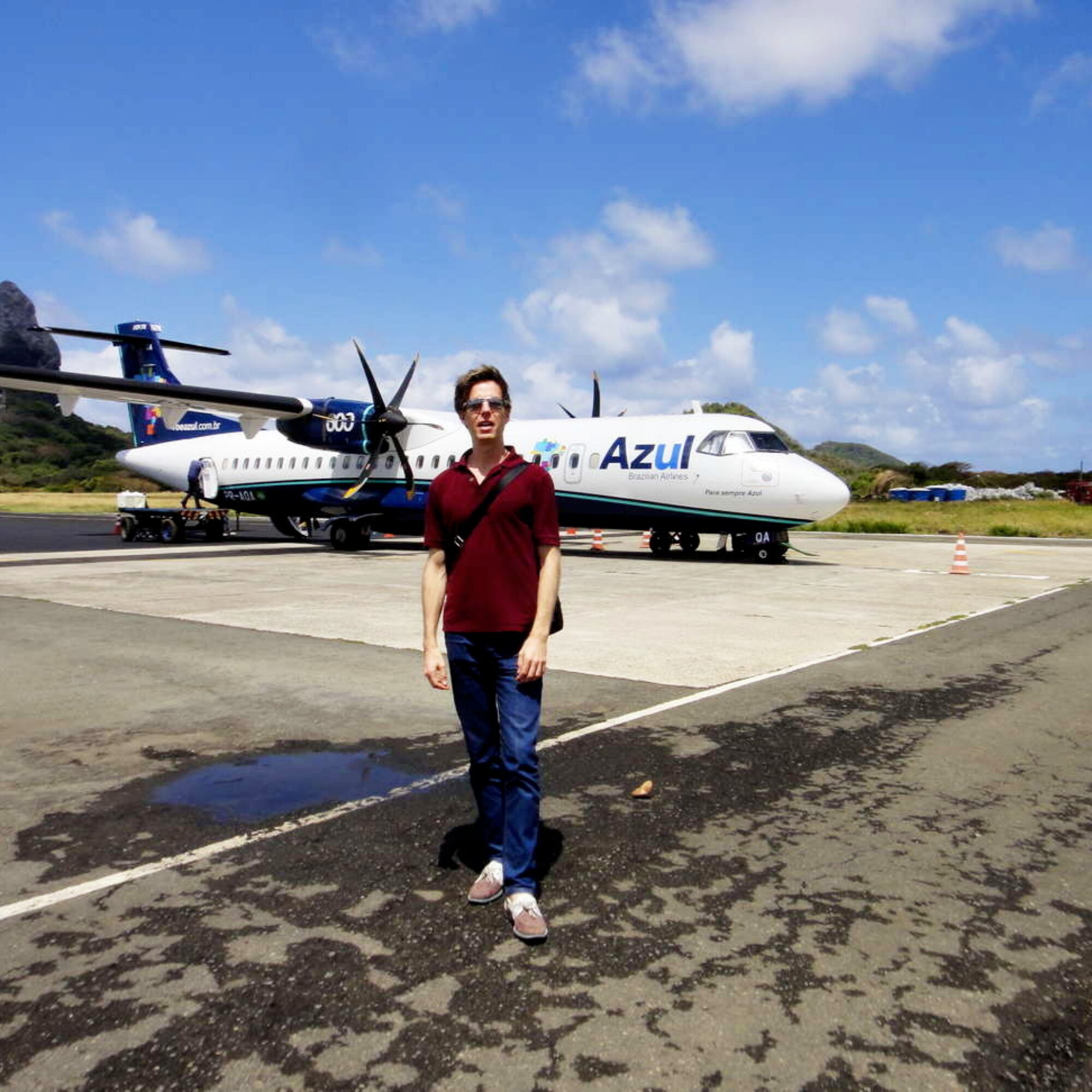
Despite the lack of healthy food, the island of Fernando do Noronha was beautiful. Tripadvisor rated its Baia do Sancho the number one beach in the world this year. Be sure to scroll down to see the dolphin videos. Baia do Sancho Rated the number one beach in the world, you have to climb down a ladder between giant rocks, walk through a cave, and down a long stone staircase to reach it. The water is as clear as you can imagine seawater. We were lucky to have waves big enough to have fun and knock you over, but not so big to scare you. The water was warm and you felt like a kid playing at the beach. The sand was soft and clean.…

2 Comments

Two videos from one of the best books I’ve read on the environment, our impact on it, and what we can do about it

I posted years ago on "One of the best books I've read on the environment, our impact on it, and what we can do about it." I recommend reading that post and the book I based it on. The author did two videos, one at Harvard slightly over an hour, the other at a TEDx talk for slightly over fifteen minutes. They summarize the book without assuming a science background. I recommend watching them too. I think they bring meaning to our activities that affect our environment and what we can do about them without judgment. I'd love to hear your thoughts if you watch them too. Here's the Harvard one: https://www.youtube.com/watch?v=GFosQtEqzSE Here's the TEDx one: https://www.youtube.com/watch?v=-5bVbfWuq-Q

0 Comments

Why I plan never to visit Brazil again

Today's post is mostly a rant from someone who has eaten too many carrots and little else for a week, but I've traveled six continents and in only two places did I go hungry---Brazil and North Korea. North Korea has a failed authoritarian central planned economy. It's tragic for the people living there, but at least I understand the situation and knew to prepare for difficulty finding food. Brazil has no economic reasons why it shouldn't have food available, but it doesn't, at least if you don't eat meat. Actually, even if you do eat meat. I may be extrapolating too far from the situation on the island of Fernando de Naronha, but a week of hunger will do that to you. Most restaurants serve…

2 Comments

“You can live cheaper in New York City than any place in the world”

"You can live cheaper in New York City than any place in the world" A friend once said that in college in response to someone saying New York City cost a lot to live in. He may have overstated things, but I've found the mental model useful. It's on my mind because I'm visiting Brazil for the first time for a friend's wedding and we're getting nailed at every turn for fees, taxes, and such. I've been to tourists traps and I've been swindled and cheated as a tourist so I'm not surprised. Nor am I complaining. The money isn't the issue. It's the perspective. We're on an island, Fernando de Naronha, with what some people have called the best beach in the world. When…

0 Comments

The smallest effective difference

Once in college, where floor living means shared bathrooms, as I brushed my teeth, a guy walked up to the sink next to me, turned on the water full blast, calmly brushed his teeth as gallons of water flowed out the faucet completely unused, and then, on finishing brushing, turned the water back off. A lot of people live this way. I can't believe people live that way. I mean, I can, but I don't like thinking that way. Treating the water takes energy, which means burning coal. In some places it means emptying groundwater than might take generations to replace. Living that way means not just using up water. It means using up oil, making unnecessary noise, eating too much, and so on. Medicine…

2 Comments

Sunday Non-judgment: Why Tell Koko About Robin Williams’s Death?

Continuing my series on responses to the New York Times column, The Ethicist, looking at the consequences of one's actions instead of imposing values on them, here is my take on today's post, "Why Tell Koko About Robin Williams's Death?". According to press reports, Koko, the gorilla adept at sign language, seemed saddened to hear the news of the death of Robin Williams, whom the gorilla met once in 2001 (and bonded with immediately). I cannot fathom the ethical reasoning behind telling Koko about Williams's death. What is the point of telling her about the death of someone she met once, 13 years ago? The press reports dwelt on the fact that she appeared sad. I don’t think any of us can know if she…

0 Comments

I love my breakfast!

I love my breakfast. Yes, breakfast, in the singular. I eat the same simple combination almost every day and I prepare it through the same steps almost the same every day. Yet it has more flavor, texture, and nutrition than any other breakfast I know. Compared to the flashy, colorful boxes taking up most of the cereal supermarket aisle I haven't entered in years---at least not since I wrote about "Variety, choice, the manufactured illusion of it, and creating more yourself" and "Nature versus Corporate." My breakfast creates a solid foundation for my day, every day. My breakfast: Oats, about 1/3 of a bowl Chia seeds, one heaping teaspoon Water, enough for the oats and chia seeds to absorb Fresh fruit, usually half an apple,…

0 Comments

Cooking from scratch means less garbage

The other day I felt lazy and bought a can of food for a quick dinner. It ended up creating the most trash of any meal for a while. Since my apartment renovations opened up the kitchen, I'm cooking a lot more. Specifically, I'm cooking a lot more from scratch, buying a lot more vegetables, which I cook in the rice cooker / vegetable steamer / miracle appliance. Also a lot more beans, which I also cook in the rice cooker. Or I sauté the vegetables with olive oil. I've noticed I'm creating a lot less trash---a lot less. I didn't realize how much trash comes from food packaging. When I buy an eggplant, I put carry it home by hand or in a bag…

0 Comments

Why do you freak out when you’re late?

You're stuck in traffic, late for an important meeting. There's nothing you can do. Each tick of the clock reminds you of how bad this will make you look. If the meeting is important enough your palms sweat and your breathing becomes affected. Your mind keeps going around in circles about how to explain your lateness and making up excuses. Have you ever wondered why you react this way? You can't do anything about it, so why the intensity of emotions? You aren't feeling fight-flight-or-freeze. That reaction makes sense in the face of an aggressor, even if in today's world you have to hold yourself back from acting on them. In your ancestors' environments before about ten thousand years ago, without law and police to…

0 Comments

Emotions have (at least) two components: motivation and feeling

I write and talk about emotions a lot. I find many people consider them ethereal and mysterious so don't understand them. As a result, they close off an important part of their identity. Many people think of our minds having a rational side and an emotional side. They think of the rational side as reasonable. They contrast the emotional side with it and consider emotions as irrational and weird, not amenable to understanding. Emotions motivate us Since I usually approach emotions from a leadership perspective, I think of them functionally---emotions motivate us. As leaders we want to motivate ourselves, which means understanding our emotions---what we feel and how they work. I've found they works systematically---that is, consistently, reliably, and predictably. They work in a system…

0 Comments

What makes an emotion a passion?

What's the difference between emotions and passions? In a leadership context I look at emotions functionally, as motivations. In an art or music context, I think more about how emotions feel and how to express them. To distinguish them, I think the functional view helps more. A passion is something that motivates you strongly with strong feelings. In other words, a passion is a strong or intense emotion. A lot of people seem to think of emotions as ethereal or mysterious, which makes them hard to understand. Many also see passions as something they wish they had so they could achieve more, like others do. They feel like the passions they could have unluckily elude them. I think of emotions and passions lying along a…

0 Comments

A friend my age, a married father of three, and his cancer

Read my post on "Thoughts on mourning" before continuing. If you don't view death as I wrote about it there, you may want to skip today's post. It's serious. It's not about leadership. For me it's about emotions in dire situations and personal growth. Others may view it as something morbid that they don't want to read about. Both husband and wife in a married couple with three young children are longtime friends of mine. The husband, about a year old than me, found out in June that the abdominal pains he'd felt for few months were advanced pancreatic cancer. Nobody expected it. He died in July, just over a month after the diagnosis. Wikipedia described his case perfectly: Early on there are usually no…

0 Comments

Why I chose to study science

One of the main reasons I started thinking about physics was a college course I took called something like "Philosophy and Physics" by a Professor I liked a lot, David Albert. He's still teaching courses on the philosophy of science. The course covered the challenges of understanding the results of quantum mechanics experiments which look nothing like regular life---double slit experiments and things like that. I loved the course. I had taken only basic physics courses by then. It was purely philosophical, with no math or experiment. I liked the course enough to consider majoring in philosophy of science. Then it hit me: I don't want to interpret other people's discoveries. I want to discover things myself and let other people interpret them. That meant…

0 Comments

Op/Ed Fridays: Building roads creates congestion. What does increasing the food supply do?

If you've sat in a traffic jam on a highway, you've thought to yourself "If they only built an extra lane, I could pass all this congestion. Why don't they build an extra lane to this highway? Or build an alternative route?" This type of questioning led to building many new roads and widening many existing ones for decades. Eventually people realized the flaws in that thinking. University of Toronto and University of Pennsylvania researchers Matthew Turner and Gilles Duranton, based on decades of U.S. highway data, developed what they call a "Fundamental Law of Road Congestion." Their research led them to conclude that building roads leads people to use them until they reach the original congestion levels and "that an increased provision of roads…

0 Comments

There’s no point in trying to figure *everything* out

Do you get hung up trying to figure everything out or worry you can't succeed if you don't learn enough? A lot of people seem to, to the point it debilitates them. I like information, but I don't get hung up trying to figure everything out like I used to. Another way of looking at everything I find the following perspective helps. Our minds didn't evolve to understand everything. They evolved to help our ancestors live and pass on their genes. If my life is in danger, I focus on solving the problem. As long as my life isn't in danger, I use my mind to enjoy life and experience emotions I want---in other words, living the life I want. The universe stretches on for…

0 Comments

Unnecessary pollution

Thoughts while putting my clothes in the dryer: Every time you leave a light on in an empty room, you use more electrical power than Alexander the Great, who conquered an empire, in his entire life. Every time you start a car, you burn more gasoline than Napoleon, who won more battles than anyone in history, in his entire life. Every time you turn on the clothes dryer, you use more electrical power to do it than the billions of humans who ever lived, collectively, from the dawn of time until about seventy-five years ago did for all their clothes ever. Every time you turn on an air conditioner, you pollute more than anyone who lived in a similar climate since forever to cool themselves,…

0 Comments

Have you ever experienced nature?

Your world is man-made, nearly every part of it. Have you ever spent a day nature---even more than an hour? I don't know about you, but I've slept almost every night of my life on a manufactured mattress with manufactured pillows and sheets. The nights I've camped I slept in a manufactured tent made of petroleum by-products, maybe space-aged materials!, on a similar mattress pad. Places like the Grand Canyon I visited by car and viewed from carved vantage points walking on paths created for me to explore and view it from. Beaches and oceans I've viewed only from groomed shorelines with houses or resorts probably as close as regulations allowed. Stretches hiking the Appalachian Trail in New England were probably the least manufactured environments…

0 Comments

Calling any emotions negative shows you don’t understand emotions

Look at your body in the mirror. Is the human body not a wonder of evolution? Do you see anything extraneous? I don't. It seems efficient. What our species didn't need evolved away. What's left is essential. Take anything away from the human body and our ancestors might not have survived and you might not have been born. Our ancestors had competition from similar species for the same resources, so our particular anatomy is likely best suited to its purpose than anything close. Would you call any part of your body negative or bad? If someone suggested that your hand, because you can clench it into a fist and hit someone with it, was a negative body part you'd probably consider that stupid. The hand…

0 Comments

If someone tells you the world around you isn’t real or what you think it is, watch your wallet!

"The world you see is not what you think it is." How many organizations start with this philosophy? It piques your curiosity---"It isn't?"---to hear what comes next. The next step is the tricky one: "We'll tell you what it's really like." They rarely word it so bluntly, but many organizations start this way. For all I know they're right. What I do know is that once someone gets you to doubt your senses and awareness, they primed you to believe anything they say. I've meant to write this since the meditation retreat a few weeks ago. Though Buddhism is less intrusive than most major religions, it still rests on supernatural concepts like reincarnation and enlightenment. I didn't appreciate someone telling me if I didn't do…

0 Comments

Know your emotions: jealousy isn’t envy

If someone wins the lottery or gets something you wish you had, would you feel jealous of them? No, you wouldn't. If you wish you had something someone else did, you would envy them, which is different from jealousy. Today people use the terms interchangeably, but they describe distinct feelings. I only learned the difference a few years ago when someone pointed it out to me. Since then I've become more aware of both emotions and they create fewer problems. That's the value of awareness. The more accurately you understand your motivations and emotions, the greater your emotional awareness and the more you can manage your life. I'm no expert on the emotions, but I've experienced them like anyone and I've developed skills to handle…

0 Comments

Visualizing reactivity and freedom, part 2: how to improve

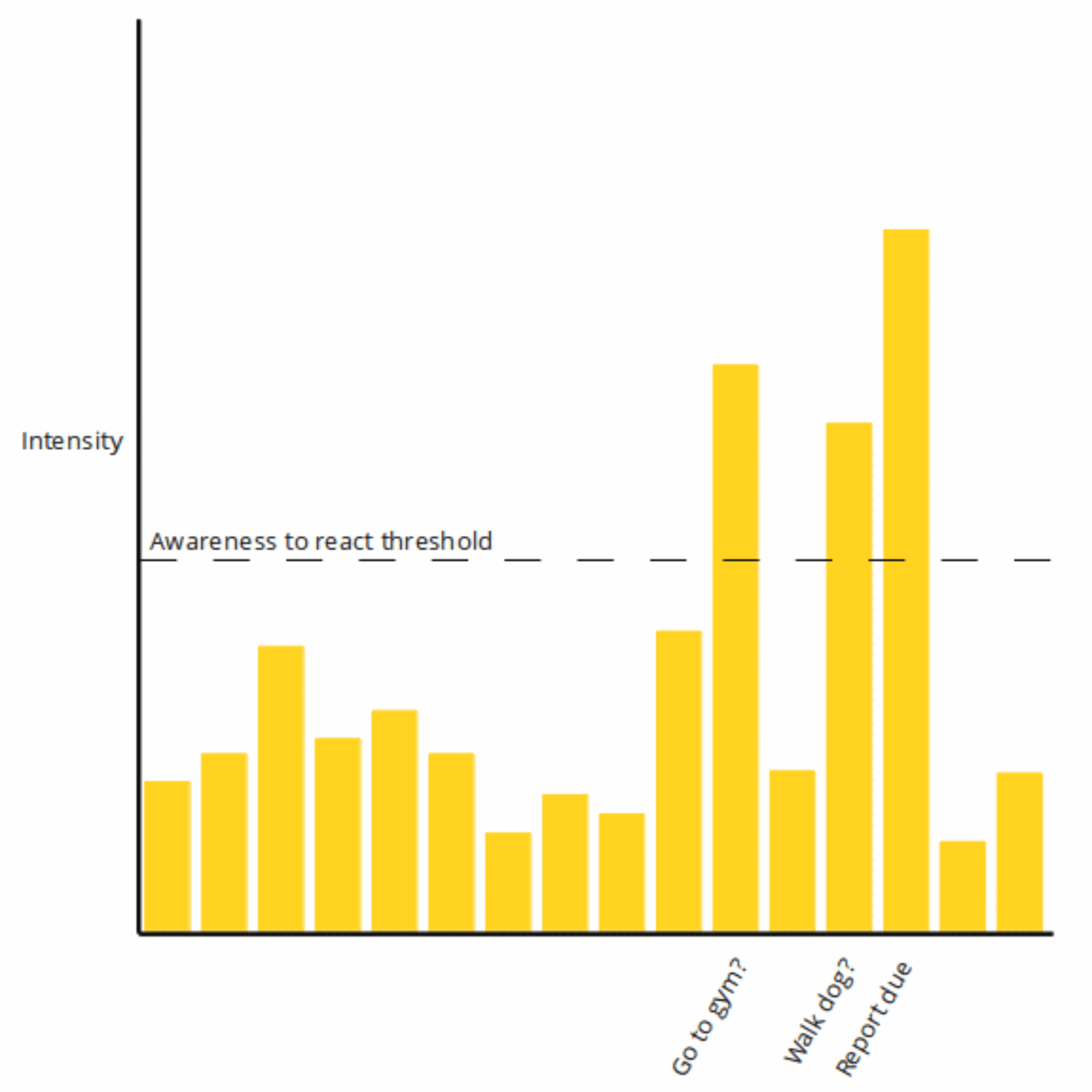
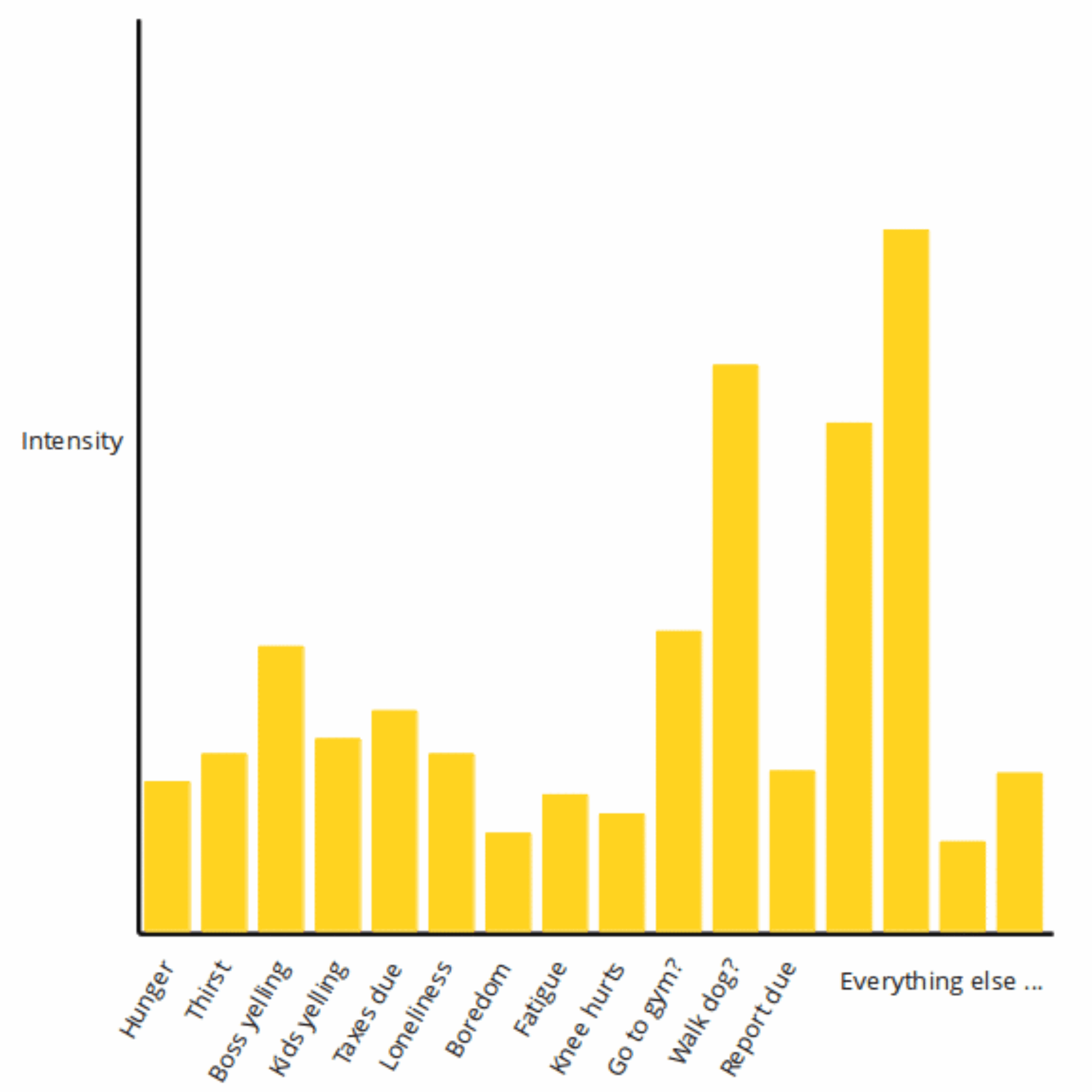
Emancipate yourself from mental slavery, None but our self can free our mind. -- Bob Marley, Redemption Song Context How do you move from living reactively, like in this graph, where you can't help but react to any intense motivation: To living aware and non-reactively like this, where you are aware of many motivations but don't feel compelled to react blindly to any? That change brings freedom. It comes from raising awareness and lowering compulsion to act on it. How to raise awareness by increasing your sensitivity to your motivations A motivation being subtle---that is, not intense---doesn't mean it's unimportant. On the contrary, often your most important motivations are subtle ones. How many people want to write books, paint, and so on, but never do…

0 Comments

Visualizing reactivity and freedom, part 1

Think of a time you reacted blindly. Did it go well? How do you feel about leaders who react without thinking or intuition? You don't want to react blindly---the opposite of leadership, since it means you're reacting to someone else, or unpredictable events in your environment, which I call blowing in the breeze. Most people understand the term "reactive" vaguely, so they can't do much about it. I find visualizing complex ideas helps me understand them. Visualizing reactivity Context: at any moment many things in your environment, body, and mind call for your attention and create motivations. You feel hunger and thirst, your boss yells at you, your kids yell for your attention, you remember you have to do your taxes, you want to go…

0 Comments

“Why we store fat” doesn’t make sense

You've heard the reason why we store fat. You probably never questioned it. Have you noticed it doesn't make sense? You've heard the following from any number of sources. Have you ever questioned it? The reason our bodies store fat goes back to the earliest of times. Fat storage was a tool of survival for humans. When food was plentiful people ate as much as they could. The extra food was stored as fat tissue (also known in medical circles as adipose tissue). When food was scarce at other times of the year then the stored fat was used as energy. The bodies of these early humans required the stored fat tremendously for their energy source. What is this talk of "When food was scarce…

4 Comments

What a pound of juicy, ripe cherries teaches you about life

You can learn a lot from a cherry. Enjoying my first half-pound of these sweet, tangy, juicy wonders of nature of the season reminded me how much nature teaches us about life. Sorry to my southern hemisphere readers. "Multitasking" makes you do multiple things poorly. Focusing on one thing gives you quality. I was about to start reading while eating. But wait! Why would I allow something to divert my attention from the cherries' flavor and how they burst with juice in your mouth. Nor could I process what I read while giving any attention to the fruit. No, better to do one thing well than two or more things poorly. Experience and base feelings trump intellect. Did parents and school value grades over recess…

0 Comments

End of content

No more pages to load