Awareness


The two meanings of exhaustion

I wrote before about the two meanings of competition. I've also noticed two distinct feelings of exhaustion. I think most people think of the exhaustion as something they don't like, like at the end of a long day of work they didn't want to do or didn't enjoy. Another is similar, but I think distinct because we like the feeling so much. The second exhaustion comes from doing something we love, like exercising, until we can't do it anymore---that is, to exhaustion. I love that feeling. Feeling spent. I think everyone does, or at least everyone who pushes themselves to it. I suspect more people are familiar with the first feeling and they don't like it. Since they don't like it I think they avoid…

0 Comments

Want to lead? Look for a leadership vacuum

"Working here sucks." "My boss is incompetent." "No one there knows what they're doing." I hear comments like these all the time from frustrated people. The more I coach, the more I see them indicate incredible opportunities. I see them as leadership vacuums---situations where no one is leading effectively but that lack leadership. People without skills to act effectively get frustrated, angry, impatient, etc and the more they feel powerless the more intense their emotions get. For people with skills, these situations are opportunities to act as the leader the project needs. People with those skills recognize other people's titles and authority don't mean they know what to do. They know someone has to do something. If they do it, they'll emerge as the leader,…

0 Comments

You have the same potential for passion as anyone

Following up on "Passions, you create," which I recommend rereading, where I wrote about passion not being something you happen to find, like if you just turned over enough rocks you'd find it... Everyone has the same potential to develop passions, as far as I can tell. If all you do is turn over rocks but never dig in---that is, look at what others do and think about those things without trying yourself---you can convince yourself you don't have passions, that somehow you're different and unlucky compared to those. That's just your opinion. They worked hard and persevered through challenges that if you did you'd find as much passion within you as they did. You'll try things you end up not liking and give them…

0 Comments

If you have “too much to do” or “not enough time,” you’re not getting more done. You’re annoying.

I first noticed it in the last semester of business school when most students were complaining about having to choose between job offers. All the offers more than met their standards. Dwelling in their decisions instead of choosing and living their lives made them miserable instead of enjoying themselves. What made them miserable wasn't that they had multiple offers---that is, the problem didn't come from outside. The problem was their inability to choose, which came from a lack of skill, discipline, self-awareness, or something like that. Schools offer tons of so-called opportunities to lead---student-run clubs, student governance, etc. Many people think "Community is better than not community, so I should sign up." Later they move to "Showing leadership is better than not showing leadership, so…

0 Comments

The beauty of Godfather 3

Most people who love The Godfather 1 and 2 dislike the third because of the director's daughter in a lead role, saying they don't like her acting. I find the closing scene completes the story beautifully. https://www.youtube.com/watch?v=KupAgY18QDc What do I find so beautiful about this scene? It wordlessly communicates most of the themes of the series---family, women, men, intimacy, solitude, winning, America, and Sicily---with subtlety and complexity. I can't put into words what it communicates, which I like in art, for it to say something it a particular medium that you can't say in any other but that feels true. Michael tried to do what he considered right, but always calculated, never allowing himself to let go, to become vulnerable, meaning never developing intimacy. He…

0 Comments

Emotional awareness ruins television dramas

Years ago I enjoyed television dramas but now I can't bear to watch them. Sopranos, Oz, Orange Is The New Black, House of Cards, Mad Men, etc. It hit me when some friends had me watch a few episodes of Breaking Bad. I enjoyed the acting. Each episode was compelling. Other dramas also have stunning sets and effects and beautiful people. I want to watch each next episode. But something bothered me. It took me a while, but I realized what made it dramatic was that people kept doing things just outside what I would expect people would do in life. The people are too beautiful and fashionable. These properties make the shows dramatic and thrilling but ultimately removed from life, meaning they didn't tell…

0 Comments

What is fundamental?

What can you not define in terms of other things? I can define most things in terms of more fundamental things. Music is a bunch of sounds. Trees are kinds of plants. Books are assemblies of paper with writing on them. Some things feel harder to define in terms of more fundamental things. How do you define the color blue in terms of something more fundamental? You can describe photons and wavelengths, but I don't think they capture the sensory perception. Same with sour, hot, or other perceptions. What about emotions? How can you define happiness? Maybe the issue is that some things are non-verbal concepts, implying they aren't more fundamental, just that we can't describe them. Colors and feelings seem to happen in another…

0 Comments

The last time you interviewed someone

The last time you interviewed someone for a position on a team you were on... Did you talk about salary, bonus, benefits, and measurable things like that? Did you talk about the company or team goals? Are those goals your goals? If not, did you talk about your goals, passions, vulnerabilities, and so on? The company wants to sell products and services. You probably have aspirations beyond just that. What are your great passions, if not to be the number one provider of whatever your company does or whatever generalities its mission statement states? Do you want great relationships? Inner peace? Adventure? If you don't talk about those things to people entering your life, how do you expect to create them in your life? If…

0 Comments

The great masters of speaking with authentic voices

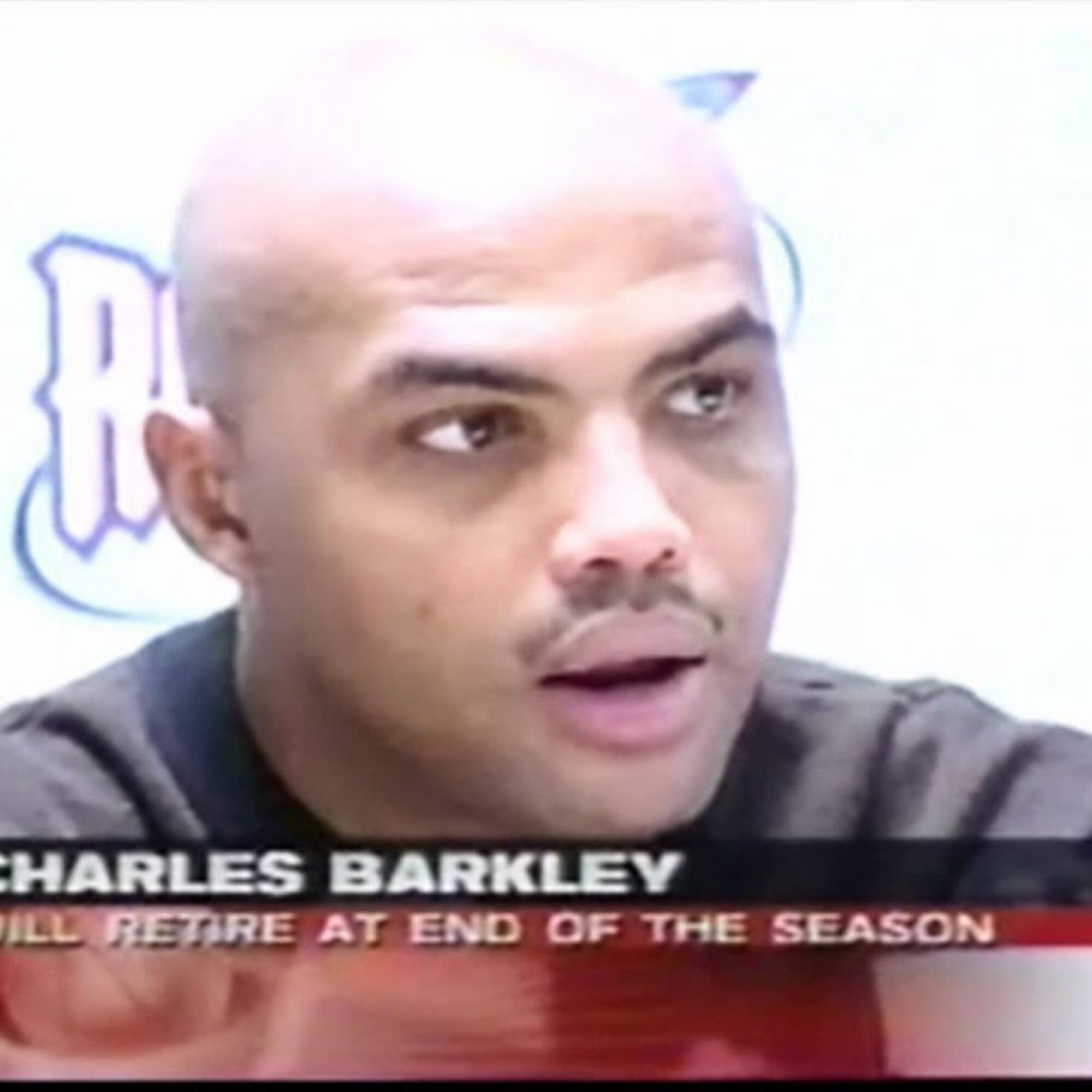
Following up yesterday's post's exercise for how to speak authentically, I wanted to give a couple more examples illustrating mastery of speaking authentically. People who speak authentically can say things others can't, meaning they have more freedom. We respect them not for their technical mastery of some craft but that they speak without that. A great master today is Charles Barkley, whom I wrote about the other day. He's famous for speaking about race, sex, class, and other topics many people lose their jobs for, yet people don't condemn him. They recognize he's sharing something about himself, not imposing his values on others. He leads people to accept him instead of judging him. The video below shows a different authenticity. Note the vulnerability he shows…

2 Comments

Your authentic voice

For a leader to speak with an authentic voice adds to their credibility and ability to influence. So how do you learn to speak more authentically? I've been leading clients through a method that has worked with each of them for years. It works, and a lot more effectively than someone telling you principles to follow. Nothing works like experience. Most people's fear of saying something they'll regret inhibits them from speaking authentically. Holding back makes you sound inauthentic, but not holding back risks saying something you think you shouldn't, like that you hate someone. Yet we admire people who speak without holding back. How do they do it without losing their jobs? I designed this exercise to have you practice on the smallest scale…

0 Comments

A reader comments on why people associate empathy with feeling down

A couple weeks ago I wrote a post, "Why do people always associate empathy with feeling down?" on a topic I've explored before---that people associate empathy with feelings people don't like. I find that association counterproductive and missing many feelings people can share. A reader wrote about how the post reminded her of her childhood. What she wrote echoed something I hear at my seminars when I talk about others trying to help them when the person trying to help doesn't understand them and ends up not helping, which is people's parents. She grew up wary of empathizing with people, in part because of similar associations. She learned to associate empathy with other people roping you into their problems, something I don't think anyone would…

0 Comments

Emotions and sharp knives

Yesterday I compared emotions to fire and pain---things we don't enjoy feeling but we can use to improve our lives if we know how to use them. Calling them negative leads us to suppress and deny them---the opposite of self-awareness---which takes away our ability to improve our lives. I call that counterproductive. I think sharp knives might make a more helpful analogy. I might call sharp knives negative if I handled them clumsily and threw them around carelessly. You don't let children handle sharp knives because they don't have the dexterity to use them without hurting themselves. Chefs train to use them effectively. The more you train, the sharper you want your knives. No skilled cook wants a dull knife. Calling a dull knife bad…

0 Comments

Calling emotions negative is like calling fire or pain negative

People describe anger, depression, and many other emotions as negative or bad, as if they don't want them in their lives. They're useful! They motivate you to change what causes them, generally things in your environments and beliefs. What causes them is conflict between yourself and others, internal conflict, and wanting the world to change, mainly. As long as conflict exists, which is forever since no one shares your interests exactly, you're going to feel those emotions. If you think of them as negative or bad, you're making an inevitable part of life worse for yourself. It's like you're kicking yourself when you're down. People seem to get that pain, although they don't enjoy feeling it, helps their lives. They find the source of the…

0 Comments

Why do people always associate empathy with feeling down?

Yet again, another paper on empathy only associates it with emotions we don't like---sadness, loss, etc. Almost never laughter, joy, fun, and feelings we like. I wrote about this before and how catastrophically it impedes people from developing what is otherwise an important tool for relationships, leadership, your own health, and more. I'm not even going to mention the paper because it's so counterproductive. Wikipedia describes empathy like: discerning what another person is thinking or feeling; and making less distinct the differences between the self and the other. It also is the ability to feel and share another person's emotions. Some believe that empathy involves the ability to match another's emotions... Nothing in there suggests you can only empathize about gloom and doom. Yet look…

0 Comments

What do you think when someone acts not how you want

How do you think when someone acts unexpectedly, especially a way you don't like. That result is usually the opposite of leadership, where you want people behaving the way you lead them. I used to think something like They did something wrong. Why would they do that?!? What's their problem? I know how to do this right. I have to change them. What should I do to get them to behave how I want? I still think that way sometimes, I guess out of habit more than effectiveness because I don't find it effective at influencing people to follow my lead. It annoys the other person and it frustrates me. Now I think something more like I didn't expect that result. I don't like that…

0 Comments

The death spiral of thinking you understand someone when you don’t

We've all been on both sides of the pattern below, usually with someone we like. Neither side likes it. Usually, neither side knows how to get out of it. From your perspective: You think you understand them when you don't You do what you think they would like, thinking you'll help them They don't show appreciation You feel like they don't appreciate you You consider them ungrateful and think they don't deserve your attention You stop doing what you thought they wanted You resent them From their perspective They see you do things that don't help them They don't value what you're doing because it doesn't help them They don't know how to react---thanking you risks motivating you to keep doing what they don't want.…

0 Comments

Some “The most helpful self-awareness exercise” comments

I responded to some questions from someone practicing "The most effective self-awareness exercise I know" and thought the answers would help others doing the exercise. Or might help motivate people to try it if they haven't. I think it makes sense without the question. I'll check with the person practicing about including the question. Here's what I wrote: The feeling that you don't have anything to write or that your mind is empty is common. I suggest that your mind is never blank. I've never experienced anyone's mind but mine, so I can't say for sure, but everyone I've worked with who has said things like that has later found that they were thinking things that were so like fish-in-water, they couldn't recognize the thoughts.…

0 Comments

Nobody says “You care too much what other people think” when you care what *they* think

Has anyone said "You're thinking too much about it," "You care too much what other people think," or the like? I was talking to someone about something in my life. She said one of those phrases to me. So I talked about the same thing in her life. Suddenly she became very interested in the conversation. My conclusion: Nobody says "You care too much what other people think" when you care what they think. I wasn't surprised. Despite her words, she didn't care about my values and how much I thought about things. She thought and talked about the same things as much when they related to her. Along the lines that suggesting to calm down or take it easy is usually a jerk move…

0 Comments

To start a habit, focus on emotions

Different people suggest starting habits different ways. Some say to start with behavior, like setting a New Year's resolution or doing it every day for a month. Others suggest starting by changing your environment, like by putting a note on your computer monitor or daily schedule, wearing a device that measures your exercise, or joining a web page that tracks and reminds you. That's all low-level tactics. Tactics, no matter how effective, don't work if the high-level strategy doesn't work. Effective strategy comes from knowing how the new habit will affect your life. What is its meaning, value, importance, and purpose (MVIP)? MVIP is based in emotion. That means what emotions do you expect the new habit to create. If you expect the change to…

0 Comments

This pattern improves your life

Notice this pattern and you'll know how to improve it. It applies to an activity. I'm thinking of exercise when I write it, but many activities fit it. The pattern When you're not about to do it, you think of it as something you generally want to do. When you're about to do it, you feel anxious, maybe to the point of fear. You have to overcome that anxiety and fear to start it. Starting is hard. After you start, it's hard and unpleasant, but you feel emotional reward for doing it. As hard as it is, since you're doing it, you want to keep doing it and push your limits. As much as you want to keep doing it, you can't keep it up.…

0 Comments

Highlights from interviewing the first student of my new online leadership course

[Another post superseded this one by posting the full interview and the highlights. I'll copy that post here: Over the past six months I created an online leadership course, The Fundamentals of Leadership. I interviewed a student who took it. Listen to the interview highlights and full course. If you want to learn to lead yourself or others better, or to improve your life, listen to the interview and see if it fits your interests. Click here for the interview highlights (about ten minutes) Click here for the full interview (about an hour) Here it is in nine 5—8-minute segments: Part 1, Part 2, Part 3, Part 4, Part 5, Part 6, Part 7, Part 8, Part 9 About the course The Fundamentals of Leadership…

0 Comments

The overeager salesperson and why just understanding someone can undermine you leading them

Imagine you want a product and you know a store that sells it. You go to the store. Now imagine the moment you walk in, a salesperson walks up to you with the product you want---the same brand, model, color, and everything, even at a great price---and says, "I know what you want. Here's what you're looking for." It would make you suspicious, wouldn't it? Despite them offering what you wanted, you'd feel motivated to wonder how they knew and to look for reasons not to buy it, the opposite of their interest. You might not even buy it. Since they offered it, you know the salesperson wants you to buy it, so it's in their interests but you can't help wondering if it's in…

0 Comments

I take responsibility for my emotions and no other adults’

I believe that whatever someone does, ultimately I am responsible for my emotions. Someone can try to make me feel unhappy, but they can't unless I let them. I didn't always feel that way. I used to blame others for how I felt. Maybe someone more skilled at making me feel bad could outdo my skills at resilience, but it hasn't happened yet, at least not since I started developing emotional skills. And if it did happen, I would use the occasion to motivate myself to improve my skills. Many people blame others for their emotions. I don't find that perspective helps. Like other cases of blaming, the belief underlying blaming, however palliative, undermines your ability to learn emotional skills to improve your life. I…

2 Comments

Why party

It's the new year. Many of us partied last night. A few nights ago I came back from a friend's place. A few longtime friends got together to visit. The me of years ago would have found the event boring since we mostly just talked, ate, and drank wine. But, like most of the people in my life, everybody cared about their project, hobbies, etc and we talked about what we cared about, talking to understand each other and to try to help each other. When I was younger, I went to social events to try to find excitement. I went with people I didn't know that well. I thought the more people, flashing lights, popular DJs, and so on the more fun we'd have.…

0 Comments

The Model: the series

[EDIT: I covered this series in more depth in Leadership Step by Step, so I recommend the book, but the core is here. I use The Model as a part of my life, basically daily.] Here is The Model---my model for the human emotional system designed for use in leadership, self-awareness, and general purpose professional and personal development---in series form. Click in the table of contents to the left for each page. I find this Model the most effective and valuable foundation for understanding yourself and others and improving your life. Why? A model's value comes not from its accuracy but how well it serves its purpose, which improves from effective filtering of information. Street maps, for example, are more useful for driving for having less detail…

0 Comments

End of content

No more pages to load