Awareness


I like judging people

I write a lot about judgment and non-judgmental behavior. I won't lie. I like to judge people. I decide whom I consider valuable or not, whom I think looks good or not, or has taste or social skills and so on. People seem mortified after doing the exercise in "The most effective self-awareness exercise I know of." Seeing their thoughts written out on paper and realize how much they judge themselves and other people fills them with shame, dread, embarrassment, and other feelings they don't like. Telling them that every person who does the exercise finds out the same thing about themselves helps relieve those feelings. Seeing everyone, without fail, find the same result has completely relieved me of those feelings I don't like. It's…

0 Comments

Hold yourself accountable with precision. It gives you freedom.

Do you stress over eating more than your want on the holidays? I found a great way not to that applies in many other places. Since getting more fit, I'm more sensitive to smaller changes in my fitness. When I used to have more fat, eating more than I wanted for a few meals didn't change much on my body. To go from having some fat to a little more fat didn't register. So I would eat more than I wanted. Now I notice the next morning or sometimes during the meal. The more precise your standards, the more you can stick to them because missing them becomes more obvious. You hold yourself more accountable without mental effort. This precision creates freedom because instead of…

6 Comments

You need to read this post

"Need" is a powerful word. People use it wrong a lot. If you do, you're probably hurting your credibility and ability to influence. It implies sloppy communication and probably sloppy thinking. People often say things like: "You need to calm down," when they want you calm, "You need to be quiet," when they want you quiet, "You need to listen more," when they want you to understand them, and so on. I associate such phrases with people with authority trying to get others to comply. Videos online of cops subduing people often show them "You need to get down on the ground!" Since neediness is so unattractive, I think most people are sensitive to someone telling them they need something. I am. So when you…

0 Comments

Less dessert, more appreciation

I think dessert is standard after dinner in the U.S., especially at restaurants. Even if you don't eat one, they give you the dessert menu to think about it. I read that only a generation ago dessert tended to be just a piece of fruit, and not every day. Less dessert seems like less sweets, but more overall appreciation of sweetness. That is, I think eating less or fewer sweets will improve my life---less physical pleasure but more emotional reward. That's my style. So I decided to make dessert the occasional piece of fruit, avoiding things with sugar added. Maybe a glass of wine or scotch sometimes. Once you stop having sugar, you don't sweat the decision. You just don't eat it. Much easier. I…

0 Comments

What happens when you develop empathy and compassion skills

Each exercise in my seminars teaches a fundamental, useful leadership skill. Collectively, when you practice them more than a few times, they teach empathy and compassion, two critically important skills if you want people to want you to lead them. With my one-on-one coaching clients I can see their empathy and compassion skills develop over weeks and months. I've noticed patterns. At first people feel odd asking about emotions and passions, especially at work. "Can I use the word passion?," they ask. "Is it appropriate at work? It will feel funny." They ask if using someone's emotions to motivate them is manipulation. They worry about using the other person. After doing the exercises once or twice, they realize how effectively motivating someone through emotions and…

0 Comments

Join Joshua Spodek’s leadership workshop, Saturday December 6 in Soho

I've been invited to lead a leadership workshop at a great location in Manhattan Saturday, December 6. If you like my material, want to lead better, and like the testimonials of recent attendees, come to the seminar. Below is from their announcement. Click here to register! "How to lead people so they want you to lead them again" by Joshua Spodek Saturday, December 6, 2014 10am to 5pm Soho - NYC Previous University Presentations Columbia, Harvard, MIT, NYU-Stern, INSEAD, New School, New York Academy of Sciences   Previous Coaching Clients Include Start-up Founders as well as Employees of  McKinsey, Bain, BCG, Deloitte, Ernst & Young, A.T. Kearney, UBS, Bear Stearns, JP Morgan Chase, Morgan Stanley, Deutsche Bank, Citigroup, American Express, Google, U.S. Army, U.S. Navy Lead…

0 Comments

Almost everyone I spend time with loves what they do

I feel like many people consider malaise or frustration the dominant mood of today's world. Maybe that's just the media because outrage gets page views and sells ads, not fulfillment or contentment. Of the people I spend time with, nearly everyone loves what they do. As far as I can tell, they feel generally good. Not always, of course, but overall. A lot of people complain a lot. Maybe they outnumber the people who don't. The point of this post is that I choose whom I spend time with. I have limited time and resources and find the best way to live is to choose to spend time with people who find ways to enjoy life. Some might say that's a sign of some privileged…

0 Comments

Now I understand meat eaters asking weird questions — they don’t know what they’re talking about

If you don't eat meat, people ask you "Where do you get your protein?" a lot. It's been so long since I ate meat, I don't think about protein. I eat what I like. No problem. After nearly a quarter-century including competing at Nationals for Ultimate, running six marathons, getting a PhD in physics, and doing about 50,000 burpees, and various other mental and physical achievements, if any problems haven't arisen from something missing from my diet, I don't think it's going to happen. So why do so many people ask such weird questions? Why the fascination with protein? The Brazilian attitude toward diet clarified it. They hardly have any vegetables or variety of plants. Every restaurant's menu is almost completely based on meat. I…

0 Comments

Minimum effective behavior

Since my post, "The smallest effective difference," I've meant to list habits and practices I do to reduce my unnecessary effects on things. I plan to add to the list over time as I think of new ones since I feel like I act on the philosophy all the time and it seems short. If you have similar habits and practices, please let me know. The point of them is not to avoid polluting or waste, although I like those side effects. The point is mainly bringing simplicity, elegance, nuance, and awareness, which I find make life into art. Minimal but effective exercises like burpees Omitting needless words and using simple words Not taking long showers just because they feel good Turning off the light…

0 Comments

How you develop social skills

The pattern for developing a new social skill goes like: 1. Lack of awareness of something I want to change 2. Awareness of it 3. Realizing I can do something about it 4. Try do something about it but notice a day later that I missed the opportunity 5. Notice an hour later 6. Notice a minute later 7. Notice in the moment 8. Unconscious mastery Advancing from one step to the next is just a matter of practice and time. If I don't practice I don't advance. If I don't give it enough time I don't advance. If I practice it's only a matter of time until unconscious mastery. I edited this from a response to a client on a question about behavioral change.…

0 Comments

Why I am inspired to learn leadership

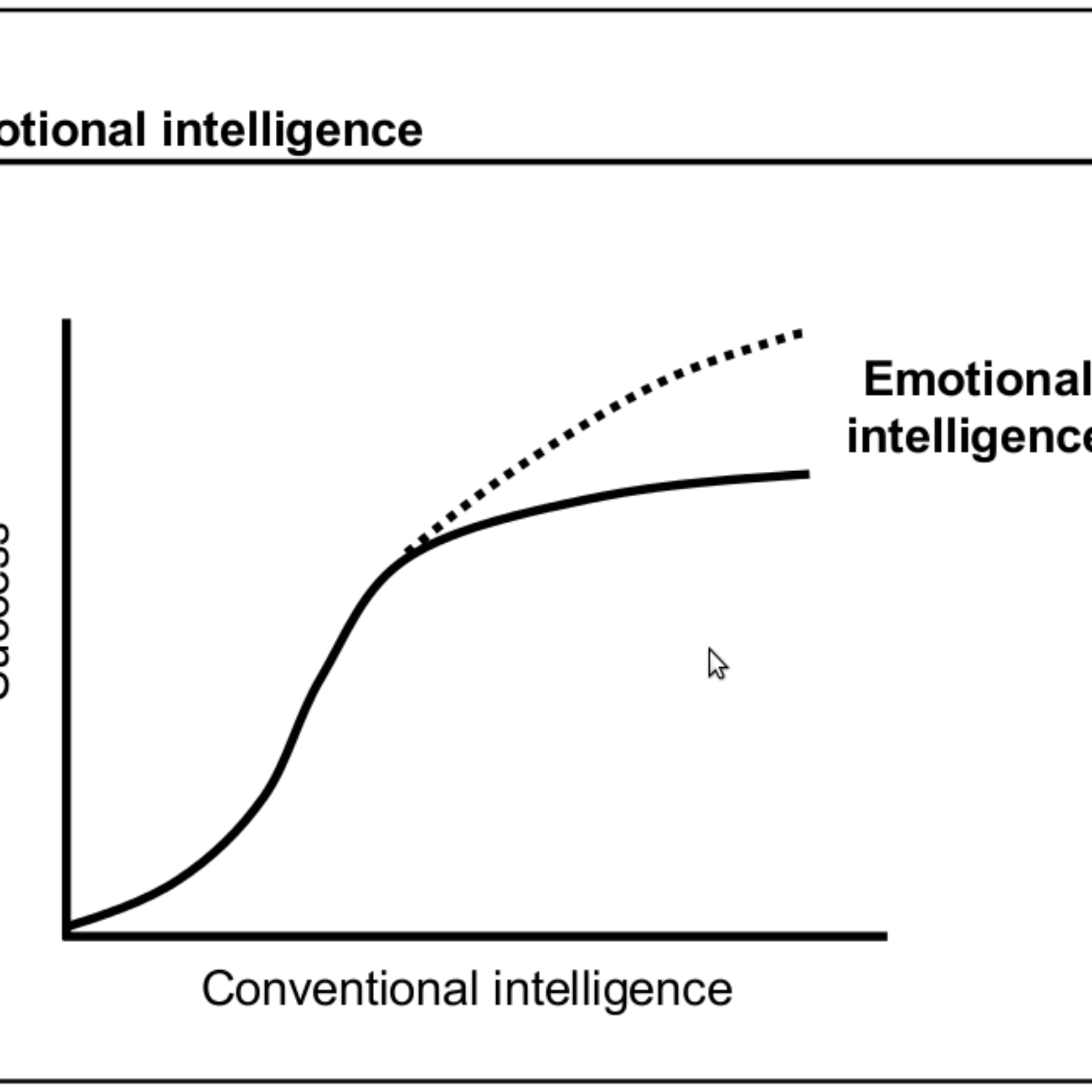
To business people I say I was very analytical, which is how they describe themselves. In casual conversation I say I was a geek or nerd. When I was young, those terms were still insults, before everyone got computers and became geeks and nerds too. To business people someone being analytical usually means they have poor people skills, which to them means low emotional intelligence, which means limited ability to rise in a corporation or make deals. That's about as big a problem you can have in business. By the time I was in business school, I knew I wanted to keep starting businesses, so I valued success in business. Here is the main slide covering these concepts my core leadership class used, showing that…

0 Comments

The smallest effective difference

Once in college, where floor living means shared bathrooms, as I brushed my teeth, a guy walked up to the sink next to me, turned on the water full blast, calmly brushed his teeth as gallons of water flowed out the faucet completely unused, and then, on finishing brushing, turned the water back off. A lot of people live this way. I can't believe people live that way. I mean, I can, but I don't like thinking that way. Treating the water takes energy, which means burning coal. In some places it means emptying groundwater than might take generations to replace. Living that way means not just using up water. It means using up oil, making unnecessary noise, eating too much, and so on. Medicine…

2 Comments

Sunday Non-judgment: Why Tell Koko About Robin Williams’s Death?

Continuing my series on responses to the New York Times column, The Ethicist, looking at the consequences of one's actions instead of imposing values on them, here is my take on today's post, "Why Tell Koko About Robin Williams's Death?". According to press reports, Koko, the gorilla adept at sign language, seemed saddened to hear the news of the death of Robin Williams, whom the gorilla met once in 2001 (and bonded with immediately). I cannot fathom the ethical reasoning behind telling Koko about Williams's death. What is the point of telling her about the death of someone she met once, 13 years ago? The press reports dwelt on the fact that she appeared sad. I don’t think any of us can know if she…

0 Comments

Non-judgmental Ethics Sunday: Tourist Retractions

Continuing my series on responses to the New York Times column, The Ethicist, looking at the consequences of one's actions instead of imposing values on them, here is a take on an earlier post,"Tourist Retractions." I recently spent several days at a relatively expensive hotel. The place was deplorable and unsanitary, with an unresponsive front desk. I gave it a poor write-up on TripAdvisor.com, the travel website, titling my review "An Overpriced Dung Heap." The following day, the owner contacted me through the site with an offer to refund almost half the cost of my stay if I would retract my review. I accepted the handsome offer and deleted my post. Who was the most unethical: me (for accepting the bribe), the owner (for offering…

0 Comments

Why do you freak out when you’re late?

You're stuck in traffic, late for an important meeting. There's nothing you can do. Each tick of the clock reminds you of how bad this will make you look. If the meeting is important enough your palms sweat and your breathing becomes affected. Your mind keeps going around in circles about how to explain your lateness and making up excuses. Have you ever wondered why you react this way? You can't do anything about it, so why the intensity of emotions? You aren't feeling fight-flight-or-freeze. That reaction makes sense in the face of an aggressor, even if in today's world you have to hold yourself back from acting on them. In your ancestors' environments before about ten thousand years ago, without law and police to…

0 Comments

Judging doesn’t annoy people. Imposing values on others does.

Nobody likes being judged them without asking for it, right? On the contrary... Mere judging isn't the issue. People judge all the time without annoying people. There's a nuance there and knowing it will change how you judge yourself and communicate to others. In particular you'll Feel less guilt Communicate more clearly Provoke fewer arguments Influence more effectively. People don't have a problem with someone judging them. The other person has to express their judgment for you even to know about it. People don't even have problems with someone expressing their judgment of them. People with different values can get along. In fact, since no two people have exactly the same values, all people who get along get along despite having different values, which means…

0 Comments

Emotions have (at least) two components: motivation and feeling

I write and talk about emotions a lot. I find many people consider them ethereal and mysterious so don't understand them. As a result, they close off an important part of their identity. Many people think of our minds having a rational side and an emotional side. They think of the rational side as reasonable. They contrast the emotional side with it and consider emotions as irrational and weird, not amenable to understanding. Emotions motivate us Since I usually approach emotions from a leadership perspective, I think of them functionally---emotions motivate us. As leaders we want to motivate ourselves, which means understanding our emotions---what we feel and how they work. I've found they works systematically---that is, consistently, reliably, and predictably. They work in a system…

0 Comments

When I was mugged at knifepoint in Amsterdam

I talked my way out of a guy threatening me with a knife. Maybe it was the alcohol, maybe the girl earlier in the night, maybe the physics, but something gave me the courage. As we both walked away I kept looking back, worried he might come after me, but he never did, and I went to my friend's place to sleep. The year must have been 1998 or 1999 because I was close to finishing the lab research part of my thesis. The x-ray observational satellite I was helping build and calibrate was sponsored by the European Space Agency---ESA, Europe's counterpart to NASA---and I had presented my results in Utrecht. The results came from years of research and lab work culminating in a few…

0 Comments

Video: Sam Harris on consciousness and internal monologue

I prefer posting original content, but I found such valuable and new insights in this interview of big-time author Sam Harris on how the mind worked I couldn't help it. He put into words what I've experienced but hadn't thought to express so clearly. That clarity helps clarify the observations and let you use them. The awareness his descriptions create lead you to greater self-awareness and ability to understand and lead yourself. Since he's talking about general human thought processes, it also raises your awareness of others' thoughts and motivations as well as your ability to understand and lead them. I consider awareness like he describes as effective a foundation for leading yourself and others as anything. It's clearly based on disciplined and focused behavior.…

0 Comments

Six reasons to learn leadership skills even if you don’t want to lead

People ask me if there's value to learning leadership if you don't plan to lead. Yes, at least with the style of leadership I teach, based in self-awareness and emotional skills. It helps across many areas in your life, especially your relationships and self-awareness. I'm not sure if command-and-control or some other styles help as much. Here are six reasons, not comprehensive, that come to mind first. 1. Leadership skills improve your relationships All relationships involve some give and take, negotiation, conflict management, listening, understanding, and so forth. These areas are what leadership covers. Developing skills in those areas, even in just one area of your life like work, helps you with relationships in all other areas, including with family, friends, colleagues, classmates, neighbors, significant…

0 Comments

If you have to force something you think others will like, rethink it. You can probably do it easier.

Sometimes I find myself having to push hard on a project that seems like it would benefit everyone, but it doesn't happen. My hard work goes nowhere. I've learned that if I have to push hard on something I think people would like, I'm probably looking at it ineffectively. Usually, I realize I'm trying to get people to see things my way when there are other ways of looking at it. Like I'm pitching myself or my project instead of understanding their interests, needs, or concerns and letting what I'm pitching emerge as a possible solution. When I see that pattern, I've learned to step back, pause, and think about it differently. The pause may be a few seconds, a day, or longer, depending on…

0 Comments

An exercise to help make you more aware of yourself when you need it most

Today's exercise builds on the one in my post, "An exercise in knowing your beliefs; so you can change them," so please do that one first. It's easier for most people, more general, and develops skills that you can use for this post's exercise. Still, you can do this on its own if you want. It also looks similar to, but is subtly different from, the recent exercise, "An exercise to help you understand others, reduce arguments, and become more aware of yourself." As similar as it looks, it's as different as two stretches or weight-lifting exercises that work different parts of the body. It's still similar in its simplicity It only takes a few minutes a day It costs nothing You don't have to…

3 Comments

An exercise to help you understand your world and become more aware of yourself

Today's exercise builds on the one in my post, "An exercise in knowing your beliefs; so you can change them," so please do that one first. It's easier for most people, more general, and develops skills that you can use for this post's exercise. Still, you can do this on its own if you want. It also looks similar to, but is subtly different from, yesterday's exercise, "An exercise to help you understand others, reduce arguments, and become more aware of yourself." As similar as it looks, it's as different as two stretches or weight-lifting exercises that work different parts of the body. It's still similar in its simplicity It only takes a few minutes a day It costs nothing You don't have to tell…

0 Comments

See Joshua Spodek at Cole Haan, Flavorpill, and General Assembly’s Inspiration Workshop, September 6

Post-event update: see a write-up and video of the event here -- http://flavorwire.com/477424/history-begins-here-starting-a-legacy-in-nyc. Everybody who attended it seemed to love it. My event had a packed room with enthusiastic participants. I made several great connections at my event and the others I attended. I hope to see you next time. See me next weekend The event is free and there's lots more than just me presenting on leadership. My part is next Saturday, September 6, 12:30pm-2:30pm. I'll talk on leadership and lead attendees through some exercises to develop leadership skills. People describe more workshops as inspiring and I teach others to inspire (though you have to practice). Click on the image to RSVP and for all the logistics.  

0 Comments

An exercise to help you understand others, reduce arguments, and become more aware of yourself

Today's exercise builds on the one in my post, "An exercise in knowing your beliefs; so you can change them," so please do that one first. It's easier for most people, more general, and develops skills that you can use for this post's exercise. Still, you can do this on its own if you want. It's similar: It only takes a few minutes a day It costs nothing You don't have to tell people you're doing it It reveals a lot of how you view the world It helps you become less attached to things and ideas you don't like The exercise 1. Carry a notebook or some paper with you every day for a week. 2. When you to notice a belief that another…

0 Comments

End of content

No more pages to load