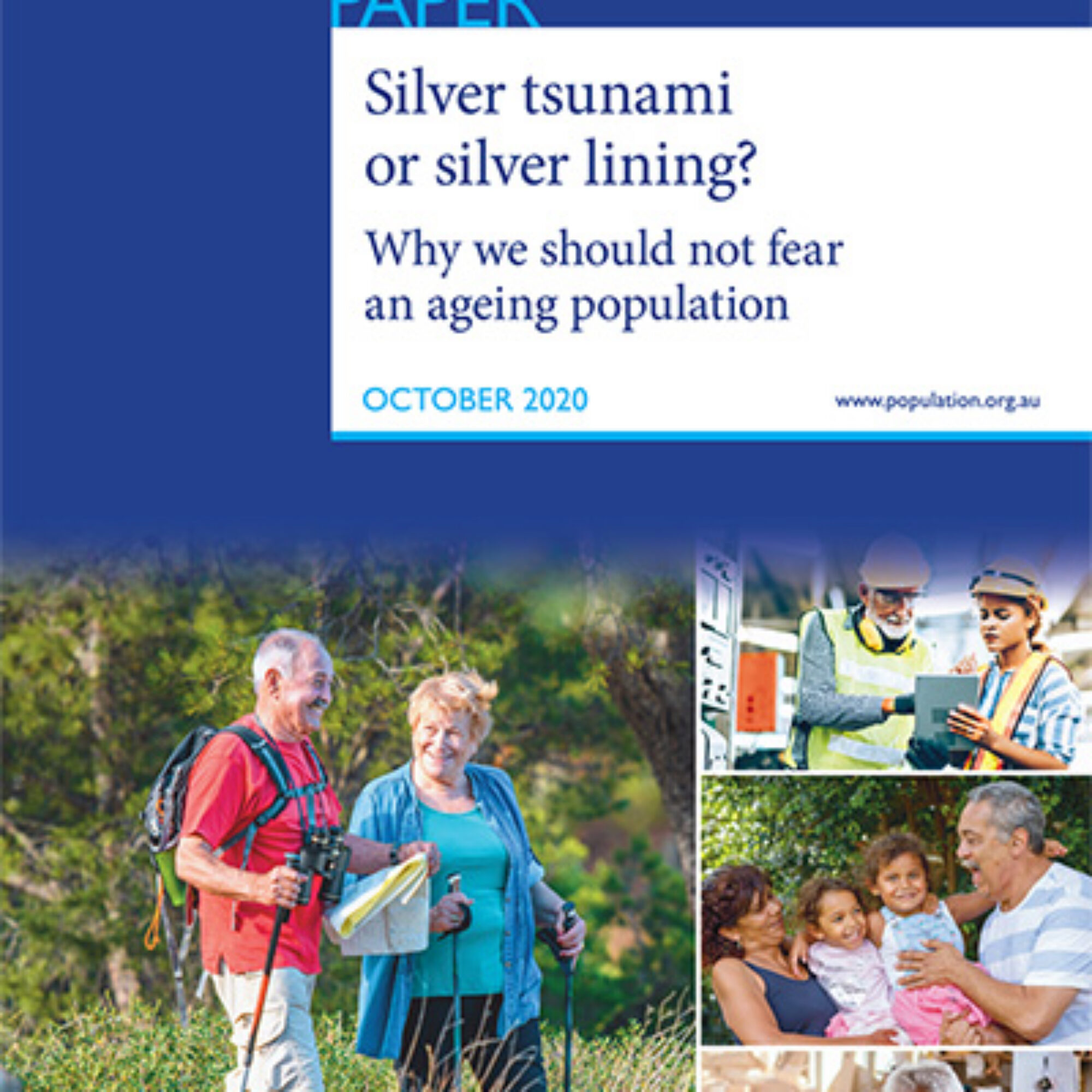
Debunking the myth that an ageing population is a problem.

An observation based on my experience with physics and economics: both fields create models that predict how nature will behave, often people for economists. Then we observe nature and people. In physics if nature contradicts our predictions, we say we're wrong and the model needs fixing. When people behave differently than economists predict, economists say people are wrong and need fixing. Economists claim that a country's or the world's population growing too old creates economic problems, like requiring too many young people to take care of old people or pensions will go bankrupt. These claims filter to the rest of us, who don't look at their assumptions to see the flaws. You need only consider that humans lived with close to no growth for hundreds…

0 Comments

444: Dar-Lon Chang, part 1: The engineer who made headlines for quitting ExxonMobil

Do you know anyone whose company pollutes more than they'd like, who wants to change things, but whose company keeps not acting? I think that situation describes almost everyone. Even the most sustainably companies aren't close to sustainable. They just pollute a bit less than everyone else, from Patagonia to Greenpeace. Maybe it describes you. Maybe it fits your elected officials, school administration, church leaders, etc as much as your employer. Today's guest worked at Exxon for 16 years. If any place qualifies as the poster child for contributing to climate change, well Dar-Lon Chang can tell us the view from the inside. If you'd like to change but feel frustrated, Dar-Lon probably faced bigger hurdles, with more to lose. After 16 years, with wife…

0 Comments

Vegan Seitan Stew, 4 minutes prep time (video)

I saw a post on Reddit's community on vegan fitness that talked about making seitan with a prep time of 90 minutes. I responded 90 minutes sounds insane. I make mine with a prep time of about two minutes. Add water and soy sauce to wheat gluten, mix with spoon then with hands, cut into pieces. Then put in pressure cooker with stew for a few minutes cooking time. Maybe I should make a video. They asked me to make the video, so I did. If you want to see just the seitan-making part, jump to the 2-minute mark. Otherwise you can watch me make the whole stew. Including talking to the camera, the prep time is about five minutes for about five meals. Learning…

0 Comments

443: Nobody understands what’s so bad with climate change

Here are my notes I read from for this episode It hit me recently that nearly nobody knows what's so bad about climate change. I've started asking people and nobody knows. Actually, of the dozens I've asked, one knew, though it took prompting for her to say it. Everyone gets sea level rise, biodiversity, loss of coral reefs. I'll grant we have to move cities. But I'll respond that after some loss, we'd rebuild, which could create meaning. I'll grant more and bigger hurricanes, but I'll respond that we'll learn to build hurricane-proof buildings. Katrina's losses in lives and property, while tragic, are nothing compared to the material gains. Most people see fossil fuels brought billions out of poverty, longevity, prosperity. That trade seems worth…

0 Comments

What Genesis Meant

I'm continually trying to understand different people's views on population. I see people agreeing on its importance regarding sustainability and even existence, but disagreeing on how to view it or respond to it. The other day I posted Our environment is getting biblical about how we're causing fire and brimstone to rain down from the skies and other situations like in the Bible. I thought about another biblical passage. When Genesis says (similar quotes show up throughout the bible) I will surely bless you, and I will multiply your descendants like the stars in the sky and the sand on the seashore. I'm pretty sure it didn't mean to have that many offspring living at once. If you made one person for every grain of…

0 Comments

Our environment is getting biblical

You've heard of fire and brimstone. The Bible refers to them plenty. Here's a typical passage, from Luke: But the same day that Lot went out of Sodom it rained fire and brimstone from heaven, and destroyed them all. Do you know what brimstone is? Sulfur. Do you know what makes acid rain? Sulfur! What did the ozone hole do if not let in fire? We're seeing fire and brimstone raining down from the sky. Should we count the pandemic? We're making all these things, though. They aren't just happening. We could choose to stop. We've indulged in many years of plenty. As we overfish and overuse nearly every other natural resource---why do we call parts of nature "resources"?---we can expect many lean years. The…

0 Comments

Marathon Number Eight

I woke up, ate a light breakfast, oiled the chain, set the machine for intervals of just over 1/8th a marathon, and rowed. About three and a half hours later I finished my second rowing marathon. My results: I rowed my first rowing marathon two years ago. Someone pointed out my rest periods then of 2 minutes were too long (I forget the reason, something about the body switching modes). I also did 1/15th of a marathon intervals then and averaged around 2:25/500m over that whole marathon, so I rowed significantly faster this time and shorter rests so I like the improvement. I didn't row the sixth interval as slow as it looks. I started 30 seconds late from the bathroom break taking longer than…

0 Comments

442: Jonathan Hardesty, part 1: The Journey from Absolute Rookie to Mastery

Longtime listeners and readers of my books and podcast know I draw the analogy to learning and mastering a skill to learning to play piano or a sport. You start by playing scales or practicing groundstrokes. Likewise with leadership or taking initiative, acting entrepreneurially, both performance arts you can master. Also acting in stewardship. People don't get that learning to cook without producing tons of garbage took training from when I started, producing a bag a week. Maybe I should explain better. Some listeners my have heard how I once found but lost a web page of a guy who sketched every day for a year and posted each day's sketch. Chicken scratches for 300 days, then a month of interesting stuff, then beauty. Anyone…

0 Comments

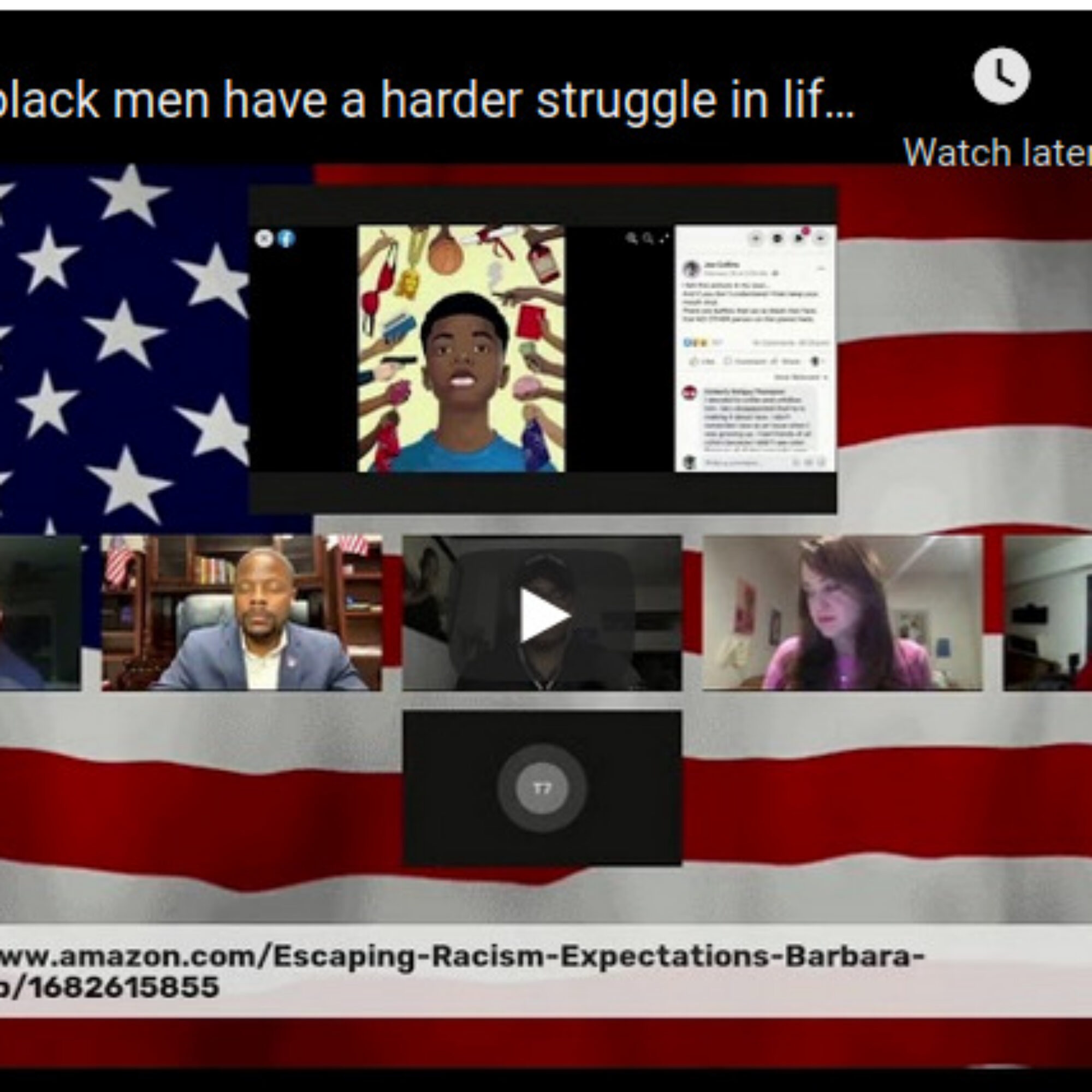
“Do black men have a harder struggle in life than most? Are white men privileged?” see me on a Magamedia panel

Readers have given me positive feedback on my appearance on the politically conservative, Trump-supporting media outlet Magamedia. I value interacting with people with diverse views. The other day, I participated in a panel there prompted by a Congressional candidate from California facing criticism for posting an artwork representing the experience of black men. We examined the situation from a range of perspectives. https://youtu.be/TTj9w_uu8oY I'd love your thoughts, whether you agree with any of the views or not, what you think of my appearing there, what you might have done differently, or whatever your thoughts.

2 Comments

You can make a habit stick faster than the “experts” say

All the "experts" have some study for how long it takes for a habit to stick. Here are a bunch of articles from searching "how long to start a habit" not worth reading that give the common answers: How Long Does It Take for a New Behavior to Become Automatic? begins: "According to a 2009 study published in the European Journal of Social Psychology, it takes 18 to 254 days for a person to form a new habit. The study also concluded that, on average, it takes 66 days for a new behavior to become automatic."How Long Does it Actually Take to Form a New Habit? (Backed by Science) says, "Maxwell Maltz was a plastic surgeon in the 1950s when he began noticing a strange…

0 Comments

441: John Sargent, part 1: The CEO who reduced a Big Five publisher’s footprint

I learned of John's work through his statement at Macmillan's Sustainability page while researching Ray Anderson: In 2009, after reading Ray Anderson's "Confessions of a Radical Industrialist," I decided it was Macmillan's responsibility to lessen our impact on the earth, and in particular, to lower our carbon emissions. We created a senior position in the company and spent well over a year measuring our carbon footprint. We then set ourselves the daunting goal of reducing our scope one, two, and "major" three carbon emissions by 65%, and we gave ourselves a decade to get it done. Over the course of the last nine years, we have made sustainability a major component of all our decisions at the company. In 2010 we instituted a carbon offset…

0 Comments

How learning sustainability is like learning sex

My books and courses get stellar reviews because they teach how to lead and take initiative effectively---not through lecture but through practicing the basics and advancing as we improve, sometimes to mastery. We learn all performance-based fields that way---sports, dance, music, military, and so on. I approached coaching acting sustainably similarly. It hit me the other day that some things we don't need structured learning for---things we love without any training and can pick up with practice. To learn them we need only start. We love indulging in the environment---walks in the woods, playing at the beach, watching a sunset or rainbow. I've now led hundreds, maybe over a thousand people to sample acting sustainably and the overwhelming majority enjoyed it. Most continued in some…

0 Comments

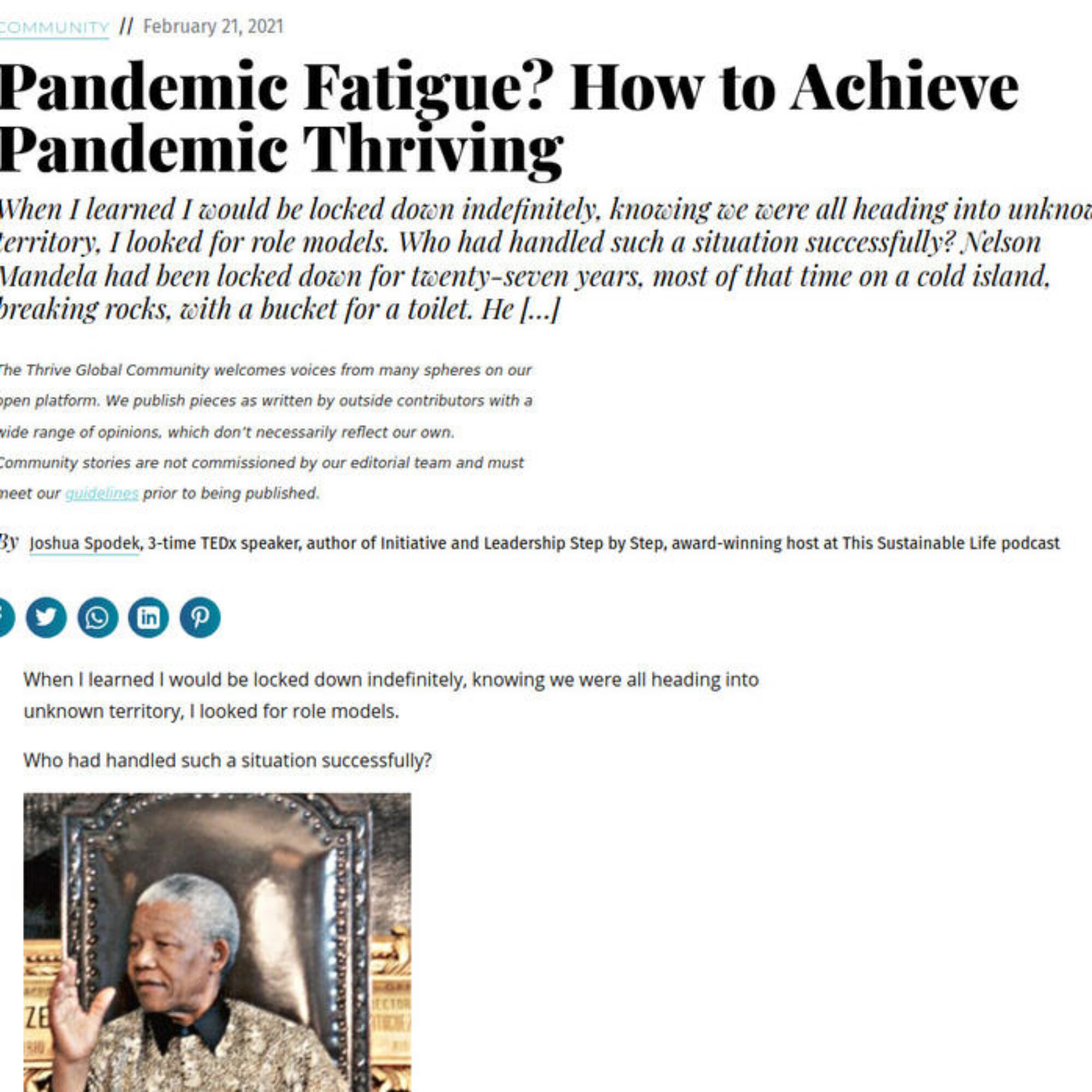
Pandemic Fatigue? How to Achieve Pandemic Thriving

I posted on handling what people call pandemic fatigue to Thrive Global today: Pandemic Fatigue? How to Achieve Pandemic Thriving. Here's the text of the article: When I learned I would be locked down indefinitely, knowing we were all heading into unknown territory, I looked for role models. Who had handled such a situation successfully? Nelson Mandela had been locked down for twenty-seven years, most of that time on a cold island, breaking rocks, with a bucket for a toilet. He negotiated with presidents of the nation that locked him up and emerged to get their jobs. I could see what was possible under lock down. While he remained imprisoned, the world celebrated his seventieth birthday with a global celebration. Over six hundred million people…

2 Comments

Why do we end sentences with “and stuff” and “or something”?

Maybe from the podcasting, maybe from writing, maybe from my general interest in self-awareness and preferring to do things deliberately, not thoughtlessly. We all know about filler words and sounds like "umm," "like," "so," and "and." I'm not sure why we use them. Lately I've started trying to reduce them, which takes concentration, so therefore distracts from speaking and listening. I've been asking myself lately why we end sentence with "and stuff" and "or something." Have you noticed doing it or hearing others? I'm not just asking out of whimsy. I believe paying attention closely enough, we can sense ever more subtle motivations, which reveal more about ourselves. The more we can move from thoughtless reflex and reactivity to reflection and thought, the more we…

0 Comments

440: Andrés Reséndez: The Other Slavery

About six months ago the parallels started forming for me between our global economic system today that creates great suffering on the scale of hundreds of millions of people with nightmarish cruelty, but also people benefiting from it looking the other way or saying "what I do doesn't matter" or "the youth will solve it". . . And the systems of slavery. Also looking for role models who changed systems of that scale. My historical knowledge of abolition and slavery was limited. You've heard guests Adam Hochschild, Manisha Sinha, Eric Metaxas, and others sharing historical background on the systems of slavery and abolition, as well as individual abolitionists. I believe we can learn from them and honor them by learning from them. Our situation is…

0 Comments

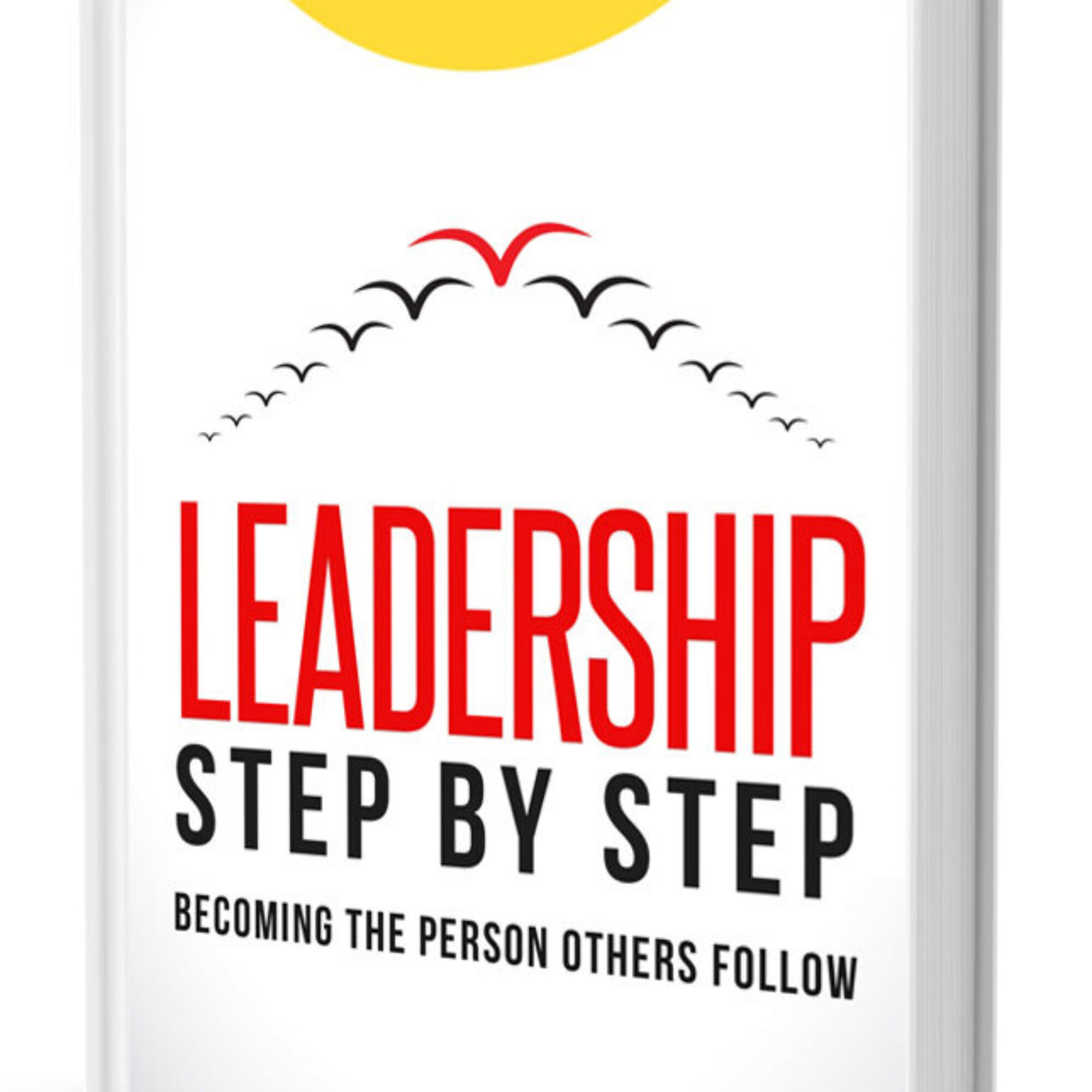
“The 11 Best Leadership Books You Should Read This Year” named Leadership Step by Step

Brunchwork's "The 11 Best Leadership Books You Should Read This Year" named Leadership Step by Step along with favorites including, 1. Let My People Go Surfing: The Education of a Reluctant Businessman by Yvon Chouinard 3. The 7 Habits of Highly Effective People by Stephen R. Covey 6. 5 Levels of Leadership by John C. Maxwell 7. How to Win Friends & Influence People by Dale Carnegie 9. Leading with Gratitude: Eight Leadership Practices for Extraordinary Business Results by Adrian Gostick and podcast guest Chester Elton For my book they write 5. Leadership Step By Step by Joshua SpodekPublished in 2017, Leadership Step By Step was written by Joshua Spodek, an author and professor who holds a PhD in astrophysics. His professional versatility translates easily…

0 Comments

Hear my second conversation on This Sustainable Life: Solve for Nature

I wrote about Eugene launching This Sustainable Life: Solve for Nature with me as his first guest. As the guest on his podcast, he led me to commit to an environmental activity based on my environmental values. I committed to planting some edible plants in my windowsill. Listen to hear my results, how Joe DeSena and Spartan Race get involved, and more. Click here to listen at Eugene's site and subscribe. Here it is inline: Thank you Eugene for a wonderful conversation! More places to find Eugene This Sustainable Life: Solve For Nature PodcastBlogYouTubeTwitterFacebookInstagram

0 Comments

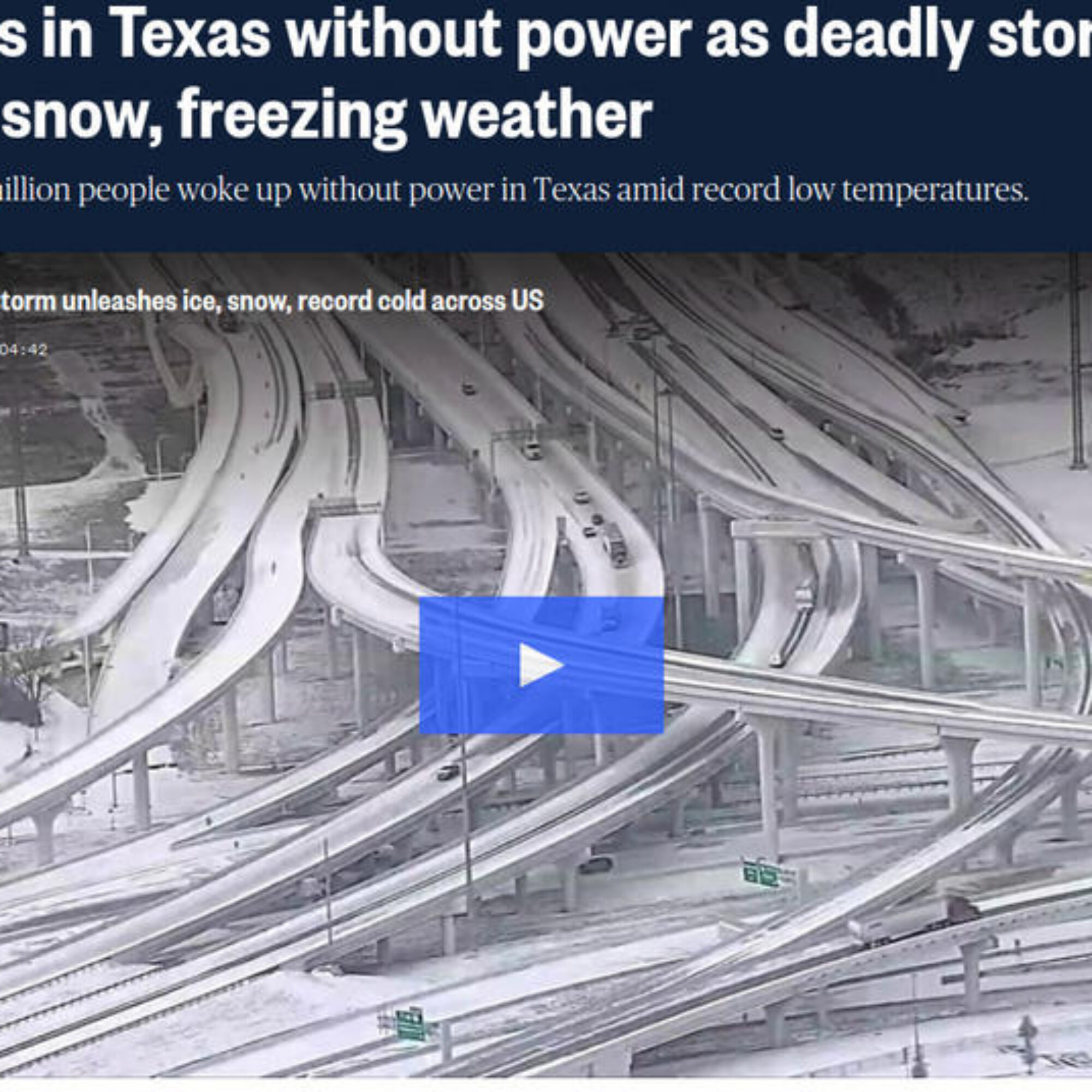
439: How to Fix Texas

Here are the notes I read from for this episode How to fix Texas Just got off conference call a Texas attendee couldn't attend because her power was out.There are helpless people suffering. I empathize with them and feel compassion. I support helping them.If we want to prevent future suffering, we have to look at systems. That's not ignoring present pain or loss. It's preventing future pain and loss.In that call, one person had been in touch with the Texas person. She told us of ice forming inside her house and other problems.The present attendees lamented each mention of a problem as if she were suffering some horrible hardship. For tens of thousands of years, humans have lived without power including in the cold, including…

0 Comments

Do we need math and science after school?

You might think with a physics degree I'd feel strongly that we should require students to learn a fair amount of math and science. I love the subjects and consider them as beautiful as any art or music, but until recently didn't consider them beyond simple calculations important for most people. The pandemic and environment changed that view. The U.S. response to the pandemic exemplifies what happens when a nation that hasn't learned math or science for a few generations faces a natural problem. The mainstream seems to consider math and science important for engineering, which creates innovation and jobs. I have no problem with them, but they miss the value of math and science. I don't think most people understand their roots. Science is…

0 Comments

The Founding Fathers, travel, and flying

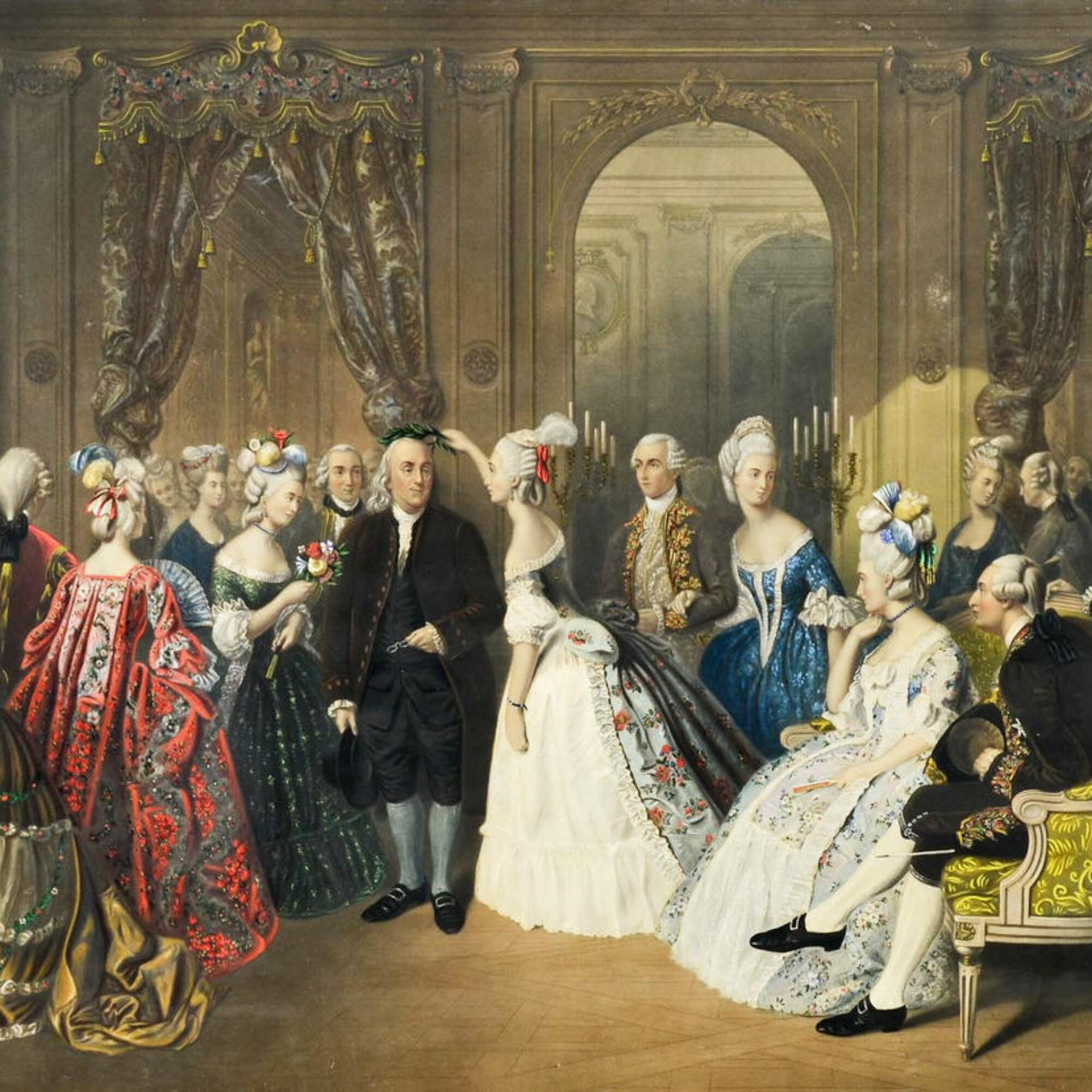
With my practicing singing the national anthem and my guests who are experts in abolition, I keep researching the colonies and early United States. Not my goal, but I noticed how often the American Founding Fathers kept showing up in Europe. Here's Benjamin Franklin in Paris: I could have posted about Jefferson, John Adams, or, for all I know, many non-famous colonists and early Americans visiting Europe and the Caribbean. Also plenty British and other Europeans visited North America, including many British troops. None of them flew. For that matter, their sailboats must have been slow and less stable or reliable than ours today. Yet they traveled across oceans without burning fossil fuels. Why should we think not flying means not traveling? Do we think…

0 Comments

Where Is the World Going, Mr. Spodek?

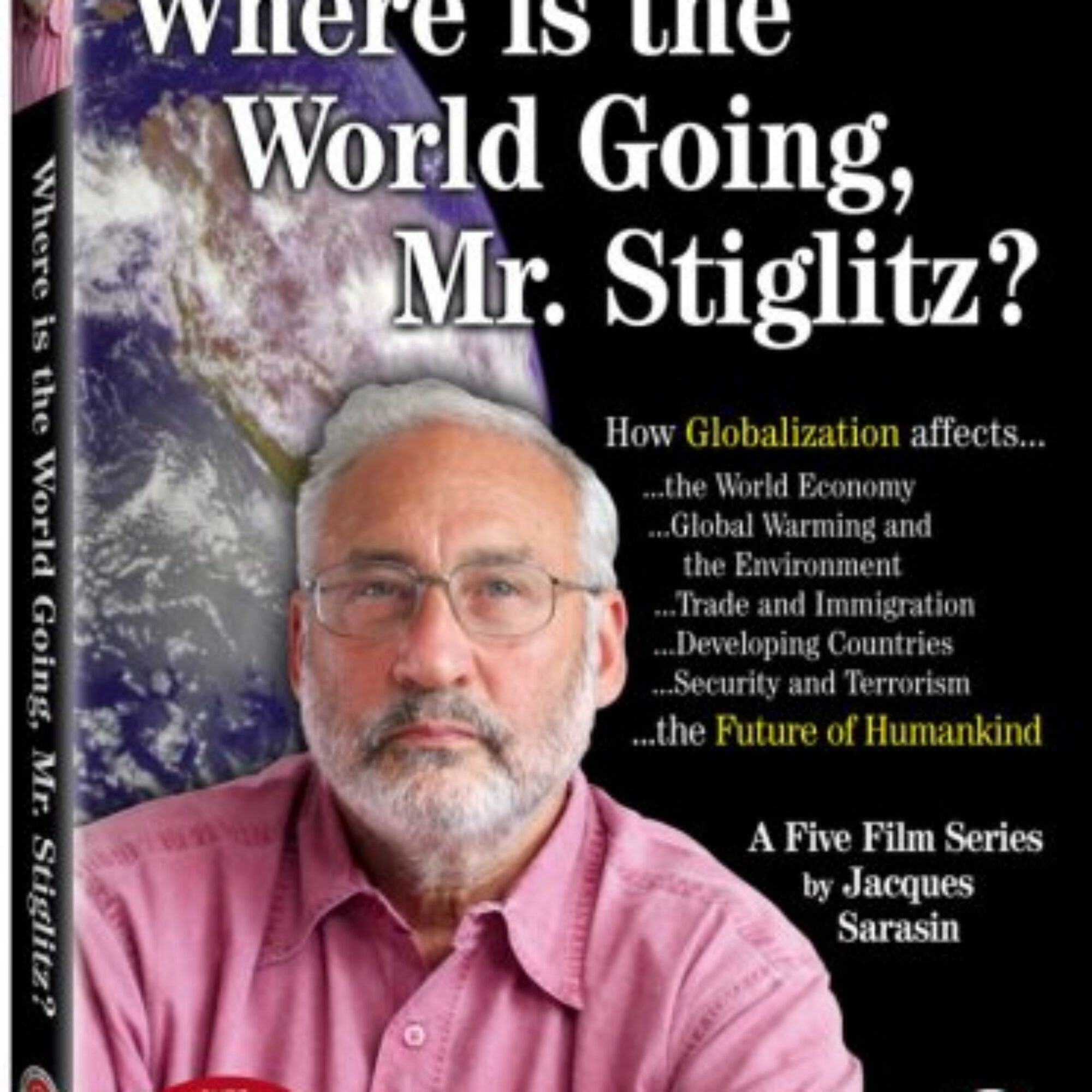
Where Is the World Going, Mr. Stiglitz? I saw a dvd at the library called Where Is the World Going To, Mr. Stiglitz and recognized the name and face of, Joseph Stiglitz, honoree of the economics Nobel and professor at Columbia Business School, where I got my MBA and friends took his course so I felt connected. Libraries lend for free, so I borrowed it, not knowing what to expect. I loved it---amazingly, because it was over six hours of an economist just talking to the camera. I normally don't enjoy economics, but I loved how he presented things---simply, directly, and enthusiastically. Below a short description of that video, I present something of my version of describing my views on sustainability, speaking Eugene Bible, host…

0 Comments

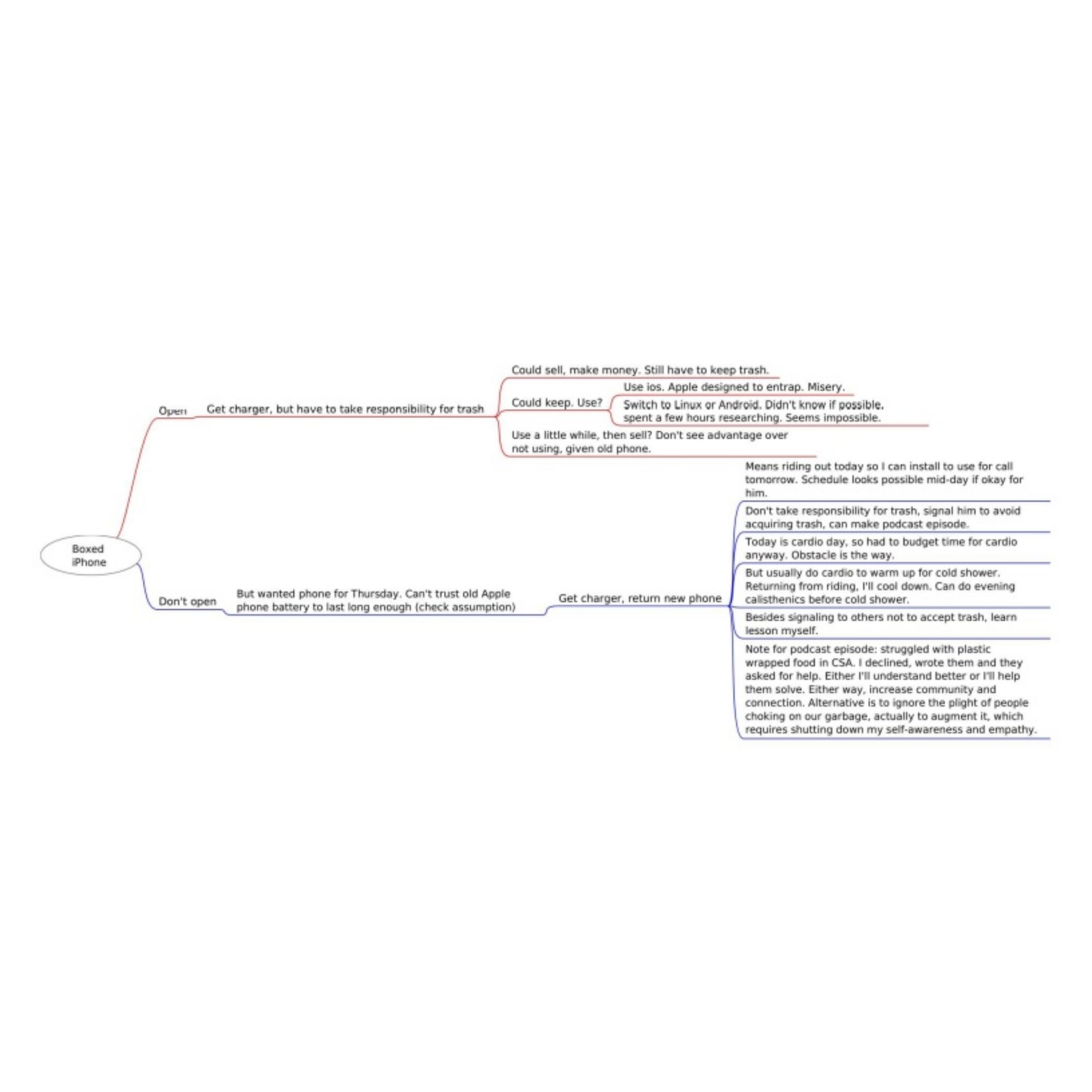
438: Avoiding Creating Garbage, Advanced Edition

When they hear I take two years to fill a load of trash, people ask how I do it, what's in my trash. In this episode I share a couple stories from last week of facing things entering my life that would result in my having to take responsibility for trash---acquiring a new cell phone and acquiring bagged food. I've done things like these processes enough to know that they result in joy, community, and connection. It may sound like too much effort or annoying. Regarding too much effort, I put the stories in context of how much people put effort and time into TV and gyms, which my practiced lead to saving time and money, resulting in plenty to spare. Regarding annoying, I used…

0 Comments

What the biggest human structure says about culture

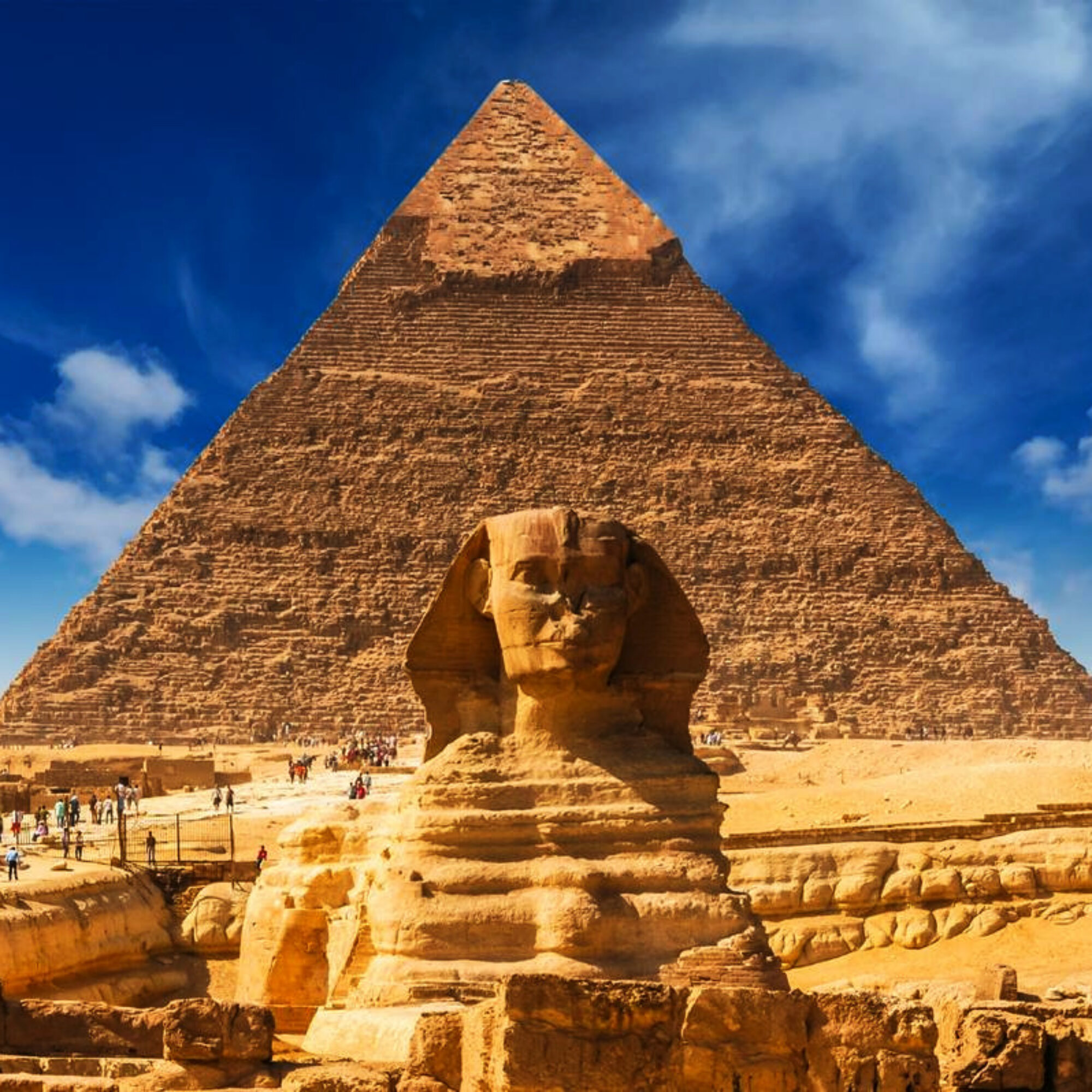
A friend pointed out how the biggest architectural structure has changed over history and what it says about culture. After listing a few he mentioned, I'll share the one I think will come next, if we haven't already attained it. I forget the details, but since the agricultural revolution led to permanent structures the largest structures humans have created have included: Markets for trading produce---probably the first. Religious structures or tombs, like the pyramids. Military defenses. Churches and cathedrals. Bridges. Government offices. Corporate and commercial buildings. I forget what order he put them in. It's interesting to consider what the structures say about the culture they emerged from. I proposed what will come next. He didn't expect it, but found it plausible: Garbage dumps. They're…

0 Comments

Hear me on the Cybertraps podcast

This episode started talking about sidchas and the episode one of the hosts did on my podcast, involving biking in minus 40 degree weather, but the meat of it was what traps us online and to devices, which also traps us polluting: people design everything to make us want more. First they promote craving, then ways to mollify the craving but that recreate the craving. They try to addict us. We also talk about how to exit the addiction, whether to devices or polluting behavior, and how to avoid getting addicted in the first place. And how to recognize when they're trying to start it. About Cybertraps: The Cybertraps Podcast is a twice-weekly podcast discussing all the trouble we can get into with technology. Hosted…

0 Comments

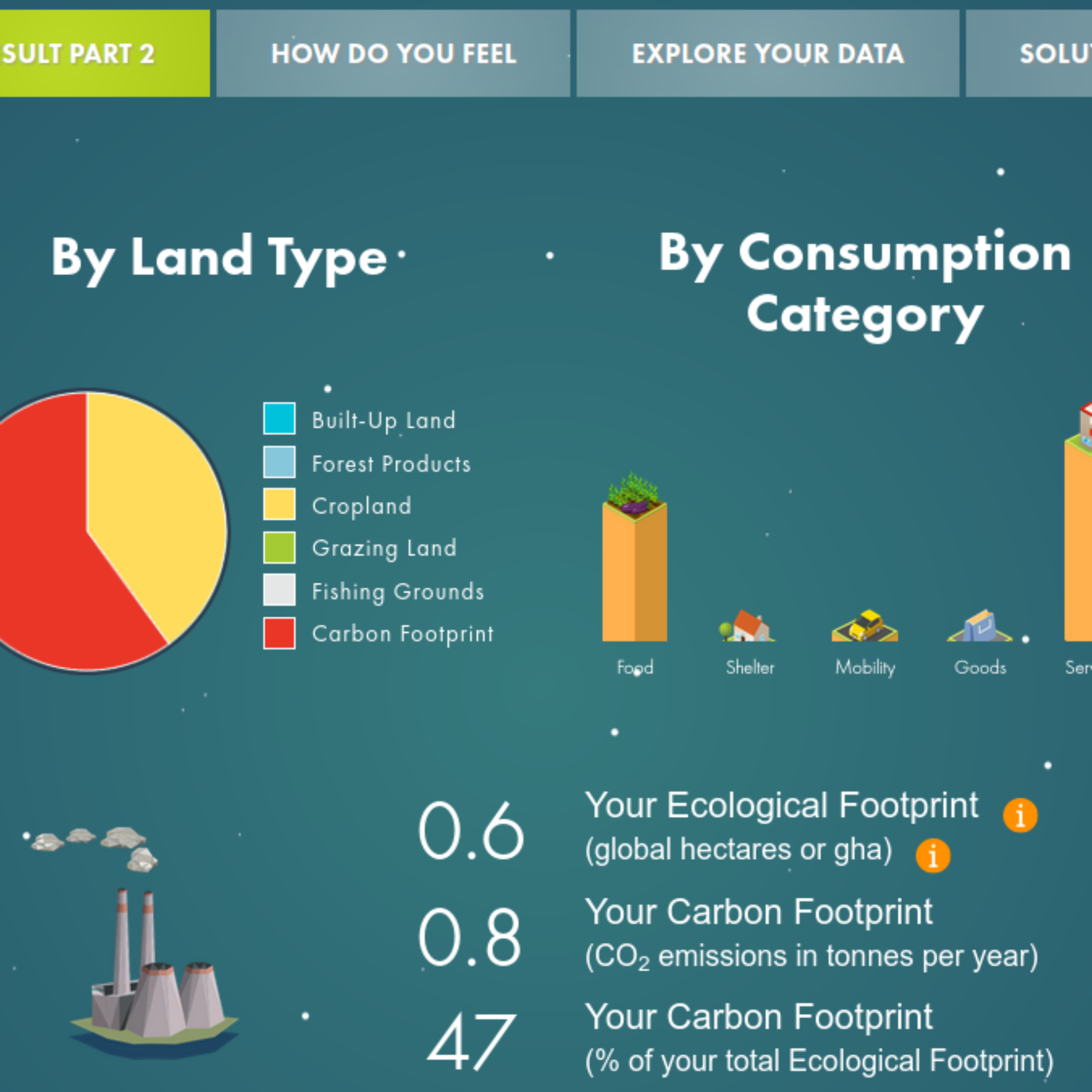
My latest ecological footprint, according to online calculator: 0.8 tonnes of CO2 annually

Since unplugging the fridge and a few other changes, I revisited the online calculator I used in my post from a couple years ago, My ecological footprint. My results: I cause 0.8 tonnes of CO2 emitted annually. I'm happy to have brought it down, but I'm just one person. I intend to help change a system that makes burning fossil fuels so standard and unquestioned. Systemic change begins with personal transformation. Could I be a role model? I hope so, since my role models helped me reach this level of joyfully living sustainably. I feel like I live like a king I can't remember feeling better any time before. Partly, I miss when my body recovered faster from a tough workout, could run faster, jump…

0 Comments

End of content

No more pages to load