
All Posts

What it feels like when people ask if I still don’t fly and if I’m still off the grid
When people see me for the first time in a while, they often ask if I still don’t fly and if I’m still off the grid. I think they see the behavior as noble acts of deprivation and sacrifice. If you were born in a…

Might the Squamish nation pollute and deplete the most per capita in the world?
I heard about a case where so-called indigenous people in Vancouver were restored land by the government that they had been kicked off of. As a sovereign nation, they didn’t have to follow Canadian law. I heard that they decided to build giant skyscrapers, which…

Treating pollution as an externality misses the point
Before considering pollution as an externality, let’s first consider another practice that deprives people of life, liberty, and property without due process of law. Sadly, I have to point out that comparing things doesn’t imply saying they are equal. Anyone who reads that I am…
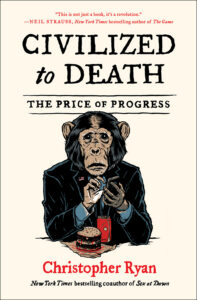
Hear me on Christopher Ryan’s podcast
This podcast appearance started with my reading Chris’s book Civilized to Death, which I recommend to anyone thinking that not pushing for progress means returning to the Stone Age, dying earlier, etc. I’ve read and watched too many primary articles, books, and documentaries to count, and…
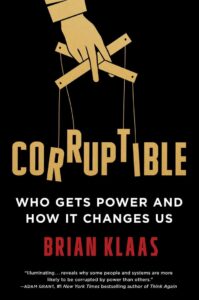
This week’s selected media, October 18, 2026: Corruptible, Rocky
This week I finished: Corruptible: Who Gets Power and How It Changes Us, by Brian Klaas: This book asked the big questions about corruption: Does power corrupt, does power attract corrupt people, do corrupt people seek power, nature versus nurture, and so on. It treated…
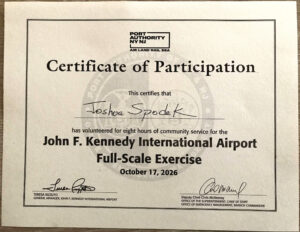
Here is my participation certificate from today at JFK airport for a security exercise. As a volunteer, I played the role of a victim or survivor of a simulated security incident. It’s designed to train first responders for unusual emergencies with smoke, confusion, and so…
Why should America act if other nations don’t?
A common retort to America or Americans acting is, “It doesn’t matter if China doesn’t act. They pollute more than we do. We only produce [some fraction] of total emissions” or some variation of it doesn’t matter what we do, we only produce a fraction…
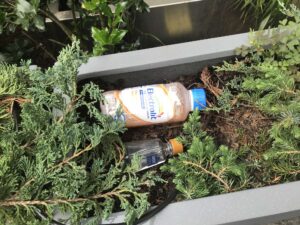
More casual trashing of an otherwise pleasant residential neighborhood
As always with posts showing litter and garbage, I’m posting about the beauty of nature and our ability to restore a culture that doesn’t reward behaviors that require that nature needs protection, conservation, or restoration. Even if I post about garbage, pollution, and depletion that…

It’s harder to lead people to change to stop violating their values
It may seem counterintuitive, but it’s harder to lead people to change to stop violating their values, though you might think they’d want to. Leading someone to change to start living by their values and stop violating them forces them to face that they’ve been…

863: Robert Parkinson: Tyrants and Rogues: Understanding the Declaration of Independence
I can’t help but copy from my blog post on finishing reading Robert’s book. It describes what to expect from the first half of our conversation and his book. The second half of our conversation relates the revolutionary era and leadership today applied to a situation that is far closer to their situation then than most people see. We can learn from them. It’s tempting to think of our impact on the environment as an issue of technology, legislation, and stewardship. It’s about liberty, freedom, equality, democracy, and security, personal and national, which means enforcing the Constitution that Robert’s book conveys the foundation for. Here’s my comments on his book: Wow, I’ve been learning a lot about the revolution, but didn’t realize how much challenge the colonists faced, nor did I learn about the people on the British side. I knew about the big events and interactions that make the history books like the Stamp Tax, Coercive Acts, Boston Massacre, Lexington and Concord, and the ones you know about. I didn’t know about events like the Gaspée affair, the burning of Falmouth, Gwynn’s Island, and all the British aristocracy and military acting. I had only learned about people like Hutchinson, Gage, Dartmouth, and so on as caricatures, not real people. I didn’t know what motivated them. Parkinson points out that as much as we value the timeless words of the start and end of the Declaration of Independence, the rebels and patriots acted on the 27 grievances. I’ve read them before and could pick up some of the meaning behind them, but knew little to no detail. This book recounts what all the colonists knew intimately. Before this book, I had wondered why farmers risked their lives for independence. Sure, they didn’t want to be taxed without representation or imperial soldiers quartered in their homes, but were those things worth dying for? From what I knew before this book, the offenses seemed problematic but something seemed missing. I learned there were far more incidents, many more deadly, and more people involved than I knew of before, yet they drove independence and the revolution. His writing ties many pieces together, so I kept finding names and places affecting each other and being affected by each other. The book read like a tapestry with a rhythm throughout the book. The head of King George from the statue on Bowling Green starts the book and reappears at the end. The boats and people using them going to and from Gwynn’s Island had me going forward and backward like I was reading a mystery novel or a Christopher Nolan movie. The numbers 42, 45, 88, and 92 recur (two refer to years of British revolutions, 1642 and 1688; one is the edition of a publication, 45; and the other is the number of votes supporting a Circular Letter in support of union, 92). Finally, each incident tied back to Jefferson, Franklin, the three other editors, and the congress learning about them, figuring out what to make of them, writing them, editing them, and sending the Declaration to the colonies. Robert’s faculty page at SUNY Binghamton
Browse the Archive
2026
October
September
August
July
June
May
April
March
February
January
Read my weekly newsletter
On initiative, leadership, the environment, and burpees